When you’re scaling down a sulfuric acid plant for process pilot training, the difference between SCSA and DCDA defines your emission profile.
A Double Contact Double Absorption (DCDA) system splits conversion and absorption into two stages with intermediate reheating, routinely achieving SO₂ to SO₃ conversion efficiencies above 99.8%. In contrast, a Single Contact Single Absorption (SCSA) system uses a single absorber after the converter, typically yielding lower overall conversion and higher residual SO₂ in the tail gas — often exceeding strict environmental limits without additional tail gas scrubbing. The environmental benefit is immediate: DCDA can reduce exit SO₂ concentrations to well below regulatory thresholds like 658 mg/m³, making it the cleaner, more compliant choice for demonstration‑scale operations.
The core advantage of DCDA in pilot plants is not just higher conversion but a direct pedagogical window into chemical equilibrium shift — removing product between stages drives the reaction forward, slashing emissions while teaching a fundamental principle of process intensification.
The Fundamentals: SCSA vs. DCDA
How Single Absorption Limits Performance
In an SCSA configuration, the process gas passes once through the catalytic converter and then enters a single absorption tower where SO₃ is absorbed.
Because the gas leaving the converter still contains unreacted SO₂, the single pass leaves that unconverted portion in the tail stream.
The overall conversion rarely exceeds 98% under typical operating conditions, meaning the outlet still carries a noticeable load of SO₂ that may require dedicated tail gas treatment.
How Double Absorption Resets the Equilibrium
A DCDA loop inserts a first absorption step after the initial converter beds.
After cooling and absorbing the SO₃ already formed, the lean gas is reheated and sent through a second converter.
By removing the product (SO₃) from the reaction mixture at the halfway point, you shift the equilibrium position — exactly what Le Chatelier’s principle predicts — allowing the residual SO₂ to be oxidized far more completely in the second stage. A final absorption tower captures the newly formed SO₃, delivering overall conversion in excess of 99.8%.
Why DCDA Delivers Superior Environmental Performance
Drastically Lower Tail Gas SO₂
The immediate environmental payoff is the almost complete elimination of SO₂ slip.
With DCDA, the stack gas SO₂ concentration easily falls below the 658 mg/m³ landmark used in many emission guidelines, whereas an equivalent SCSA unit might exceed it two‑ or three‑fold.
In a pilot plant, this means you can operate without odor complaints or health concerns indoors, while demonstrating how modern plants meet their air permits.
A Built‑in Demonstration of Emission Control
Pilot plants are teaching tools first and production assets second.
The DCDA layout lets students and operators observe how inter‑stage product removal and heat recovery work hand‑in‑hand to suppress pollution.
They collect data at each absorption point, calculate the incremental conversion, and directly connect the hardware design to the final emission number — a learning outcome that an SCSA rig simply cannot deliver.
Heat Integration and Real‑World Relevance
Because DCDA requires reheating the intermediate gas, efficient pilot units need to recover heat from the exothermic conversion stages.
This forces the designer to incorporate heat exchangers and consider the full energy balance, mirroring industrial best practices.
The environmental benefit expands: the same heat integration that reduces fuel demand also lowers the plant’s carbon footprint, making the pilot plant a model of cleaner process design.
Understanding the Trade‑offs
Higher Capital and Operating Costs
A DCDA pilot plant demands two absorption towers, an extra converter stage, additional heat exchangers, and a reheating source.
This roughly doubles the major equipment count compared to an SCSA setup, increasing both fabrication cost and the laboratory footprint.
The ongoing energy penalty for gas reheating also raises utility consumption, though this is often offset by the thermal integration downstream.
Added Complexity Demands Skilled Operation
Operating a DCDA circuit is not as straightforward as a single‑pass system.
Operators must carefully control the SO₃ concentration entering the first absorber, the intermediate reheat temperature, and the second converter’s inlet conditions to avoid mist formation or catalyst damage.
For a pilot plant intended for basic demonstration, the startup and shutdown procedures become longer and more nuanced, requiring deeper operator training.
When SCSA Still Makes Sense
If strict emission compliance is not the pilot plant’s primary goal — perhaps the unit simply illustrates fluid dynamics or heat exchange — the simpler SCSA design reduces capital expenditure and maintenance.
In those cases, pairing SCSA with a downstream scrubber can still achieve low emissions, though at the expense of a different learning emphasis.
How to Apply This to Your Pilot Plant
The right choice depends on what you need the pilot plant to teach and how closely you must replicate industrial realities.
- If your primary focus is demonstrating state‑of‑the‑art emission control: Choose DCDA. Its 99.8%+ conversion and sub‑658 mg/m³ tail gas are the direct proof you need for modern environmental compliance.
- If your primary focus is teaching the principles of equilibrium shift and process intensification: DCDA is indispensable; the two‑stage absorption makes the theory tangible and gives students quantitative data on how product removal drives the reaction forward.
- If your primary focus is a low‑budget teaching rig for basic unit operations: An SCSA plant, possibly followed by a simple tail gas scrubber, can still illustrate absorption fundamentals while keeping complexity and cost under control.
- If your primary focus is heat integration and energy balance studies: The DCDA route naturally embeds multiple heat exchange points, offering a richer thermodynamic case study than an SCSA system can provide.
Every pilot plant represents a trade‑off between realism, cost, and educational depth — and the decision between SCSA and DCDA will echo through the emissions data your students remember for years.
Summary Table:
| Feature | Single Contact Single Absorption (SCSA) | Double Contact Double Absorption (DCDA) |
|---|---|---|
| Conversion Efficiency | Rarely exceeds 98% | Exceeds 99.8% |
| SO₂ Emissions | Higher, often exceeds regulatory limits | Drastically lower (well below 658 mg/m³) |
| Equipment Count | Lower (single absorber, basic setup) | Higher (two absorbers, extra converter/heaters) |
| Operating Complexity | Simple, easy to operate | Complex, requires precise temperature control |
| Best Suited For | Basic unit operations & low-budget rigs | Advanced emission control & process intensification studies |
Equip Your Lab with Industry-Standard Pilot Plants
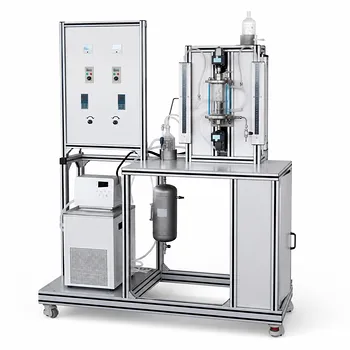
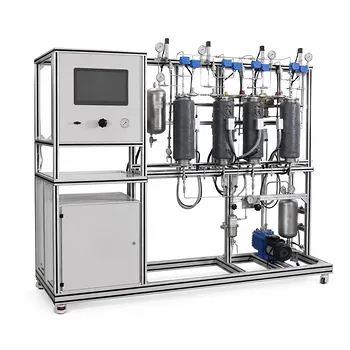
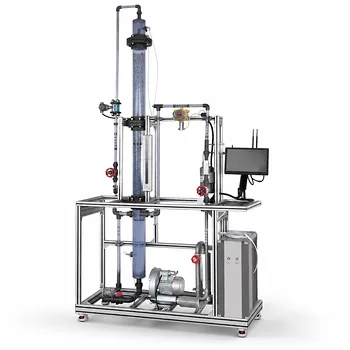
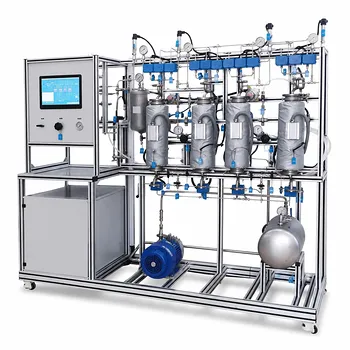
At LABPARK, we provide state-of-the-art Educational and Vocational Unit Operations Pilot Plants across chemical engineering, bioprocess & biotech, and environmental & water treatment. Designed specifically for universities, research institutes, and enterprises, our systems—including advanced gas absorption units—allow students and researchers to experience real-world industrial processes, heat integration, and emission controls firsthand.
Ready to elevate your training and research capabilities? Contact LABPARK today to discover the perfect pilot plant solution for your institution.
Related Products
- Dual-Mode Gas Absorption and Desorption Unit Operations Training Pilot Plant
- Bench Scale Dual Column Gas Separation and Capture Educational Pilot Plant
- Carbon Dioxide Absorption and Desorption Educational Pilot Plant for Carbon Capture Studies
- Carbon Dioxide Adsorption and Capture Educational Unit Operations Pilot Plant
- Absorption and Desorption Educational Unit Operations Pilot Plant
People Also Ask
- How do two-film & penetration theories apply to gas absorption pilot plant teaching? Key pedagogical insights.
- How is the direction and driving force of mass transfer determined in a gas absorption unit operations pilot plant?
- How does partial pressure behavior influence gas absorption pilot plants? Master Mass Transfer
- Why does increasing flow fail to enhance absorption in fast chemical reactions? Pilot Plant Insights
- What are the limitations of Henry's Law in gas absorption pilot plants? Avoid critical lab errors.