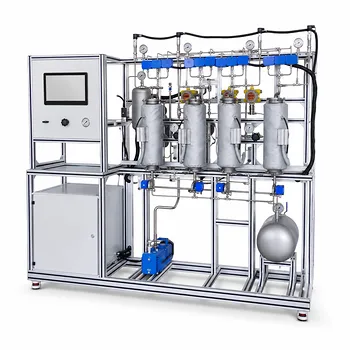
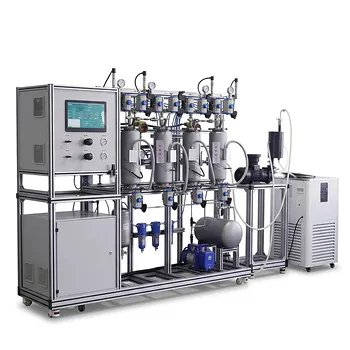
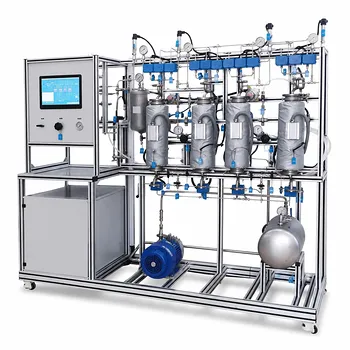
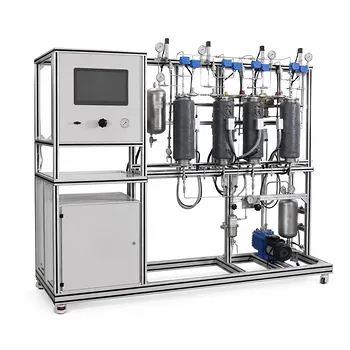
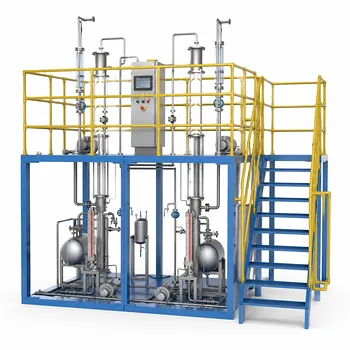
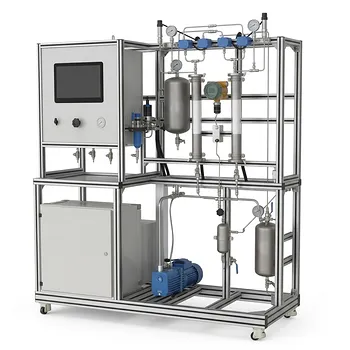
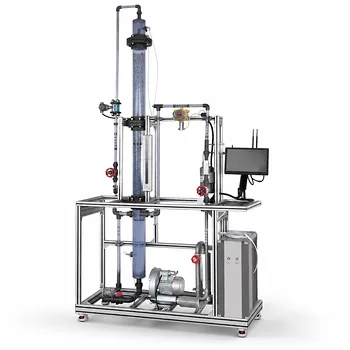
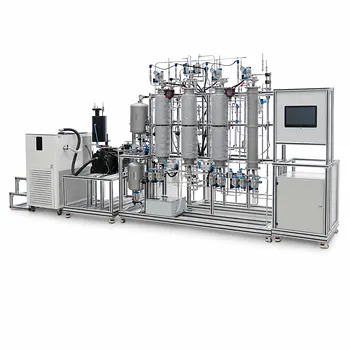
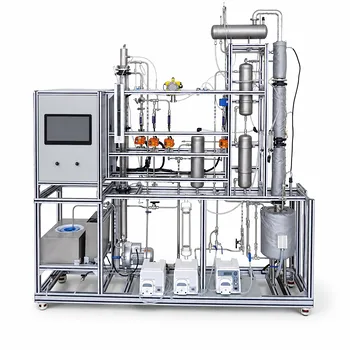
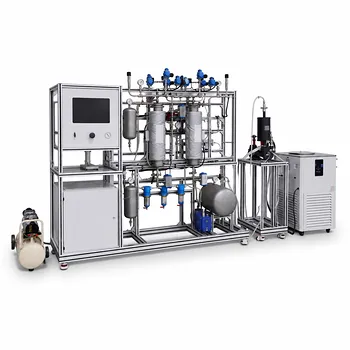
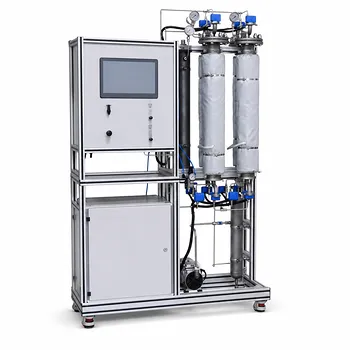
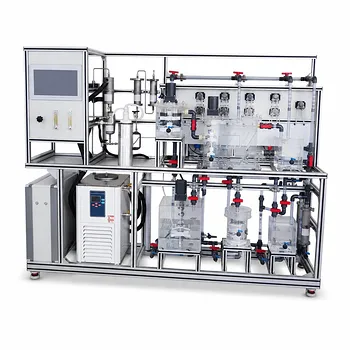
Your pilot plant’s ability to replicate real-world gas cleaning hinges on two foundational unit operations: absorption and adsorption. In chemical engineering and environmental pilot plants, absorption is simulated using gas–liquid scrubbing towers (packed or tray columns) to wash out soluble contaminants from large-volume exhaust streams. For trace or low-concentration toxic gases, adsorption pilot units employ packed beds of solid sorbents like activated carbon or zeolites, allowing researchers to study breakthrough behavior, mass transfer kinetics, and regeneration cycles under controlled conditions.
The core takeaway: Both absorption and adsorption pilot plants serve as scalable, controllable platforms to evaluate removal efficiency, pressure drop, solvent or sorbent performance, and regeneration energy. The choice between them—and how they are configured—is dictated primarily by the pollutant concentration, chemical nature, and the end goal of the study.
What Absorption Pilot Plants Simulate
The Core Gas–Liquid Contactor
At the heart of any absorption pilot plant is a counter-current column—typically a packed bed or tray tower—where the waste gas rises against a downward-flowing liquid solvent. This mimics industrial scrubbers used to remove acid gases (H₂S, CO₂), NOx, or organic vapors. By adjusting liquid-to-gas ratios and solvent properties, researchers directly observe mass transfer coefficients, column flooding limits, and pressure drops.
Process Configurations for Comprehensive Study
Pilot plants often extend beyond a single column. Instructors can connect two columns in series or use towers with adjustable bed heights to demonstrate how increased contact volume enhances removal efficiency and yield. Industrial syngas cleanup is replicated by integrating quenching stages, spray washers, and demisters before the absorber, teaching students multi-stage heat and mass transfer simultaneously.
Chemical vs. Physical Absorption
Supplementary reference material highlights a critical distinction. Chemical absorption pilot plants (e.g., using MEA or MDEA solutions) operate at low pressures and moderate temperatures (20–40°C) with regeneration above 105°C, ideal for demonstrating reaction-enhanced mass transfer. Physical absorption setups (e.g., methanol-based Rectisol at -54°C, Selexol at 2–5 MPa) illustrate Henry’s Law solubility and regeneration by simple pressure reduction. For educational labs, amine-based chemical absorption units are typically preferred because they avoid the hazards and high utility costs of cryogenic or high-pressure operation.
Solvent Regeneration Loops
To close the loop, absorption pilot plants are frequently coupled with stripping or regeneration columns. Using a safe CO₂-water system, students can measure absorption efficiency in one column and stripping performance in another, gaining hands-on insight into solvent regeneration energy, reusability, and overall process economics.
What Adsorption Pilot Plants Simulate
Fixed-Bed Adsorbers and Breakthrough Curves
Adsorption pilot units center on a packed column filled with solid adsorbent—activated carbon, zeolites, or silica gel. A known concentration of pollutant (e.g., VOCs, mercury vapor, H₂S) is fed at a controlled flow rate while downstream sensors map the breakthrough curve, revealing the bed’s dynamic capacity and mass transfer zone. This direct measurement is essential for designing industrial adsorbers for trace-level toxins.
Desorption and Regeneration Studies
A complete adsorption pilot plant includes regeneration capabilities. Thermal regeneration (hot inert gas or steam) and vacuum or pressure swing desorption are simulated to evaluate sorbent longevity, energy demand, and the potential to recover valuable components. Research teams can test how desorption temperature profiles affect adsorbent deterioration and the concentration of the recovered stream.
Extending to Catalytic Surface Reactions
While not strictly absorption or adsorption, some environmental pilot plants incorporate gas-phase catalytic reactors (e.g., Selective Catalytic Reduction for NOx). These units share the packed-bed configuration but focus on surface reaction kinetics rather than simple physical capture. They are often studied side by side with adsorption to compare destruction vs. sequestration strategies.
Understanding the Trade-offs
Concentration and Steam Load
Absorption excels at high pollutant loadings where a liquid solvent can scrub significant volumes economically. Adsorption becomes more efficient at low concentrations (ppm levels) where liquid scrubbing would require uneconomically large solvent flow or produce dilute waste. However, adsorbents have finite capacity and need frequent regeneration, creating a cyclic operational pattern.
Regeneration Complexity and Energy
Thermal regeneration of adsorbents consumes considerable energy and can degrade microporous structures. Solvent regeneration in absorption may involve distillation, which is also energy-intensive, but amine-based systems operate at relatively low temperatures (<120°C). Physical absorption regeneration by flashing is simpler but requires high-pressure equipment that complicates pilot-scale design.
Educational Viability and Safety
For university pilot plants, safe solute-solvent pairs (CO₂-water) dominate absorption studies to avoid toxic chemical handling. Similarly, adsorption labs often use low-risk VOCs (ethanol, acetone) to familiarize students with breakthrough analysis without hazardous waste. When real industrial pollutants are simulated, amine-based chemical absorption is often chosen over cryogenic systems because it avoids extreme temperatures and pressures while still delivering meaningful reaction kinetics data.
Making the Right Choice for Your Pilot Plant Goal
- If your primary focus is teaching mass transfer fundamentals: Choose a CO₂–water absorption/stripping system with adjustable column heights and easy-to-measure parameters. This setup provides clear visualization of flooding, pressure drop, and basic counter-current principles.
- If your primary focus is industrial acid gas removal R&D: Opt for an amine-based chemical absorption pilot plant with a closed regeneration loop. This allows manipulation of temperature, solvent loading, and gas-to-liquid ratios to mimic refinery-scale amine treating.
- If your primary focus is trace-level toxic gas capture: Deploy a fixed-bed adsorption unit with high-resolution breakthrough monitoring. Prioritize thermally regenerable adsorbents if your research extends to sorbent longevity and desorption energy optimization.
- If your primary focus is recovering valuable components from dilute streams: Consider a modular configuration that couples an adsorption column with vacuum or pressure swing desorption to concentrate the recovered product, or a physical absorption system where pressure reduction alone releases the solute without additional thermal input.
A well-designed pilot plant transforms theoretical separation principles into actionable data—empowering you to scale from a laboratory insight directly to an efficient, compliant industrial installation.
Summary Table:
| Feature / Parameter | Absorption Pilot Plants | Adsorption Pilot Plants |
|---|---|---|
| Phase Interaction | Gas-Liquid (Counter-current columns/scrubbers) | Gas-Solid (Packed beds) |
| Ideal Pollutant Concentration | High pollutant loadings (large-volume streams) | Low/Trace concentrations (ppm levels) |
| Key Study Parameters | Mass transfer coefficients, flooding, pressure drop | Breakthrough curves, dynamic capacity, mass transfer zone |
| Regeneration Method | Stripping columns (thermal or flash pressure reduction) | Thermal desorption, vacuum or pressure swing desorption |
| Common Educational Systems | CO₂-Water, Amine-based systems (MEA/MDEA) | Activated carbon, Zeolites with low-risk VOCs (ethanol) |
Scale Your Environmental Research and Training with LABPARK
Ready to bridge the gap between classroom theory and industrial application? LABPARK provides premium Educational and Vocational Unit Operations Pilot Plants in chemical engineering, bioprocess & biotech, and environmental & water treatment. Specially designed for universities, research institutes, and enterprises, our systems empower you to:
- Conduct High-Fidelity Simulations: Replicate real-world gas scrubbing and trace pollutant capture with precision.
- Ensure Safe Learning Environments: Utilize low-risk media (like CO₂-water or dilute VOCs) to teach advanced thermodynamic and kinetic principles without high hazards.
- Optimize System Configurations: Access modular pilot plants featuring adjustable bed heights, automated data logging, and integrated regeneration loops.
Bring hands-on industrial simulation to your facility—contact LABPARK today to request a quote or customize your pilot plant setup!
Related Products
- Carbon Dioxide Adsorption and Capture Educational Unit Operations Pilot Plant
- Multi-Component Gas Pressure Swing Adsorption Pilot Plant for Unit Operations Education
- Carbon Dioxide Capture and Utilization Educational Pilot Plant for Unit Operations
- Bench Scale Carbon Dioxide Capture Educational Unit Operations Pilot Plant
- Dual-Mode Gas Absorption and Desorption Unit Operations Training Pilot Plant
People Also Ask
- How does operating pressure influence the transition between absorption and desorption in a CO2 pilot plant?
- How is moisture removal managed in an adsorption unit operations pilot plant? Dew Point Control Guide
- How do physical vs chemical adsorption impact pilot plant design? Key operational & regeneration strategies.
- What are the key differences between PSA and TSA? Choosing the Right Adsorption Pilot Plant
- What unit operations are critical for CCUS training pilot plants? Build hands-on engineering expertise.