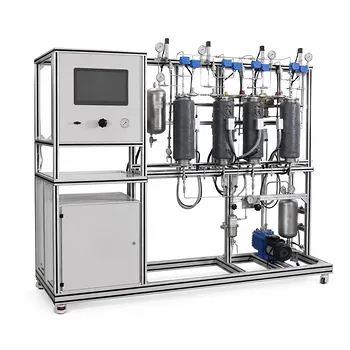
The key to reliable bioprocess data starts with how you sample. In pilot-scale bioprocess and biotechnology plants, in situ membrane sampling is strongly preferred over ex situ methods because it protects the living culture from mechanical shear, metabolic shock, and contamination—all of which are inevitable when cells are circulated outside the controlled bioreactor. The central operational challenge that researchers must then manage is membrane fouling, which silently shrinks effective pore size, rejects the very analytes you are trying to measure, and ultimately distorts the analytical data that guides scale-up decisions.
In situ sampling keeps cells exactly where they belong—inside the bioreactor—eliminating the stress, starvation, and sterility risks of external loops. But that protection comes with a trade-off: membrane fouling inevitably changes how the sampling interface behaves, making it a critical variable to control, not just a maintenance headache.
Why In Situ Sampling Wins for Cell Health and Data Integrity
When an analysis requires an external instrument (FIA, HPLC, or mass spectrometry), the fundamental question is how to get a cell-free sample without harming the culture. In situ and ex situ strategies take radically different approaches, and the biological consequences are profound.
Eliminating Shear Stress from Recirculation Pumps
Ex situ sampling loops rely on a pump to force culture broth at high velocity across a membrane filter.
That high-shear environment mechanically damages mammalian or microbial cells, reducing viability and potentially releasing intracellular debris that further fouls the membrane.
In situ devices place a probe directly into the bioreactor, relying on gentle diffusion or a very low transmembrane pressure. No external pump is needed, and cells are never dragged through a narrow tubing network under turbulent flow.
Preventing Metabolic Perturbation
Even brief excursions outside the bioreactor can alter a cell’s physiology.
In an ex situ loop, cells trapped in the recirculation tubing temporarily lose access to the carefully controlled dissolved oxygen and nutrient supply. This starvation period can trigger metabolic shifts, changing the profile of secreted metabolites—the very molecules you are trying to measure.
In situ sampling never removes cells from the bioreactor. They remain in their engineered, temperature‑regulated, oxygen‑saturated environment, so the metabolite snapshot you capture reflects the true state of the culture, not an artifact of sampling stress.
Closing the Door on Contamination
Every additional sterile connection and pump head in an external loop is a potential entry point for adventitious agents.
Ex situ systems multiply the number of aseptic seals, joints, and manual connections that can fail, especially in a teaching pilot plant where operators are still mastering aseptic technique.
In situ sensors and sampling probes drastically reduce the sterile boundary footprint. Fewer connections mean fewer opportunities for contamination to ruin a months‑long fed‑batch run.
The Ripple Effect on Data Quality
All three risks—shear, starvation, and contamination—feed back into the data stream.
When cells are stressed or dying, their metabolic output shifts. When contamination occurs, the whole experiment is lost. In situ sampling removes these confounding variables, making process data genuinely representative of the intended bioreactor state.
For pilot plants where the goal is to generate transferable scale‑up models, that fidelity is non‑negotiable.
The Operational Hurdle of Membrane Fouling
While in situ sampling protects the biology, it introduces a physical problem that directly attacks analytical accuracy: the membrane itself changes over time.
How Fouling Alters Pore Size and Skews Analysis
Over extended operations, proteins, polysaccharides, and cell debris accumulate on and within the membrane pores.
This fouling layer effectively reduces the membrane’s molecular weight cut‑off. Molecules that once passed freely—such as high‑molecular‑weight therapeutic proteins—begin to be rejected.
The result is a silent, gradual distortion of analytical readings. Output values drift downward not because the culture is producing less, but because your sampling window is closing. In a scale‑up pilot plant, this serves as a foundational teaching point: clean, accurate data requires continuous management of the sampling interface.
Monitoring the Signs of Fouling
Fouling announces itself through clear physical signals that pilot‑plant operators can track.
A gradual decline in permeate flux at a constant transmembrane pressure, or a rising pressure drop needed to maintain flow, are classic hallmarks.
Teaching students to monitor these trends—and to correlate them with potential shifts in HPLC peak areas—transforms a maintenance chore into a powerful diagnostic skill for process development.
Chemical Compatibility and Membrane Lifespan
Polymeric membranes, common in single‑use bioprocess probes, have limited tolerance to extreme pH and organic solvents.
Cleaning agents or harsh feed additives can chemically degrade the membrane, altering its porosity or causing structural failure.
Even without chemical attack, normal operational cycling fatigues the polymer matrix over time. Regular replacement schedules and careful solvent selection are therefore mandatory in any well‑designed pilot‑plant curriculum.
Understanding the Trade‑offs
No sampling solution is perfect, and the choice reflects a deliberate balance between biological fidelity and practical durability.
In situ systems excel at preserving cell health and delivering physiologically accurate data, but they demand rigorous fouling management and impose constraints on membrane chemistry and lifespan.
Ex situ loops, by contrast, may offer easier cleaning and faster probe replacement since the membrane is external and accessible. However, that convenience is paid for in damaged cells, altered metabolism, and a heightened contamination risk—compromises that make the resulting data far less reliable for scale‑up.
A key lesson for pilot‑plant training is that fouling is not a failure mode to avoid at all costs, but a normal physical phenomenon to understand, measure, and control. Accepting this early prevents over‑reaction and builds the disciplined monitoring habits that define robust biomanufacturing.
Making the Right Choice for Your Bioprocess Monitoring
Your specific priorities as a researcher determine which trade‑offs are acceptable and which safeguards are critical.
- If your primary focus is preserving cell viability and obtaining physiologically relevant data: In situ sampling is non‑negotiable. Protect that investment by implementing real‑time transmembrane pressure monitoring and a defined cleaning‑in‑place cycle.
- If your primary focus is developing a teaching module on sensor maintenance and failure modes: Use the in situ system to demonstrate how fouling alters flux and data, then deliberately contrast it with a small ex situ loop to let students measure the resulting viability drop and metabolite shift.
- If your primary focus is long‑duration perfusion runs with high‑value proteins: Combine an in situ sampling probe with a daily integrity test and strict chemical compatibility review of your feed and antifoam, ensuring fouling never reaches the point of analyte rejection.
- If your primary focus is swift troubleshooting and easy membrane swaps: You may be tempted by ex situ, but accept that your data will reflect stressed cells and a permanently elevated contamination risk—a heavy price for convenience.
At the pilot scale, the decision to sample in situ is a commitment to biological truthfulness. Manage the membrane, and the data will manage your scale‑up.
Summary Table:
| Feature | In Situ Membrane Sampling | Ex Situ Sampling |
|---|---|---|
| Cell Health | High viability (no pump shear or metabolic starvation) | Damaged cells (high shear, metabolic shock) |
| Contamination Risk | Low (fewer sterile connections and aseptic seals) | High (multiple aseptic joints and pump heads) |
| Data Integrity | High (accurately reflects true bioreactor state) | Distorted (altered by cell stress/metabolism) |
| Primary Challenge | Membrane fouling (pore reduction, flux decline) | Cell lysis, sample degradation, sterile leaks |
| Best Suited For | High-fidelity scale-up data & physiological analysis | Easy membrane swapping & simple maintenance |
Optimize Your Bioprocess Training & Research with LABPARK
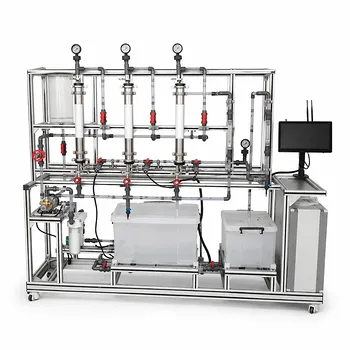
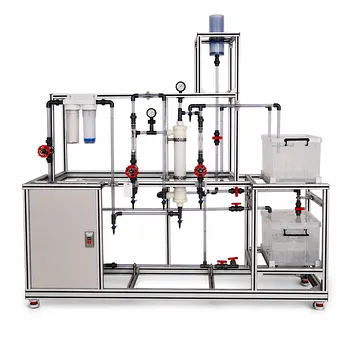
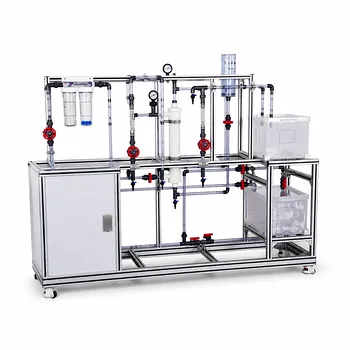
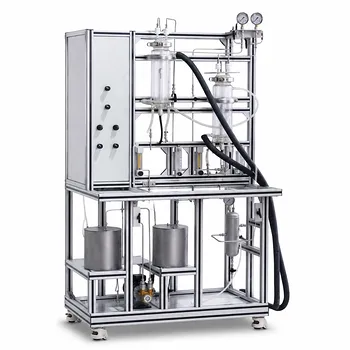
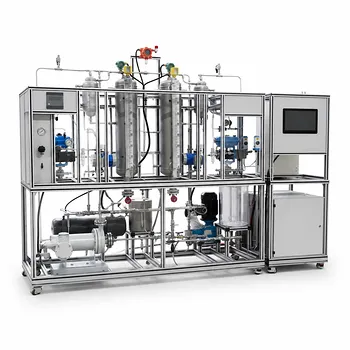
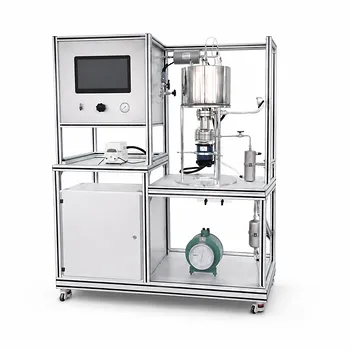
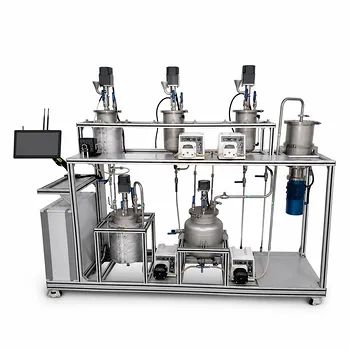
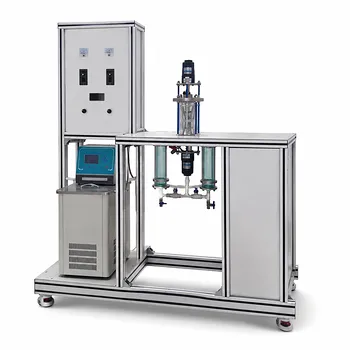
Achieving precise bioprocess data requires high-fidelity sampling and robust, reliable equipment. LABPARK designs and manufactures premium Educational and Vocational Unit Operations Pilot Plants tailored for chemical engineering, bioprocess & biotech, and environmental & water treatment.
We empower universities, research institutes, and enterprises to:
- Train with Industry-Standard Systems: Provide students and researchers with hands-on experience in controlling membrane fouling, maintaining sterility, and managing real-world pilot-scale operations.
- Ensure Data Integrity: Utilize bioreactor setups designed to protect culture viability and eliminate sampling bias.
- Scale Up Confidently: Build reliable models with precise, representative data from robust pilot systems.
Ready to upgrade your laboratory or training facility? Contact us today to discuss your pilot plant needs and discover how LABPARK can customize the perfect solution for your institution.
Related Products
- Multifunctional Membrane Separation Educational Pilot Plant with Ultrafiltration, Nanofiltration, Reverse Osmosis
- Ultrafiltration Membrane Separation Educational Pilot Plant
- Multi-Functional Membrane Separation Educational Pilot Plant for Unit Operations Lab
- Hollow Fiber Ultrafiltration Membrane Separation Educational Pilot Plant
- Multi Functional Membrane Crystallization Educational Unit Operations Pilot Plant
People Also Ask
- How do PEI, PVDF, and PSU membranes compare in pilot plants? Find the best fit.
- Pervaporation vs. Vapor Permeation: Handling Suspended Solids in Membrane Pilot Plants
- What are the trade-offs of polymer vs inorganic membranes in teaching pilot plants? Key laboratory comparison.
- How can operators optimize operating conditions and cleaning protocols in membrane separation pilot plants to mitigate fouling?
- What are the advantages of membrane separation in pilot plants? Efficient Organic Vapor Recovery