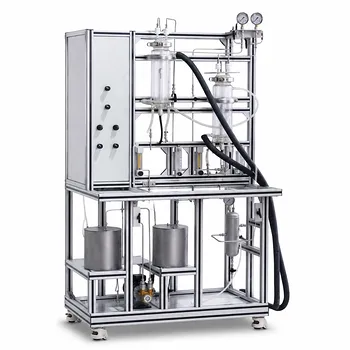
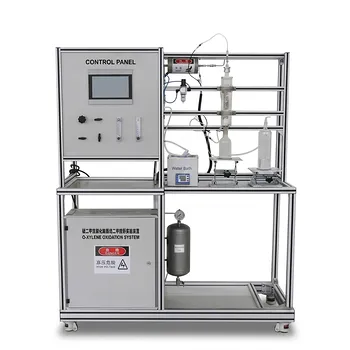
Photochemical reactions are not simply heat-driven; they are photon-driven. In a pilot-scale photochemical reactor, the local volumetric rate of energy absorption (LVREA) is a critical parameter because it directly determines the rate of the light-activated initiation step. This single parameter quantifies the number of photons absorbed per unit volume and time, dictating local reaction rates, quantum yield, and ultimately the reactor’s performance. Evaluating it is the only way to move from an empirical black-box to a predictable, scalable unit operation.
The LVREA acts as the true kinetic driver in photochemistry, bridging the radiation field and mass balance. Without it, a reactor’s behavior cannot be reliably modeled, optimized, or scaled—making it the central variable that separates a research curiosity from an engineered process.
The Unique Role of Light in Driving Reactions
Why Temperature Is Not Enough
In thermal reactors, reaction rates are governed by concentration and temperature. Hotter means faster, and modeling follows well-established Arrhenius kinetics.
Photochemical reactors break that paradigm. The activation energy is supplied by photons, not heat. The primary rate of the initiation step becomes directly proportional to the LVREA, not to the bulk temperature. This shifts the entire design logic from heat transfer to light transfer.
The LVREA as the Kinetic Master Switch
The LVREA (often expressed in einstein/cm³·s) tells you exactly how much radiant energy is being absorbed at every point in the reactor.
When you know the local absorption rate, you can directly calculate the local reaction rate for photon-triggered steps. This connects the optical design of the reactor (lamp placement, wall material, reflector geometry) to the chemical outcome. Without it, you are guessing whether a change in yield came from better mixing or from a dark spot near the lamp sleeve.
From a Desktop to a Pilot Plant: Why Local Measurement Matters
The Trap of Averaged Values
A benchtop reactor might be small enough that a single, averaged radiation flux is acceptable. A pilot plant never is.
Pilot-scale vessels have significant optical thickness gradients. Radiation decays exponentially from the lamp, and that decay depends on the local concentration of absorbing species. A volume-averaged energy absorption hides the dramatic rate differences between a brightly lit near-wall zone and a nearly dark reactor core. You would misjudge conversion, selectivity, and even safety limits.
Enabling Scale-Up with Confidence
The primary reason a pilot plant exists is to gather data for larger units. Evaluating the LVREA allows you to decouple geometry from intrinsic kinetics.
Once you can model the true, local reaction rate that is independent of a particular vessel’s light distribution, you can predict performance in a completely different reactor shape. You achieve the photochemical equivalent of knowing the intrinsic activation energy in a thermal reaction—only then can you scale without costly trial and error.
Optimizing Source Positioning and Power
LVREA maps reveal exactly where photons are being productively absorbed—and where they are simply being wasted as heat or transmitted out of the vessel.
These maps enable rational decisions: moving the lamp closer to a region of high reactant concentration, switching from a central immersion well to multiple external lamp arrays, or adjusting lamp power to avoid over-illuminating zones where the reaction is already mass-transfer-limited. Every photon has a cost, and the LVREA is your tool for maximizing quantum yield and electrical efficiency.
The Hidden Complexity: Coupling Light and Chemistry
Why LVREA Is So Difficult to Evaluate
The LVREA is not a simple measurement. The attenuation coefficient that governs how light is absorbed depends on the concentration of the absorbing species, which itself changes as the reaction proceeds.
This creates a tight mathematical coupling: you cannot solve the radiation balance without knowing the concentration field, and you cannot solve the mass balance without knowing the radiation field. In a non-ideal pilot reactor, this often demands iterative computational models that challenge even advanced researchers.
Data Requirements for a Complete Evaluation
To systematically evaluate the LVREA, you must gather a specific set of experimental data:
- Radiation source data: The lamp’s power consumption, spectral power distribution, and precise geometry.
- Reactor physical characteristics: Dimensions, wall material transmission spectrum (quartz vs. borosilicate glass), and allowable temperature/pressure ranges.
- Optical properties of the fluid: The absorption spectra of all reactants, products, solvents, and any inert compounds across the lamp’s emission range.
- Kinetic pathway details: The microkinetic steps, particularly the primary quantum yield of the initiation step, and any dark propagation or termination steps.
- Reflector characteristics: Geometry and spectral reflectivity, if external reflectors are used.
Collecting this data transforms the pilot plant from a demonstration piece into a rigorous research instrument capable of delivering performance models.
Understanding the Trade-offs: When to Simplify
The Cost of Rigor vs. the Value of Simplicity
Evaluating the full, coupled LVREA can be so computationally demanding that it stalls progress.
Three research-proven operational strategies can decouple the radiation field from the mass balance, dramatically reducing evaluation complexity:
- Perfectly mixed reactor operation: Stirring eliminates stable concentration gradients, making the attenuation coefficient spatially uniform. The LVREA then becomes solely a function of the reactor’s optical geometry, not the evolving concentration field.
- Photosensitized reactions: Using a sensitizer (like benzophenone in liquid phase) that absorbs light but is not consumed maintains a constant absorber concentration. The reaction progress no longer feeds back into the radiation attenuation, breaking the coupling loop.
- Black body (strongly absorbing) reactor configuration: When the medium is so optically thick that all photons are absorbed in a thin film near the lamp, the absorption can be modeled as a boundary condition on the lamp surface. This removes the need to resolve the volume’s radiation profile.
These simplifications trade some physical fidelity for practical, teachable models—an acceptable sacrifice in educational and early-stage research settings where speed and clarity matter.
The Pitfall of Ignoring Photoreactivity of Products
One subtle trap: even if the reactant is the intended light absorber, reaction products may also absorb at the same wavelengths.
If their absorption is significant and not accounted for, the LVREA profile will shift in ways your kinetic model does not predict. You might attribute yield decline to a side reaction when it is simply an inner-filter effect robbing the initiation step of photons. Always screen product absorption spectra early in pilot studies.
How to Apply This to Your Pilot Plant Project
Your evaluation strategy should be tailored to your primary research goal. Not every pilot study needs a full computational photon-tracking model.
- If your primary focus is fundamental kinetic studies: Invest in measuring the full LVREA distribution. You need the local, not volume-averaged, rate to extract the true quantum yield and intrinsic kinetics that will hold for any reactor geometry.
- If your primary focus is process scale-up: Use the LVREA to build a dimensionless or multi-zone model. Confirm that your chosen simplification—perfect mixing, sensitizer, or black body approximation—still preserves the critical balance between light delivery and chemical conversion at the larger scale.
- If your primary focus is teaching or rapid process screening: Employ an operational simplification like a perfectly mixed vessel with a non-consumed sensitizer. This makes the LVREA tractable for hand calculations or simple spreadsheet models, allowing students and engineers to quickly see how lamp power and reactor size affect performance without drowning in numerical methods.
The local volumetric rate of energy absorption is the fulcrum on which every photochemical reactor design balances—once you measure or reliably model it, you can pivot from guesswork to genuine chemical engineering.
Summary Table:
| Operational Strategy | Mechanism | Practical Benefit |
|---|---|---|
| Perfect Mixing | Eliminates concentration gradients | Simplifies geometry-based modeling |
| Photosensitizers | Maintains constant absorber concentration | Decouples light absorption from reaction progress |
| Black Body Config | Absorbs all photons in a thin film near the source | Removes volume-based radiation profile calculations |
Elevate Your Unit Operations with LABPARK
Whether you are scaling up complex photochemical processes or teaching fundamental kinetics, LABPARK is here to support your goals. We provide state-of-the-art Educational and Vocational Unit Operations Pilot Plants across chemical engineering, bioprocess & biotech, and environmental & water treatment.
Tailored specifically for universities, research institutes, and enterprises, our advanced pilot plants ensure precise control over critical parameters like LVREA for accurate, reproducible, and scalable results.
Ready to upgrade your laboratory and research capabilities? Contact us today to request a quote or consultation!
Related Products
- Photocatalytic Membrane Separation and Degradation Unit Operations Pilot Plant
- O-Xylene Oxidation to Phthalic Anhydride Educational Unit Operations Pilot Plant
- Tubular Reactor Flow Characteristics Determination Educational Unit Operations Pilot Plant
- Residence Time Distribution and Reactor Flow Characteristics Determination Educational Pilot Plant
- Fixed-Bed Chemical Reaction and Gas Dust Tar Removal Unit Operations Pilot Plant
People Also Ask
- What are the key differences in membrane configurations? Choose the Right Unit Operations Pilot Plant
- How Do Pervaporation, Vapor, and Gas Permeation Differ in Pilot Plants? Key Comparison
- What are the structural & performance trade-offs of flat-sheet, spiral-wound, & hollow-fiber membrane modules?
- How do PEI, PVDF, and PSU membranes compare in pilot plants? Find the best fit.
- Pervaporation vs. Vapor Permeation: Handling Suspended Solids in Membrane Pilot Plants