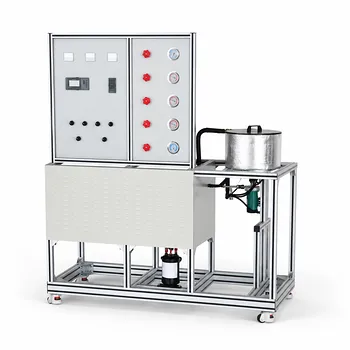
Uranyl oxalate photodecomposition is a classical chemical actinometer that allows engineers to directly measure the local volumetric rate of energy absorption (LVREA) in photoreactor pilot plants. By flowing a uranyl oxalate solution through the reactor, irradiating it, and measuring the fraction of oxalic acid that decomposes at the exit, one calculates the radiation field actually absorbed by the fluid—without needing to model lamp emission or light distribution. This conversion is rigorously proportional to the LVREA and independent of competing reaction pathways, making it a robust standard for radiation efficiency.
Quantifying how much light a flowing reaction mixture truly absorbs is a core challenge in scaling photochemical processes. Uranyl oxalate actinometry solves this by tying a simple chemical conversion measurement to the volumetric energy uptake, turning an abstract photon field into a concrete, flow-dependent number.
Why a Chemical Actinometer Matters for Pilot-Scale Photoreactors
Before you can optimize a photoreactor, you need to know how the light energy distributes inside the reactor volume.
The Hidden Variable in Photochemical Scale-Up
Lamp power ratings and incident intensity measurements tell you only what leaves the source, not what the fluid actually receives. Reflection, scattering, and absorption by reactor walls distort the local light field. A pilot plant that “sees” 100 W of lamp output may deliver a dramatically lower effective dose to the reacting fluid.
From Photon Flux to a Measurable Chemical Change
A chemical actinometer replaces photon-counting hardware with a well-characterized photochemical reaction. Its decomposition quantum yield is known and constant. The extent of reaction becomes a direct proxy for the total number of useful photons absorbed.
How Uranyl Oxalate Translates Light Absorption into a Measurable Signal
The uranyl oxalate system is chosen because its photochemistry is exceptionally clean and its response is linear over a wide range of conditions.
The Photodecomposition Step
When uranyl oxalate absorbs UV light (typically around 300–400 nm), the excited uranyl ion transfers energy to the oxalate ligand. Oxalate decomposes into carbon dioxide, carbon monoxide, and formic acid, while the uranyl ion returns to its original state. Water may also participate, producing small amounts of other products. The net reaction consumes oxalic acid without permanently altering the uranyl catalyst.
Invariance of the Overall Decomposition Rate
Crucially, the global rate of oxalic acid disappearance is directly proportional to the LVREA and does not depend on which specific photochemical pathways dominate. Even if the product distribution shifts slightly with conditions, the disappearance of oxalic acid tracks the absorbed photon flux faithfully. This makes the raw conversion measurement a reliable actinometric signal.
Linking Exit Conversion to Volumetric Energy Absorption
In a continuous-flow pilot reactor, the solution enters with a known inlet oxalic acid concentration and leaves with a lower concentration. The conversion per pass, combined with the known residence time distribution and the quantum yield of oxalate decomposition, yields the average LVREA integrated along the fluid path. By varying the flow rate, you can map how the absorbed energy changes with residence time—a direct measure of the reactor’s radiation efficiency.
Practical Implementation in a Pilot Plant Experiment
Using uranyl oxalate actinometry requires careful solution preparation, safe handling, and precise analytical quantification.
Preparing the Actinometer Solution
Uranyl nitrate and oxalic acid are dissolved in water at controlled concentrations, often with a slight excess of oxalic acid to ensure the uranyl ion is fully complexed. The solution is protected from light before it enters the reactor to avoid pre-decomposition.
Running the Continuous-Flow Experiment
The solution is pumped through the photoreactor at a known, steady flow rate while the lamps are operated at a fixed electrical power. After the reactor reaches a photostationary state, samples are taken at the outlet. Because the uranyl ion acts as a catalyst, the concentration of uranyl remains constant and can serve as an internal standard.
Measuring Oxalic Acid Concentration
A simple titration with potassium permanganate or a spectrophotometric method quantifies the remaining oxalic acid. The difference between inlet and outlet concentration gives the amount decomposed, which is then converted to the absorbed photon dose using the well-established quantum efficiency.
Understanding the Trade-Offs and Limitations
No actinometer is universal, and uranyl oxalate brings specific constraints that must be weighed against its benefits.
Radiological and Environmental Handling
Uranyl salts are classified as depleted uranium and possess low specific radioactivity, but they are still chemically toxic heavy metals. A pilot plant using this method must implement proper containment, waste collection, and disposal procedures. In many jurisdictions, this requires licensing or special safety protocols that may discourage routine use.
Wavelength Range and Reactor Geometry
The actinometer absorbs primarily in the UV-A and UV-B region. For reactors employing mostly visible-light photocatalysts, uranyl oxalate will drastically over- or underestimate the true photon absorption unless corrected. Additionally, in reactors with large optical density gradients, the assumption of uniform LVREA across the sampling zone must be verified.
Sensitivity to Oxygen and Impurities
Although the decomposition rate is robust against reaction path changes, dissolved oxygen can partially re-oxidize formic acid back to CO₂ and interfere with the mass balance if the titration does not discriminate. Deoxygenation or careful calibration eliminates this issue, but it adds an experimental step.
Time and Analytical Precision
Titration-based oxalate quantification demands consistent technique to achieve the accuracy needed for LVREA back-calculation. Small errors in concentration measurement translate directly into errors in the computed energy absorption, especially at low conversions.
Making the Right Choice for Your Reactor Optimization
Uranyl oxalate actinometry is a powerful tool, but its value depends on your specific constraints and what you need to learn.
- If your primary focus is absolute calibration of UV photoreactors: Uranyl oxalate provides a direct, wavelength-integrated measurement of the fluid’s true energy uptake that is traceable to fundamental photochemical constants.
- If your primary focus is rapid, low-hazard screening of lamp configurations: Consider alternative physical radiometry or a visible‑light actinometer (e.g., ferrioxalate) unless your process operates strictly in the UV and you can manage the uranium safely.
- If your primary focus is comparing reactor designs in an academic or R&D setting: The long history and well-documented quantum yield make uranyl oxalate an excellent reference standard that allows you to benchmark your results against decades of published data.
- If your primary focus is integrating actinometry into a teaching reactor for chemical engineering students: The simplicity of the chemical change and the direct tie to LVREA offer a uniquely instructive bridge between photochemistry theory and reactor engineering practice.
When you align the actinometer’s capabilities with your real measurement goal, a uranyl oxalate experiment transforms from a historical curiosity into a precise engineering diagnostic.
Summary Table:
| Aspect | Uranyl Oxalate Actinometry Details |
|---|---|
| Primary Function | Measures Local Volumetric Rate of Energy Absorption (LVREA) |
| Wavelength Range | UV-A and UV-B regions (300–400 nm) |
| Key Advantage | Direct conversion tracking independent of reaction pathway shifts |
| Key Limitation | Handling regulations for toxic uranyl salts and safety protocols |
Scale Up Your Research with LABPARK Pilot Plants
Achieving precise radiation efficiency and scaling chemical processes requires reliable, high-performance equipment. LABPARK provides premium Educational and Vocational Unit Operations Pilot Plants in chemical engineering, bioprocess & biotech, and environmental & water treatment. Designed specifically for universities, research institutes, and enterprises, our systems bridge the gap between process theory and hands-on industrial engineering.
Ready to optimize your photoreactor configurations? Contact us today to request a quote or consultation!
Related Products
- Multi Functional Catalytic Reaction and Reactor Evaluation Educational Unit Operations Pilot Plant
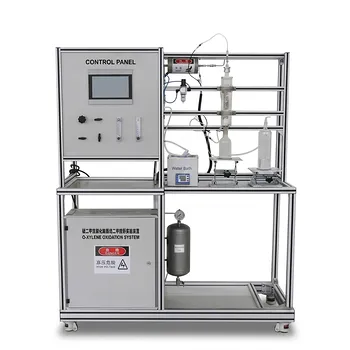
- O-Xylene Oxidation to Phthalic Anhydride Educational Unit Operations Pilot Plant
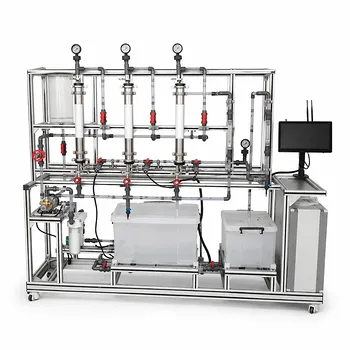
- Multifunctional Membrane Separation Educational Pilot Plant with Ultrafiltration, Nanofiltration, Reverse Osmosis
- Photocatalytic Membrane Separation and Degradation Unit Operations Pilot Plant
- Ion Exchange Water Purification Educational Pilot Plant for Engineering Unit Operations
People Also Ask
- What reaction engineering principles are shown in a catalytic reactor pilot plant? SO2 Oxidation Guide
- Why is FTIR integration in catalytic pilot plants important? Real-Time Student Insights
- How to analyze active metal distribution & identify catalyst poisoning in pilot plants? Expert Diagnostic Guide
- How do temperature limits and WHSV influence catalytic reactor optimization? Scale-Up Guide
- Why is XPS Critical for Catalytic Reactor Pilot Plants? Optimize Catalyst Performance