Temperature and residence time are your primary levers—but they come with hard limits.
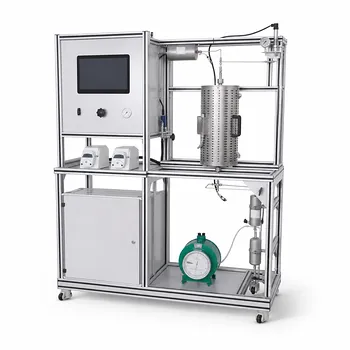
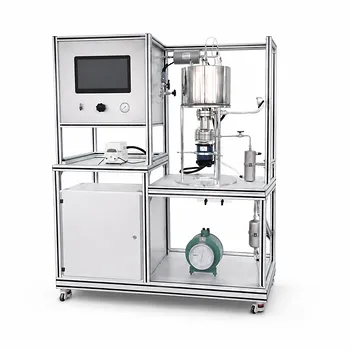
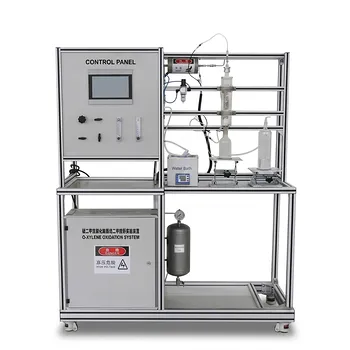
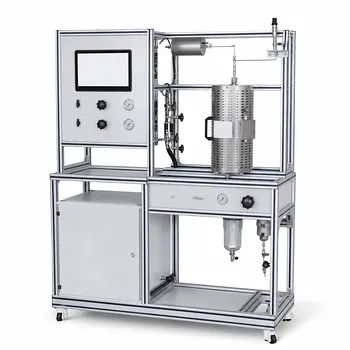
In a catalytic reactor unit operations pilot plant, the maximum allowable reaction temperature and the Weight Hourly Space Velocity (WHSV) directly shape every optimization decision. The temperature ceiling prevents thermal catalyst deactivation and runaway reactions, while WHSV—the mass flow of feed per mass of catalyst—controls residence time and, therefore, conversion and throughput. Pilot engineers must continuously balance yield, catalyst lifetime, safety, and equipment cost within a shrinking operating window as the catalyst ages.
The true art of pilot-plant optimization is not about running at the highest temperature or lowest space velocity. It is about finding the economic sweet spot where product quality, throughput, catalyst replacement intervals, and reactor metallurgy converge—and doing so with the data needed to scale up confidently.
How Temperature Limits Define the Optimization Space
Thermal Deactivation and Catalyst Lifetime
Every catalyst has a maximum safe operating temperature. Exceed it, and you trigger sintering (loss of active surface area) or accelerated coking.
These deactivation mechanisms permanently reduce activity, forcing earlier catalyst replacement and increasing operating cost.
Pilot plants therefore treat the temperature ceiling as a hard constraint—not just for today’s run, but to preserve long-term catalyst performance.
Safety and Runaway Prevention
In exothermic reactions, an unchecked temperature rise can lead to thermal runaway and pose serious safety hazards.
The maximum allowable temperature is also a process safety boundary. Pilot reactor control systems are designed to keep the bed temperature well within safe limits, even during upsets.
Adjusting Temperature to Compensate for Catalyst Deactivation
As catalyst activity naturally declines, conversion drops. The primary response is to gradually raise the operating temperature.
This temperature ramping maintains a target conversion rate without immediately replacing the catalyst.
Pilot teams generate temperature‑versus‑time curves that map the catalyst’s aging trajectory—these curves inform the economic decision of when to shut down for a catalyst change.
WHSV: The Throughput vs. Conversion Balancing Act
Residence Time and Conversion
WHSV is inversely proportional to residence time. Lowering the WHSV increases the time reactants spend in the catalyst bed, which generally boosts conversion.
For example, in CO preferential oxidation (PROX) pilot studies, a decrease to 13 h⁻¹ WHSV drove CO conversion up to 91% and CO₂ selectivity to 90%.
However, this gain comes at a direct cost: the mass of feed processed per hour falls, reducing overall throughput.
Selectivity Trade‑offs
Space velocity doesn’t just change conversion—it often alters the product distribution.
Pilot data from catalytic oxidation units show that increasing WHSV from 10 to 60 h⁻¹ can slash conversion and target product selectivity from over 80% to under 40%.
Optimizing the WHSV therefore means finding the window where selectivity toward the desired product remains economically acceptable—not simply chasing maximum conversion.
Generating Kinetic Data for Scale‑Up
By systematically varying WHSV while holding temperature constant, pilot plants isolate the effect of residence time.
This generates the conversion‑versus‑WHSV curve that is essential for reactor sizing and scaling up.
When combined with temperature variations, the data set builds a robust kinetic model that accounts for both reaction rate and mass transfer limitations.
The Interplay Between Temperature, WHSV, and Equipment Design
Material Constraints: ASME Codes and Alloy Costs
Higher temperatures accelerate kinetics, allowing you to increase space velocity and shrink the reactor volume.
In steam reforming, for instance, raising the temperature from 650°C to 850°C over a precious-metal catalyst enabled a jump in Gas Hourly Space Velocity from 83,000 to 257,000 h⁻¹, cutting the required core volume from 12.7 to 4.1 liters.
But temperature is bounded by pressure‑vessel design codes. Using a higher‑grade alloy lifts the limit—say from (T_A) to (T_B)—yet fabricating a reactor from that alloy can dramatically increase capital cost. Pilot‑plant evaluations often treat alloy selection as a discrete decision variable in a mixed‑integer non‑linear programming (MINLP) optimization, balancing alloy expense against the savings from a smaller reactor.
Optimizing Reactor Volume and Bed Configuration
With a fixed temperature limit, packing more catalyst (lowering WHSV) increases conversion but raises pressure drop and catalyst inventory.
Alternatively, using smaller catalyst particles improves internal mass transfer and catalyst utilization at high temperatures, but also increases bed pressure drop.
Pilot reactors deliberately test different particle sizes and space velocities to quantify the trade‑off between diffusion resistance and hydraulic losses—a critical input when designing industrial‑scale units.
Rate‑Limiting Step Diagnostics
Temperature and WHSV together serve as diagnostic tools for uncovering the rate‑limiting step.
If the surface reaction is the bottleneck, raising the temperature produces a dramatic increase in conversion, while changing WHSV does little.
If external diffusion limits the rate, increasing the gas velocity (higher WHSV) becomes the effective lever. Pilot plants use this sensitivity analysis to design the catalyst and flow distribution for scale‑up.
Understanding the Trade‑offs
Catalyst Deactivation vs. Reactor Downtime
Running at a lower temperature preserves catalyst life but reduces throughput. Ramping temperature as the catalyst ages delays shutdowns, but the inevitable deactivation trajectory means eventually you must weigh the cost of lost production against the cost of a catalyst change.
High Conversion vs. Throughput
A low WHSV maximizes conversion and selectivity, but at the expense of feed rate. Raising WHSV boosts throughput, yet may push conversion below the minimum acceptable threshold. The optimum is the point where the value of additional product exactly offsets the value of additional feed that remains unreacted.
Miniaturization vs. Pressure Drop
High‑temperature operation and small catalyst particles enable compact reactors, but at the cost of higher pressure drop. In pilot plants, this translates to increased compressor power and potential bed attrition, which must be accounted for in the economic model.
Making the Right Choice for Your Pilot Plant Goals
Once you understand how temperature limits and WHSV interact, your optimization strategy depends on what you are trying to prove or achieve in the pilot unit.
- If your primary focus is maximizing catalyst lifetime: Map the temperature‑versus‑time deactivation curve at a conservative baseline WHSV. Use this to establish the economic catalyst replacement interval that minimizes total cost.
- If your primary focus is throughput‑driven production: Operate at the highest temperature your materials and safety system allow, then find the WHSV that keeps conversion just above the target floor. Validate that selectivity remains within specification.
- If your primary focus is generating scale‑up kinetics: Run a matrix of temperature and WHSV points, include at least two catalyst particle sizes, and confirm the rate‑limiting step. This dataset will underpin a predictive reactor model.
- If your primary focus is cost‑optimized reactor design: Treat temperature as a design variable bounded by alloy choice, then solve for the combination of reactor volume and WHSV that minimizes total capital plus operating expense—including catalyst change‑out costs.
By treating temperature limits and space velocity not as fixed numbers but as interconnected decision variables, your pilot plant becomes the definitive source of the trade-off data that de‑risks the jump from the lab to the plant floor.
Summary Table:
| Parameter | Key Constraints & Trade-offs | Impact on Process Optimization |
|---|---|---|
| Temperature Limit | Thermal deactivation (sintering/coking), safety (runaway risks), and reactor alloy costs. | Ramping temperature compensates for catalyst aging; higher temperatures allow smaller reactor volumes. |
| WHSV (Space Velocity) | Inverse to residence time. Higher WHSV boosts throughput but reduces conversion and selectivity. | Used to generate conversion-vs-WHSV curves for reactor sizing and rate-limiting step diagnostics. |
Optimize Your Process Scale-Up with LABPARK
Bridging the gap between lab-scale research and industrial production requires precise, reliable equipment. LABPARK provides state-of-the-art Educational and Vocational Unit Operations Pilot Plants in chemical engineering, bioprocess & biotech, and environmental & water treatment for universities, research institutes, and enterprises.
Our advanced pilot systems are engineered to help you map reaction kinetics, test temperature limits, and optimize WHSV with absolute precision.
Ready to elevate your research, training, or process development? Contact LABPARK today to discover how our pilot plants can de-risk your scale-up journey!
Related Products
- Multi Functional Catalytic Reaction and Reactor Evaluation Educational Unit Operations Pilot Plant
- Methanol Synthesis and Catalyst Performance Evaluation Educational Unit Operations Pilot Plant
- Fixed-Bed Chemical Reaction and Gas Dust Tar Removal Unit Operations Pilot Plant
- Crude Benzene Hydrogenation Educational Unit Operations Pilot Plant
- Ethylbenzene Dehydrogenation Educational Unit Operations Pilot Plant
People Also Ask
- What reaction engineering principles are shown in a catalytic reactor pilot plant? SO2 Oxidation Guide
- Why is FTIR integration in catalytic pilot plants important? Real-Time Student Insights
- How to analyze active metal distribution & identify catalyst poisoning in pilot plants? Expert Diagnostic Guide
- What operational insights do catalyst pellet concentration profiles provide? Optimize Reactor Yield
- Why is XPS Critical for Catalytic Reactor Pilot Plants? Optimize Catalyst Performance