Trace chromium determination at the parts-per-billion level hinges on a carefully choreographed sequence of concentration, oxidation-state control, and selective color development.
In pilot plants validating heavy metal removal, the target concentrations are often too low for direct measurement—typically 0.03 to 0.15 ppm. The solution is to pre-concentrate the chromium by co-precipitating chromic hydroxide with an aluminum hydroxide carrier, after first ensuring all chromium is in the trivalent state with hydroxylamine. The precipitate is then filtered, dissolved, oxidized back to hexavalent chromium with permanganate, masked with phosphate to eliminate iron interference, and finally reacted with diphenylcarbazide. The resulting colored complex is measured colorimetrically at 540 nm against a calibration curve.
The core principle is that direct detection of trace chromium in pilot-plant wastewater is impossible without a concentration step. Co-precipitation with aluminum hydroxide acts as a chemical “net,” gathering the chromium into a manageable solid that can then be dissolved and converted into a highly specific, measurable form—while systematically removing interferences from iron, oil, and high-salt matrices.
Why Chromium Speciation Drives the Analytical Strategy
Before you can measure chromium, you must appreciate the two faces it shows in water. Trivalent chromium, Cr(III), is a non-toxic, essential trace element that readily forms insoluble hydroxides. Hexavalent chromium, Cr(VI), is highly toxic and highly soluble, and it will not precipitate as a hydroxide under normal treatment conditions. This is exactly why environmental pilot plants include a chemical reduction unit—to convert toxic Cr(VI) into the stable, less harmful Cr(III) before precipitation and filtration. The analytical method must, therefore, be capable of detecting total chromium or assessing the efficiency of that reduction step, and it must handle both oxidation states seamlessly.
The Pre-Concentration and Determination Protocol
Why a Carrier Precipitate Is Non-Negotiable
At the trace levels present in treated effluent or brine—often a few tens of parts per billion—the mass of chromium hydroxide that would form is far too small to be filtered or handled quantitatively. The solution is to introduce a much larger quantity of aluminum salt, which precipitates as aluminum hydroxide at a mildly basic pH. Chromic hydroxide co-precipitates with this bulky carrier, allowing you to capture essentially all of the chromium in a solid that can be filtered and re-dissolved. This pre-concentration step boosts the effective concentration by a factor that brings it well within the detection range of the colorimetric finish.
Ensuring the Right Oxidation State Before Precipitation
For the co-precipitation to be quantitative, every chromium atom must be in the trivalent state. The method therefore adds hydroxylamine to the sample beforehand. Hydroxylamine is a mild reducing agent that selectively converts any residual Cr(VI) to Cr(III) without affecting the aluminum carrier or the subsequent chemistry. Only after this reduction do you adjust the pH to precipitate the mixed hydroxides.
Managing Oily Samples and Organic Interferences
Wastewater from industrial sources often contains oil, grease, or suspended organic material. These substances coat precipitates, foul filters, and can react with the oxidizing agent or the color-forming reagent, leading to erratic results. The supplementary guidelines are clear: if the sample is oily, remove the oil first. A simple extraction with hexane or ethyl ether, or a thorough filtration through a fine filter, eliminates this interference before the pre-concentration step begins.
Filtering, Dissolving, and the Critical Oxidation to Cr(VI)
Once the mixed aluminum‑chromium hydroxide precipitate is filtered, it is dissolved in a dilute acid. At this point the chromium is still Cr(III), but the diphenylcarbazide reagent reacts only with the hexavalent form. Therefore, you oxidize the dissolved Cr(III) to Cr(VI) with potassium permanganate in an acidic medium. This step is delicate: the permanganate must be added in a controlled fashion, and any excess must be destroyed afterwards—typically with sodium azide or by boiling—because residual permanganate will itself bleach the colored complex you are about to form.
Taming Iron Interference with Phosphate
Iron is a near-universal constituent of wastewater and would otherwise produce a strong false-positive color with diphenylcarbazide. The method introduces a phosphate buffer (sodium dihydrogen phosphate) after the oxidation. The phosphate sequesters iron as a stable, non-reactive phosphate complex, rendering it invisible to the color-developing reagent without affecting the chromium reaction.
The Diphenylcarbazide Reaction and Photometric Finish
The final step is straightforward and highly specific. Diphenylcarbazide is added to the solution, where it reacts with Cr(VI) to form a vivid red-violet complex. The absorbance of this complex is measured at 540 nm—the wavelength of its maximum light absorption—using a spectrophotometer. The transmittance or absorbance reading is then compared to a calibration curve prepared from standards of known chromium concentration. The result is a precise determination of the original chromium level after accounting for the pre-concentration factor.
Understanding the Trade-offs
Sensitivity at the Cost of Complexity
This method is exquisitely sensitive, reliably quantifying chromium at levels that would otherwise be invisible. However, it is a multi-step, wet-chemical procedure that demands meticulous technique. Any loss during filtration, incomplete dissolution, or error in the pre-concentration factor directly propagates into the final result. In a pilot-plant environment, where time and operator attention are finite, the protocol requires a skilled hand and careful documentation.
Matrix Interference Is Never Completely Eliminated
The phosphate buffer masks iron effectively, but other cations like molybdenum or mercury, if present in high concentrations, can also react with diphenylcarbazide. The supplementary references note that high extraneous salt concentrations (e.g., in brine) reinforce the need for the aluminum hydroxide co-precipitation step, because it effectively separates chromium from the bulk of the salt matrix. For samples with large amounts of oil, skipping the extraction step guarantees a contaminated precipitate and meaningless data.
Oxidation-State Fidelity Demands Precise Control
The hydroxylamine reduction must be complete, but adding an enormous excess could interfere with the later permanganate oxidation. Similarly, the permanganate oxidation itself must go to completion, yet excess oxidant must be quantitatively destroyed. These are not merely suggestions—they are the routine “failure points” that turn a robust reference method into a source of frustration if not respected.
Making the Right Choice for Your Pilot-Plant Work
- If your primary focus is validating sub-ppm chromium removal in clear, low-salt effluents: The co-precipitation colorimetric method is your most reliable tool, provided you routinely include iron‑masking and carefully calibrate each batch.
- If your samples contain oil, grease, or high organic load: Always pre-extract with hexane or ethyl ether before starting the concentration step. Skipping this will generate false positives and degrade precision.
- If you are analyzing high-salinity brines or waters with extreme salt matrices: Lean on the aluminum hydroxide co-precipitation as a clean-up step that simultaneously concentrates the chromium and rejects the bulk of the interfering salts. Verify that the carrier precipitation is quantitative under your specific matrix conditions.
- If your pilot plant is designed around Cr(VI) reduction: Use the hydroxylamine reduction step before precipitation to capture both oxidation states, and confirm that the oxidation back to Cr(VI) with permanganate is complete and excess oxidant removed. This ensures your total chromium reading reflects true removal efficiency.
An accurate chromium determination at these trace levels is what turns a pilot plant from a series of unit operations into a demonstrably effective treatment process—and mastering this analytical sequence puts that proof firmly in your hands.
Summary Table:
| Process Step | Purpose | Key Reagent / Condition |
|---|---|---|
| 1. Reduction | Converts all chromium to Cr(III) | Hydroxylamine |
| 2. Co-Precipitation | Concentrates trace Cr(III) with carrier | Aluminum hydroxide (basic pH) |
| 3. Dissolution & Oxidation | Re-dissolves and converts Cr(III) to Cr(VI) | Permanganate (acidic medium) |
| 4. Iron Masking | Eliminates iron interference | Phosphate buffer |
| 5. Determination | Spectrophotometric measurement at 540 nm | Diphenylcarbazide |
Optimize Your Water Treatment Pilot Studies with LABPARK
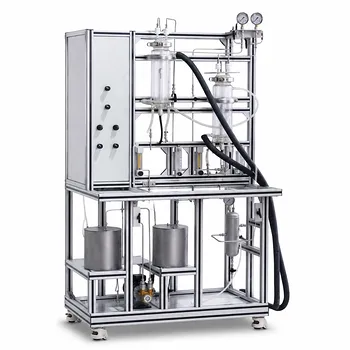
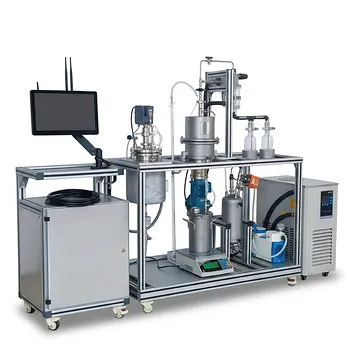
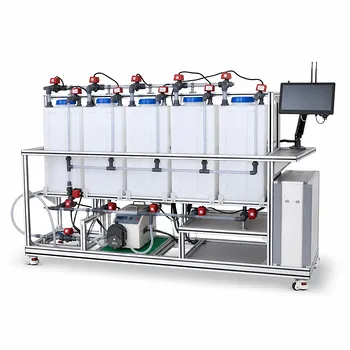
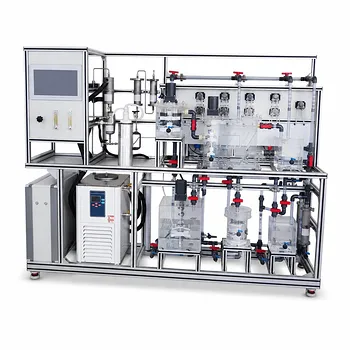
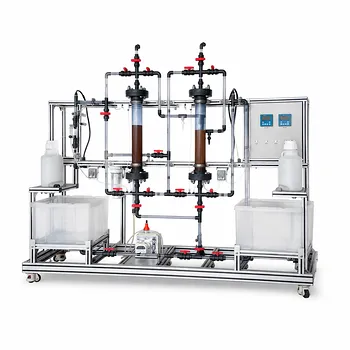
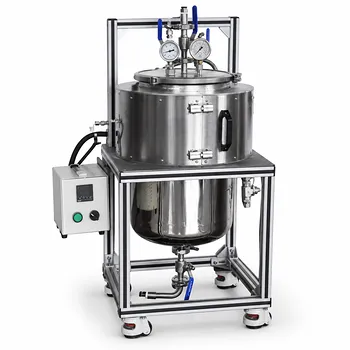
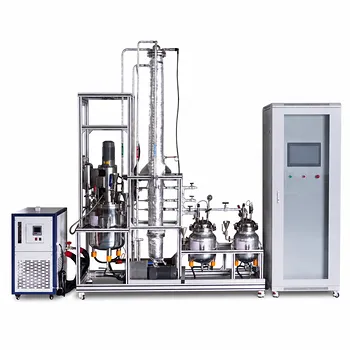
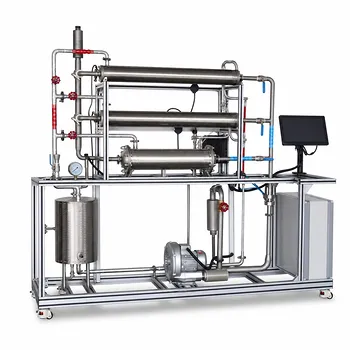
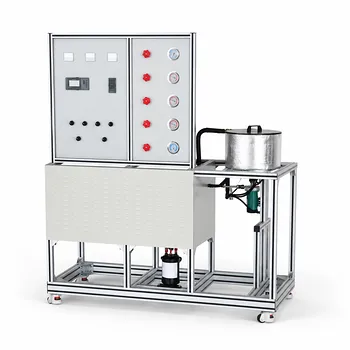
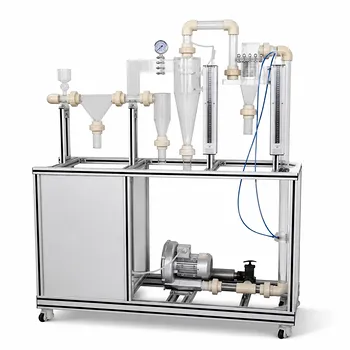
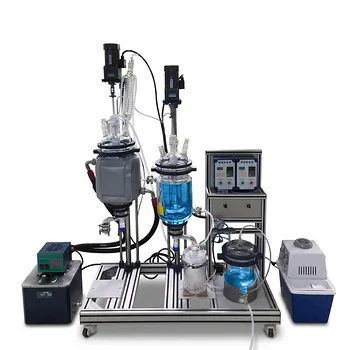
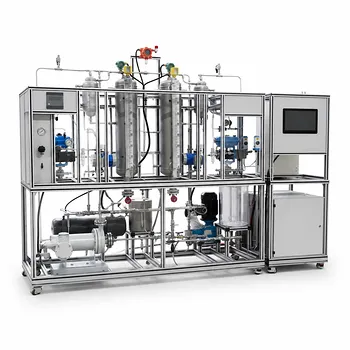
Validating heavy metal removal requires precise unit operations and accurate analytical setups. LABPARK provides state-of-the-art Educational and Vocational Unit Operations Pilot Plants in chemical engineering, bioprocess & biotech, and environmental & water treatment. Designed specifically for universities, research institutes, and enterprises, our systems enable reliable hands-on learning and advanced research.
Ready to upgrade your research and training capabilities? Contact us today to discover the ideal pilot plant solution for your facility!
Related Products
- Photocatalytic Membrane Separation and Degradation Unit Operations Pilot Plant
- Constant Pressure Filtration Educational Unit Operations Pilot Plant
- Multifunctional Membrane Separation Educational Pilot Plant with Ultrafiltration, Nanofiltration, Reverse Osmosis
- Supercritical High-Gravity Flash Evaporation Educational Unit Operations Pilot Plant
- Electrochemical Water Treatment Educational Unit Operations Pilot Plant
People Also Ask
- What are the key differences in membrane configurations? Choose the Right Unit Operations Pilot Plant
- How Do Pervaporation, Vapor, and Gas Permeation Differ in Pilot Plants? Key Comparison
- What are the structural & performance trade-offs of flat-sheet, spiral-wound, & hollow-fiber membrane modules?
- Pervaporation vs. Vapor Permeation: Handling Suspended Solids in Membrane Pilot Plants
- How do PEI, PVDF, and PSU membranes compare in pilot plants? Find the best fit.