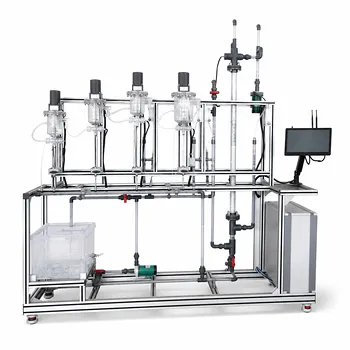
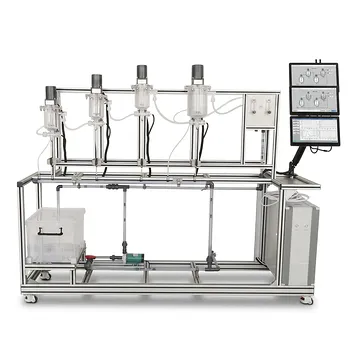
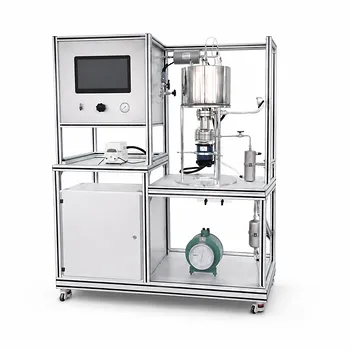
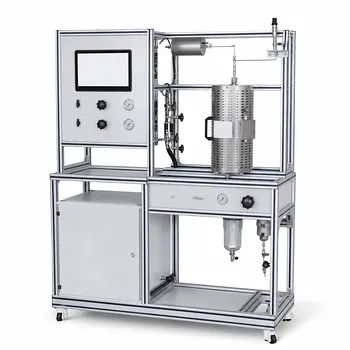
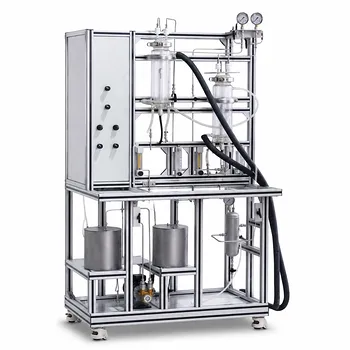
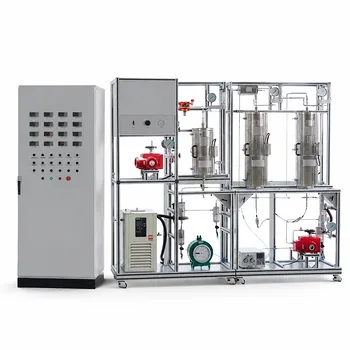
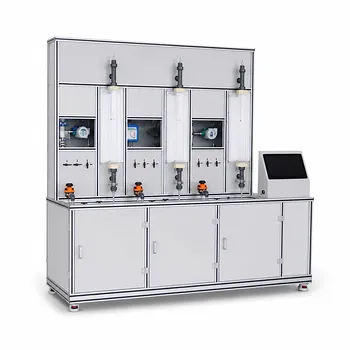
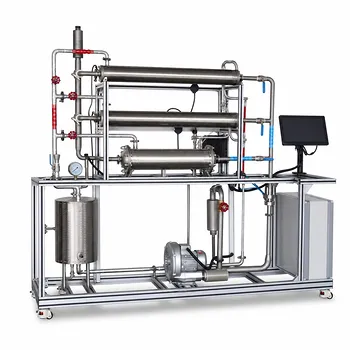
Temperature is the most powerful knob you can turn in a chemical reaction. Increasing the temperature increases the fraction of molecules that possess enough energy to overcome the activation energy barrier, and it increases the frequency of collisions. This combination causes the reaction rate to rise exponentially. In chemical engineering educational pilot plant reactors, precise thermal control is critical because it transforms a chaotic, qualitative observation into a quantitative scientific instrument. It allows students to accurately determine rate constants, measure activation energies, observe equilibrium shifts, and safely practice the scale‑up protocols they will use in industry.
The core insight: Temperature does not just speed up a reaction—it reshapes kinetics, thermodynamics, and safety boundaries. In a pilot plant reactor, precise control is what separates a useful engineering experiment from a dangerous, uninterpretable one. It is the foundation for teaching data‑driven process design.
How Temperature Governs Reaction Rates
The Kinetic Imperative: Activation Energy and Collisions
For a reaction to occur, molecules must collide with sufficient energy and proper orientation. Only those collisions where the energy equals or exceeds the activation energy (Eₐ) can lead to products. Raising the temperature does two things:
- It increases the average kinetic energy of the molecules, so a far larger fraction surpasses the Eₐ threshold.
- It increases the collision frequency, simply because molecules move faster.
Both effects amplify the reaction rate, but the exponential jump in the number of molecules that are “energetically qualified” is the dominant factor.
The Arrhenius Equation: Quantifying the Temperature Dependence
This relationship is captured by the Arrhenius equation, often expressed as ( \lg k = A + B/T ). The reaction rate constant (k) is extremely sensitive to temperature because it depends on an exponential term, ( e^{-E_a/RT} ). A small temperature increase can easily double or triple a reaction rate.
In an educational pilot plant equipped with a jacketed reactor and a PID temperature controller, students can step the temperature by a few degrees and measure the resulting change in conversion. Plotting (\ln k) vs. (1/T) yields the activation energy directly, turning a theoretical concept into tangible, reproducible data.
Beyond Rate: Temperature’s Role in Equilibrium and Selectivity
Temperature’s influence extends far beyond kinetics. For reversible reactions, the equilibrium constant (K) can shift dramatically. For instance, in a gas‑phase dissociation reaction the equilibrium constant might go from 0.36 at 373 K to 3.2 at 423 K. A poorly controlled reactor will wander across this equilibrium landscape, making yield predictions impossible.
Temperature also governs selectivity in complex networks. In multi‑step fuel processing—steam reforming, water‑gas shift, and preferential oxidation—each stage has a distinct thermal sweet spot where kinetics and thermodynamics are balanced. Without precise control, side reactions dominate and the desired product stream is lost.
Why Precise Control Matters in an Educational Pilot Plant
Turning the Reactor into a Quantitative Laboratory
An educational pilot plant reactor is not just a large‑scale test tube. It is a platform for generating reliable process data. When thermal control is precise, students can:
- Accurately determine reaction rate constants and activation energies.
- Measure equilibrium constants at different temperatures to calculate Gibbs free energy changes (ΔG°) and validate thermodynamic models.
- Isolate the effect of temperature from other variables like pressure and concentration.
This transforms the pilot plant from a demonstration into a research‑grade tool, teaching students to think like plant designers.
Teaching Thermal Safety and Runaway Prevention
Exothermic reactions can enter thermal runaway if the heat generation rate exceeds the reactor’s cooling capacity. In an educational setting, this is the single most important safety lesson. A jacketed reactor with a high‑precision PID controller and thermowell allows students to observe how a runaway develops and how active cooling, agitator speed, and quench systems can arrest it.
They learn to read temperature‑time profiles and calculate parameters like the time‑to‑maximum‑rate (TMR). These are the same safety analyses required in industry for process hazard assessments.
Bridging Theory and Industrial Scale‑Up
Industrial reactors rarely operate isothermally by chance. They rely on cascaded temperature zones, gradient control, and feedback loops. When a student experiments with a temperature‑programmed reaction in a pilot plant, they are directly practicing the scale‑up methodology used in plants. They see how a temperature trajectory can steer a reaction to completion while avoiding hot spots, degradation, or thermodynamic back‑conversion.
For advanced concepts like microchannel reactors for fuel processing, a pilot plant with zoned heaters and rapid‑response sensors lets students replicate a temperature gradient along the reactor length—demonstrating the trade‑off between fast kinetics at high temperature and favorable equilibrium at low temperature.
Understanding the Trade‑offs and Common Pitfalls
The Risk of Oversimplification: Ignoring Equilibrium Effects
A common mistake is to assume that “hotter is always better.” For exothermic reactions, a higher temperature can increase the rate but shift the equilibrium to favor reactants. If the temperature is not controlled, the reactor may achieve rapid initial conversion but leave substantial unreacted material, reducing overall yield. Educational plants must highlight this interplay, not hide it.
Measurement Artifacts: The Hidden Impact on Conductivity and pH
Temperature fluctuations do not only affect the reaction—they alter the instruments themselves. For example, the conductivity of a weak electrolyte solution rises by about 1.9 % for every 1 K increase simply because ion mobility increases. If a student tries to calculate ionization constants without using a thermostatic bath, the data will be severely skewed. Similarly, temperature‑driven pH shifts can trigger unwanted side reactions like metal hydroxide precipitation in complexation studies.
Precise thermal control eliminates this background noise, ensuring that measured changes truly reflect chemical transformation.
Multi‑Step Reactions Demand Gradient Control
When a pilot plant is used for sequential reactions—such as fuel processing stages—a single set‑point temperature is often inadequate. The first step may require high‑temperature kinetics, while a later step requires a lower temperature to push equilibrium. Without active gradient control, the reaction cannot be optimized. Educational units that lack zoned heating or microchannel heat exchange lose the ability to teach this critical design principle.
How to Apply This to Your Educational Pilot Plant
Your choice of temperature control strategy should match the learning objectives. Here are the practical guidelines.
- If your primary focus is teaching fundamental kinetics: Ensure the reactor has a jacketed heating/cooling system and a PID controller. This enables textbook Arrhenius experiments where temperature is the only variable changed.
- If your primary focus is process safety: Select a reactor with a fast‑response thermowell and an automated cooling loop. Run exothermic reactions to demonstrate runaway and safe operating limits.
- If your primary focus is thermodynamic validation: Add the ability to hold multiple precise temperature steps for long durations. Use this to measure equilibrium constants and calculate ΔG° and ΔH° values.
- If your primary focus is multi‑step process integration: Choose a system with zoned temperature control (e.g., microchannel or three‑stage CSTR cascades). This teaches the temperature‑gradient management that defines modern reaction engineering.
Precision in temperature control is precision in learning. With it, your pilot plant reactor does not just illustrate a concept—it builds the competence and confidence students need to design, operate, and troubleshoot real‑world chemical processes.
Summary Table:
| Key Aspect | Kinetic/Thermodynamic Influence | Educational Importance |
|---|---|---|
| Kinetics (Arrhenius) | Exponential rate increase via activation energy threshold | Accurate calculation of rate constants and activation energy |
| Equilibrium | Reversible reaction shift based on thermal properties | Validation of thermodynamic models and Gibbs free energy |
| Thermal Safety | Risk of exothermic runaway reactions | Training in hazard assessment, TMR analysis, and emergency cooling |
| Selectivity & Scale-Up | Minimizes side reactions and controls product yield | Practical experience with industrial gradient and cascade controls |
Elevate Your Chemical Engineering Lab with LABPARK
To bridge the gap between classroom theory and real-world industrial practice, precise equipment is essential. LABPARK offers premium Educational and Vocational Unit Operations Pilot Plants in chemical engineering, bioprocess & biotech, and environmental & water treatment.
Tailored for universities, research institutes, and enterprises, our pilot plants are equipped with high-precision thermal control systems to ensure safe, reproducible, and industry-relevant training.
Ready to upgrade your lab's capabilities? Contact us today to find the perfect pilot plant system for your institution!
Related Products
- Multi Functional Catalytic Reaction and Reactor Evaluation Educational Unit Operations Pilot Plant
- Residence Time Distribution and Reactor Flow Characteristics Determination Educational Pilot Plant
- Tubular Reactor Flow Characteristics Determination Educational Unit Operations Pilot Plant
- 100L Continuous Loop Hydrogenation Educational Unit Operations Pilot Plant
- Multi-Stage Stirred Tanks in Series Residence Time Distribution and Mixing Performance Determination Educational Pilot Plant
People Also Ask
- What reaction engineering principles are shown in a catalytic reactor pilot plant? SO2 Oxidation Guide
- Why is FTIR integration in catalytic pilot plants important? Real-Time Student Insights
- How to analyze active metal distribution & identify catalyst poisoning in pilot plants? Expert Diagnostic Guide
- How do temperature limits and WHSV influence catalytic reactor optimization? Scale-Up Guide
- Why is XPS Critical for Catalytic Reactor Pilot Plants? Optimize Catalyst Performance