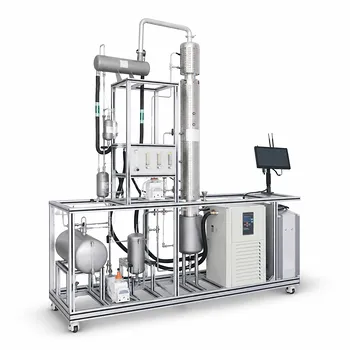
Knowledge Chemical Engineering Education How does a multi-column PSA pilot plant demonstrate continuous purification? A hands-on engineering guide.
Author avatar

Tech Team · LABPARK

Updated 1 month ago

How does a multi-column PSA pilot plant demonstrate continuous purification? A hands-on engineering guide.


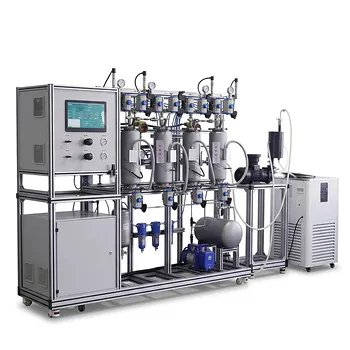
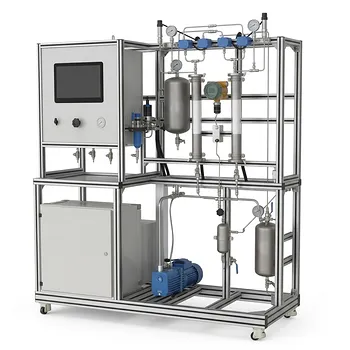
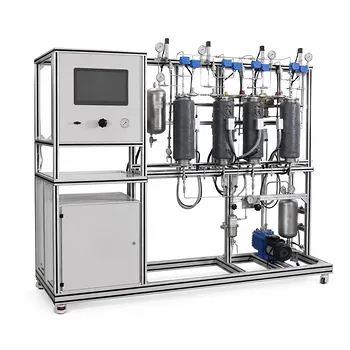
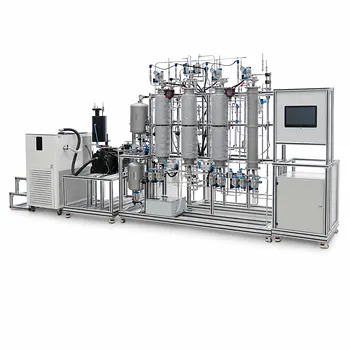
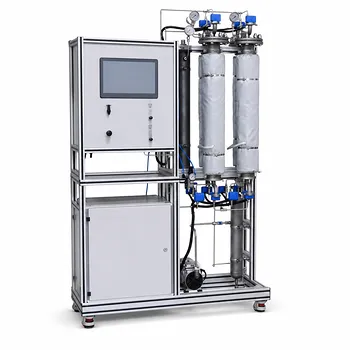
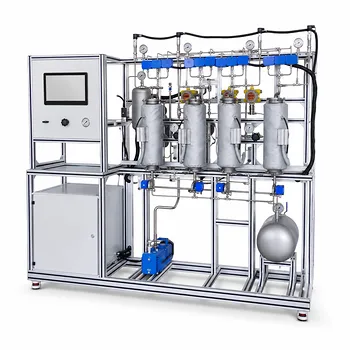
The answer lies in a clever orchestration of parallel adsorber beds. In a multi-column Pressure Swing Adsorption (PSA) pilot plant, while one column is actively purifying gas at high pressure, the others are cycling through regeneration steps—depressurization, pressure equalization, purging, and repressurization. By precisely synchronizing these staggered, batch-like operations, the system delivers a steady, quasi-continuous stream of high-purity gas. This hands-on demonstration makes the leap from isolated batch adsorption to uninterrupted industrial purification tangible for chemical engineering students.

PSA units show that batch adsorption can be transformed into continuous gas purification by running multiple columns in parallel, each at a different stage of the pressure‑swing cycle. The staggered timing off‑loads the regeneration burden, so product flow never stops—and the pilot plant becomes a live textbook of process automation, mass transfer dynamics, and scale‑up logic.

The Mechanics of a Multi‑Column PSA Cycle

The Four Fundamental Steps of a PSA Bed

Each adsorber column experiences a repeating sequence of four transient steps.
At high pressure (10–40 bar), the bed adsorbs impurities—CO₂, moisture, or light hydrocarbons—leaving a purified product stream.
The bed then depressurizes, releasing the adsorbed species as waste.
A pressure equalization step shares gas with a low‑pressure bed, recovering energy and preparing for regeneration.
Finally, a low‑pressure purge strips residual contaminants before the bed is repressurized and brought back online.

Synchronizing Beds for a Seamless Product Flow

The magic happens when four or more columns are operated in a rotating sequence.
At any given moment, at least one bed is in the adsorption step, delivering product.
The other beds are staggered such that as soon as the online bed is saturated, a freshly regenerated column takes over—all within a matter of seconds.
This precisely timed handover is what transforms a series of batch adsorption events into a quasi‑continuous purification process.

How the Pilot Plant Bridges Batch and Continuous Worlds

Making Transient Steps Visible

A batch adsorption column inevitably stops product flow during regeneration.
In the multi‑column pilot plant, students can watch the pressure, flow, and concentration profiles shift from column to column in real time.
Data from differential pressure transmitters, mass flow controllers, and online gas analyzers reveal the dynamic interplay between the high‑pressure adsorption front and the low‑pressure desorption tail.

The Driving Force: Pressure‑Dependent Adsorption Equilibria

PSA exploits the reversible nature of physical adsorption.
On solid adsorbents like zeolites, the equilibrium loading rises with pressure—much like Henry’s Law governs gas‑liquid absorption, but here the isotherm (e.g., Langmuir) dictates the capacity.
At high pressure, the driving force pushes impurities onto the adsorbent; at low pressure, the equilibrium shifts, and the impurities desorb.
Cycling the pressure is the lever that allows the same bed to be used over and over—exactly what students control in the pilot plant.

Column Design That Supports Continuous‑Like Performance

Achieving a stable mass transfer zone is critical for smooth product flow.
The pilot plant teaches that the column’s height‑to‑diameter ratio should be at least 3:1 or 4:1 to avoid channeling and to maintain a sharp adsorption front.
Top and bottom headers, packed with inert ceramic balls on support grids, distribute the gas evenly across the full cross‑section.
This uniform flow ensures that breakthrough curves are representative and that the transition from batch to continuous flow is not sabotaged by maldistribution.

Process Automation: The Invisible Glue

The multi‑column sequence demands split‑second valve actuation.
Programmable logic controllers (PLCs) and pneumatic or solenoid valves execute the cycle logic, enabling students to modify cycle times, pressure levels, and equalization steps.
This hands‑on automation experience reinforces that the transition from batch to continuous is as much a control engineering challenge as a chemical engineering one.

Understanding the Trade‑offs

Energy and Capital Costs vs. Product Continuity

A single batch adsorber is simple and cheap, but product flow stops during regeneration.
Adding more columns closes the flow gap, yet each extra vessel increases capital cost and the complexity of the valve manifold.
The pilot plant allows students to quantify this trade‑off: how many beds are enough to meet a given product‑purity spec without excessive hardware?

Purity‑Recovery Dilemma

Short cycle times maximize throughput but may let the mass transfer zone break through earlier, reducing purity.
Longer adsorption steps improve purity but require more thorough regeneration, which can waste high‑purity product gas used as purge.
The pilot plant’s flexibility lets students adjust the purge‑to‑feed ratio and pressure equalization timing to see how recovery and purity tug against each other.

Mechanical and Adsorbent Limitations

Frequent pressure swings stress valves and adsorbent particles.
Real‑world adsorbents can slowly degrade, and fines can clog downstream filters.
By running extended experiments, students learn that a successful “continuous” PSA process must also contend with maintenance cycles and adsorbent replacement—challenges that batch setups rarely reveal.

How to Apply This to Your Learning Objectives

The multi‑column PSA pilot plant is a versatile teaching platform. Focus your experiments based on what you most need to master:

  • If your primary focus is understanding cyclic process dynamics: Map out the pressure and concentration profiles during every step; use the data to verify that staggered bed operation eliminates dead‑time in product flow.
  • If your primary focus is process automation and control: Experiment with cycle‑time variations, equalization strategies, and valve logic. The pilot plant shows how integrated control transforms a collection of batch adsorbers into a unified continuous process.
  • If your primary focus is scale‑up and industrial relevance: Study the impact of column aspect ratio, header design, and adsorbent choice on mass transfer zone stability. These are the same design levers engineers use to scale a single‑bed pilot into a full‑scale hydrogen or nitrogen purification plant.

With every pressure swing, the pilot plant proves that continuity isn’t about eliminating batch steps—it’s about orchestrating them so brilliantly that the product stream never falters.

Summary Table:

Process Phase / Component Cycle Function & Mechanics Key Educational Insight
Adsorption Phase High-pressure (10–40 bar) impurity retention Visualizes the movement of the mass transfer zone
Regeneration Phase Depressurization & low-pressure purging Demonstrates pressure-dependent adsorption equilibria
Parallel Cycling Staggered operation of multiple columns Shows how batch steps transition to continuous flow
PLC Automation Precise valve actuation and timing sequence Integrates process control with chemical engineering principles

Bring Industrial-Scale Gas Purification to Your Lab

LABPARK provides state-of-the-art Educational and Vocational Unit Operations Pilot Plants in chemical engineering, bioprocess & biotech, and environmental & water treatment for universities, research institutes, and enterprises. Empower your students and researchers to master complex dynamic processes like multi-column PSA with our hands-on, PLC-controlled training systems.

Contact LABPARK today to customize your pilot plant and elevate your curriculum!

Related Products

People Also Ask

Related Products

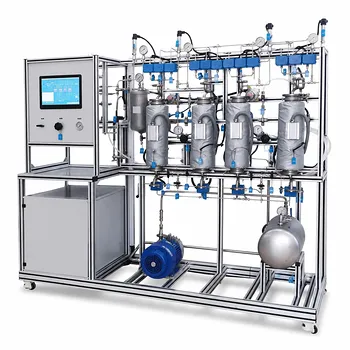
Multi-Component Gas Pressure Swing Adsorption Pilot Plant for Unit Operations Education

Multi-Component Gas Pressure Swing Adsorption Pilot Plant for Unit Operations Education

Multi-component gas pressure swing adsorption pilot plant designed for unit operations education. Features four-tower configuration, IoT touchscreen control, dual regeneration, and real-time breakthrough curve analysis for engineering training with safety interlocks and mobile frame simulates industrial PSA processes.

Pressure Swing Adsorption Educational Unit Operations Pilot Plant

Pressure Swing Adsorption Educational Unit Operations Pilot Plant

Integrated bench-scale pressure swing adsorption pilot plant for hands-on teaching of gas-solid separation, mass transfer, and process optimization using nitrogen-oxygen model, featuring dual-column design, industrial touchscreen control, digital assessment suite, and customizable hardware and software configurations for educational laboratories.

Bench Scale Carbon Dioxide Capture Educational Unit Operations Pilot Plant

Bench Scale Carbon Dioxide Capture Educational Unit Operations Pilot Plant

This bench-scale educational pilot plant simulates industrial CO₂ separation using a multi-tower adsorption system for hands-on engineering training. Students achieve ≥90% CO₂ purity while studying pressure swing adsorption, desorption kinetics, and process control in gas purification experiments.

Educational Pressure Swing Adsorption Ethylene Capture Unit Operations Pilot Plant

Educational Pressure Swing Adsorption Ethylene Capture Unit Operations Pilot Plant

Advanced educational pilot plant for pressure swing adsorption ethylene capture provides comprehensive hands-on training in industrial gas separation processes, featuring an eight-column PSA system, real-time data acquisition, and fully customizable design for chemical engineering unit operations laboratories and research.

Fixed-Bed Chemical Reaction and Gas Dust Tar Removal Unit Operations Pilot Plant

Fixed-Bed Chemical Reaction and Gas Dust Tar Removal Unit Operations Pilot Plant

Integrated educational pilot plant for studying catalytic gas-solid reactions and downstream gas purification. Features dual fixed-bed reactor, three-stage heating, and touchscreen control for hands-on engineering training. Ideal for chemical and environmental engineering curricula.

Low Concentration Carbon Dioxide Capture Pressure Swing Adsorption Educational Pilot Plant

Low Concentration Carbon Dioxide Capture Pressure Swing Adsorption Educational Pilot Plant

Low-concentration CO2 capture pilot plant using Pressure Swing Adsorption for engineering education. Students gain practical experience in breakthrough curve measurement, adsorption dynamics, and variable analysis in a hands-on lab setting. Ideal for unit operations, mass transfer, and chemical engineering labs.

Packed Bed Absorption Educational Unit Operations Pilot Plant

Packed Bed Absorption Educational Unit Operations Pilot Plant

Study gas-liquid absorption, pressure drop, flooding, and mass transfer coefficients with this pilot plant. Transparent packed column, industrial touchscreen, real-time sensor data, automated analysis. Investigate two-phase flow, loading points, column efficiency. Comprehensive data logging and assessment software included.

Multimodal Absorption and Desorption Pilot Plant for Unit Operations Training

Multimodal Absorption and Desorption Pilot Plant for Unit Operations Training

Multimodal absorption and desorption pilot plant for higher education labs. Bridges theory and industrial practice with transparent packed columns, three operational modes (real-material, simulated, semi-physical), and SCADA control. Students explore mass transfer, column hydraulics, and process control. Customizable.

Absorption and Desorption Educational Unit Operations Pilot Plant

Absorption and Desorption Educational Unit Operations Pilot Plant

Dual packed column absorption and desorption pilot plant for chemical engineering education, offering real-time mass transfer coefficient measurement, durable mobile frame, industrial touch-screen interface, and customizable design for varied laboratory curricula, enabling hands-on study of gas absorption and stripping.

Bench Scale Dual Column Gas Separation and Capture Educational Pilot Plant

Bench Scale Dual Column Gas Separation and Capture Educational Pilot Plant

This dual-column educational pilot plant provides hands-on teaching of gas adsorption, separation, and capture processes. It features stainless steel columns, regeneration up to 400°C, and a 15.6-inch touchscreen PLC for TSA and PSA studies in chemical engineering curricula, process simulation.

Multi-Modal Distillation Unit Operations Training Pilot Plant

Multi-Modal Distillation Unit Operations Training Pilot Plant

Multi-modal distillation pilot plant for practical unit operations training in chemical engineering education. Features real, analog, and semi-physical simulation modes, industrial construction, customizable for university labs. Hands-on fractionation columns, SCADA control, safety systems. Includes sight glasses, sampling ports, closed-loop recycling.

Dual-Mode Gas Absorption and Desorption Unit Operations Training Pilot Plant

Dual-Mode Gas Absorption and Desorption Unit Operations Training Pilot Plant

Industrial-scale pilot plant for gas absorption and desorption training in chemical engineering. Features dual-mode operation with real and simulated materials, transparent columns for flow visualization, and customizable design. Supports independent or combined loops for hands-on unit operations experiments.

Carbon Dioxide Adsorption and Capture Educational Unit Operations Pilot Plant

Carbon Dioxide Adsorption and Capture Educational Unit Operations Pilot Plant

Advanced laboratory pilot plant for teaching carbon dioxide adsorption and capture unit operations. Features four-tower adsorption system with 400°C heating jackets, high-precision CO2 and O2 sensors, and 15.6-inch touchscreen with wireless data logging. Ideal for chemical engineering education.

Carbon Dioxide Capture and Utilization Educational Pilot Plant for Unit Operations

Carbon Dioxide Capture and Utilization Educational Pilot Plant for Unit Operations

Educational pilot plant for carbon dioxide capture and utilization featuring four-tower adsorption, high-temperature regeneration, precise CO2 analysis, modern touchscreen control, real-time data, and robust construction for hands-on unit operations training in university labs with curriculum alignment and safe operation.

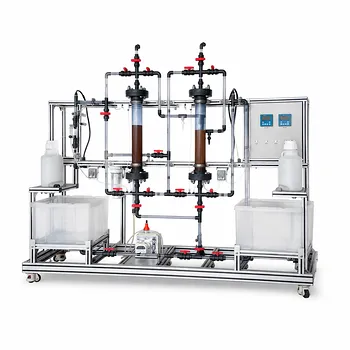
Ion Exchange Water Purification Educational Pilot Plant for Engineering Unit Operations

Ion Exchange Water Purification Educational Pilot Plant for Engineering Unit Operations

This bench-scale ion exchange pilot plant trains engineering students in water purification. Dual transparent columns simulate industrial softening and demineralization. Students observe fluid dynamics, perform resin regeneration, and analyze breakthrough curves. The corrosion-resistant frame ensures durability in unit operations experiments.

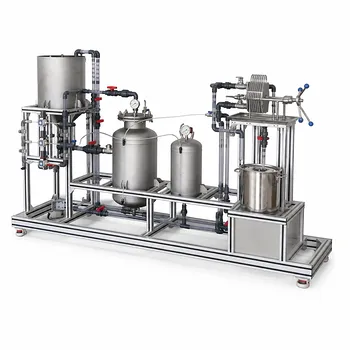
Constant Pressure Filtration Educational Unit Operations Pilot Plant

Constant Pressure Filtration Educational Unit Operations Pilot Plant

Hands-on educational pilot plant for constant pressure filtration. Classic plate and frame filter press allows students to study kinetics, determine specific cake resistance, perform cake washing and evaluate washing rates. Ideal for chemical engineering curriculum. Mobile, customizable, safety-compliant design.

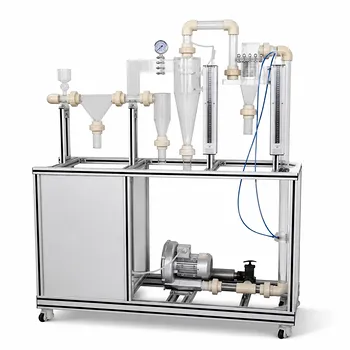
Gas-Solid Heterogeneous Separation Demonstration Educational Unit Operations Pilot Plant

Gas-Solid Heterogeneous Separation Demonstration Educational Unit Operations Pilot Plant

Comprehensive visual transparent gas-solid separation pilot plant for chemical engineering labs. Demonstrates gravity settling inertial settling cyclone and bag filter technologies. Enables real-time analysis of fluid-particle mechanics pressure drop and collection efficiency. Ideal for undergraduate unit operations courses.

Dual-Mode Rectification Pilot Plant for Practical Training Unit Operations

Dual-Mode Rectification Pilot Plant for Practical Training Unit Operations

Industrial-scale dual-mode rectification pilot plant for chemical engineering practical training. Features real-material and simulated-material operation modes, sieve-plate column with sight glasses for visual observation of hydrodynamics, and customizable SCADA control for safe, hands-on learning of unit operations and mass transfer.

Continuous Sieve-Plate Distillation Pilot Plant for Unit Operations Laboratory Education

Continuous Sieve-Plate Distillation Pilot Plant for Unit Operations Laboratory Education

Integrated pilot-scale teaching system for continuous sieve-plate distillation studies. Visual demonstration of tray hydraulics, flexible feed positions, and automatic reflux control for hands-on unit operations education in engineering labs. Designed for higher education engineering laboratories.

Gas Phase Mixing and Residence Time Distribution Determination Educational Unit Operations Pilot Plant

Gas Phase Mixing and Residence Time Distribution Determination Educational Unit Operations Pilot Plant

Integrated lab system for gas-phase mixing and RTD determination. Supports pulse and step tracer methods with dual CSTR and PFR reactors, industrial components, and PC data logging. Provides hands-on study of non-ideal flow and reactor behavior for university students.


Leave Your Message