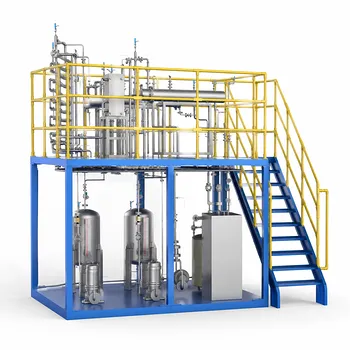
A continuous selective control system acts as a pre-programmed safety referee, constantly comparing the main process demand against a critical safety limit to prevent a catastrophic event before it can start.
It prevents flameout and explosive hazards by using a Low Selector (LS) to instantly override the normal steam pressure controller. The moment the fuel gas supply pressure drops toward an unsafe level, its dedicated controller outputs a lower signal. The LS immediately passes this lower signal to the fuel valve, throttling it down to maintain a minimum safe fuel-to-air ratio and prevent the conditions that cause flameout or fuel-rich explosive mixtures.
The core purpose of a selective control system in combustion is to solve a fundamental conflict: the process demands more fuel, but a safe operating limit forbids it. By automating the choice to prioritize the safety limit, the system transforms a potential explosion into a controlled throttling action, without ever requiring a full system shutdown.
Dissecting the Combustion Hazard: It's Not Just a Flame Out
To understand the solution, you must first appreciate the specific cascade of dangers it prevents. A low fuel pressure event is not simply a nuisance; it’s the initiating domino in a chain that leads to two distinct but equally devastating hazards.
The Flameout and Unburned Fuel Accumulation
When fuel pressure sags, the energy content flowing to the burner drops. If the airflow is not reduced at the exact same rate, the fuel-to-air mixture becomes too lean to sustain combustion. The flame physically lifts off the burner and extinguishes.
However, the fuel valve is still open. Raw, unburned fuel gas continues to flow into the hot, confined combustion chamber. This creates a volatile cloud of fuel and air that is almost certain to be within its explosive range. Any residual hot surface or spark will then ignite this accumulated mass as a confined vapor cloud explosion.
The Flashback Hazard
The opposite scenario is less intuitive but equally dangerous. If the fuel pressure drops severely, the exit velocity of the fuel at the burner nozzle can fall below the mixture’s flame speed. The flame front can then propagate backward into the burner body and fuel supply piping—a condition known as flashback. This can cause severe mechanical damage and breach the fuel line, feeding a high-pressure external fire.
The Low Selector: The Unsleeping Safety Arbiter
The primary reference correctly identifies the Low Selector (LS) as the core of this protection strategy. This is not a complex calculation; it’s a simple, unerring comparison of two signals.
The Dual-Path Architecture
The system is designed with two independent control loops that converge at the LS, which then sends its chosen output to the final fuel control valve.
- Path 1 (The Master): The Steam Pressure Controller (PIC) monitors the boiler's steam drum. Its output signal is essentially the boiler's "fuel demand"—calling for more or less fuel to meet the steam load.
- Path 2 (The Sentinel): The Fuel Gas Pressure Controller (PIC) monitors the supply pressure upstream of the control valve. Its setpoint is not a process variable but a minimum safety limit. Its output signal represents the absolute maximum safe valve position given the current supply pressure.
The Override Sequence in Action
The magic happens in the instantaneous, signal-level switch. Here is the definitive sequence:
- Normal State: Fuel supply pressure is ample. The sentinel controller sees a safe pressure and outputs a high signal (e.g., 100% demand). The master controller’s output for load regulation is lower. The low selector passes the lower, master-driven signal to the valve. The boiler operates on steam demand.
- Failure Event: Fuel supply pressure begins to fall. The sentinel controller detects this and, to stop further pressure decay, begins to reduce its output signal to close the valve.
- The Handoff: The sentinel controller’s falling output intersects and drops below the master controller’s signal. The low selector instantly switches authority. It ignores the still-high demand from the steam controller and passes the sentinel's lower, protective signal to the valve.
- Controlled Safety State: The fuel valve is throttled back, not shut. It stabilizes at a position that maintains the minimum safe pressure. The fuel-to-air ratio is preserved, keeping the flame lit and stable, albeit at a lower firing rate. The system did not trip; it self-preserved.
Understanding the Trade-offs and Pitfalls
While elegant, this "soft protection" strategy is not without its constraints. Acknowledge these to build a complete and credible mental model.
- Not a Substitute for Hard Interlocks: A selective control system manages operational deviations. It is not a replacement for the hardwired safety interlocks described in the supplementary references. If the fuel pressure continues falling past the controller’s ability to compensate, a dedicated low-fuel-pressure switch must still trigger a full safety trip and lockout.
- Controller Tuning Conflict: The sentinel controller must be tuned aggressively to react instantly to pressure drops, but not so aggressively that it causes oscillation when it takes over. Its tuning is for emergency intervention, which is fundamentally different from the master controller’s tuning for smooth process regulation.
- Uninformed Operations: An operator may see a boiler running at reduced capacity and be tempted to manually increase demand, blissfully unaware that the sentinel controller is the one holding the valve. This is why clear alarm annunciation is critical: the system must loudly announce when it has entered override mode.
Making the Right Choice for Your Educational Goal
The implementation of a selective control system in a pilot plant should match your specific pedagogical or research objective.
- If your primary focus is teaching fundamental process safety logic: Emphasize the signal comparison architecture and walk students through the handoff event described above, using trend logs to visualize the exact moment of override.
- If your primary focus is demonstrating industrial-grade control system design: Pair the selective control system with a properly configured Safety Integrity Level (SIL)-rated hardwired shutdown interlock, illustrating the layered protection concept.
- If your primary focus is operator training: Focus on the alarm system. Drills should force students to diagnose the "firing rate limited by fuel pressure" override condition, distinguishing it from a standard load change, and to take diagnostic action rather than making a hasty manual shutdown.
The most profound lesson a combustion pilot plant can impart is not just how to hold a setpoint, but how to design a system that chooses self-preservation over productivity. A correctly implemented selective control system does precisely that, serving as a silent, automatic guardian.
Summary Table:
| Component / State | Role / Condition | Signal Priority | Action & Safety Output |
|---|---|---|---|
| Steam Pressure Controller | Process Demand (Master) | High (During normal operation) | Regulates fuel valve based on steam load |
| Fuel Gas Pressure Controller | Safety Limit (Sentinel) | Low (During pressure drop) | Determines minimum safe fuel valve limit |
| Low Selector (LS) | Decision Maker | Passes the lowest input signal | Overrides demand to prevent fuel-lean or flashback hazards |
| Safety Interlocks | Ultimate Protection | Absolute fallback | Triggers full emergency shutdown and system lockout |
Enhance Process Safety & Practical Training with LABPARK
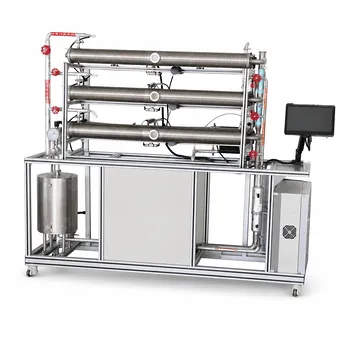
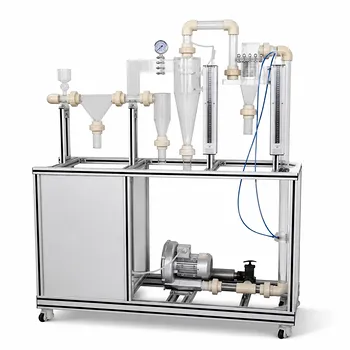
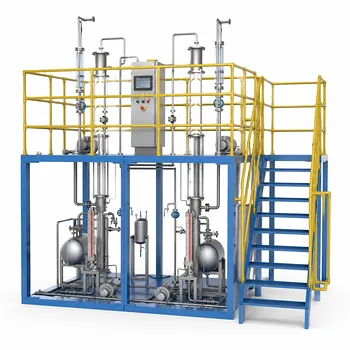
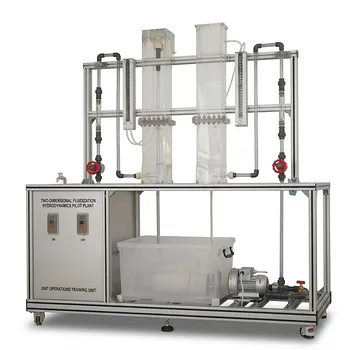
Designing safe, industry-grade environments is critical for building hands-on engineering skills. LABPARK provides high-quality Educational and Vocational Unit Operations Pilot Plants in chemical engineering, bioprocess & biotech, and environmental & water treatment for universities, research institutes, and enterprises.
Our pilot plants incorporate realistic industrial control architectures—including selective control loops and safety interlocks—giving students and operators practical, safe experience in handling operational hazards.
Contact LABPARK today to find the ideal pilot plant solution to upgrade your training facility!
Related Products
- Solid Waste Pyrolysis and Refining Educational Pilot Plant for Unit Operations
- Multi-Reactor Educational Pilot Plant for Reaction Engineering Unit Operations
- Multimodal Absorption and Desorption Pilot Plant for Unit Operations Training
- Multi-Modal Distillation Unit Operations Training Pilot Plant
- Multi Pump Fluid Transport Process Piping Unit Operations Training Pilot Plant
People Also Ask
- How do educational unit operations pilot plants bridge theory and design? Bridge the Engineering Gap
- How do educational unit operations pilot plants address safety and waste management when scaling up?
- When to transition from PID to adaptive control in pilot plants? Key process indicators.
- Why is the chemical plant startup schedule crucial? De-risk scale-up with pilot plants.
- Why Use PTFE & Hastelloy in Chemical Pilot Plants? Prevent Corrosion & Ensure Safety