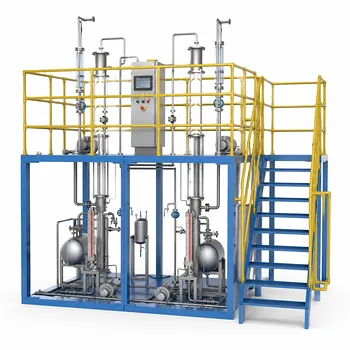
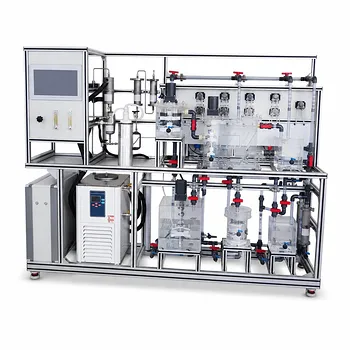
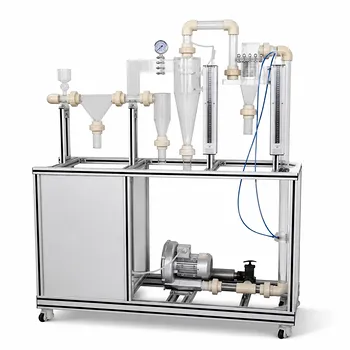
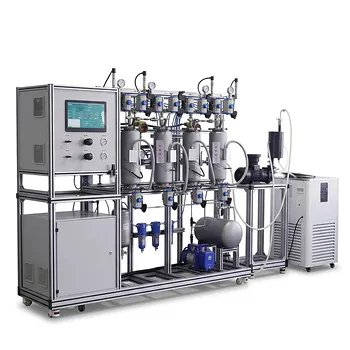
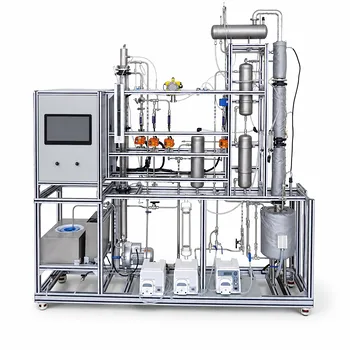
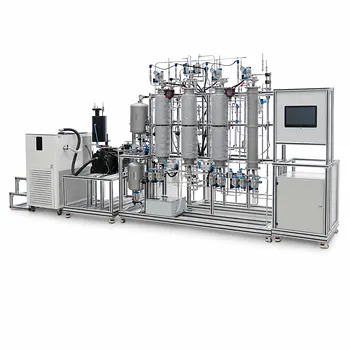
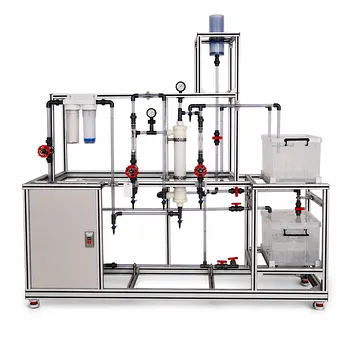
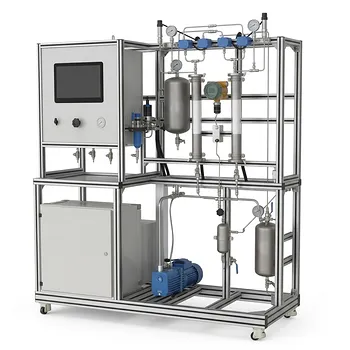
Achieving high-purity gas streams at pilot scale is a matter of strategically pairing impurity characteristics with the correct mass-transfer mechanism. Physical scrubbing dissolves undesirable components by leveraging solubility differences, while chemical scrubbing converts them into non-volatile compounds through a fast, selective reaction. When these methods are combined with careful control of contact time and flow dynamics, pilot-scale systems can meet stringent purity targets reliably and predictably.
Pilot-scale gas purification relies on two distinct scrubbing principles: physical absorption, which traps impurities through solubility, and chemical scrubbing, which irreversibly binds them via reaction. The key to high purity lies in matching the scrubbing mode to the impurity, ensuring sufficient gas–liquid contact, and selecting reagents that neither attack the target gas nor introduce new contaminants.
The Two Pillars of Gas Scrubbing
Pilot units simplify complex plant operations to measurable, controlled processes. In gas purification, every scrubbing step rests on either physical dissolution or a chemical transformation.
Physical Scrubbing: Selective Dissolution
Physical scrubbing exploits the difference in solubility or boiling point between the target gas and its impurities. The contaminated gas passes through a liquid wash medium—often water or a high-boiling organic solvent—and only the impurities dissolve into the liquid phase.
The driving force is Henry’s Law: the amount of impurity dissolved is proportional to its partial pressure in the gas. Operation at lower temperatures and higher pressures improves solubility, making the process tunable. This method works well for trapping water-soluble gases like ammonia or acetone, provided the target gas remains practically insoluble.
No chemical bonds are formed, so recovery of the wash medium is often possible through simple pressure reduction or heating. However, the ultimate purity is capped by the physical equilibrium—residual impurity partial pressure can never be reduced to zero with this approach alone.
Chemical Scrubbing: Irreversible Reaction
Chemical scrubbing raises purity by converting impurities into non-volatile salts or stable compounds. The gas stream contacts a reactive scrubbing agent—a classic example is sodium hydroxide (NaOH) solution for acidic impurities like HCl or SO₂.
The reaction must be rapid and highly selective. It must destroy the unwanted species without consuming the target gas or generating byproducts that could vaporize and recontaminate the stream. Because the reaction is effectively irreversible, the equilibrium limitation of physical scrubbing is eliminated, making it possible to drive impurity concentrations down to trace levels.
In a pilot-scale wash bottle or packed column, the scrubbing liquid becomes a chemical sink. The solute concentration in the liquid builds up over time, so monitoring pH or conductivity gives a direct read on remaining absorption capacity.
Designing Pilot-Scale Scrubbing Systems for Maximum Purity
Laboratory-scale modules serve as proving grounds for full-scale installations. They make it easy to characterize mass transfer, pressure drop, and reagent consumption under controlled conditions.
Ensuring Adequate Contact Time and Mass Transfer
Mass transfer efficiency depends on interfacial area and residence time. In a pilot system, this is often achieved with a specific tube configuration: a “long inlet, short outlet” arrangement in wash bottles forces the gas to travel through a deeper liquid column, maximizing bubble path length and contact time.
Scaling this principle up means using packed beds or bubble columns that provide large surface areas without excessive pressure drop. Pilot units allow you to test these designs at varying gas flow rates and measure the resulting impurity breakthrough curves directly.
Selecting the Right Scrubbing Agent
Chemical scrubbing demands a reagent that meets three non-negotiable criteria:
- Fast kinetics to capture impurities before they exit the contactor.
- Total selectivity to avoid reacting with the desired gas.
- No new volatile contaminants formed as reaction products.
For acidic impurities, NaOH is almost universal because it produces harmless, non-volatile salts. Pilot trials verify that the chosen reagent does not foam excessively, precipitate solids that could clog lines, or degrade materials of construction.
Configuring Flow and Capacity
A purification train run in counter-current flow—liquid entering from the top, gas rising from the bottom—provides the steepest concentration driving force and the highest purity. Pilot systems commonly use small packed columns to evaluate this arrangement.
Critically, the scrubber capacity must match the gas flow rate. If the unit is undersized, the liquid will saturate too quickly, and impurity slippage occurs. If it’s oversized, the residence time becomes excessive and the system wastes reagent and energy. Pilot data directly informs the minimum liquid-to-gas ratio required for a given outlet specification.
Understanding the Trade-offs
Blindly applying one method without considering the nature of the impurity will lead to either purity shortfalls or needless complexity. Pilot-scale work must always weigh these inherent trade-offs.
Physical vs. Chemical Scrubbing: Key Limitations
Physical scrubbing is inherently clean—no new chemicals are introduced—but it is limited by equilibrium. Removing a trace impurity that is weakly soluble requires either impractically high pressure, very low temperature, or an enormous volume of solvent. After scrubbing, a downstream polishing step is often necessary.
Chemical scrubbing annihilates the equilibrium problem, but it introduces its own set of constraints. The spent scrubbing solution must be regenerated or disposed of safely. Many chemical reagents are corrosive, and their use demands compatible wetted materials. The reaction may also be exothermic, requiring cooling in larger pilot runs.
Common Pitfalls in Pilot-Scale Operations
Short-circuiting—where gas bubbles channel through a narrow path without fully contacting the liquid—is the most common cause of performance failure. This is often misdiagnosed as insufficient reagent strength when in fact the scrubber’s internal distribution needs redesign.
Another frequent mistake is neglecting by-product volatility. If a chemical reaction produces CO₂ or another gas that escapes the liquid phase, the apparent outlet purity may still be compromised. Pilot units must include analytical sampling points after each stage to catch such issues early.
Making the Right Choice for Your Purification Goal
The configuration that works best depends on the impurity’s character, your purity target, and the acceptable operational complexity. Use pilot data to match the approach to the objective.
- If your primary focus is removing acid gases like HCl or SO₂: Prioritize chemical scrubbing with a dilute NaOH solution; the irreversible reaction drives impurity levels down to trace levels and eliminates the equilibrium ceiling.
- If your primary focus is removing water-soluble neutral compounds (e.g., acetone, ammonia): Physical scrubbing with water is often sufficient and avoids chemical handling. Operate at the lowest practical temperature and highest pressure to maximize solubility.
- If your primary focus is reaching ultrapure specifications with a mix of impurities: Combine physical and chemical stages in series. Use a physical pre-scrub to remove the bulk, then a chemical polishing step to collapse the remaining concentration to the parts-per-billion level.
- If your primary focus is minimizing reagent waste and operating cost: Size the pilot scrubber to the exact gas flow rate and monitor breakthrough curves to schedule reagent replacement only when necessary, avoiding excess chemical consumption.
When pilot-scale units align the scrubbing mechanism with the impurity’s physical and chemical nature, they become powerful diagnostic tools that shrink risk and deliver the purity the process demands.
Summary Table:
| Feature | Physical Scrubbing | Chemical Scrubbing |
|---|---|---|
| Mechanism | Solubility & physical dissolution (Henry's Law) | Fast, selective chemical reaction |
| Target Impurities | Water-soluble gases (e.g., ammonia, acetone) | Acidic/reactive gases (e.g., HCl, SO₂) |
| Regeneration | Simple (via heating or pressure reduction) | Complex (reagent consumption & disposal needed) |
| Purity Limit | Capped by physical equilibrium constraints | Drives impurity concentrations to trace/ppb levels |
Scale Up Your Purification Processes with LABPARK
Ready to optimize your gas purification and mass-transfer workflows? LABPARK provides state-of-the-art Educational and Vocational Unit Operations Pilot Plants in chemical engineering, bioprocess & biotech, and environmental & water treatment. Designed specifically for universities, research institutes, and enterprises, our pilot systems enable hands-on training and precise process validation.
Contact LABPARK today to discuss your pilot plant requirements and bring advanced engineering solutions to your facility!
Related Products
- Bench Scale Carbon Dioxide Capture Educational Unit Operations Pilot Plant
- Fixed-Bed Chemical Reaction and Gas Dust Tar Removal Unit Operations Pilot Plant
- Green Anhydrous Ethanol Purification Extractive Distillation Unit Operations Training Pilot Plant
- Electrolyte Distillation Purification and Formulation Educational Pilot Plant
- Bench Scale Dual Column Gas Separation and Capture Educational Pilot Plant
People Also Ask
- What unit operations are critical for CCUS training pilot plants? Build hands-on engineering expertise.
- What are the differences between post- and pre-combustion carbon capture training pilot plants?
- How can pilot plants show tail gas vs flue gas CO2 capture differences? Key educational insights.
- How do temperature variations affect CO2 transport models in pilot plants? Model vs Reality
- How does operating pressure influence the transition between absorption and desorption in a CO2 pilot plant?