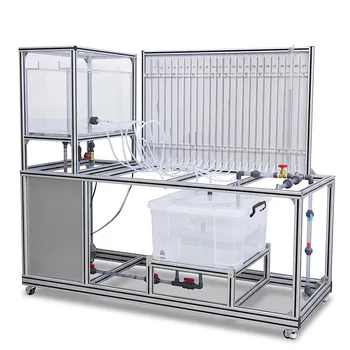
When you cross the threshold from a benchtop flask to a pilot-plant reactor, you are not just making more product—you are choosing a fundamentally different heating strategy.
A standard laboratory heating mantle wraps an exposed resistive wire directly against the glass, leaving the electric circuit vulnerable to any liquid spill. A pilot-plant unit operation, by contrast, almost always uses indirect heating through a jacketed vessel, a circulating heat-transfer fluid, or an explosion-proof immersion heater that physically separates the electrical hazard from the process liquid. This shift from direct electrical contact to a decoupled, engineered thermal loop is the core safety distinction.
The move from a lab mantle to a jacketed pilot-plant vessel is not a luxury—it is a safety imperative born of volume. By replacing a live-wire shell with a drained, pressure-relieved, and insulated fluid jacket, pilot plants eliminate the electric shock risk of spills and transform liquid heating into a controlled, scalable unit operation.
Why a Laboratory Heating Mantle Becomes a Hazard at Scale
Direct Electrical Contact with the Process Fluid
A heating mantle’s resistive wire sits inside a fabric shell that presses against the glass vessel. A spill, a cracked flask, or even persistent condensation can create a short circuit, electric shock, or arc flash.
At 1-liter scale, you can shut it down, unplug it, and dry it out. At 50 liters or 200 liters, the liquid inventory and the thermal energy stored in the system make that same failure instantly severe. In a pilot environment, spills are a design inevitability, not a freak accident, so the heating method must be intrinsically safe.
The “Shutdown and Dry” Mindset Fails at Pilot Scale
Laboratory practice for a wet mantle is immediate power-off, disassembly, and drying—a practical fix when the batch is small and replacement is cheap.
In a pilot plant, halting a reaction mid-cycle can ruin thousands of dollars of material, and drying a large fabric mantle is physically impractical. The engineering answer is not a larger drying procedure; it is a heating system that never puts live electrical parts in the path of a liquid spill in the first place.
How Pilot Plants Redesign Liquid Heating for Inherent Safety
Indirect Heat Transfer via Jacketed Vessels
The most common pilot-plant solution is a jacketed reactor. A heating or cooling medium—water, steam, or thermal oil—circulates through the vessel’s double-walled shell.
The electric heating elements are now remote, located inside a utility skid or in-line heater, far from the process fluid. If a product spill occurs, it drips onto a metal drip tray, not into an energized heater. This decoupled energy transfer removes electrical shock risk by design.
Explosion-Proof Immersion Heaters as a Secondary Option
When an external jacket is not feasible, some pilot units use immersed electric heaters. However, these are not the exposed wire of a mantle. They are housed in sealed, explosion-proof enclosures with built-in overtemperature sensors, rigid conduit connections, and often a purged or pressurized housing to prevent vapor ignition. The electrical hazard is still present but isolated inside a certified, ignition-proof barrier, which is a world apart from a fabric-wrapped mantle.
Engineered Safety Layers in the Thermal Loop
Pilot-plant heating systems contain several built-in safeguards that a mantle lacks:
- Drainage points route leaked heat-transfer fluid away from electrical components, preventing a conductive path.
- Pressure relief valves protect the jacket from overpressure if a control valve fails or the fluid thermally expands, avoiding a burst jacket that could spray hot oil near operators.
- Double-walled insulation minimizes surface temperatures, reduces condensation that could create an external shock hazard, and keeps the equipment cool enough to touch, adding a layer of personnel protection.
These barriers are systematic, passive, and always present—dramatically different from the single-layer, operator-dependent safety of a lab mantle.
Understanding the Trade-Offs of Indirect Pilot-Plant Heating
Higher Capital Cost and Infrastructure
A jacketed reactor requires a heat-transfer fluid loop, a chiller or heater unit, pumps, and associated controls. The upfront investment is orders of magnitude above a $500 mantle.
However, this cost is justified when product value, safety regulations, and the need to replicate a scaled process are factored in. The pilot plant is not a lab; it is a miniature factory, and factory safety standards apply.
Slower Thermal Response and Control Complexity
The thermal mass of the jacket fluid introduces lag. You cannot simply turn a voltage dial and get instant heat; you need a PID controller and often a cascade control strategy to manage the inert zone between the heater power and the process liquid.
For chemists accustomed to the fast, manual ramping of a mantle, this can feel sluggish. Yet that very dynamic mirrors how heat transfer behaves at full production scale, making it a critical learning step.
The Danger of Assuming a Mantle Mentality in the Pilot Bay
A common mistake is to assume that what worked safely at 2 liters will work safely at 20 liters by simply buying a bigger mantle. A larger mantle still exposes live electrics to spills, and the consequences scale with volume. The true safety upgrade is not a larger mantle; it is a different equipment concept that fundamentally isolates the hazard.
How to Apply This Lesson to Your Scale-Up Decisions
Your choice between a mantle and a jacketed system must be driven by fluid volume, chemical hazard, and the intended learning or production outcome.
- If your primary focus is early-stage process development at 1–5 L with non-flammable solvents: A laboratory heating mantle combined with a spill tray and ground-fault circuit interrupter may be acceptable, but always perform a job hazard analysis.
- If your primary focus is pilot-scale validation of an exothermic reaction or flammable liquid: A jacketed vessel with a remote heat-transfer fluid loop is non-negotiable. It separates the electrical hazard while delivering the precise, safe thermal control needed for scale-up data.
- If your primary focus is teaching heat-transfer fundamentals at a larger scale: A pilot-plant jacketed system lets students safely explore conduction, convection, and control dynamics, transforming a shock risk into an instructive, hands-on engineering experiment.
By understanding why the heating mantle disappears at scale, you are not just checking a safety box—you are adopting the engineer’s mindset of designing hazards out of the system rather than relying on procedure to contain them later.
Summary Table:
| Feature | Laboratory Heating Mantle | Pilot-Plant Unit Operation |
|---|---|---|
| Heating Method | Direct contact (exposed electrical wire) | Indirect transfer (jacketed fluid / sealed loop) |
| Spill Safety | High risk of short circuit and shock | Inherently safe; liquids route away from electrics |
| Control & Scaling | Manual, rapid response (non-scalable) | PID cascade control (replicates industrial processes) |
| Safeguards | Operator-dependent (manual shutdown) | Passive engineered layers (PRVs, drainage, insulation) |
Transition Safely from Benchtop to Pilot Scale with LABPARK
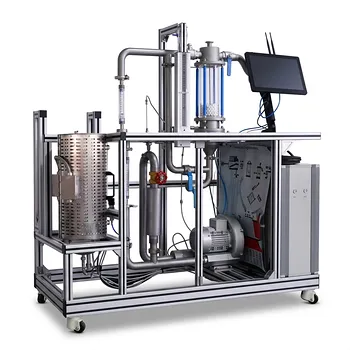
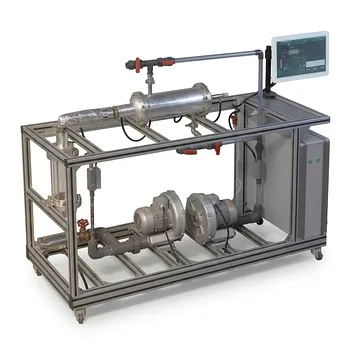
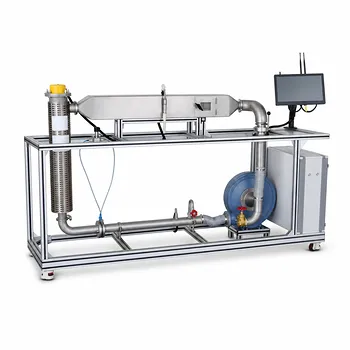
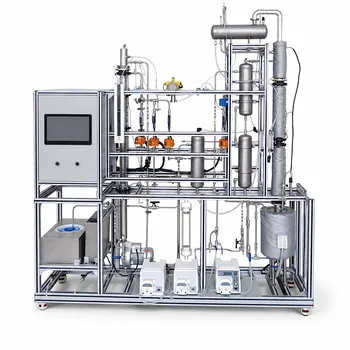
Ensure the highest safety standards and realistic scale-up training in your facility. LABPARK provides state-of-the-art Educational and Vocational Unit Operations Pilot Plants in chemical engineering, bioprocess & biotech, and environmental & water treatment.
Specially designed for universities, research institutes, and enterprises, our pilot plants replace hazardous, direct-contact lab heating with engineered, industry-grade indirect thermal control. Protect your operators while gathering precise, scalable process data.
Contact LABPARK today to discuss your custom pilot-plant requirements.
Related Products
- Solid Spherical Heat Transfer Coefficient Determination Educational Chemical Engineering Pilot Plant
- Shell and Tube Heat Exchanger Heat Transfer Coefficient Determination Educational Pilot Plant
- Comprehensive Heat Transfer Coefficient Determination Educational Unit Operations Pilot Plant
- Hot Filtration Educational Unit Operations Pilot Plant Laboratory System
- Rising and Falling Film Evaporation Educational Unit Operations Pilot Plant
People Also Ask
- How to Determine Maximum Heat Transfer Coefficient in Reactor Pilot Plants: Wilson Plot Guide
- How are steady-state and unsteady-state heat transfer processes demonstrated practically using chemical engineering pilot plants?
- How Pilot Plants Show Natural vs. Forced Convection Heat Transfer
- How do unit conversions affect pilot plant calibration? Avoid errors in heat transfer data analysis
- Why is the prevention of scale formation on heat exchanger surfaces a critical learning objective? Key Lessons