The relationship between operating pressure ratio and product loss in your membrane-based dehydration pilot plant is governed by a frustrating law of diminishing returns. When you operate at a realistic pressure ratio (around 80), even a dramatic tenfold increase in membrane selectivity—from 500 to 5000—only reduces your methane loss marginally, from about 3.2% to 2.75%. The theoretical solution of pushing the pressure ratio to 1000 (slashing loss to 0.17%) is effectively off the table due to prohibitive energy costs and safety concerns.
The core constraint in pilot-scale membrane dehydration is that practical pressure ratios are capped by economics and safety. This ceiling forces you to accept a baseline level of product loss that higher membrane selectivity alone cannot overcome. Your optimal strategy, therefore, shifts from maximizing selectivity in isolation to balancing it with the achievable pressure differential and complementary variables like operating temperature.
Decoding the Pressure-Ratio Ceiling in Your Pilot Plant
The pressure ratio is the driving force for separation. It’s defined by the feed pressure relative to the permeate pressure.
Why You Can't Just Crank Up the Ratio
Achieving an ultra-high pressure ratio requires either heavily compressing the feed gas or pulling a deep vacuum on the permeate side. Both paths are dead ends in a practical pilot setting.
Compressing the feed is energy-intensive and expensive. For a pilot plant studying scalable processes, this introduces costs that make the final design commercially unviable. Using vacuum pumps on the permeate side introduces safety hazards, particularly with flammable gases like methane, and adds significant capital and maintenance costs.
The "Hard Floor" for Product Loss
These real-world constraints create a performance ceiling. Because you can’t economically or safely exceed a certain pressure ratio (often around 80:1), you are stuck with a fundamental limit on how low your product loss can go.
The primary reference data confirms this: at a pressure ratio of 80, the "hard floor" for methane loss sits in the 2-3% range even with highly selective materials. This is the non-negotiable physical reality you must design around.
Diminishing Selectivity: The Trap of Going Higher
It’s tempting to think a better membrane solves everything. The data shows otherwise when pressure ratio is the bottleneck.
The Minimal Gain from a Major Upgrade
Jumping from a membrane with a water/methane selectivity of 500 to a premium 5000 material is a major technological leap.
Yet, the impact on your methane loss is minimal—a reduction from 3.2% to just 2.75%. You get a mere 0.45% improvement for a potentially significant cost increase. This demonstrates that selectivity is not your independent control knob; its effectiveness is entirely dictated by the pressure ratio you can achieve.
The Theoretical Dream vs. Pilot Reality
Only by breaking through the practical pressure ratio ceiling does high selectivity become truly powerful.
At a pressure ratio of 1000, product loss plunges to 0.17%. This shows the membrane is capable, but the system around it is the limiter. Your challenge is to optimize a system where the pressure ratio is fixed at a realistic, lower value.
The Temperature Lever: An Optimization Partner
Since you can't single-handedly win with pressure ratio and selectivity, you must bring another powerful variable into play: temperature.
Exploiting Solubility-Driven Separation
For rubbery membranes commonly used in organic vapor dehydration, the separation mechanism is solubility-driven. The organic vapor (like water) dissolves into the membrane and diffuses through.
Decreasing the operating temperature increases the vapor's solubility, which directly raises the flux of the water vapor across the membrane. This thermodynamic principle is your most potent tool for increasing separation efficiency once the pressure ratio is maxed out.
Maximizing Selectivity at Low Temperatures
Higher temperatures are the enemy of selectivity in this process. They increase the permeation of the permanent gas (methane) without providing the same relative benefit for the organic vapor.
By running your pilot rig at the lowest possible temperature that is consistent with your process, you maximize the selectivity and flux of the water vapor. This compensates for the inability to increase the pressure ratio, helping you push product loss toward the lower end of the achievable range.
Practical Pilot Plant Realities and Trade-offs
Your pilot plant's architecture and operating window introduce further constraints to manage.
Hardware Limits and Module Design
Most gas separation pilot plants use flat-sheet membranes in spiral-wound modules or envelopes. These modules have specific pressure and temperature ratings that define your safe operating envelope.
Pushing temperature too low could cause condensation or embrittlement of the membrane material. Your optimization must occur strictly within these physical hardware limits.
The Energy Balance Equation
While running very low temperatures is favorable for separation, it requires chilling. This is an operating cost.
The true optimization is an economic one: balancing the cost of chilling against the value of the recovered methane. This mirrors the trade-off with pressure ratio, where you balance compression/vacuum costs against the cost of product loss.
When Membrane Dehydration Underperforms
Understanding these constraints helps you recognize an ill-fitting application. If your gas stream contains a very high concentration of organic vapors, a membrane system can become economically challenged because the "hard floor" product loss translates to a large absolute volume of lost gas.
For streams where even 2% loss is unacceptable, you might need a hybrid system, such as a membrane unit for bulk removal followed by a polishing adsorption or absorption step.
Common Pitfalls to Avoid
A few specific mistakes can derail your pilot plant optimization.
- Chasing Theoretical Selectivity: Don't pay a premium for a super-selective membrane if your pressure ratio is the bottleneck. Verify through your own data that a 10x selectivity gain doesn't yield a 10x product retention gain.
- Ignoring Temperature's Dual Role: While low temperature is good for separation, it can also slow diffusion kinetics. Ensure that the increase in solubility offsets any reduction in the diffusion coefficient.
- Neglecting Permeate Sweep: On the low-pressure side, the concentration of the permeated water vapor can build up, reducing the effective driving force. A small, dry sweep gas on the permeate side can artificially increase the effective pressure ratio for water without high-cost vacuum or compression.
- Treating Membrane Area as a Scalable Solution: Adding more membrane area does not reduce the fundamental product loss percentage dictated by the pressure ratio. It may improve total water removal capacity, but the relative methane loss per unit of dehydrated product remains governed by the pressure and temperature conditions.
Making the Right Choice for Your Pilot Plant Goal
Your optimal control strategy is dictated by your primary research or operational objective. The pressure ratio is a fixed constraint, and you must tune the remaining variables around it.
- If your primary focus is minimizing product loss: Set your feed pressure to the maximum safe limit for your hardware, then dial in the lowest practical operating temperature. Monitor the energy cost of chilling and choose the membrane selectivity that is "good enough" (e.g., 500), as paying more for higher selectivity yields a negligible return.
- If your primary focus is energy efficiency: Find the sweet spot where the cost of feed compression and/or chilling is balanced against the value of the lost product. Conduct a sensitivity study at a fixed, safe pressure ratio, systematically varying temperature and measuring the total energy input per unit of dehydrated product.
- If your primary focus is studying the membrane material itself: You must deliberately fix the pressure ratio and temperature as independent variables. Only by holding the process conditions constant can you accurately decouple and measure the intrinsic selectivity and flux of new membrane samples.
By accepting the absolute constraint of the pressure ratio, you transform your pilot plant from a frustration into a powerful tool for mapping the true, economically-viable performance boundaries of your dehydration process.
Summary Table:
| Pressure Ratio | Membrane Selectivity (H2O/CH4) | Methane (Product) Loss | Feasibility & Constraints |
|---|---|---|---|
| 80 (Realistic) | 500 | ~3.2% | Standard baseline, economically viable. |
| 80 (Realistic) | 5,000 | ~2.75% | Diminishing returns; high membrane cost. |
| 1000 (Theoretical) | High | ~0.17% | Prohibitive energy costs and safety hazards. |
Optimize Your Chemical Engineering Lab with LABPARK
Are you looking to overcome complex separation constraints and achieve precise, reliable results in your research?
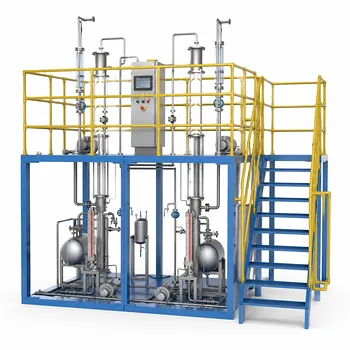
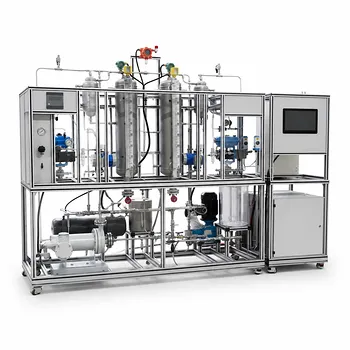
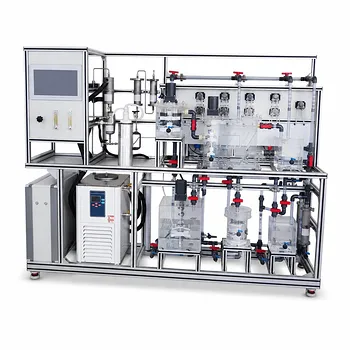
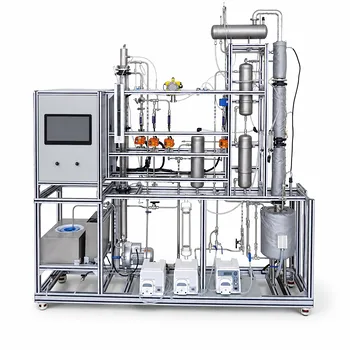
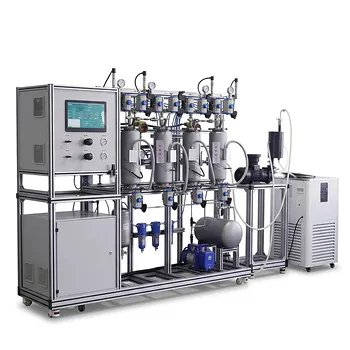
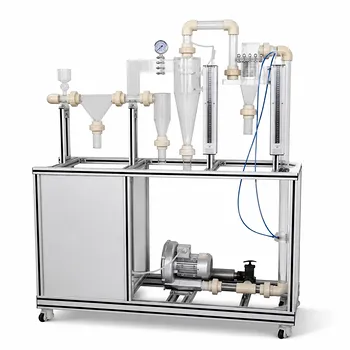
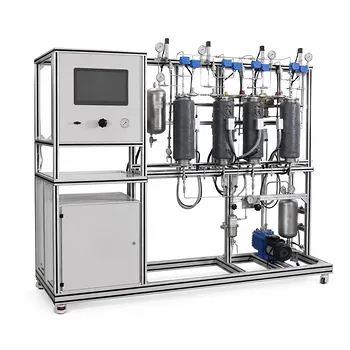
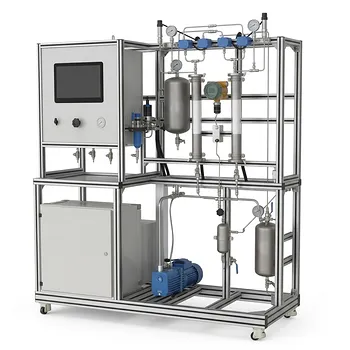
LABPARK provides state-of-the-art Educational and Vocational Unit Operations Pilot Plants in chemical engineering, bioprocess & biotech, and environmental & water treatment. Specifically designed for universities, research institutes, and enterprises, our pilot plants empower you to test real-world parameters safely and efficiently.
Contact LABPARK experts today to find the perfect, scalable pilot plant solution for your institution!
Related Products
- Ultrafiltration Membrane Separation Educational Pilot Plant
- Photocatalytic Membrane Separation and Degradation Unit Operations Pilot Plant
- Multi Functional Membrane Crystallization Educational Unit Operations Pilot Plant
- Multifunctional Membrane Separation Educational Pilot Plant with Ultrafiltration, Nanofiltration, Reverse Osmosis
- Multi-Functional Membrane Separation Educational Pilot Plant for Unit Operations Lab
People Also Ask
- How do PEI, PVDF, and PSU membranes compare in pilot plants? Find the best fit.
- Pervaporation vs. Vapor Permeation: Handling Suspended Solids in Membrane Pilot Plants
- Why Use a Membrane Separation Pilot Plant vs. Lab Testing? Avoid Costly Scale-Up Failures
- Isotropic vs. Anisotropic Membranes: How to Choose the Best Pilot Plant Modules
- How do membrane pilot plants demonstrate synthetic vs biological membrane advantages?