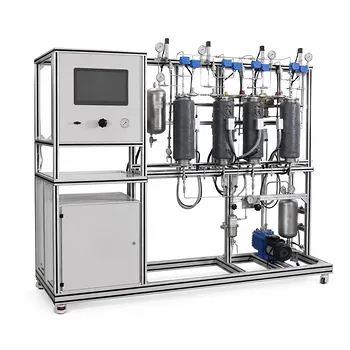
Knowledge Chemical Engineering Education How do membrane-based gas separation processes compare to traditional separation methods in chemical engineering pilot plants?
Author avatar

Tech Team · LABPARK

Updated 2 weeks ago

How do membrane-based gas separation processes compare to traditional separation methods in chemical engineering pilot plants?


Membrane-based gas separation isn’t merely an alternative to traditional methods—it’s a deliberate shift toward energy efficiency, process intensification, and versatile hands-on learning in pilot plants. When compared to pressure swing adsorption (PSA) or cryogenic distillation, membrane pilot units avoid energy-intensive phase changes or high-pressure thermal cycles. They operate continuously at ambient temperatures, minimize physical footprint through modular design, and give researchers direct control over variables like feed pressure, temperature, and stage cut to evaluate material selectivity and durability. This transforms the pilot plant from a simple demonstration into a rigorous platform for investigating core transport principles and preparing for industrial challenges.

The fundamental difference is energy and adaptability. Membrane pilot plants eliminate the need for boiling, freezing, or adsorbent regeneration, replacing them with compact, continuous modules that respond rapidly to process changes. This not only cuts utility consumption but also accelerates the learning cycle for students and engineers exploring gas separation fundamentals and scale-up.

The Energy and Footprint Advantage

Eliminating Thermal Dependence

Traditional thermal methods like cryogenic distillation demand enormous energy to liquefy and then fractionate gases based on boiling points. Pressure swing adsorption, while less extreme, still relies on cyclic pressurization and depressurization of solid adsorbents. Both carry a heavy energy penalty tied to phase changes or pressure cycling. Membrane systems sidestep this entirely. They operate under a partial pressure driving force at near-ambient conditions, consuming energy mainly for compression of the feed stream. Because no phase transition occurs, the energy demand is intrinsically lower, making pilot-scale experiments cheaper to run and easier to instrument.

Process Intensification and Modular Design

Membrane modules—often hollow-fiber or spiral-wound flat-sheet configurations—pack a large surface area into a minuscule volume. This is the essence of process intensification that the primary reference highlights. A suitcase-sized membrane unit can replace a tall distillation column or a large PSA vessel in a pilot plant, slashing floor space and utility connections. This modularity also means researchers can swap membrane materials or module types within minutes to compare performance. The absence of moving parts and auxiliary regeneration equipment further simplifies safe operation, even when handling explosive gases like hydrogen.

Studying Separation Principles in Real Time

From Solution-Diffusion to Selectivity

Gas permeation through dense polymer membranes follows the solution-diffusion mechanism: gas molecules dissolve into the material, diffuse across it, and desorb on the low-pressure side. In a pilot plant, this translates directly into Fick’s Law analysis, where flux $J_G$ is proportional to permeability $P_M$ (the product of diffusivity $D$ and solubility $S$) and the partial pressure difference $\Delta p$, divided by membrane thickness $\delta_m$. Students and engineers can manipulate feed pressure and composition to validate this relationship, measure stage cut (the fraction of feed that permeates), and calculate selectivity for gas pairs like O₂/N₂. Tangible experiments with selectivities of 7–8 for oxygen over nitrogen or 10–100 for organic vapors over nitrogen transform abstract equations into intuitive, visual data.

Simulating Industrial Gas Separation Scenarios

With the same pilot unit, a team can replicate high-purity nitrogen generation (95–99% N₂ from air) or hydrogen recovery from refinery purge streams containing methane, ethane, and propane. By adjusting operating conditions, they observe how pressure ratio and temperature influence recovery rates and product purity. This direct mimicry of industrial applications—including volatile organic compound (VOC) recovery from concentrated streams—prepares students for real-world problems in petrochemistry, carbon capture, and sustainable processing, exactly as the primary reference emphasizes.

Understanding the Trade-offs and Limitations

Material Stability and Fouling

Membrane performance is only as robust as the polymer itself. Dense films can suffer from plasticization when exposed to high concentrations of CO₂ or hydrocarbons, swelling the matrix and permanently reducing selectivity. Trace contaminants or particulates in pilot-plant feed streams can foul the surface or attack sealing materials, leading to degraded performance that does not always reverse with cleaning. The pilot plant must therefore be designed with appropriate pre-filtration and chemical compatibility checks—a lesson in realistic industrial constraints.

Pressure and Purity Boundaries

Membranes separate based on partial pressure differences, so achieving very high product purity often demands either a multi-stage membrane cascade or an impractically large pressure ratio. For example, producing ultra-high-purity nitrogen above 99.9% frequently remains more cost-effective with PSA or cryogenic methods. Moreover, the intrinsic permeability–selectivity trade-off—Robeson’s upper bound—means membranes that are highly selective tend to exhibit lower permeability, requiring larger membrane areas or higher driving forces. Pilot-plant studies must therefore balance these engineering economics against the intrinsic material properties.

Making the Right Choice for Your Pilot Plant Goal

Which approach you select for a unit operations pilot plant hinges on your core objective:

  • If your primary focus is teaching core transport phenomena: Choose a membrane system. It lets students directly observe solution-diffusion, apply Fick’s Law, and calculate selectivity and stage cut in real time—concepts that can remain abstract in distillation or PSA setups.
  • If your primary focus is minimizing energy and footprint for research: A membrane pilot plant is the clear winner. Its ambient operation, compact modular design, and rapid startup/shutdown accelerate experimental throughput while slashing utility costs.
  • If your primary focus is scaling up a specific industrial separation for high-purity products: Use the membrane pilot plant to establish baseline mass-transfer coefficients and material compatibility, but plan for a hybrid evaluation that may include PSA or distillation for the final purity polish, acknowledging the pressure-ratio limits.

Membrane-based gas separation pilot plants don’t just demonstrate an alternative technology—they compress decades of materials science and transport theory into a compact, teachable, energy-sipping system that equips engineers to tackle the next generation of sustainable separation challenges.

Summary Table:

Comparison Feature Membrane Gas Separation Traditional Methods (PSA/Cryogenic)
Energy Consumption Low (no phase changes, ambient temp) High (requires thermal cycles/compression)
Footprint & Design Compact, modular, scalable Large footprint, complex piping
Separation Principle Solution-diffusion & partial pressure Boiling point differences or adsorption
Purity Capabilities Good for bulk separation/recovery Ideal for ultra-high purity (>99.9%)

Elevate Your Chemical Engineering Lab with LABPARK

Are you looking to bridge the gap between theory and industrial reality? LABPARK offers state-of-the-art Educational and Vocational Unit Operations Pilot Plants specializing in chemical engineering, bioprocess & biotech, and environmental & water treatment.

Specifically designed for universities, research institutes, and enterprises, our pilot plants deliver hands-on learning experiences in gas separation, mass transfer, and process intensification.

Contact LABPARK today to discover how we can customize the perfect pilot plant setup for your institution!

Related Products

People Also Ask

Related Products

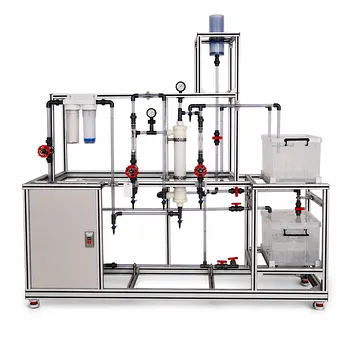
Multifunctional Membrane Separation Educational Pilot Plant with Ultrafiltration, Nanofiltration, Reverse Osmosis

Multifunctional Membrane Separation Educational Pilot Plant with Ultrafiltration, Nanofiltration, Reverse Osmosis

An integrated laboratory bench-scale membrane separation system for higher education engineering labs combining Ultrafiltration, Nanofiltration, and Reverse Osmosis processes. Features industrial PLC control with touch-screen HMI, transparent piping, and academic assessment software. Ideal for chemical and environmental engineering curricula.

Ultrafiltration Membrane Separation Educational Pilot Plant

Ultrafiltration Membrane Separation Educational Pilot Plant

This ultrafiltration membrane separation educational pilot plant enables undergraduate students to process PVA solutions, study hollow fiber membrane dynamics, and perform quantitative analysis with spectrophotometry for hands-on learning of unit operations and industrial maintenance and membrane cleaning protocols.

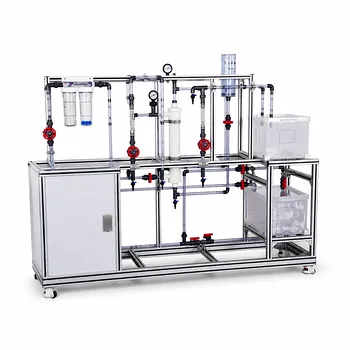
Multi-Functional Membrane Separation Educational Pilot Plant for Unit Operations Lab

Multi-Functional Membrane Separation Educational Pilot Plant for Unit Operations Lab

The Multi-functional Membrane Separation Educational Unit Operations Pilot Plant is an integrated bench-scale laboratory system designed for teaching undergraduate engineering education. It features Ultrafiltration, Nanofiltration, and Reverse Osmosis modules in a compact, mobile unit for practical hands-on learning.

Photocatalytic Membrane Separation and Degradation Unit Operations Pilot Plant

Photocatalytic Membrane Separation and Degradation Unit Operations Pilot Plant

Bench-scale pilot plant integrating photocatalytic degradation with membrane separation for engineering education. Study advanced oxidation, microfiltration, and hybrid processes using industrial sensors. Features safety light-blocking curtain, low-noise compressor, and durable stainless-steel construction.

Hollow Fiber Ultrafiltration Membrane Separation Educational Pilot Plant

Hollow Fiber Ultrafiltration Membrane Separation Educational Pilot Plant

Explore our hollow fiber ultrafiltration membrane separation educational pilot plant for hands-on learning of industrial ultrafiltration processes, flux analysis, fouling mitigation, and process control. Compact, customizable, and built for engineering labs.

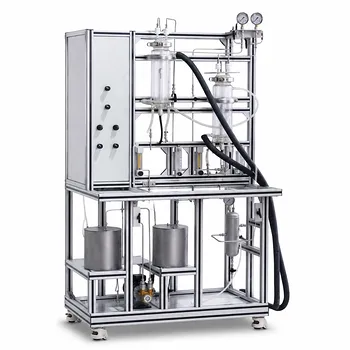
Bench Scale Dual Column Gas Separation and Capture Educational Pilot Plant

Bench Scale Dual Column Gas Separation and Capture Educational Pilot Plant

This dual-column educational pilot plant provides hands-on teaching of gas adsorption, separation, and capture processes. It features stainless steel columns, regeneration up to 400°C, and a 15.6-inch touchscreen PLC for TSA and PSA studies in chemical engineering curricula, process simulation.

Gas-Solid Heterogeneous Separation Demonstration Educational Unit Operations Pilot Plant

Gas-Solid Heterogeneous Separation Demonstration Educational Unit Operations Pilot Plant

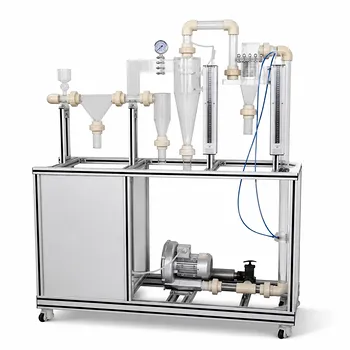
Comprehensive visual transparent gas-solid separation pilot plant for chemical engineering labs. Demonstrates gravity settling inertial settling cyclone and bag filter technologies. Enables real-time analysis of fluid-particle mechanics pressure drop and collection efficiency. Ideal for undergraduate unit operations courses.

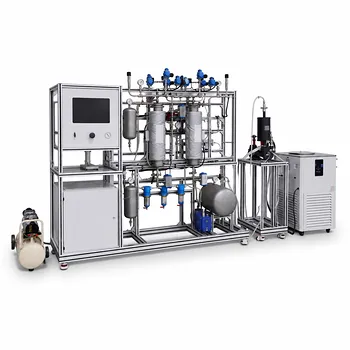
Multi Functional Membrane Crystallization Educational Unit Operations Pilot Plant

Multi Functional Membrane Crystallization Educational Unit Operations Pilot Plant

Integrated bench-scale membrane crystallization pilot plant for engineering education. Provides hands-on training in advanced separation technologies, combining membrane distillation crystallization and process intensification. Features variable scaling vessels, industrial-grade flow control, and interactive digital data acquisition. Customizable for university labs.

Multi-Component Gas Pressure Swing Adsorption Pilot Plant for Unit Operations Education

Multi-Component Gas Pressure Swing Adsorption Pilot Plant for Unit Operations Education

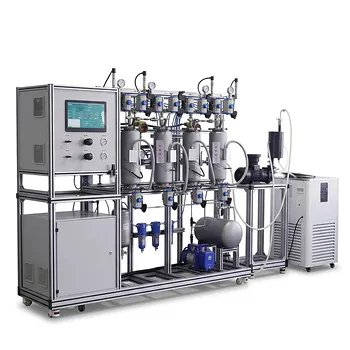
Multi-component gas pressure swing adsorption pilot plant designed for unit operations education. Features four-tower configuration, IoT touchscreen control, dual regeneration, and real-time breakthrough curve analysis for engineering training with safety interlocks and mobile frame simulates industrial PSA processes.

Pressure Swing Adsorption Educational Unit Operations Pilot Plant

Pressure Swing Adsorption Educational Unit Operations Pilot Plant

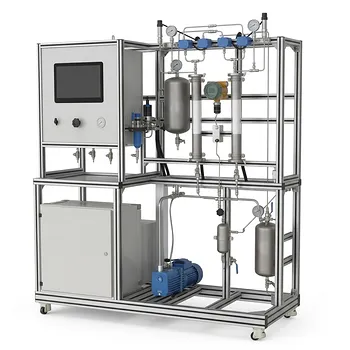
Integrated bench-scale pressure swing adsorption pilot plant for hands-on teaching of gas-solid separation, mass transfer, and process optimization using nitrogen-oxygen model, featuring dual-column design, industrial touchscreen control, digital assessment suite, and customizable hardware and software configurations for educational laboratories.

Educational Pressure Swing Adsorption Ethylene Capture Unit Operations Pilot Plant

Educational Pressure Swing Adsorption Ethylene Capture Unit Operations Pilot Plant

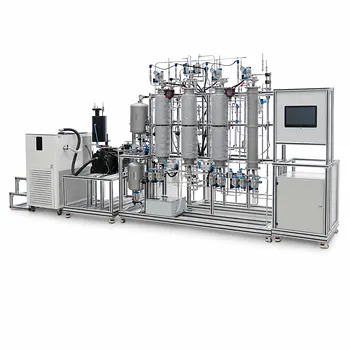
Advanced educational pilot plant for pressure swing adsorption ethylene capture provides comprehensive hands-on training in industrial gas separation processes, featuring an eight-column PSA system, real-time data acquisition, and fully customizable design for chemical engineering unit operations laboratories and research.

Alkaline Membrane Water Electrolysis Educational Pilot Plant Unit Operations Training System

Alkaline Membrane Water Electrolysis Educational Pilot Plant Unit Operations Training System

Hands-on educational pilot plant for alkaline membrane water electrolysis hydrogen production, integrating unit operations training with industrial PLC control, real-time data logging, customizable design, durable 316L stainless steel construction, explosion-proof safety, and modern 5G connectivity for university laboratories.

Dual-Mode Gas Absorption and Desorption Unit Operations Training Pilot Plant

Dual-Mode Gas Absorption and Desorption Unit Operations Training Pilot Plant

Industrial-scale pilot plant for gas absorption and desorption training in chemical engineering. Features dual-mode operation with real and simulated materials, transparent columns for flow visualization, and customizable design. Supports independent or combined loops for hands-on unit operations experiments.

Methane Cracking Educational Unit Operations Pilot Plant

Methane Cracking Educational Unit Operations Pilot Plant

This bench-scale methane cracking educational pilot plant provides hands-on catalytic conversion training with a 1000°C furnace, seven mass flow controllers, and real-time automation for safe, curriculum-aligned experiments. Designed for university teaching of unit operations and reaction engineering.

Fixed-Bed Chemical Reaction and Gas Dust Tar Removal Unit Operations Pilot Plant

Fixed-Bed Chemical Reaction and Gas Dust Tar Removal Unit Operations Pilot Plant

Integrated educational pilot plant for studying catalytic gas-solid reactions and downstream gas purification. Features dual fixed-bed reactor, three-stage heating, and touchscreen control for hands-on engineering training. Ideal for chemical and environmental engineering curricula.

Absorption and Desorption Educational Unit Operations Pilot Plant

Absorption and Desorption Educational Unit Operations Pilot Plant

Dual packed column absorption and desorption pilot plant for chemical engineering education, offering real-time mass transfer coefficient measurement, durable mobile frame, industrial touch-screen interface, and customizable design for varied laboratory curricula, enabling hands-on study of gas absorption and stripping.

Carbon Dioxide Absorption and Desorption Educational Pilot Plant for Carbon Capture Studies

Carbon Dioxide Absorption and Desorption Educational Pilot Plant for Carbon Capture Studies

Explore carbon dioxide absorption and desorption with this educational pilot plant. Transparent columns visualize mass transfer; electric heating simulates industrial solvent regeneration; touchscreen interface enables data monitoring. Ideal for chemical engineering, bridging theory and practice.

Carbon Material Thermal Pretreatment Multiphase Separation Educational Pilot Plant

Carbon Material Thermal Pretreatment Multiphase Separation Educational Pilot Plant

Educational pilot plant for carbon material thermal pretreatment and multiphase separation. Features jacketed agitated reactor, separation column, and modern controls for hands-on unit operations training in heat transfer, fluid flow, and process safety with industrial-grade materials and wireless data acquisition.

Bio-fermentation Ethanol Production Practical Training Unit Operations Pilot Plant

Bio-fermentation Ethanol Production Practical Training Unit Operations Pilot Plant

Bio-fermentation ethanol production pilot plant for hands-on training in unit operations: fermentation, solid-liquid filtration, membrane separation, and distillation. Bridges theory with industrial practice using industrial-grade components, customizable for university labs. Hybrid automated and manual control for comprehensive learning.

Bench Scale Carbon Dioxide Capture Educational Unit Operations Pilot Plant

Bench Scale Carbon Dioxide Capture Educational Unit Operations Pilot Plant

This bench-scale educational pilot plant simulates industrial CO₂ separation using a multi-tower adsorption system for hands-on engineering training. Students achieve ≥90% CO₂ purity while studying pressure swing adsorption, desorption kinetics, and process control in gas purification experiments.


Leave Your Message