Ionic radius, charge, and coordination chemistry dictate every critical decision in pilot-scale adsorption and ion exchange—from resin selection and column sizing to flow rates and regeneration cycles. These atomic-scale properties determine whether a target ion adsorbs selectively, diffuses rapidly into the porous structure, or gets stuck in a hydration shell that slows everything down. Engineers who fail to account for the interplay between a bare ion’s charge density and its hydrated size will design columns that suffer early breakthrough, poor capacity utilization, or excessive chemical consumption.
The central insight: separation in a column is not driven by the bare ionic radius listed in a table—it is governed by the charge-to-size ratio of the hydrated ion and its coordination behavior in solution. Higher charge density increases affinity for the active site, but it also attracts a larger hydration sphere that retards intraparticle diffusion. Pilot plant design is the art of balancing this thermodynamic drive against the kinetic drag to achieve a sharp, cost-effective separation.
The Microscopic Drivers of Column Performance
The performance of an adsorption or ion exchange bed is first determined by the chemical interactions at the molecular level. Understanding why one ion sticks while another slips through is the foundation for all downstream design choices.
Charge Density: The Key Affinity Controller
The electrostatic grip between an ion and a fixed exchange site is proportional to the ion’s charge-to-size ratio (charge density). Ions with smaller ionic radii and higher charge—such as Mg²⁺ (72 pm) or Al³⁺ (54 pm)—exhibit far stronger attraction to sulfonic acid or chelating groups than larger, lower-charged ions like Na⁺ (102 pm).
This explains why isoelectronic ions show a distinct selectivity order. In a pilot column packed with strong-acid cation resin, Al³⁺ will displace Mg²⁺, which in turn will displace Na⁺. The lanthanide contraction provides a perfect illustration: as the ionic radius shrinks from La³⁺ to Lu³⁺, the charge density rises and the stability constant with chelating resins or EDTA increases systematically, enabling high-resolution separation of rare earth elements.
For the column designer, this means resin selectivity is not a fixed property—it is an operator-controllable function of the target ion’s charge density. You can exploit this by choosing a resin whose functional groups complement the charge density of your target, or by manipulating the solution pH to alter the effective charge of weak electrolytes.
The Hydration Shell Paradox: High Charge, Slow Mass Transfer
There is a hidden cost to high charge density. In water, ions do not exist as bare spheres. Highly charged small ions polarize water molecules so strongly that they acquire a tightly bound hydration shell, dramatically increasing their effective hydrodynamic radius.
That Al³⁺ ion with a bare radius of 54 pm may have a hydrated radius larger than Na⁺. The consequence is that the ion with the highest thermodynamic preference for the resin also diffuses the slowest through the liquid film surrounding the particle and through the pores inside the adsorbent. In a pilot column, this manifests as a stretched mass transfer zone and a gradual breakthrough curve. You must provide longer residence time to let these heavily hydrated ions reach the interior exchange sites; otherwise, you will leave a significant fraction of the resin’s capacity unused.
Coordination Chemistry and Speciation Effects
An ion’s coordination sphere directly alters the apparent charge and size of the species being removed. The supplementary references on chromium and cobalt complexes illustrate this vividly: replacing a coordinated water molecule with a chloride ion inside the coordination sphere reduces the complex’s overall conductivity and changes its ionic character.
In a water treatment pilot plant, this means speciation is everything. Iron may exist as a free Fe³⁺ cation, a partially hydrolyzed species, or a chloride complex depending on the feed composition. Each form has a different effective charge and size, and thus a different affinity for the resin. Engineers must use ion chromatography, conductivity meters, or speciation software to characterize the real feed species before selecting a resin or setting column parameters. Operating a column blind to speciation is the fastest route to scaling, fouling, and inconsistent effluent quality.
Translating Ionic Properties into Pilot Plant Design
With the physicochemical rules established, we can now map them directly to the tangible design and operation decisions faced by engineers running a pilot plant.
Selecting the Right Resin or Adsorbent
Resin choice is the first point where charge and size considerations become a hardware decision. If your target ion has a very high charge density, a weak-acid or chelating resin may provide exceptional selectivity but slower kinetics. For lower-charge ions, a high-capacity strong-acid resin (e.g., polystyrene sulfonate at ~1,500 meq/L) might be more economical.
Porous adsorbents like activated carbon or zeolites introduce a geometric size constraint. High-molecular-weight target species or large hydrated ions can be physically excluded from micropores. This mirrors the polymer adsorption case, where high-MW components are thermodynamically preferred but kinetically blocked. You must match the adsorbent’s pore size distribution to the hydrated size of the target species; otherwise, your measured breakthrough capacity will be far lower than the equilibrium isotherm predicts.
Sizing the Column: Bed Depth and Mass Transfer Zone
The length of the mass transfer zone (MTZ) is directly proportional to the diffusion coefficient of the target ion. Ions with large hydration spheres generate a long, shallow MTZ. In a pilot column, this means you need a taller bed to fully develop and contain the front, preventing ion leakage.
A typical learning objective in vocational training pilot plants is to observe how the breakthrough curve flattens when the flow rate is too high for the ion’s diffusivity. By correlating the MTZ length with the hydrated radius measured in independent experiments, you can establish an empirical minimum bed depth for your specific ion–resin pair. Shorter beds are acceptable only if you plan to stop the run before the MTZ reaches the column outlet.
Optimizing Flow Rates and Residence Time
Flow rate determines the contact time available for mass transfer. An ion with a high charge density but a large hydration shell creates a conflict: it needs longer contact time (lower flow rate) to diffuse, yet it has a high thermodynamic driving force once it reaches the site.
Pilot plant operators use this knowledge to optimize throughput by running scouting experiments at different linear velocities. The goal is to find the highest flow rate that still yields an acceptable mass transfer zone length. If the column is being used for polishing (removing trace concentrations), slower rates are mandatory because the driving force is low. For bulk removal, you may accept some leakage in exchange for throughput.
Regeneration Strategies and Chemical Consumption
Regeneration flushes the captured ion off the resin using a high-concentration brine or acid solution. The efficiency of this step depends on the relative charge density of the target ion and the regenerant ion. Ions with very high charge density bind so strongly that they require a massive excess of regenerant (often 2–3 times the stoichiometric amount) to be displaced.
In a pilot plant tasked with recovering valuable metals, you design regeneration cycles where the adjusting pH and chelating agent concentration releases the target ion selectively. For example, a lanthanide-loaded resin might be stripped by a carefully controlled EDTA solution that exploits the systematic differences in stability constants caused by the lanthanide contraction. Students operating these units learn that regeneration is not just a chemical cost—it is the separation step that determines whether the process is economically viable.
Common Pitfalls and Trade-offs
No column design can simultaneously maximize selectivity, speed, and capacity. Accepting trade-offs is a mark of engineering maturity.
Pitfall 1: Ignoring the hydrated radius. Designing based on bare ionic radii leads to underestimation of required residence time. You will see premature breakthrough and a sloping concentration profile that cheats you out of usable capacity.
Pitfall 2: Overlooking coordination speciation. If the solution contains multiple coordination isomers of the same metal, each will break through at a different time. The result is an unexpected tail in the effluent that violates discharge limits. Monitor speciation—especially after pretreatments that alter pH.
Pitfall 3: Chasing equilibrium capacity in a short bed. Lab isotherms assume infinite contact time. In a high-flow pilot column, you operate under kinetic-limited conditions. The apparent capacity may be only 50–70% of the equilibrium value. Design for the mass transfer zone, not for the equilibrium point.
Pitfall 4: Using the wrong resin pore structure. If you choose a resin with pores too small for a large hydrated ion, you pay for capacity you can never use. If the pores are too large, selectivity drops because non-target ions enter freely. The trade-off is between accessibility and exclusion.
Making the Right Choice for Your Pilot Plant Goal
The design of an adsorption or ion exchange column is a balancing act between the electrostatic pull of the bare ion and the hydraulic drag of its hydration sphere. Your action plan should reflect the primary outcome you are optimizing for.
- If your primary focus is achieving the highest purity effluent: Operate at reduced flow rates to minimize mass transfer zone length, select a resin with high cross-linkage that excludes large hydrated ions while tightly grabbing the high-charge target, and implement a conservative bed depth well beyond the theoretical MTZ length.
- If your primary focus is maximizing throughput and productivity: Accept a degree of capacity loss due to kinetic limitations. Run at the highest linear velocity that still keeps the breakthrough front within the bed, and consider a resin with larger macropores to reduce intraparticle diffusion resistance, even if that sacrifices some selectivity.
- If your primary focus is minimizing chemical regeneration costs: Use a resin with moderate rather than extreme selectivity to ensure the captured ion can be removed with a stoichiometric excess of regenerant. Control the feed pH to ensure the target ion is in its most easily exchangeable form, and plan regeneration cycles to elute the ion before it forms hard-to-displace complexes within the bead.
- If your primary focus is selective recovery of valuable metals: Exploit small differences in ionic radius and coordination chemistry. Pretreat the feed to force the metals into distinct speciation states, use a chelating resin with tailored functional groups, and design a gradient regeneration protocol that separates ions by their charge density—just as is done with lanthanides.
Understanding how a few picometers of radius and one unit of charge translate into column dimensions and operating procedures is what separates a routine pilot run from a genuinely predictive separation process. When you design around the hydrated ion, not the bare one, you move from troubleshooting to engineering.
Summary Table:
| Ionic Property | Impact on Column Performance | Design & Operational Solution |
|---|---|---|
| High Charge Density | Stronger resin affinity but attracts a larger hydration shell. | Choose resins matching target charge density; adjust pH. |
| Large Hydrated Radius | Retards intraparticle diffusion; stretches mass transfer zone (MTZ). | Increase bed depth and residence time (lower flow rates). |
| Complex Speciation | Alters effective charge and size, causing inconsistent breakthrough. | Monitor feed speciation; pre-treat to control ionic forms. |
| High Affinity Binding | Requires significant excess regenerant chemicals to displace. | Optimize regeneration cycles using gradient pH or chelating agents. |
Elevate Your Chemical Engineering & Water Treatment Research
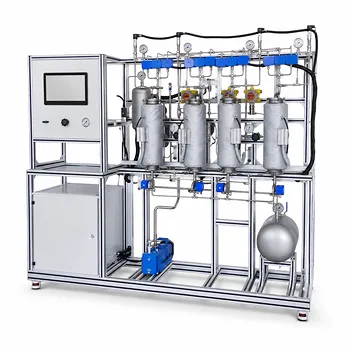
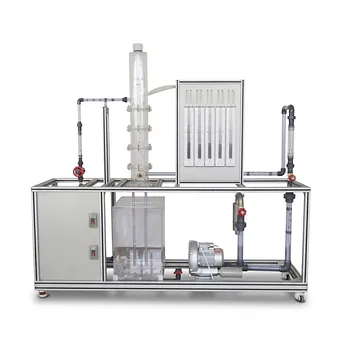
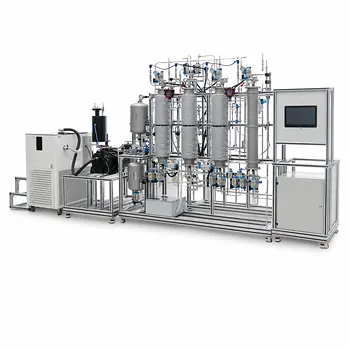
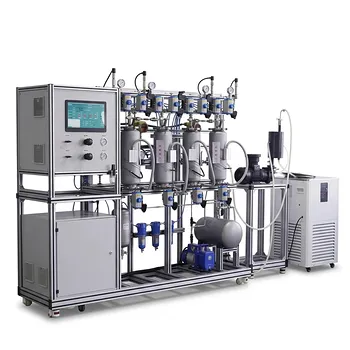
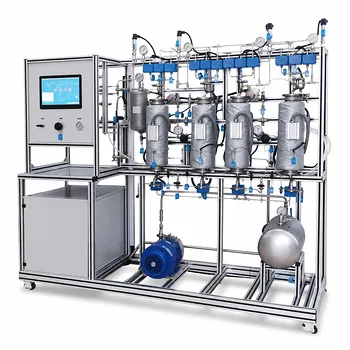
Translating complex molecular dynamics into predictable, scale-up processes requires precise, reliable equipment. LABPARK provides state-of-the-art Educational and Vocational Unit Operations Pilot Plants in chemical engineering, bioprocess & biotech, and environmental & water treatment.
Engineered specifically for universities, research institutes, and enterprises, our pilot plants empower students and researchers to master column kinetics, adsorption dynamics, and regeneration strategies in real-world scenarios.
Ready to upgrade your lab's capabilities? Contact LABPARK today to discuss your custom pilot plant needs!
Related Products
- Ion Exchange Water Purification Educational Pilot Plant for Engineering Unit Operations
- Absorption and Desorption Educational Unit Operations Pilot Plant
- Multimodal Absorption and Desorption Pilot Plant for Unit Operations Training
- Pressure Swing Adsorption Educational Unit Operations Pilot Plant
- Packed Bed Absorption Educational Unit Operations Pilot Plant
People Also Ask
- How to Prevent Ion Exchange Channeling? Expert Solutions for Pilot Plants
- How does ion exchange work in water treatment pilot plants? Cost & process guide.
- What operational precautions should lab operators take for resin volume changes and air pockets? Key Guide
- How to use ion exchange pilot plants to verify alkalinity? A hands-on guide for engineering students.
- How can students use ion exchange pilot plants for column sizing? Master Wastewater Design