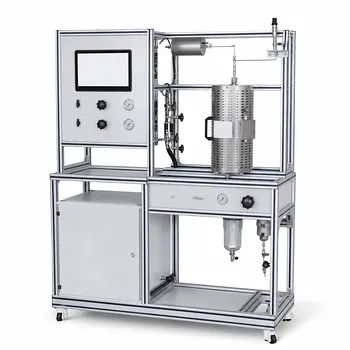
Coking is the primary failure mechanism in steam reforming pilot reactors. The selection of both the active metal and the support material dictates how severely and how quickly carbon deposits form. Catalysts based on nickel, for example, are extremely active but naturally promote carbon filament growth. Pairing them with a carefully chosen support—like CeO₂ or ZrO₂—modifies the metal’s electronic environment, supplies mobile oxygen that gasifies nascent coke, and physically anchors the metal particles to delay sintering-induced deactivation.
The real lever for extending catalyst life is not just picking a “coke-resistant” metal. It is engineering the metal-support interface to maximize dispersion, prevent agglomeration, and continuously remove carbon precursors through reactive support chemistry.
The Deactivation Battlefield: Coke and Sintering
Steam reforming operates at high temperatures where two main deactivation pathways converge. Coking, or carbon deposition, physically blocks active sites and can cause pressure-drop buildups that shut down the reactor. Sintering, the migration and coalescence of metal crystallites, reduces the available active surface area over time. Both processes are intimately linked to the choice of catalyst formulation.
How Coke Forms on the Catalyst Surface
In methane steam reforming, carbon can form via methane decomposition or the Boudouard reaction when local conditions become unfavorable. In ethanol reforming, ethylene cracking and ethanol decomposition add additional carbon-forming routes. Once deposited, coke encapsulates the metal particles, severing them from the reactant stream.
Why Sintering Makes Coking Worse
When metal particles sinter into larger clusters, they lose the high dispersion that maximizes activity. Simultaneously, larger particles provide a more favorable geometry for carbon nucleation and filament growth. Supports that delay sintering therefore indirectly suppress coking by preserving the small, highly active metal ensembles that favor gasification over carbon accumulation.
How the Active Metal Sets the Stage for Deactivation
The choice of active metal determines the intrinsic tendency to form coke and the operating temperature window—which in turn influences carbon gasification rates.
Nickel’s Double-Edged Sword: High Activity, High Coking Risk
Nickel is the workhorse of steam reforming due to its affordable price and exceptional ability to cleave C–H, O–H, and C–C bonds. However, nickel aggressively catalyzes carbon filament growth, especially when the steam-to-carbon ratio drifts too low or local hot spots develop.
Copper: A Low-Temperature Specialist
Copper-based catalysts are highly selective for methanol steam reforming at 200–350 °C. At these lower temperatures, the thermodynamics of carbon formation are less favorable, greatly reducing the driving force for coking. The trade-off is that copper is far less active for breaking strong C–H bonds, making it unsuitable for methane reforming.
Cobalt and Noble Metals: Stability at a Cost
Cobalt often shows better resistance to carbon deposition than nickel in ethanol steam reforming between 400 and 800 °C. Noble metals like platinum or rhodium are virtually coke-proof, but their prohibitive cost confines them to fundamental research rather than routine pilot operations. For most pilot plants, modifying a nickel catalyst with promoters is the practical path to stability.
The Support Is Not Just a Carrier, It’s a Defense System
The support—often Al₂O₃, CeO₂, ZrO₂, or spinels like MgAl₂O₄—participates directly in the chemistry of coke suppression and metal stabilization.
Physical Anchoring: Delaying Sintering and Agglomeration
High-surface-area supports physically separate metal nanoparticles, creating a barrier that prevents them from migrating and coalescing. Materials like α-Al₂O₃ or MgAl₂O₄ spinel provide exceptional thermal stability and mechanical strength. A gram of support offering hundreds of square meters of surface area keeps the active phase highly dispersed, maintaining a large active area that resists the onset of sintering-driven coking.
Reactive Supports: Oxygen Storage that Burns Away Coke
Ceria (CeO₂) is not an inert scaffold. It acts as an oxygen reservoir, releasing lattice oxygen under reducing conditions to oxidize carbon deposits. This self-cleaning cycle means that in a well-tuned reactor, coke precursors can be gasified as CO almost as soon as they form.
The Synergy of CeO₂ and ZrO₂
Zirconia (ZrO₂) enhances the stability of nickel particles and promotes the formation of surface hydroxyl groups that boost methane conversion. When mixed with ceria, the resulting CeO₂-ZrO₂ solid solution improves oxygen mobility and thermal resistance simultaneously, creating a support that actively combats coking on two fronts.
Geometry as a Support Strategy
The shape of the catalyst particle matters as much as its chemistry. Pilot reactors use rings, wagon wheels, or multi-hole cylinders rather than solid spheres. These geometries reduce the internal diffusion path, lower bed pressure drop, and increase external surface area for heat transfer—minimizing localized hot spots that would otherwise trigger accelerated coke formation.
Understanding the Trade-offs
No single formulation eliminates all deactivation challenges. Every choice involves a compromise.
Low-temperature operation reduces coking but slows kinetics. Operating below 700 °C for methane reforming, or using copper at 250 °C for methanol, decreases the thermodynamic driving force for carbon formation. However, it also slows the reaction rate, requiring larger catalyst volumes or higher steam excess.
High steam-to-carbon ratios suppress coke but cost energy. Running at a steam-to-carbon ratio of 3:1 instead of 2:1 provides extra oxidizing power to gasify carbon, but producing that excess steam increases the plant’s energy demand and operating cost.
Cerium-rich supports excel at coke removal but can be mechanically fragile. The same oxygen storage capacity that burns off carbon can lead to support degradation over many thermal cycles if the support isn’t properly stabilized with a dopant like zirconia or lanthanum.
Spinel supports resist sintering but may interact electronically with the metal. MgAl₂O₄ and ZnAl₂O₄ show excellent sintering resistance compared to silica, but the metal-support interaction can modify the intrinsic activity of the active phase—sometimes requiring a promoter to restore the desired turn-over frequency.
How to Apply This to Your Pilot Operation
Your selection should be driven by the specific reforming chemistry and the acceptable regeneration frequency in your pilot facility.
- If your primary focus is methane steam reforming at high throughput: Choose a nickel catalyst supported on a thermally stabilized CeO₂-ZrO₂ mixed oxide. This combination provides high activity while the reactive support continuously gasifies coke, allowing longer campaigns between regeneration cycles.
- If your primary focus is methanol steam reforming or low-temperature operation: Select a highly dispersed copper catalyst on an alumina or zirconia support. The low operating temperature inherently limits coking, and the high dispersion maximizes the inherently lower activity of copper.
- If your primary focus is ethanol reforming with demanding feedstock variability: Evaluate cobalt-based catalysts on MgAl₂O₄ spinel. Cobalt’s superior carbon resistance in ethanol reforming, paired with a sintering-resistant support, provides a wider operating window when feedstock purity or steam-to-carbon ratios are hard to control perfectly.
- If your primary focus is teaching deactivation and regeneration dynamics: Use a standard supported nickel on α-Al₂O₃ in a multi-hole cylinder geometry. It will coke deliberately when steam ratios are varied, providing clear data on deactivation kinetics while being robust enough for repeated oxidative regeneration cycles.
The catalyst is a system, not a single ingredient. By matching the metal’s reactivity with a support that actively mitigates sintering and provides a chemical defense against carbon buildup, you can dramatically extend the run length and consistency of your steam reforming pilot reactor.
Summary Table:
| Component | Role in Steam Reforming | Deactivation Impact |
|---|---|---|
| Nickel (Ni) | Primary catalyst for methane reforming | High activity; prone to carbon filament growth |
| Copper (Cu) | Low-temperature specialist (200–350 °C) | Low coking risk; unsuitable for methane reforming |
| Ceria (CeO₂) | Oxygen storage support | Releases lattice oxygen to gasify coke precursors |
| Alumina / Spinels | Sintering resistance & high surface area | Prevents metal particle agglomeration |
Enhance Your Process Engineering Labs with LABPARK
Unlock the full potential of your chemical engineering research and education. LABPARK designs and delivers premium Educational and Vocational Unit Operations Pilot Plants tailored for chemical engineering, bioprocess & biotech, and environmental & water treatment.
Whether you are a university, research institute, or enterprise aiming to analyze catalyst deactivation, kinetics, or scaling dynamics, our highly customizable systems provide the reliability and precision you need.
Contact our experts today to design a pilot plant that meets your exact research and educational goals.
Related Products
- Steam Methane Reforming Hydrogen Production and Purification Educational Pilot Plant
- Dual-Mode Rectification Pilot Plant for Practical Training Unit Operations
- Fixed-Bed Chemical Reaction and Gas Dust Tar Removal Unit Operations Pilot Plant
- Ethylbenzene Dehydrogenation Educational Unit Operations Pilot Plant
- 100L Continuous Loop Hydrogenation Educational Unit Operations Pilot Plant
People Also Ask
- How Do Temp, Pressure & S:C Ratio Affect Methane Reforming? Optimize Your Pilot Reactor
- How to Integrate WGS & Purification in Steam Reforming Pilot Plants to Protect Fuel Cells from CO Poisoning
- What are the differences between steam reforming and ATR in pilot plants? Key Design Guide
- How is carbon deposition controlled in steam reforming? The Critical Role of S/C Ratio
- What is the difference between allothermal and autothermal steam reforming in pilot plants?