Precise oxygen control is the linchpin of safe catalyst regeneration during coke burn-off in fixed-bed pilot plants. By deliberately adjusting the inlet oxygen concentration, operators can govern the relative speed of the temperature front and the combustion reaction zone moving through the bed. This ensures the peak temperature anywhere in the reactor never exceeds the catalyst’s thermal stability limit, preventing the irreversible sintering of metal crystallites that destroys active surface area.
Coke burn-off regeneration is a thermal tightrope walk: too much oxygen, and a runaway temperature spike sinters the catalyst; too little, and the process drags on with dangerous residual carbon. The core control lever is inlet oxygen concentration, which shapes how the exothermic reaction zone and the slower heat wave interact. Mastering this interaction lets you cap peak temperatures below the catalyst’s critical limit while completing the burn in a practical timeframe.
The Hidden Physics of Regeneration Heat Management
How Coke Burn-Off Generates a Moving Hotspot
During regeneration, deposited coke on a deactivated catalyst reacts exothermically with oxygen to form CO and CO₂. This reaction zone propagates axially through the fixed bed, releasing intense heat that must be managed carefully. The challenge is not just the total heat released, but the fact that the reaction front and the resulting temperature wave move at different speeds—creating a potential thermal pile‑up.
Why Sintering Is the Irreversible Killer
Sintering is the growth of metal crystallites (like platinum or copper) on the catalyst carrier, and it permanently reduces the active surface area. It accelerates sharply once the local temperature breaches the catalyst’s thermal stability limit—for copper-based catalysts, this can be as low as 570 K, while reforming catalysts tolerate higher but still sharply defined thresholds. Once sintered, the catalyst cannot be revived without reprocessing, making temperature containment during regeneration a non‑negotiable safety requirement.
The Temperature Wave vs. The Reaction Zone
Two moving fronts define the regeneration: the reaction zone, where oxygen meets coke and burns, and the temperature wave, which lags behind because it takes time for the solid bed to heat up. If the reaction zone races ahead of the temperature wave, the heat accumulates, and the peak temperature can spike far above the adiabatic rise predicted by simple stoichiometry. The interplay can be controlled by one adjustable variable: inlet oxygen concentration.
Oxygen Concentration: Your Primary Control Dial
How Lower Oxygen Slows the Temperature Front
Reducing the oxygen concentration in the regeneration gas does two things: it stretches the reaction zone length and decreases the local rate of heat release. A more spread‑out combustion front transfers heat to the solid bed more gradually, letting the temperature wave catch up. The result is a flatter, more manageable thermal profile with a lower peak temperature. This principle is the core of safe regeneration in pilot‑scale fixed beds.
Monitoring Peak Bed Temperature with Multi‑Point Sensors
Pilot plants are uniquely equipped with precise multi‑point temperature sensors inserted axially and radially in the bed. These provide real‑time profiles, allowing operators to detect a temperature runaway early. The maximum allowable temperature limit (often dictated by the catalyst manufacturer) must never be crossed. Integrating these sensors with automated oxygen‑trim controllers can clamp the oxygen flow the moment a pre‑set thermal boundary is approached.
Preventing Impurity‑Driven Sintering During Regeneration
While oxygen control handles the bulk of the thermal risk, chemical agents like chlorine and steam dramatically lower the catalyst’s resistance to sintering. Pilot units must include gas purification steps before regeneration gas enters the reactor. Even traces of these agents can accelerate crystallite growth at temperatures that would otherwise be safe, turning a well‑managed burn‑off into a costly degradation event.
Understanding the Trade‑offs in Regeneration Control
Shorter Regeneration vs. Residual Coke Risk
Higher oxygen concentrations burn coke faster, minimizing unit downtime, but risk exceeding the sintering threshold. Lower oxygen gives a safer, flatter profile but may leave a small residual coke concentration that can slow catalyst activity in the subsequent cycle. Operators must decide on an acceptable residual carbon level—typically below 0.1 wt%—by weighing time against long‑term catalyst integrity.
The Danger of Incomplete Burn‑Off
Stopping the regeneration too early to avoid thermal risk can leave carbon deposits in the bed. This residual coke not only reduces the number of active sites but can also create localized hotspots during normal operation when the catalyst is back under high‑temperature reaction conditions. The trade‑off, therefore, is not just about time—it’s about ensuring the regeneration is thorough enough to restore meaningful activity without pushing the catalyst past its thermal cliff.
Equipment Design Influences Your Safety Margin
A pilot plant’s tube diameter and gas distribution directly affect heat transfer. Larger tube diameters can create radial temperature gradients, making the bed harder to control. Pilot systems with narrow tubes (diameter ≤ 0.1 m) and high‑flux preheating provide more uniform temperature profiles, allowing slightly higher oxygen concentrations before dangerous peaks form. This is why the same oxygen set‑point can be safe in one rig and destructive in another.
Making the Right Choice for Your Pilot Plant
The safe oxygen concentration for your regeneration is not a universal number—it’s a function of your catalyst’s thermal limit, your bed geometry, and your tolerance for downtime versus residual coke. Use the following goal‑oriented guidelines to align your control strategy with your operational priorities.
- If your primary focus is maximizing catalyst lifespan: Adopt a conservative oxygen ramp (starting below 1 vol% O₂ in inert gas) and use multi‑point temperature readings to ensure no point exceeds the catalyst’s certified thermal stability limit, even if regeneration takes longer.
- If your primary focus is minimizing regeneration downtime: Gradually increase oxygen in small increments under tight temperature monitoring until you approach 80% of the thermal limit, then hold—never sacrifice the safety cushion for speed.
- If your primary focus is preserving a novel, expensive catalyst: Purge the regeneration gas stream of all chlorine and steam impurities first, run the burn‑off at the lowest practical oxygen level, and accept a slightly higher residual carbon target to guarantee zero sintering.
- If your primary focus is training or education: Use the pilot plant’s sensor suite to deliberately map the temperature wave vs. reaction zone relationship at different oxygen levels, teaching operators to “feel” the thermal response before they face a commercial unit.
Mastering regeneration is less about finding a magic oxygen number and more about understanding the dynamic thermal conversation inside your bed—and using oxygen concentration to keep that conversation calm.
Summary Table:
| Regeneration Parameter | Operational Impact | Sintering Risk |
|---|---|---|
| Low Inlet O₂ (< 1 vol%) | Flatter temperature profile, slower burn | Low (Preserves active surface area) |
| High Inlet O₂ | Faster cycle time, sharp thermal spikes | High (Irreversible catalyst damage) |
| Impurities (Steam/Chlorine) | Lowers thermal stability threshold | Critical (Accelerates sintering at lower temps) |
Optimize Your Chemical Engineering Research with LABPARK
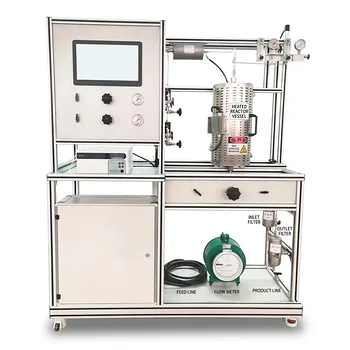
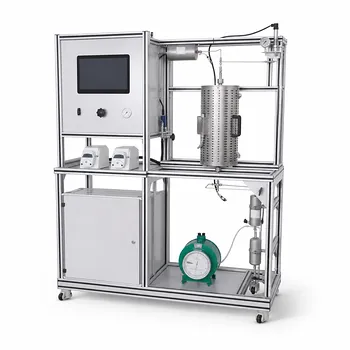
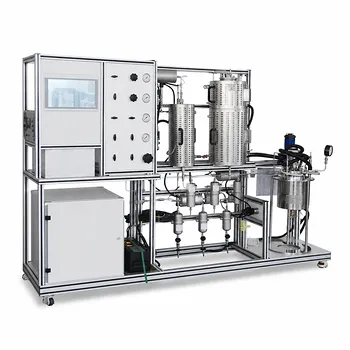
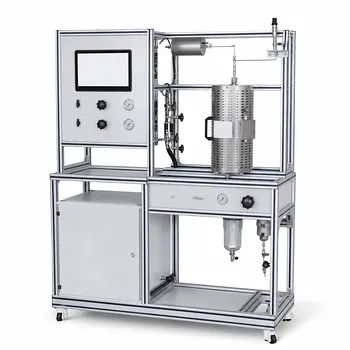
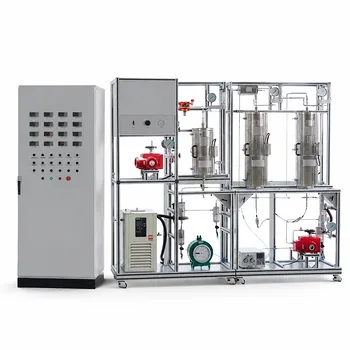
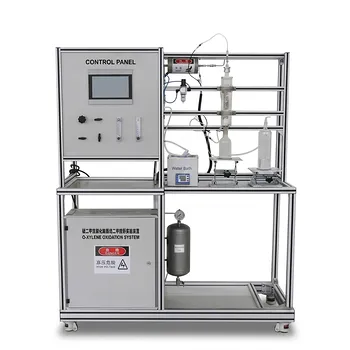
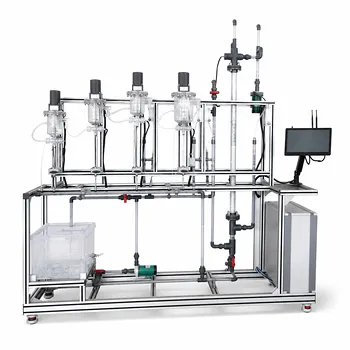
Safe and effective catalyst regeneration requires precise process control and high-performance equipment. LABPARK provides state-of-the-art Educational and Vocational Unit Operations Pilot Plants in chemical engineering, bioprocess & biotech, and environmental & water treatment.
Tailored for universities, research institutes, and enterprises, our pilot plants feature multi-point temperature sensors and advanced control systems to prevent thermal degradation and secure your research outcomes.
Contact LABPARK today to discuss your pilot plant requirements with our technical experts!
Related Products
- Fixed Bed Gas Solid Catalytic Reaction Educational Pilot Plant
- Educational Unit Operations Pilot Plant for Intraparticle Diffusion Effective Factor Measurement
- Ethylbenzene Dehydrogenation Educational Unit Operations Pilot Plant
- Multi Functional Catalytic Reaction and Reactor Evaluation Educational Unit Operations Pilot Plant
- Carbon Dioxide Hydrogenation Methanol Synthesis Educational Unit Operations Pilot Plant
People Also Ask
- How do reactor pilot plants safely study gas-solid reactions? Master kinetics with thermal & flow control.
- How does the Mears criterion evaluate transport resistance? Key Guide to Intrinsic Kinetics
- Fluidized vs. Fixed Bed Reactors: Comparing Heat & Complexity in Pilot Plants
- Why is a multibed configuration necessary for exothermic reactions? Optimize your pilot plant trajectory.
- How is the friction factor determined for fixed-bed pilot plants? Select the best pressure drop correlation.