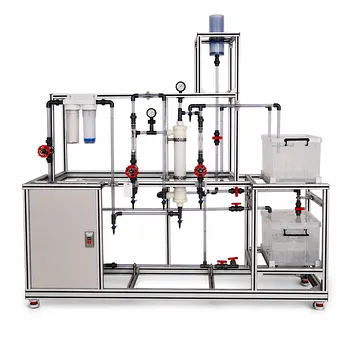
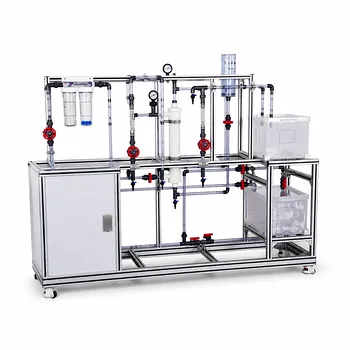
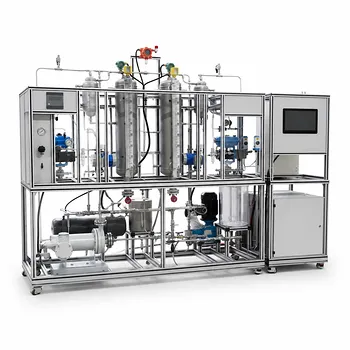
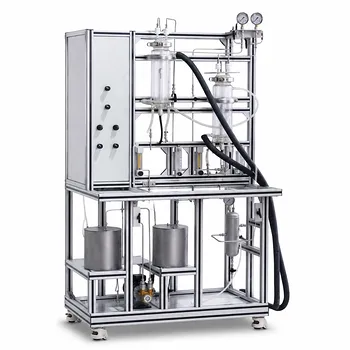
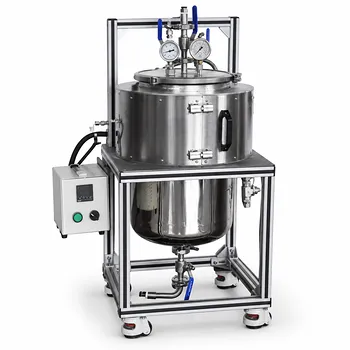
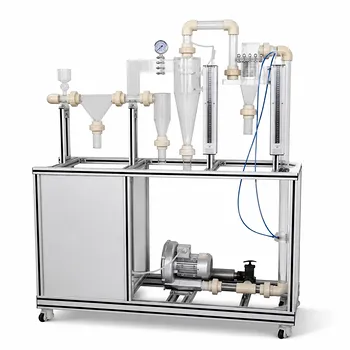
Membrane filtration pilot plants provide a hands-on platform to physically demonstrate and research critical food and beverage separation processes. You can use them to clarify fruit juices via microfiltration, concentrate whey proteins through ultrafiltration, and perform low-temperature juice concentration or demineralization with nanofiltration or reverse osmosis. These pilot-scale systems let you systematically alter membrane pore size, pressure, and flow conditions to observe exactly how they impact separation efficiency, product sensory quality, and energy use.
A membrane filtration pilot plant is not just a piece of hardware—it’s a controlled research environment. It allows you to deconstruct complex food streams and study how each membrane process selectively retains or passes specific components, turning a theoretical unit operation into a tangible, measurable system you can optimize for taste, yield, and stability.
The Foundation: Membrane Separation Principles in a Pilot Setting
Understanding Size Exclusion and Selective Permeability
All pressure-driven membrane processes separate components based on size and solute-membrane interactions. A pilot plant makes this abstract concept visible. By swapping membrane modules with different pore sizes—from microfiltration (MF) down to reverse osmosis (RO)—you can feed the same raw juice or whey stream and instantly see which molecules end up in the permeate and which stay in the retentate.
The Role of Driving Forces
Most food and beverage applications use pressure as the main driving force. In a pilot plant, you can manipulate trans-membrane pressure and cross-flow velocity to control flux. This teaches a core insight: separation is not just about pore size; it’s about how you apply energy to overcome osmotic pressure and concentration polarization.
Key Food and Beverage Applications Demonstrated
Juice Clarification with Microfiltration
MF membranes (0.1–10 μm pore size) retain suspended solids, pulp, and spoilage microorganisms while allowing water, sugars, acids, and flavor compounds to pass. In a pilot run, you can feed freshly pressed apple or orange juice, observe the crystal-clear permeate, and taste-test it immediately—proving that cold-sterilization and clarification happen without heat, preserving fresh flavor. You can then measure turbidity reduction and microbial log-reduction values.
Concentrating Dairy Proteins with Ultrafiltration
UF membranes (2–100 nm) are the workhorse for whey protein concentration. A pilot plant can process raw whey, showing you how α-lactalbumin and β-lactoglobulin are retained while lactose, salts, and water permeate. By adjusting pressure and recirculation rate, you can hit a target protein concentration factor, simulating exactly what happens in a commercial cheese plant before spray drying. You can also evaluate phospholipid removal in vegetable oil refining using similar UF modules.
Juice Concentration and Demineralization with NF/RO
Nanofiltration (1–2 nm) and reverse osmosis (0.1–1 nm) let you remove water to concentrate juices at ambient temperatures. In a pilot setup, you can run grape juice through an NF membrane to partially remove monovalent salts (demineralization) while retaining sugars and color, or use RO to produce a high-brix concentrate with minimal thermal degradation. Measuring the permeate’s conductivity and brix lets you calculate real rejection rates and compare energy consumption to traditional evaporation.
Exploring Non-Pressure Processes for Specialty Beverages
Pervaporation modules can be integrated to demonstrate solvent recovery or alcohol adjustment in beverages. For example, you can study how a membrane selectively removes ethanol from a fermented drink, preserving delicate aromas—a process that’s difficult to replicate with distillation.
Researching Critical Process Variables
Monitoring Flux and Rejection in Real Time
Pilot plants are instrumented to measure flow rates, pressures, and concentrations at every stream. You can plot flux vs. time for different membrane types and clearly observe the onset of fouling or concentration polarization. This turns a theoretical mass transfer equation into a real data set you can model.
Analyzing Concentration Polarization and Fouling
Concentration polarization is the true enemy of membrane efficiency. In a pilot system, you can deliberately increase feed solids or reduce cross-flow velocity and watch permeate flux plummet. Then, you can reverse the phenomenon by increasing shear or implementing periodic back-pulsing, providing an intuitive understanding of how to manage boundary layers in industrial plants.
Testing Multi-Stage and Recycling Configurations
A well-designed pilot plant allows you to rearrange modules in series or recycle the retentate. This mimics the multi-stage systems used in high-recovery juice plants, where the goal is to extract the maximum amount of water without letting local solute concentrations exceed solubility limits. You can study how recovery rate affects final product quality and membrane lifespan.
Addressing Real-World Challenges
Preserving Heat-Sensitive Nutrients and Flavors
Since membrane filtration operates at low temperatures, pilot studies can directly compare the vitamin C or aroma retention of a membrane-concentrated juice against a thermally evaporated sample. This quantitative comparison builds a powerful business case for installing membrane technology in a processing line.
Validating Cleanability and Membrane Lifespan
Food processing demands frequent cleaning-in-place (CIP). A pilot plant lets you replicate CIP cycles with caustic and acid solutions between batches to evaluate how quickly flux recovers and whether the membrane’s rejection properties shift over time. This data is critical for predicting operational costs.
Understanding the Trade-offs
The Flux-Selectivity Trade-off
A membrane that gives you sharper separation (high protein rejection) often operates at a lower flux. In a pilot plant, you can measure this directly: a tighter UF membrane may deliver a purer protein stream, but with half the throughput of a looser one. The best choice depends on whether product purity or processing speed is your bottleneck.
Capital and Energy Cost Realities
While membrane systems save thermal energy, they incur costs in pumps and cleaning chemicals. A pilot study can generate scale-up data that an engineer uses to compare total cost of ownership. Small-scale experiments often reveal that high-pressure RO requires more energy than NF for the same volume reduction, prompting a search for hybrid approaches.
Fouling and Maintenance Overhead
Even with optimized hydrodynamics, certain feed streams (like unfiltered citrus juice with high pectin content) will foul membranes quickly. The pilot plant exposes this reality early, helping you decide whether pretreatment (like enzyme depectinization) is required before membrane concentration. It’s better to discover that in a lab than after installing a full-scale system.
How to Apply This to Your Process Development
Different goals demand different membrane deployments. Use your pilot plant experiments to align with your final product priorities.
- If your primary focus is preserving fresh flavor and aroma in clear beverages: Use microfiltration and taste the permeate side-by-side with the raw feed to confirm no flavor scalping occurs.
- If your primary focus is maximizing protein yield in dairy streams: Select an ultrafiltration membrane in the 10–50 kDa range and measure protein rejection at multiple pressure points to find the optimum balance between purity and throughput.
- If your primary focus is energy-efficient, non-thermal concentration: Start with nanofiltration for partial demineralization and sugar retention, then compare its flux and energy consumption to reverse osmosis at the same concentration factor.
- If your primary focus is studying fouling behavior and cleaning protocols: Run the system with the actual food stream you intend to process and cycle through CIP regimens, measuring flux recovery to build a realistic maintenance schedule.
A membrane filtration pilot plant transforms unit operation theory into actionable insight, letting you taste, measure, and optimize the separation process long before a single dollar is spent on full-scale equipment.
Summary Table:
| Membrane Process | Pore Size Range | Key F&B Application | Main Research Outcome |
|---|---|---|---|
| Microfiltration (MF) | 0.1–10 μm | Juice clarification & cold-sterilization | Removes suspended solids & microbes; preserves fresh flavor |
| Ultrafiltration (UF) | 2–100 nm | Whey protein concentration | Retains proteins (α-lactalbumin/β-lactoglobulin); passes lactose |
| Nanofiltration (NF) | 1–2 nm | Juice demineralization & concentration | Partially removes monovalent salts; retains sugars & color |
| Reverse Osmosis (RO) | 0.1–1 nm | High-Brix juice concentration | Removes water at ambient temperatures to prevent thermal damage |
| Pervaporation | Non-porous | Alcohol adjustment & aroma recovery | Selectively removes ethanol while preserving delicate beverage aromas |
Accelerate Your Separation & Process Research with LABPARK
Are you looking to bridge the gap between theoretical unit operations and hands-on industrial applications?
LABPARK provides state-of-the-art Educational and Vocational Unit Operations Pilot Plants in chemical engineering, bioprocess & biotech, and environmental & water treatment. Designed specifically for universities, research institutes, and enterprises, our pilot plants empower you to:
- Visualize Real-World Separation: Allow students and researchers to master cross-flow dynamics, fouling behavior, and CIP cycles on industrial-grade membranes.
- Generate Reliable Scale-Up Data: Easily monitor flux, trans-membrane pressure, and rejection rates to optimize processes for food, beverage, and biotech products.
- Customize to Your Curriculum & R&D Needs: Select from modular configurations spanning MF, UF, NF, RO, and integrated clean-in-place systems.
Ready to elevate your laboratory’s research and training capabilities? Contact LABPARK today to discuss your custom pilot plant configuration!
Related Products
- Ultrafiltration Membrane Separation Educational Pilot Plant
- Hollow Fiber Ultrafiltration Membrane Separation Educational Pilot Plant
- Multifunctional Membrane Separation Educational Pilot Plant with Ultrafiltration, Nanofiltration, Reverse Osmosis
- Multi-Functional Membrane Separation Educational Pilot Plant for Unit Operations Lab
- Multi Functional Membrane Crystallization Educational Unit Operations Pilot Plant
People Also Ask
- How do PEI, PVDF, and PSU membranes compare in pilot plants? Find the best fit.
- Pervaporation vs. Vapor Permeation: Handling Suspended Solids in Membrane Pilot Plants
- How do membrane pilot plants demonstrate synthetic vs biological membrane advantages?
- Why Use a Membrane Separation Pilot Plant vs. Lab Testing? Avoid Costly Scale-Up Failures
- Isotropic vs. Anisotropic Membranes: How to Choose the Best Pilot Plant Modules