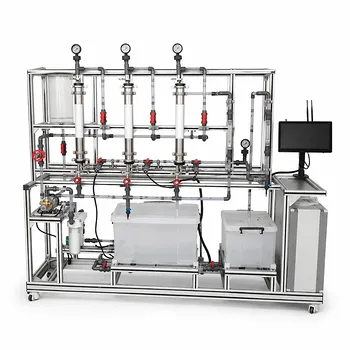
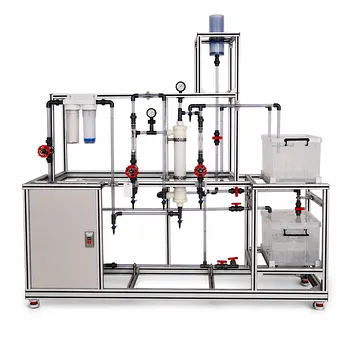
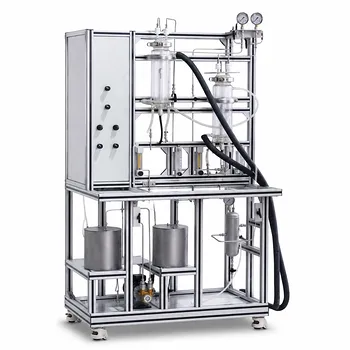
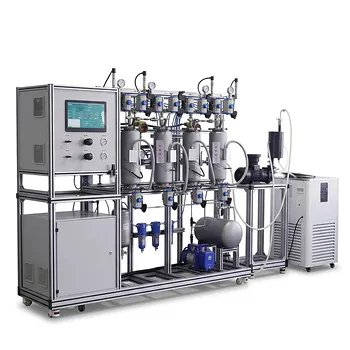
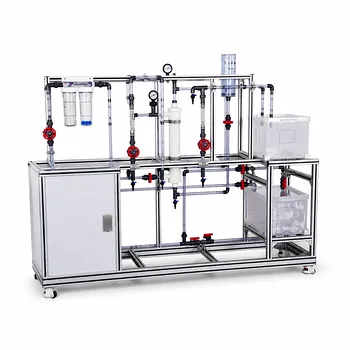
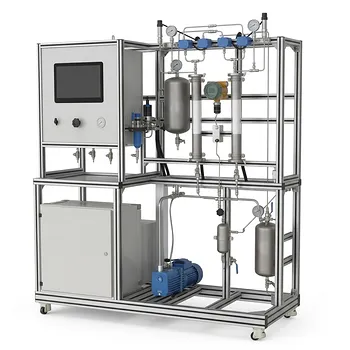
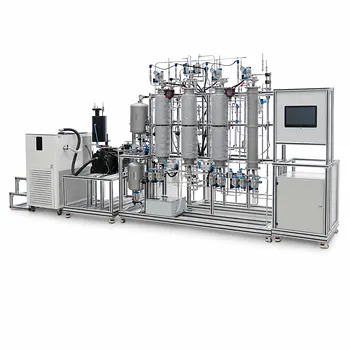
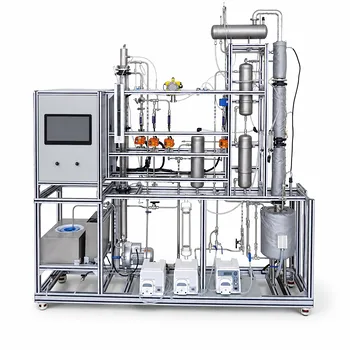
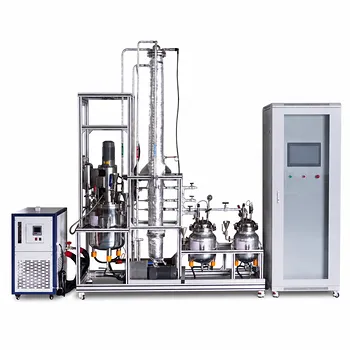
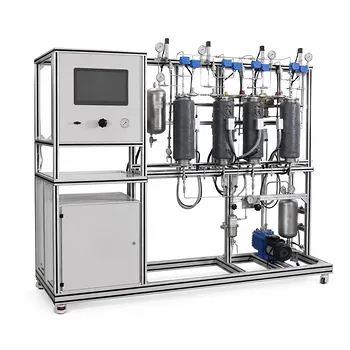
Membrane pilot plants transform synthesis gas ratio adjustment from an abstract concept into a hands-on, controllable experiment. By passing a syngas mixture across a hydrogen‑selective membrane and withdrawing the hydrogen‑rich permeate at reduced pressure, students directly manipulate the final H₂:CO ratio. Varying the active membrane area, the feed flow rate, and the permeate pressure teaches real‑time process control that mirrors industrial carbonylation feed preparation.
Gas‑separation membrane pilot plants serve as powerful teaching tools by letting students tune the H₂:CO ratio through three primary variables—active membrane area, feed rate, and permeate pressure—while revealing the fundamental limits imposed by single‑stage selectivity and the economic drivers behind multi‑stage designs.
How a Membrane Separator Shifts the H₂:CO Balance
The Principle of Selective Hydrogen Permeation
The core idea is remarkably straightforward: a hydrogen‑selective membrane allows the smaller, faster‑diffusing H₂ molecules to pass through far more readily than CO. When syngas enters a hollow‑fiber module, the feed splits into a low‑pressure permeate stream enriched in hydrogen and a high‑pressure retentate stream that retains the carbon monoxide. By deliberately removing a defined fraction of hydrogen, you shift the ratio in the retentate from a typical steam‑reforming value of 3:1 down to a carbonylation‑ready 1:1.
The Three Critical Control Knobs
Students learn that automatic ratio adjustment is not a black box; it depends on three directly manipulable parameters.
- Active membrane area. In a pilot plant, this is often varied in service by blocking the permeate flow from selected membrane elements. Reducing the effective area limits hydrogen removal and moves the retentate ratio closer to the original feed value.
- Feed flow rate. A higher gas feed rate reduces the residence time over the membrane, lowering the degree of hydrogen extraction. Conversely, a slower feed rate gives more opportunity for H₂ to permeate, enabling a steeper ratio drop.
- Permeate pressure. Lowering the permeate‑side pressure increases the transmembrane driving force for hydrogen, pulling more H₂ out of the retentate and yielding a leaner H₂:CO mixture.
These variables are typically manipulated from a central control panel, giving students direct experience with process control loops, PID tuning, and real‑time composition monitoring.
From Theory to Practice: The Educational Pilot Plant Setup
Real‑Time Ratio Control and Automation
A modern educational pilot plant integrates gas chromatography or online mass spectrometry to continuously report the H₂:CO ratio. Students can set a target ratio and write a control algorithm that automatically adjusts permeate pressure or feed rate. This mirrors the industrial need for consistent stoichiometric feed to downstream reactors, where even small ratio drifts degrade catalyst performance.
Matching Industrial Carbonylation Feed Preparation
Many chemical engineering curricula emphasize the gap between syngas generation (often rich in hydrogen) and downstream processes like hydroformylation or acetic acid synthesis, which require a tight 1:1 ratio. The pilot plant closes that gap: students observe firsthand how a single membrane skid, when operated with the correct combination of area, flux, and pressure, converts a 3:1 feed into a certified carbonylation feed. This hands‑on link between unit operations and process synthesis deepens their understanding of integrated plant design.
Understanding the Trade‑offs of Single‑Stage Separation
The Purity vs. Recovery Dilemma
No membrane is a perfect molecular gate. Single‑stage units expose the thermodynamic dilemma: high hydrogen recovery inevitably contaminates the permeate with some CO, while targeting very high retentate CO purity forces a large loss of hydrogen in the permeate. Students can quantify this by calculating stage cut and constructing purity‑recovery trade‑off curves. By testing gas mixtures such as CO₂/CH₄, they see that reaching both pipeline‑grade retentate and high‑purity permeate simultaneously is impossible in a single stage—an insight that is equally valid for syngas adjustment.
When Multi‑Stage Configurations Become Necessary
The pilot plant encourages students to ask, “What if I need a 2% H₂ in the retentate and a hydrogen product stream suitable for recycle?” The answer leads to multi‑stage membrane networks with intermediate compression. These experiments fuel discussions about capital vs. operating costs, the role of process intensification, and the integration of membranes with conventional separation technologies like pressure swing adsorption. Such economic reasoning transforms the pilot plant from a simple demonstration into a platform for design thinking.
Embedding Process Intensification and Economics in the Curriculum
Comparing Membrane Separation to PSA and Cryogenic Distillation
The small footprint, continuous operation, and low energy demand of a membrane pilot plant become strikingly clear when students benchmark it against the batch cycles and deep‑cold temperatures of alternative technologies. This comparison reinforces the concept of modular process intensification—achieving the same separation task with fewer unit operations and less resource consumption. For the syngas application, students can calculate energy savings and see why membrane‑based ratio adjustment is gaining traction in modern petrochemical complexes.
Evaluating Membrane Performance Under Changing Conditions
Beyond the core ratio control, a well‑instrumented pilot plant invites investigation into membrane material properties. Students can test polymeric modules—such as polysulfone‑silicone hollow fibers—across a range of feed pressures and temperatures, measuring permeability and selectivity. They might also examine how impurities like water or CO₂ alter separation efficiency. This material‑science dimension connects the classroom theory of Fickian diffusion and solution‑diffusion models to tangible performance data, preparing them for the materials‑driven innovation shaping today’s gas‑separation industry.
Making the Right Choice for Your Educational Goal
The way you configure and operate a membrane pilot plant should align with the specific learning outcomes you want to achieve.
- If your primary focus is process control fundamentals: Emphasize the interactive control of permeate pressure and active area, and let students write their own ratio‑control algorithm.
- If your primary focus is industrial realism: Operate the plant with real synthesis gas and mimic a carbonylation feed scenario, demonstrating the step‑by‑step ratio adjustment from steam‑reformer effluent.
- If your primary focus is separation thermodynamics: Use the pilot plant to generate purity‑recovery trade‑off curves and then task students with designing a multi‑stage cascade that overcomes the single‑stage limits.
- If your primary focus is sustainable process design: Integrate energy‑efficiency comparisons and have students quantify the lifecycle advantage of membrane‑based ratio adjustment over traditional methods.
A gas‑separation membrane pilot plant does far more than illustrate a unit operation; it equips the next generation of engineers with the systems‑thinking skills to design and control the resource‑efficient chemical processes of tomorrow.
Summary Table:
| Control Variable | Process Action | Impact on H₂:CO Ratio | Educational Value |
|---|---|---|---|
| Active Membrane Area | Reduce active area | Decreases H₂ removal (retentate stays closer to feed) | Teaches capacity control & scaling |
| Feed Flow Rate | Increase feed rate | Lowers H₂ extraction due to reduced residence time | Demonstrates residence time effects |
| Permeate Pressure | Lower pressure | Increases H₂ permeation (leaner H₂ retentate) | Illustrates driving force & PID tuning |
Bring Industrial Realism to Your Lab with LABPARK
Ready to elevate your engineering curriculum? LABPARK provides state-of-the-art Educational and Vocational Unit Operations Pilot Plants in chemical engineering, bioprocess & biotech, and environmental & water treatment designed specifically for universities, research institutes, and enterprises.
Our advanced pilot plants bridge the gap between classroom theory and industrial practice, offering students hands-on experience with real-time process control, PID loops, and unit operations.
Contact LABPARK today to explore our custom pilot plant solutions and upgrade your training facilities!
Related Products
- Bench Scale Dual Column Gas Separation and Capture Educational Pilot Plant
- Multifunctional Membrane Separation Educational Pilot Plant with Ultrafiltration, Nanofiltration, Reverse Osmosis
- Multi-Functional Membrane Separation Educational Pilot Plant for Unit Operations Lab
- Gas-Solid Heterogeneous Separation Demonstration Educational Unit Operations Pilot Plant
- Ultrafiltration Membrane Separation Educational Pilot Plant
People Also Ask
- What are the key thermodynamic considerations for gas mixture modeling? Expert Guide
- Which membrane materials are commonly used in gas separation pilot plants, and how is membrane fouling typically managed?
- Why Are Binary Interaction Parameters Critical for Gas Separation Pilot Plants? Avoid Costly Failures
- Why is Graham's Law critical for gas separation in pilot plants? Master Unit Operations Design
- How does the separation mechanism of gas permeation differ from liquid membrane processes? Pilot Plant Guide