Magnesium doesn’t just add to the scale—it deliberately distorts your silica measurement. In the gravimetric determination of silica by hydrofluoric acid volatilization, magnesium originally present as magnesium silicate converts to magnesium sulfate after treatment. Because magnesium sulfate is significantly heavier than magnesium oxide, weighing the final residue directly understates the silica loss. You correct this error by determining the magnesium oxide content in the residue, mathematically converting that weight to its magnesium sulfate equivalent, and then adding the excess mass back to the measured weight loss.
The measured silica loss is falsely low because magnesium ends up weighed as the heavier sulfate, not the oxide. To get the true silica value, you must convert the determined MgO to its MgSO₄ equivalent and then add the calculated excess weight back to the observed loss.
The Chemistry of the Interference
Why the Residue Gets Heavier
In the standard procedure, the deposit sample is ignited at 1100°C, treated with hydrofluoric and sulfuric acids, and then re-ignited. Silica volatilizes as silicon tetrafluoride. During this step, magnesium silicate (MgO·SiO₂) is converted into magnesium sulfate (MgSO₄).
MgSO₄ has a molecular weight of 120.4 g/mol, while MgO is only 40.3 g/mol. After the second ignition, all magnesium remains as the sulfate, which is over twice as heavy as the oxide that would correspond to the original magnesium content.
Because the residue is now heavier than it should be, the gravimetric loss attributed to silica is too low. You are effectively “missing” some of the silica that left the sample—it has been arithmetically replaced by excess sulfate mass.
The Gravimetric Silica Procedure at a Glance
The deposit is first ignited, weighed, then treated with a mixture of HF and H₂SO₄. Silicon reacts to form volatile SiF₄, and the sample is ignited once more at 1100°C.
The weight loss between the initial and final residues is taken as SiO₂. Any magnesium that was bound to silica will now remain as MgSO₄, inflating the final residue weight and introducing a systematic negative bias.
Magnesium’s Role in the Error
Only magnesium that originated as magnesium silicate–type compounds participates in this interference. The key point is that the residue weight after volatilization includes an artificially heavy sulfate component instead of the lighter oxide.
As a result, the calculated silica loss does not reflect the full amount of SiO₂ that actually vaporized. Without a correction, you will consistently underestimate the silica content of magnesium-bearing deposits.
The Correction Formula and How to Apply It
Converting MgO to MgSO₄
After determining the weight of MgO in the residue (for example, through hydroxyquinolate precipitation), you convert it to the equivalent weight of MgSO₄ using the well-known molecular weight ratio:
$$\text{MgSO}_4 \text{ weight} = \text{MgO weight} \times \frac{120.4}{40.3}$$
This step tells you what the residue would weigh if all magnesium were present as the sulfate instead of the oxide.
Adding the Excess Mass Back
The difference between this calculated MgSO₄ weight and the measured MgO weight is the excess mass that has been wrongly retained in the residue. You must add this excess mass back to the measured silica loss to obtain the true silica value.
In practice, the correction is: $$\text{True SiO}_2 = \text{Measured SiO}_2 + \left( \text{MgO weight} \times \frac{120.4}{40.3} - \text{MgO weight} \right)$$
This one-line calculation removes a significant source of systematic error and restores the integrity of your data.
Accurately Determining Magnesium in the Sample
Precipitating as Magnesium Hydroxyquinolate
To perform the correction, you need a precise value for the MgO content. Magnesium is typically separated and determined gravimetrically by precipitating it as magnesium hydroxyquinolate using 8-hydroxyquinoline in a hot, ammonium hydroxide–neutralized solution.
This precipitation is selective and forms a crystalline solid that can be filtered, dried, and weighed with high precision.
The Critical Drying Temperature
The hydration state of the precipitate is extremely temperature-sensitive. Drying at 105°C yields the dihydrate salt, while drying at 130–140°C drives off the water to give the anhydrous form.
Tight control of the drying temperature is essential. Even a few degrees drift can alter the gravimetric factor and introduce additional errors in the MgO weight used for the silica correction. In water treatment pilot-plant curricula, this step is often emphasized to teach students the importance of thermal precision in analytical chemistry.
Trade-offs and Common Pitfalls
When the Correction is Necessary
The correction is mandatory whenever magnesium silicate is present in the deposit. In boiler scales, heat exchanger deposits, or membrane foulants from high-magnesium feed waters, ignoring it leads to a systematic underestimation of silica.
However, if the original deposit contains magnesium entirely from carbonates or sulfates that were already present as such (and not associated with silica), the interference may be minimal—but such cases are rare in real water-treatment scales.
Risks of Insufficient Sulfuric Acid
A separate but equally damaging error occurs when too little sulfuric acid is used during the volatilization step. Instead of forming sulfates, metal fluorides remain in the residue.
These fluorides convert back to oxides only slowly upon ignition. The residue stays abnormally heavy, and a further cascade of problems can follow, including incomplete precipitation of other metals due to fluoride complexation. Always ensure an adequate excess of H₂SO₄ to drive the chemistry toward sulfate formation.
Limitations of the Gravimetric Approach
While the correction formula elegantly resolves the magnesium interference, it does assume that all magnesium determined in the residue indeed originated from magnesium silicate. In complex multi-element deposits, verifying the speciation through complementary techniques (like XRD or SEM-EDS) can add confidence.
The gravimetric method itself is time-consuming and requires skilled technique. In high-throughput pilot-plant monitoring, choosing when to apply the full correction versus when to use a rapid but less accurate alternative is a practical balancing act.
Making the Right Choice for Your Goal
Your response to this interference should align with your operational or educational objective. The same correction logic applies, but the way you prioritize it will differ.
- If your primary goal is accurate silica mass balance in a critical boiler deposit: Always determine MgO and apply the MgO‑to‑MgSO₄ correction factor. It removes the single largest source of systematic bias in silica quantification for magnesium-containing scales.
- If your primary focus is high‑throughput screening of multiple scale samples: You may accept the uncorrected value initially, but you must document that results will be 5–15% low (depending on Mg content) and confirm any borderline findings with the full correction later.
- If your primary focus is teaching analytical chemistry in a pilot‑plant laboratory: Build the correction into the curriculum as a powerful example of stoichiometric reasoning and demonstrate why precise drying of the magnesium hydroxyquinolate precipitate is not just a protocol step—it directly affects downstream decisions on water treatment program effectiveness.
- If your primary focus is evaluating anti‑scalant performance: Use the corrected silica values to calculate true deposition rates. Relying on uncorrected data could lead you to mistakenly conclude that a treatment is performing better than it actually is, simply because the magnesium interference masked the real silica deposition.
By transforming a misleading residue weight into a chemically honest silica value, this straightforward mathematical adjustment empowers you to make smarter, data‑driven decisions about scale control and water treatment in any pilot‑plant operation.
Summary Table:
| Aspect | Key Detail | Impact / Formula |
|---|---|---|
| Interference Mechanism | Converts magnesium silicate to $MgSO_4$ | Final residue weighs more, underestimating silica loss |
| Molecular Weights | MgO (40.3 g/mol) vs. $MgSO_4$ (120.4 g/mol) | Sulfate residue is ~3x heavier than the oxide |
| Correction Formula | Adjusts for the excess sulfate mass | $True\ SiO_2 = Measured + (MgO \times 2.99 - MgO)$ |
| Mg Determination | Precipitated via 8-hydroxyquinoline | Strict drying temperature (105°C or 130–140°C) is required |
Optimize Your Water Treatment Research with LABPARK
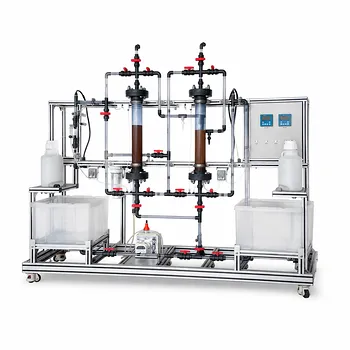
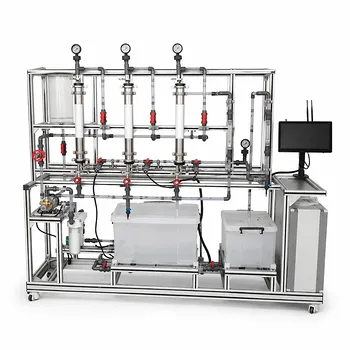
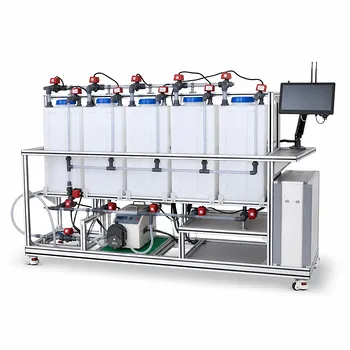
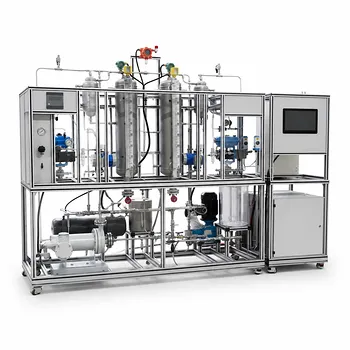
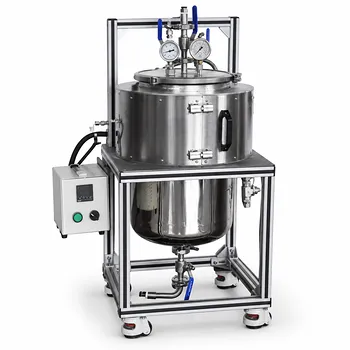
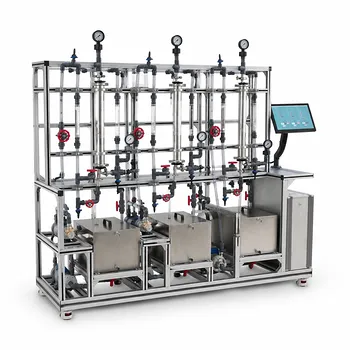
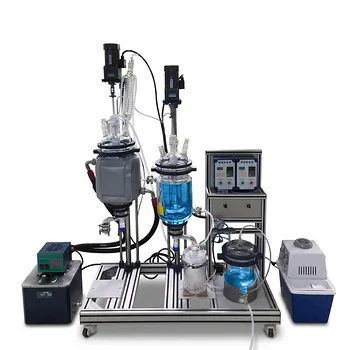
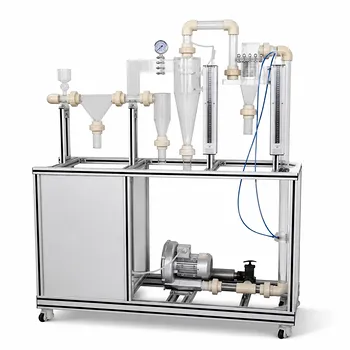
Are you looking to bridge the gap between theoretical analytical chemistry and practical process engineering? LABPARK provides state-of-the-art Educational and Vocational Unit Operations Pilot Plants in chemical engineering, bioprocess & biotech, and environmental & water treatment. Designed specifically for universities, research institutes, and enterprises, our systems ensure your students, researchers, and engineers gain hands-on, highly accurate operational experience.
Contact LABPARK today to discover how our pilot plant solutions can elevate your training and research capabilities!
Related Products
- Ion Exchange Water Purification Educational Pilot Plant for Engineering Unit Operations
- Multifunctional Membrane Separation Educational Pilot Plant with Ultrafiltration, Nanofiltration, Reverse Osmosis
- Electrochemical Water Treatment Educational Unit Operations Pilot Plant
- Constant Pressure Filtration Educational Unit Operations Pilot Plant
- Alkaline Membrane Water Electrolysis Educational Pilot Plant Unit Operations Training System
People Also Ask
- How to Prevent Ion Exchange Channeling? Expert Solutions for Pilot Plants
- How does ion exchange work in water treatment pilot plants? Cost & process guide.
- What operational precautions should lab operators take for resin volume changes and air pockets? Key Guide
- How to use ion exchange pilot plants to verify alkalinity? A hands-on guide for engineering students.
- Why does iron degrade cation resin & how to demonstrate capacity recovery? Step-by-Step Lab Guide