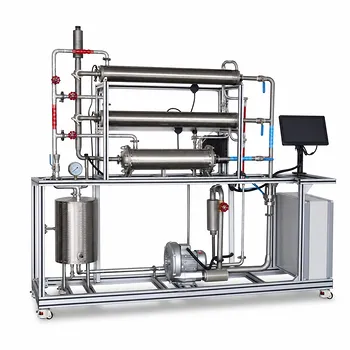
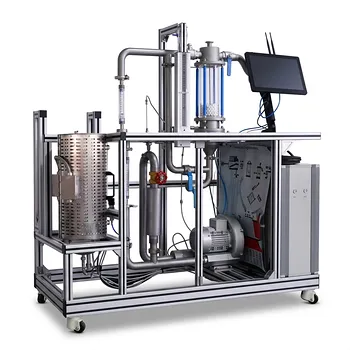
Because they transform an abstract design philosophy into a hands-on lesson in energy autonomy. Heat-integrated reactors are critical in pilot plants because they physically embody process intensification by merging the reaction and energy supply into one unit. This allows researchers to directly decouple a reaction from plant utilities, measure true chemical energy efficiency, and quantify how shrinking the equipment footprint translates to economic viability.
Process intensification promises smaller, cleaner, and cheaper processes. Heat-integrated reactors are the critical pilot-plant tool that proves this promise is real, by teaching how to make a reaction thermally self-sufficient and then directly measuring the resulting drop in energy waste and capital cost.
The Core Principle: Embedding Energy into the Reaction
A heat-integrated reactor doesn’t just contain a reaction—it makes the reaction’s own heat do the work. This is the practical demonstration of process intensification that a pilot plant must deliver.
What “Heat-Integrated” Actually Means in a Pilot Plant
Instead of firing a remote furnace and transporting heat, these reactors use configurations like counter-current heat exchangers or reverse-flow reactors. The high-temperature heat required for catalysis is generated and immediately re-used inside the reactor itself. This turns a two-step sequence—heat, then react—into a single, intensified step.
Combining Unit Operations into a Single Physical System
This integration collapses the traditional boundaries between reaction and heat exchange. In educational pilot plants, students see that the reactor is also the heat exchanger. This makes the concept of a multifunctional reactor tangible, showing how to reduce capital investment and eliminate separate utility systems.
Breaking Autothermal Limitations
Many high-temperature catalytic processes, such as the partial oxidation of methane, cannot sustain themselves without smart heat management. Heat-integrated reactors like reverse-flow designs demonstrate how to overcome this autothermal barrier. The pilot plant becomes a living proof that a reactor can maintain its own temperature profile without constant external energy input.
Teaching Economic Independence from Utilities
The true test of process intensification is not just technical performance—it’s whether you can unhook the process from expensive plant utilities. Heat-integrated reactors reveal exactly how to do this.
Decoupling Reaction Routes from External Steam and Power
The primary reference explicitly states that these reactors teach how to decouple reaction routes from external plant utilities. In a pilot plant, this means the reaction runs on its own thermal budget. Students learn to design processes that are not chained to the availability or cost of site-wide steam or electricity, making them economically resilient.
Visualizing the 5–15% Cash Cost Reduction
Utility costs—steam, cooling water, electricity—can represent up to 15% of production cash cost. When a pilot plant integrates energy recovery loops, learners can measure how much external utility consumption truly vanishes. This hands-on energy balance calculation directly connects thermal integration to improved process economics.
The Path to Standalone Process Viability
A reaction that drains a plant’s steam network is a financial liability. A heat-integrated reactor, by contrast, demonstrates process viability independent of central utilities. This is a critical lesson for engineers who will one day design processes for remote locations or energy-scarce environments, where self-sufficient operation is non-negotiable.
Quantifying True Energy Efficiency
Efficiency is often spoken of vaguely in the classroom. Heat-integrated reactors enforce a rigorous, measurable definition.
Measuring Heat Directly Converted into Chemical Energy
The pilot-plant setting forces a specific measurement: the ratio of heat that goes into forming product versus heat lost as sensible heat. This figure, the true thermodynamic efficiency, moves the conversation from “using less energy” to “using energy precisely where the chemistry demands it.”
Evaluating Intensification by the Numbers
Process intensification must have clear metrics. By monitoring how much chemical energy is gained per unit of total heat released, researchers can benchmark a heat-integrated design against a conventional staged process. The pilot plant becomes an evaluation platform where the footprint-to-performance ratio is calculated in real time.
Demonstrating Superior Selectivity and Yield Through Thermal Precision
Integrated heat control prevents temperature overshoots and hot spots, which are especially critical in microreactors. This leads to product selectivity improvements—for example, polymerization reactions can jump from 20–30% yield to around 75% simply because heat is removed or delivered with surgical precision, reducing unwanted side reactions.
Demonstrating Footprint Reduction as a Direct Design Outcome
A smaller reactor that does the same job is the iconic image of process intensification. Heat integration is the engineering lever that enables that miniaturization.
The Miniaturized Scale Toolbox
When a pilot plant pairs microreactors with integrated heat exchange, the equipment volume collapses. Students see that sub-millimeter channels and internal recuperative heat recovery allow for the same throughput in a device a fraction of the size of a traditional batch vessel. This directly demonstrates reactor footprint reduction.
Consolidating Subprocesses into a Single Vessel
The pool reactor concept—where exothermic carbamate condensation directly supplies heat for the endothermic urea reaction and steam generation—is a classic example. A single vessel replaces multiple unit operations. Operating this in a pilot plant shows how integrating heating and cooling duties can slash the number of major equipment pieces and their associated structural footprint.
Benchmarking Conventional vs. Intensified Systems
Only a pilot plant that runs both a conventional jacketed reactor and a heat-integrated one can provide comparative data. Learners then quantify the exact reduction in footprint, energy consumption, and even safety relief requirements. This side-by-side evaluation builds the critical judgment to know when to deploy intensified technology.
Understanding the Trade-offs of Heat Integration
No process intensification tool is without drawbacks. A trustworthy evaluation requires examining the complexity heat integration introduces.
Increased Operational and Control Complexity
A reactor that manages its own energy balance is a more tightly coupled system. Temperature control becomes more challenging because the driving force for heat exchange depends directly on reaction kinetics. Pilot plants reveal that while you save on utility infrastructure, you must invest in sophisticated process control and safety logic to handle thermal runaway risks.
Material and Catalyst Stress
The high thermal gradients inside a compact heat-integrated unit can strain materials and deactivate catalysts faster. Students will observe that the same design that maximizes heat transfer also exposes equipment to more severe conditions. This creates a trade-off between energy efficiency and maintenance intervals.
Limited Turndown Ratio
Autothermal or highly integrated processes often have a narrow operating window. When throughput drops, the heat balance can fail, extinguishing the reaction or causing instability. This teaches that intensified plants are sometimes less flexible than conventional setups that simply burn more fuel on demand.
Capital Cost Shifts, Not Always Reduction
While operating costs drop, the capital cost of a highly integrated, customized reactor can be high. The pilot plant experience must highlight that economic viability depends on the balance between saved utility dollars and the premium paid for a specialized intensification unit. This nuanced financial analysis is a core research outcome.
Making the Right Choice for Your Learning Goal
How you leverage a heat-integrated reactor pilot plant depends on whether you are teaching core principles, benchmarking technologies, or designing for industry.
- If your primary focus is teaching thermodynamic reality: Ensure the pilot plant setup allows direct measurement of sensible heat loss versus chemical energy gain. The lesson is that efficiency is not a slogan—it is a number with calculable cash value.
- If your primary focus is economic process design: Structure experiments to compare the life-cycle cost of an integrated reactor against a conventional design with separate utilities. The objective is to identify the utility price and operating scale where heat integration becomes profitable.
- If your primary focus is demonstrating miniaturization: Choose a microreactor or a multifunctional pool reactor experiment. The physical size comparison tells the story of intensification most powerfully, showing how to deliver high-throughput chemistry in a benchtop-sized device.
- If your primary focus is preparing for industrial complexity: Intentionally run the integrated reactor at turndown and upset conditions. The goal is to understand the control strategies and material limits that balance out the gains in efficiency and footprint.
A heat-integrated reactor in a pilot plant is more than a piece of hardware—it is the instrument that transforms process intensification from a theoretical ideal into a discipline of measuring, trading off, and ultimately proving that better chemistry can happen in smaller, smarter, and more self-sufficient spaces.
Summary Table:
| Key Dimension | Pilot Plant Demonstration | Practical Benefit / Trade-off |
|---|---|---|
| Energy Autonomy | Decoupling reaction from utilities | 5–15% reduction in production cash costs |
| Thermodynamic Efficiency | Measuring chemical energy vs. heat loss | Verifiable process intensification metrics |
| Footprint Reduction | Multi-functional & microreactor designs | Smaller equipment volume & lower capital cost |
| Operational Trade-offs | Tight thermal coupling and kinetics | Increased control complexity & limited turndown |
Bring Process Intensification to Life with LABPARK
Ready to equip your facility with state-of-the-art training systems? LABPARK provides advanced Educational and Vocational Unit Operations Pilot Plants in chemical engineering, bioprocess & biotech, and environmental & water treatment.
We empower universities, research institutes, and enterprises to bridge the gap between theory and industrial application with safe, highly integrated, and precise pilot systems.
Contact LABPARK today to discuss your laboratory requirements and request a custom quote!
Related Products
- Multi Functional Catalytic Reaction and Reactor Evaluation Educational Unit Operations Pilot Plant
- Multi-Stage Stirred Tanks in Series Residence Time Distribution and Mixing Performance Determination Educational Pilot Plant
- Residence Time Distribution and Reactor Flow Characteristics Determination Educational Pilot Plant
- Fixed-Bed Chemical Reaction and Gas Dust Tar Removal Unit Operations Pilot Plant
- Multi-Reactor Educational Pilot Plant for Reaction Engineering Unit Operations
People Also Ask
- How does feed gas flow rate affect catalytic RFR yields? Optimize Pilot Plant Performance
- What reaction engineering principles are shown in a catalytic reactor pilot plant? SO2 Oxidation Guide
- Why is FTIR integration in catalytic pilot plants important? Real-Time Student Insights
- How to analyze active metal distribution & identify catalyst poisoning in pilot plants? Expert Diagnostic Guide
- How to study catalyst poisoning & regeneration? Master catalytic reaction life cycles.