Here’s the critical reason: Calculating the Langelier Saturation Index (LSI) and Ryznar Stability Index (RSI) is critical because they transform raw water chemistry data into a clear, predictive warning system, allowing operators to proactively prevent the two most common and destructive forces in a pilot plant: mineral scale deposition and metal corrosion.
Pilot plants are designed to mimic full-scale industrial processes in a low-volume, controlled environment. Ignoring LSI and RSI means ceding control of your system’s chemistry, which inevitably leads to clogged heat exchangers, ruined experimental data, and damaged equipment. These indices are not just academic exercises—they are the difference between running a successful, long-term teaching platform and managing a recurring mechanical failure.
Understanding the Indices as Your Pilot Plant’s Guardian
The LSI and RSI are numerical flags that tell you if your process water is chemically balanced, scale-forming, or corrosive. They do not measure these conditions directly; they predict the water’s thermodynamic tendency to behave in a certain way.
How the Calculations Work
The LSI is defined as Is = pH - pHs, where pH is the measured value and pHs is the saturation pH—the theoretical pH at which the water would be in equilibrium with solid calcium carbonate (CaCO₃).
The RSI builds on this, defined as Istab = 2pHs - pH. It effectively magnifies the deviation from balance, giving a more stable, quantitative feel for scale severity.
Both use the same foundational data: temperature, pH, calcium hardness, M alkalinity, and total dissolved solids. A key skill students learn is how each variable shifts the balance.
Interpreting the Numbers to Prevent Damage
The rules are straightforward and actionable, especially in a teaching environment:
- A positive LSI (or RSI below 6.0): The water is supersaturated with CaCO₃. It will try to relieve this by precipitating a hard, insulating layer of scale on heat exchanger surfaces.
- A negative LSI (or RSI between 7.5 and 8.5): The water is undersaturated. It will try to achieve equilibrium by stripping away the protective oxide layer on metal pipes and heat exchangers, causing corrosion.
- An RSI of 7.0: Indicates near-perfect chemical balance, a target point for many systems.
The Real-World Pilot Plant Consequences of Ignoring Indices
The pilot plant environment magnifies the impact of poor chemistry. You aren't dealing with industrial-scale pipes that can lose millimeters of wall thickness for years before failing.
When Scale Wins
Scale is an excellent insulator. A paper-thin layer of CaCO₃ deposited inside a pilot heat exchanger tube dramatically reduces the overall heat transfer coefficient (K).
When this happens, your heat transfer experiments become inaccurate. Students measure inlet and outlet temperatures, only to find the logged data no longer matches the theoretical models. The result is a lab that teaches frustration, not engineering. Clogged small-diameter tubing from scale can also permanently stop flow in sensitive measurement loops.
When Corrosion Takes Hold
Corrosive water attacks the metal surfaces directly. In a pilot plant, this has two immediate effects. First, it introduces dissolved metal ions into the process stream, contaminating water samples and fouling sensitive sensors like pH and conductivity probes.
Second, and more dangerously, it compromises the physical integrity of the thin-walled heat exchanger tubes and fittings, leading to pinhole leaks. A leak between the process water and heating/cooling media not only ruins an experiment but can be a significant safety hazard in a teaching laboratory.
The Feedback Loop with Fluid Dynamics
Water chemistry and fluid dynamics are inseparable. A clean heat exchanger with high-velocity flow optimizes performance. Once scale deposits form, they not only insulate but also roughen the surface, increasing friction and pressure drop.
This forces the pilot plant’s small pump to work harder to maintain the desired flow rate. If the pressure drop exceeds the pump’s head capacity, flow rate drops, the heat transfer coefficient nosedives, and the experimental conditions fail completely.
Understanding the Trade-offs and Limitations
The LSI and RSI are powerful but not omniscient. Treating them as a complete water treatment strategy is a common pitfall.
These Are Equilibrium Models, Not Kinetic Predictors
The indices tell you if CaCO₃ precipitation is thermodynamically possible, not how fast it will happen. A highly supersaturated water might deposit scale slowly in a smooth, cold pipe but instantaneously on a hot heat exchanger surface with nucleation sites. The indices also fail to predict corrosion caused by dissolved oxygen, chlorides, or microbiological activity, ignoring entire classes of critical damage mechanisms.
The Danger of the “Balanced” Water Mirage
A classic operational mistake is to blindly dose chemicals to chase an RSI of exactly 7.0, believing this solves everything. In reality, many effective water treatment programs operate safely at a slightly positive LSI that forms a thin, controlled, protective scale layer while using corrosion inhibitors to passivate the metal. Over-correction into a slightly negative LSI can strip away this protection and trigger aggressive pitting corrosion. The goal is strategic control, not a mathematical perfect zero.
Making the Right Choice for Your Educational or Research Goal
Your reason for calculating these indices will determine how you integrate them into your pilot plant’s operation.
- If your primary focus is teaching foundational engineering principles: Build an experiment where students deliberately cause scaling or corrosion and then correct it. Have them calculate the LSI/RSI, diagnose the condition, and then design a chemical dosing program (acid feed, inhibitor injection) to achieve a target condition.
- If your primary focus is conducting long-term, reproducible research on heat transfer: Establish a daily water chemistry monitoring protocol using these indices as key performance indicators. The goal is absolute stability—maintaining a tight, pre-defined LSI/RSI window to isolate heat transfer variables from chemistry interference.
- If your primary focus is protecting expensive pilot plant assets between experiments: A simple, weekly LSI/RSI check of the stagnant water left in the system or the final rinse water can prevent slow, unseen corrosion or scale hardening that causes expensive startup failures.
The LSI and RSI take a complex, invisible threat and turn it into a simple, teachable, and actionable number—giving you the power to keep your pilot plant running safely, producing valid data, and training the next generation of engineers on how to command the chemistry, not just react to a crisis.
Summary Table:
| Index | Formula | Key Value & Meaning |
|---|---|---|
| LSI (Langelier Saturation Index) | pH - pHs | > 0: Scale-forming < 0: Corrosive = 0: Balanced |
| RSI (Ryznar Stability Index) | 2pHs - pH | < 6.0: Scale-forming > 7.5: Corrosive ≈ 7.0: Balanced |
Optimize Your Lab's Water Treatment Processes with LABPARK
Ensure accurate experimental data and protect your equipment from scale and corrosion. LABPARK offers advanced Educational and Vocational Unit Operations Pilot Plants in chemical engineering, bioprocess & biotech, and environmental & water treatment for universities, research institutes, and enterprises.
Take control of your process water chemistry—contact us today to discuss your laboratory needs!
Related Products
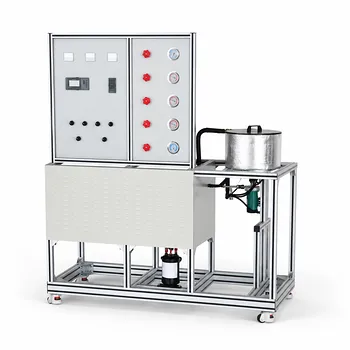
- Educational Compression Refrigeration Performance Determination Unit Operations Pilot Plant
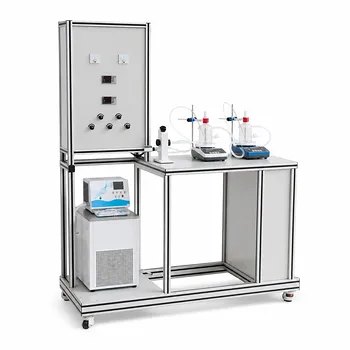
- Ternary Liquid-Liquid Equilibrium Educational Pilot Plant
- Multi Functional Catalytic Reaction and Reactor Evaluation Educational Unit Operations Pilot Plant
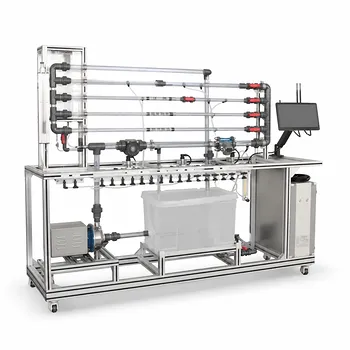
- Fluid Friction Resistance Determination Educational Unit Operations Pilot Plant
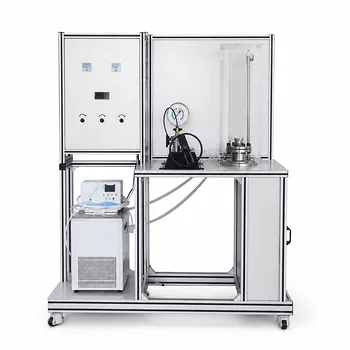
- Carbon Dioxide PVT Curve Determination Educational Unit Operations Pilot Plant
People Also Ask
- How Fourier filtering benefits PLS calibration of inline bioprocess sensors to boost accuracy
- What precautions are needed for GC analysis of salt-containing pilot plant runs? Protect your columns.
- How do students monitor and control cycles of concentration to prevent scale in cooling tower pilot plants?
- What is the analytical procedure for measuring trace copper in pilot plant waters? Colorimetric method.
- How to use pilot plants to estimate gas compression costs? Master scale-up economics.