The fundamental challenge is one of scale—both in size and concentration. In bioprocessing, the solid particles you are trying to separate are often proteins or viruses measuring just 0.01 to 10 µm, drastically smaller than the particulates in traditional chemical filtration. Compounding this, these biological products are typically present in extremely dilute solutions, so you must process immense volumes to recover a meaningful amount. This combination of minute particle size and high dilution makes solid-liquid separation a uniquely difficult bottleneck in the journey from discovery to medicine.
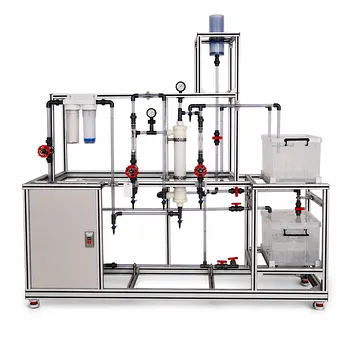
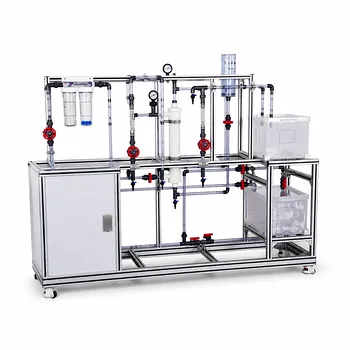
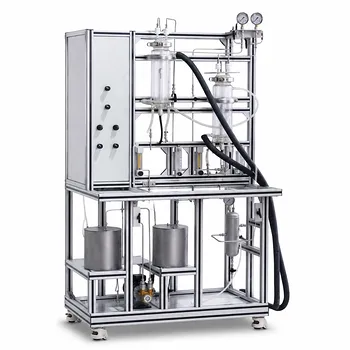
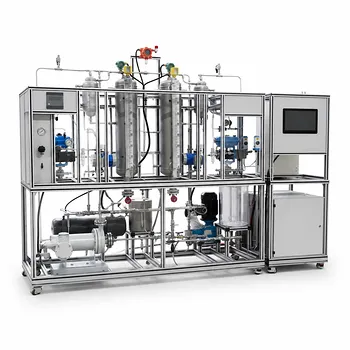
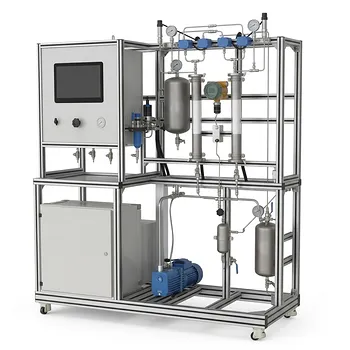
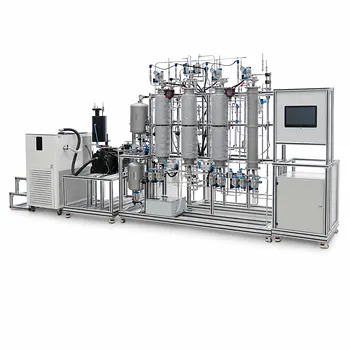
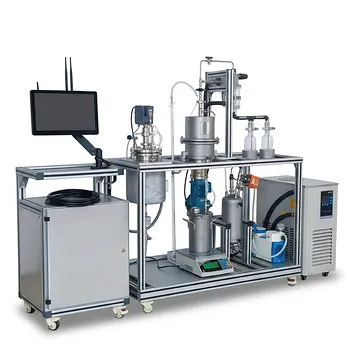
Membrane separation pilot plants are the strategic bridge that converts these fundamental challenges into understood, optimizable unit operations. They are not miniaturized production filters; they are the experimental platforms where fouling is studied, purification yields are maximized, and the critical gap between lab-scale promise and industrial-scale reality is closed with data, not hope.
The Hidden Difficulty: Why Bioprocess Separations Push Filtration to Its Limits
The Tyranny of Tiny Particle Sizes
Traditional filtration methods struggle because the target biological molecules—antibodies, viral vectors, enzymes—are orders of magnitude smaller than typical chemical precipitates. Particle sizes of 0.01 to 10 µm demand membrane classifications like ultrafiltration or microfiltration that can selectively sieve based on molecular weight cut-off. This places immense stress on membrane integrity and makes even minor defects catastrophic for purity.
The Challenge of Extreme Dilution
Biological solutions often start with product concentrations that are vanishingly low. High dilution forces you to handle enormous liquid volumes to capture enough active pharmaceutical ingredient. The energy costs, process time, and sheer scale of the required membrane area become a central economic equation that cannot be guessed at from a benchtop trial.
The Ever-Present Threat of Membrane Fouling
Perhaps the most insidious challenge is fouling. Protein and biological molecule adsorption onto membrane surfaces creates a secondary barrier that continuously reduces permeate flux and alters separation characteristics. Hydrophobic membranes—like those made from polysulfone or polyethersulfone—are particularly vulnerable to rapid, non-specific binding unless they are modified with hydrophilic polymers or carefully pre-treated. Once fouling begins, it cascades into longer cycle times, lower yields, and potential product degradation.
The Non-Negotiable Demand for Purity and Activity
Bioprocess separations must deliver stringent purity while preserving the native structure of heat-sensitive molecules. Even minor denaturation can destroy a batch. Balancing the shear forces, pressure drops, and chemical environments required to fight fouling without damaging the product is a delicate act that requires systematic, empirical tuning—not theoretical modeling alone.
How Membrane Pilot Plants Turn Obstacles into an Opportunity
Bridging the Lab-to-Industrial Chasm
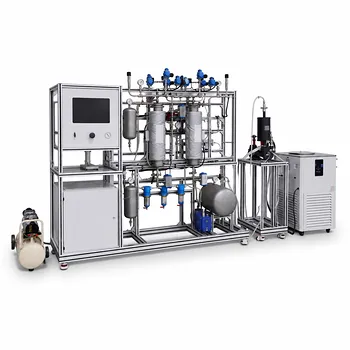
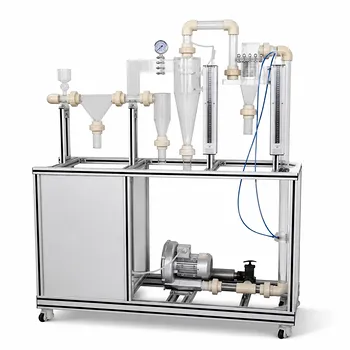
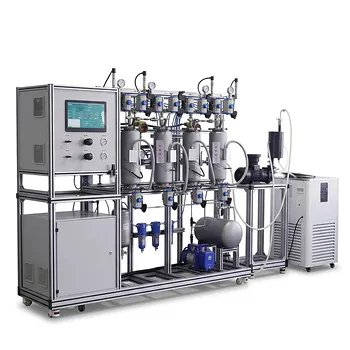
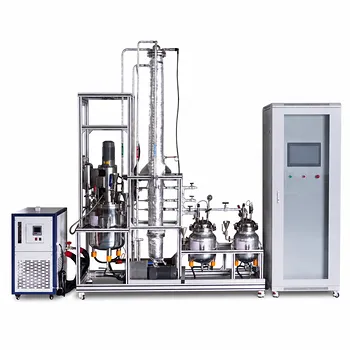
The core purpose of a membrane pilot plant is to demonstrate and optimize high-flow-rate filtration in a controlled, instrumented environment. It provides the missing middle ground where you can test the scalability of a separation concept before committing to the capital expense and regulatory filings of full-scale biomanufacturing. Instead of linear extrapolation from a small stirred cell, you generate real engineering data with representative fluid dynamics.
The Science of Fouling Prevention at Scale
Pilot plants give you the hands-on ability to study and mitigate fouling under production-relevant conditions. You can systematically adjust trans-membrane pressure, cross-flow velocity, and pH while monitoring flux decline. More importantly, you can subject membranes to repeated cleaning-in-place (CIP) cycles, test humectant preservation methods to prevent irreversible drying, and calculate the true membrane lifetime economics before a single industrial module is ordered.
A Living Laboratory for Membrane Selection and Configuration
This is where pilot plants add value well beyond simple filtration. The platform lets you compare hydrophilic membrane modifications (sulfonated PES, PVP blends) against bare hydrophobic substrates and observe the real-world impact on fouling kinetics. Beyond material selection, you can explore process-intensifying configurations:
- Catalyst Retention (Mobile Phase): Physically retain enzymes or whole cells in the reaction loop while allowing lower-molecular-weight products to permeate, simplifying downstream purification.
- Selective Product Removal: Integrate a membrane with an immobilized catalyst bed to continuously extract a specific product, shifting equilibrium and preventing product inhibition.
- Catalytically Active Membranes: Immobilize the catalyst directly onto the membrane material, fusing reaction and separation into a single step. Even liquid-liquid extractions benefit, as microporous hollow fiber contactors immobilize the phase interface without creating stable emulsions, providing up to 10,000 m²/m³ of interfacial area while keeping oil and aqueous phases apart—a technique directly applicable to enzymatic fat splitting, for instance.
Economic and Operational Feasibility Testing
Every pilot run generates the data needed to calculate the maximum achievable concentration factor, understand how osmotic pressure limits final volume reduction, and project the true cost of membrane replacement. This is where the business case is either validated or discarded with minimal financial exposure.
Understanding the Trade-offs
For all their value, membrane pilot plants are not a panacea. Fouling is never entirely eliminated—pilot work optimizes management of inevitable fouling, it does not make it disappear. The experiments are resource-intensive, demanding skilled operators who can avoid common pitfalls like letting modified membranes dry out. Moreover, the data set you generate is valid only for the specific feed stream, membrane chemistry, and hydrodynamics tested; a change in upstream fermentation conditions can render your optimization obsolete. Finally, running a pilot plant is itself a cost and a delay. The insight you gain is invaluable, but only if your organization has the patience to let the data mature into a robust scale-up protocol rather than rushing to market.
Making the Right Choice for Your Goal
Your approach to using a membrane pilot plant should be shaped by your primary objective.
-
If your primary focus is scaling a new biologic from the bench: Use the pilot plant as a de-risking tool. Run side-by-side comparisons of membrane materials, establish maximum stable flux, and build a cleaning regime that protects product quality over multiple cycles. The data you collect here will form the basis of your regulatory filing and equipment specification.
-
If your primary focus is process intensification in an existing facility: The pilot plant is your testbed for configuration changes. Evaluate catalytic membrane reactors or hollow fiber contactors to combine reaction and separation, and quantify the reduction in downstream unit operations. This is where you can directly measure the economic trade-offs between increased membrane cost and reduced solvent or chromatography expenses.
-
If your primary focus is training the next generation of bioprocess engineers: Let the pilot plant be the classroom. Have students adjust parameters like flow rate and pH to see fouling curves in real time, disassemble modules to inspect dried-out membranes, and compare theoretical predictions with actual purity yields. This is how the intuition needed for manufacturing troubleshooting is built.
The difficulty of solid-liquid separation in bioprocessing is not a failure of membrane technology—it is an invitation to understand the biology, materials science, and fluid dynamics at play. A well-executed pilot plant program turns that invitation into a competitive advantage.
Summary Table:
| Separation Challenge | Pilot Plant Solution |
|---|---|
| Minute Particle Size (0.01–10 µm) | Tests ultra/microfiltration membrane limits and selectivity |
| Extreme Dilution | Optimizes concentration factors and flux before scale-up |
| Membrane Fouling | Evaluates CIP cycles, feed parameters, and surface chemistry |
| Product Denaturation | Calibrates shear forces to protect heat-sensitive molecules |
Accelerate Your Bioprocess Scale-Up with LABPARK
Bridging the gap between laboratory research and industrial-scale production requires reliable data and robust pilot testing. LABPARK provides state-of-the-art Educational and Vocational Unit Operations Pilot Plants in chemical engineering, bioprocess & biotech, and environmental & water treatment for universities, research institutes, and enterprises.
By integrating our pilot systems, you can:
- De-risk scale-up by gathering real-world engineering data on flow rates and pressure.
- Prevent membrane fouling by optimizing cross-flow velocity, pH, and CIP cycles.
- Empower hands-on training for students and operators with production-relevant setups.
Ready to transform your bioprocess separation performance? Contact LABPARK today to find the ideal pilot plant solution for your laboratory or facility.
Related Products
- Multifunctional Membrane Separation Educational Pilot Plant with Ultrafiltration, Nanofiltration, Reverse Osmosis
- Ultrafiltration Membrane Separation Educational Pilot Plant
- Multi-Functional Membrane Separation Educational Pilot Plant for Unit Operations Lab
- Hollow Fiber Ultrafiltration Membrane Separation Educational Pilot Plant
- Photocatalytic Membrane Separation and Degradation Unit Operations Pilot Plant
People Also Ask
- How do PEI, PVDF, and PSU membranes compare in pilot plants? Find the best fit.
- Pervaporation vs. Vapor Permeation: Handling Suspended Solids in Membrane Pilot Plants
- What are the trade-offs of polymer vs inorganic membranes in teaching pilot plants? Key laboratory comparison.
- How can operators optimize operating conditions and cleaning protocols in membrane separation pilot plants to mitigate fouling?
- What are the advantages of membrane separation in pilot plants? Efficient Organic Vapor Recovery