The longevity and performance of an ion-exchange membrane in chlor-alkali electrolysis hinge on a single critical parameter—brine purity.
Secondary brine purification is critical because multivalent impurity cations (Ca²⁺, Mg²⁺, Fe³⁺, Al³⁺) in the feed brine rapidly poison and physically degrade the membrane. It prevents this degradation by using chelating ion-exchange resins to strip these ions down to trace levels (typically ≤0.02 mg/L), protecting the membrane's selective transport sites and its polymer structure from irreversible damage.
The membrane is designed to transport only sodium ions, but multivalent cations have a far stronger chemical affinity for its active sites. Once they occupy these sites, they block sodium passage and, because of the alkaline environment inside the membrane, precipitate as insoluble hydroxides that mechanically tear apart the polymer matrix. Only a rigorous secondary purification step can stop both of these degradation mechanisms at the source.
Understanding the Ion-Exchange Membrane’s Vulnerability
An ion-exchange membrane in chlor-alkali electrolysis is not a simple sieve. It is a dense polymer film containing negatively charged sulfonic and carboxylic acid functional groups. These groups create a preferential pathway that allows Na⁺ ions to migrate from the anode to the cathode while rejecting anions and bulk water. This selectivity is the core of the process.
The Chemical Gatekeeper
The membrane’s active sites act as fixed negative charges. Sodium ions (Na⁺) with their single positive charge can pass through by hopping from site to site. This is an elegant, highly efficient transport mechanism that keeps the electric current flowing and the product streams separate.
Why Multivalent Cations Are a Lethal Threat
Multivalent cations like Ca²⁺, Mg²⁺, Fe³⁺, and Al³⁺ carry multiple positive charges. Their charge density gives them a much stronger electrostatic affinity for the membrane’s fixed negative groups than Na⁺. In simple terms, they stick far tighter.
The moment these impurities enter the membrane, they displace sodium ions from the active sites. Because they bind so strongly, they become permanently lodged, effectively poisoning those transport channels. This is not a reversible effect under normal operating conditions.
The Two-Pronged Mechanism of Membrane Degradation
The damage from multivalent cations unfolds through two simultaneous, mutually reinforcing mechanisms.
1. Electrochemical Poisoning: Blocking Sodium Transport
When Ca²⁺ or Mg²⁺ occupies a sulfonic acid site, that site can no longer transport Na⁺. The direct consequence is a rapid drop in current efficiency. Fewer sodium ions make it across per unit of applied electricity, meaning you get less caustic soda for the same power input. As more sites become blocked, the cell voltage must rise to maintain production, wasting energy and generating excess heat.
2. Physical Destruction: Internal Precipitation
The pH gradient across the membrane is extreme—highly acidic on the anode side and highly alkaline on the cathode side. When multivalent cations migrate into this steep pH slope, they encounter the alkaline region and immediately form insoluble hydroxide precipitates:
- Ca(OH)₂ and Mg(OH)₂ crystallize inside the polymer matrix.
- These rigid crystals act like microscopic shards, physically tearing the polymer chains and creating permanent voids or blisters.
- The result is irreversible structural damage, increased electrical resistance, and eventual membrane puncture.
Once this physical damage occurs, the membrane’s selectivity is permanently lost. Anode and cathode products mix, and the membrane must be replaced—a costly and time-consuming event in a pilot plant.
Why Primary Purification Alone Is Insufficient
A typical brine treatment train starts with primary purification: precipitation with chemicals like soda ash and NaOH to remove bulk hardness, followed by filtration. This step is good for getting Ca²⁺ and Mg²⁺ down to a few milligrams per liter. But it is absolutely not enough to protect an ion-exchange membrane.
The Parts-Per-Billion Imperative
Membrane degradation is a cumulative process. Even sub-milligram-per-liter levels of hardness ions will deposit over time. The membrane’s active sites have a finite number of positions, and these impurities concentrate inside the polymer well beyond their bulk solution concentration. To achieve stable long-term operation, the brine must be polished to trace levels—typically 0.02‑0.05 mg/L or even lower, often expressed as parts per billion of calcium and magnesium.
The Mechanism of Secondary Brine Purification
This is where the polishing step using chelating resins becomes invaluable.
How Chelating Resins Work
The process uses specialized ion-exchange resins with iminodiacetic acid or aminophosphonic functional groups, primarily in the sodium form. These resin beads have an extraordinarily high selectivity for divalent cations over sodium. As the pre-filtered brine flows through a packed column, the following exchange happens:
R–(COO⁻Na⁺)₂ + Ca²⁺ → R–(COO⁻)₂Ca + 2 Na⁺
The calcium (or magnesium) ion is captured so tightly that the sodium ion cannot displace it. The outlet brine now contains practically no multivalent cations. Once the resin’s capacity is exhausted, it is regenerated with acid and then converted back to the sodium form with NaOH, ready for the next cycle.
The Direct Link to Degradation Prevention
By removing the degradation precursors at the source, secondary purification breaks both degradation pathways simultaneously:
- Without Ca²⁺ and Mg²⁺ in the feed, they cannot occupy the membrane’s active sites, so sodium transport remains unobstructed.
- Without these cations entering the membrane, there is nothing to precipitate inside the polymer, so the physical structure stays intact.
The outcome is stable current efficiency, minimal cell voltage creep, and a membrane lifespan that can extend from weeks to years.
Understanding the Trade‑offs
Implementing secondary brine purification adds complexity and cost. A pilot plant operator must manage:
- Resin Capacity and Regeneration: The resin beds have a finite exchange capacity. You need to monitor breakthrough and perform chemical regeneration, which consumes acid and caustic and generates a liquid waste stream.
- Pressure Drop and Operating Rate: Over‑sizing the beds provides a safety margin but increases footprint and pumping energy.
- Resin Fouling: Iron or silica can also foul the chelating resin, so the primary treatment must be robust enough to extend the guard bed’s life.
- Single‑Point Failure Risk: A momentary lapse in secondary purification—such as a regeneration error—can allow a slug of hard brine to hit the membrane, causing irreparable damage in hours.
These trade‑offs are exactly why the step is such a powerful teaching tool: it forces a complete understanding of feed pretreatment as an integrated unit operation.
Making the Right Choice for Your Pilot Plant Goal
How you configure and operate the secondary purification step depends on what you are trying to achieve in your pilot plant.
- If your primary focus is maximizing membrane lifespan: Operate the chelating resin column with a large safety factor and monitor outlet hardness continuously. Aim for a verified outlet below 0.02 mg/L.
- If your primary focus is stable energy efficiency and cell voltage: Ensure consistent brine polish. Even minor hardness excursions cause resistive spots that drive up voltage, which compounds over time.
- If your primary focus is demonstrating the complete industrial loop: Build the full regeneration sequence into your pilot plant, and track the performance‑cost trade‑off between resin capacity, regeneration frequency, and membrane health.
The membrane is the most expensive and sensitive component of your electrolysis pilot plant. Secondary brine purification is not an optional add‑on—it is the only engineering control that directly eliminates the two degradation mechanisms that will otherwise destroy it.
Summary Table:
| Impurity Cations | Damage Mechanism | Operational Impact | Target Concentration |
|---|---|---|---|
| Ca²⁺ & Mg²⁺ | Forms insoluble hydroxide precipitates [Ca(OH)₂, Mg(OH)₂] inside the membrane. | Physically tears the polymer matrix, causing permanent membrane puncture. | ≤ 0.02 - 0.05 mg/L (ppb level) |
| Fe³⁺ & Al³⁺ | Binds strongly to negatively charged sulfonic/carboxylic acid active sites. | Blocks Na⁺ transport, drops current efficiency, and increases cell voltage. | Trace levels |
Optimize Your Electrolysis Operations with LABPARK
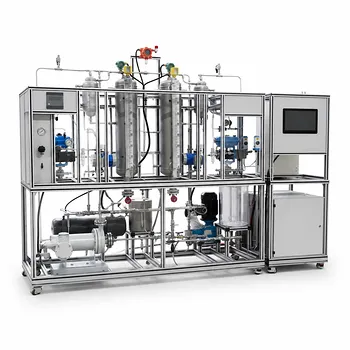
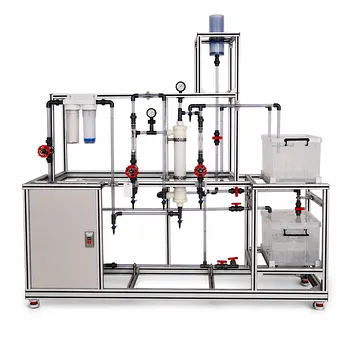
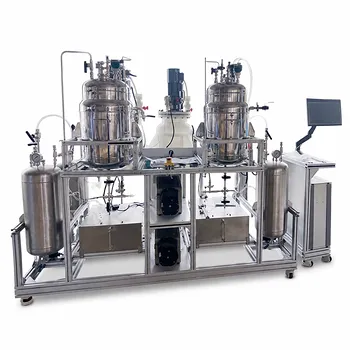
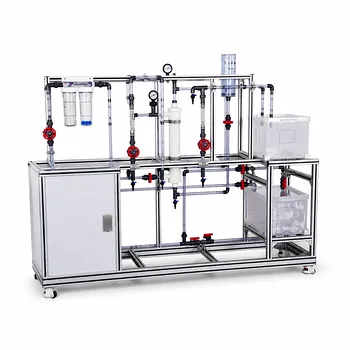
Ensure maximum membrane lifespan and precise experimental outcomes in your laboratory. LABPARK provides state-of-the-art Educational and Vocational Unit Operations Pilot Plants across chemical engineering, bioprocess & biotech, and environmental & water treatment. Designed specifically for universities, research institutes, and enterprises, our pilot plants deliver industrial-grade reliability and hands-on learning value.
Ready to elevate your research or training capabilities? Contact our engineering experts today to find the ideal pilot plant solution for your facility!
Related Products
- Ion Exchange Water Purification Educational Pilot Plant for Engineering Unit Operations
- Alkaline Membrane Water Electrolysis Educational Pilot Plant Unit Operations Training System
- Ultrafiltration Membrane Separation Educational Pilot Plant
- Multifunctional Membrane Separation Educational Pilot Plant with Ultrafiltration, Nanofiltration, Reverse Osmosis
- Multi Functional Membrane Crystallization Educational Unit Operations Pilot Plant
People Also Ask
- How to Prevent Ion Exchange Channeling? Expert Solutions for Pilot Plants
- What operational precautions should lab operators take for resin volume changes and air pockets? Key Guide
- How does ion exchange work in water treatment pilot plants? Cost & process guide.
- How to use ion exchange pilot plants to verify alkalinity? A hands-on guide for engineering students.
- Why does iron degrade cation resin & how to demonstrate capacity recovery? Step-by-Step Lab Guide