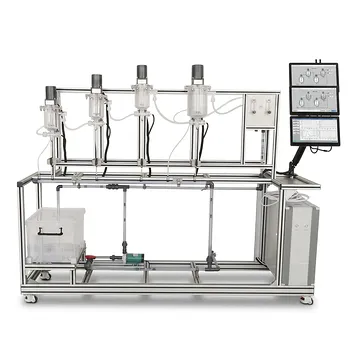
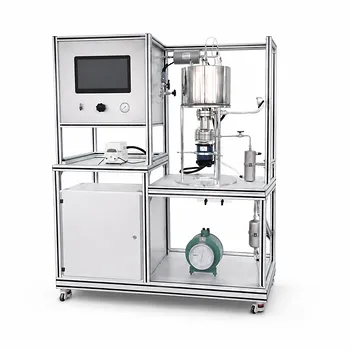
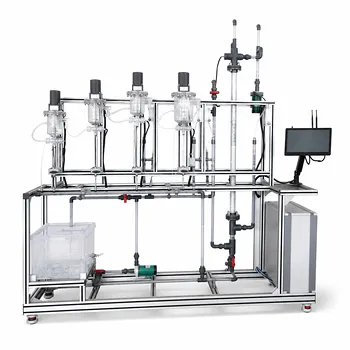
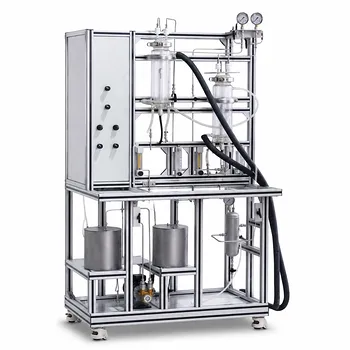
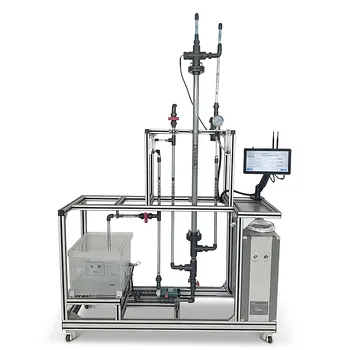
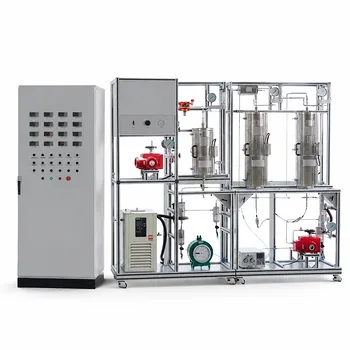
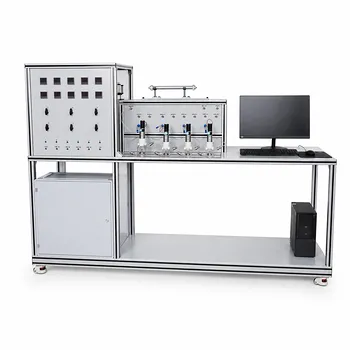
There is a single, compelling reason: process intensification is integrated into modern unit operations pilot plants to create a hands-on, risk-free sandbox for mastering the design principles that will define the next generation of sustainable, cost-effective chemical manufacturing. This integration allows students and researchers to move beyond textbook theory, directly quantifying how combining multiple steps into a single, compact device can slash capital investment, energy demand, and physical footprint—preparing them to build cleaner, more agile industrial processes.
Bridging the gap between theoretical promise and industrial reality, intensified pilot plants serve as an essential proving ground. They empower you to dissect and validate the dramatic improvements in safety, efficiency, and miniaturization that are simply unattainable with traditional equipment, making the business case for next-generation manufacturing tangible and teachable.
The Core Mission of Intensified Pilot Plants
The integration isn't about showcasing shiny new hardware. It’s about ingraining a new design philosophy. The primary reference correctly frames the ultimate goal: preparing users to design and operate sustainable, next-generation industrial chemical processes. A pilot plant is the critical link where this philosophy is validated.
Turning Abstract Concepts into Measurable Data
The leap from a research paper to a production plant is enormous. An intensified pilot plant makes the benefits concrete and quantifiable.
A tenfold or greater reduction in equipment volume is a frequently cited theoretical advantage. In a pilot environment, you can physically see the miniature reactor doing the work of a much larger column, measure the actual pressure drop, and correlate it directly to the reduced capital expenditure and smaller site footprint.
Proving the Elimination of Waste and Purification Steps
Multifunctional reactors do more than mix. They are designed to eliminate parasitic side-reactions and by-products at the source.
By integrating reaction and separation, you can pull a product out of the reaction zone instantly, preventing it from degrading. This is directly measurable, allowing researchers to demonstrate complete elimination of downstream purification steps and the associated energy and solvent waste, a core tenet of green chemistry.
Key Capabilities Unlocked by Intensified Systems
Beyond the core goal, an intensified pilot plant is a demonstration platform for a suite of interconnected benefits. Each of these can be isolated, studied, and optimized.
1. Demonstrating Inherent Safety and Risk Reduction
Safety isn't just a policy; it's a design feature. Intensified pilot plants prove this.
Minimized reactor volumes hold a dramatically smaller inventory of hazardous materials. A runaway reaction in a 25 µm microchannel is orders of magnitude less catastrophic than in a 10,000-liter tank. This inherent process safety is a powerful sales pitch for any technology and a critical lesson for future engineers.
2. Showcasing Radical Energy Efficiency through Heat Integration
Heat management is often the biggest operational cost. Intensified pilot plants turn this into a controlled experiment.
Heat-integrated reactors teach the decoupling of reaction routes from external utilities. A counter-current heat exchanger or a reverse-flow reactor demonstrates recuperative heat integration, directly measuring heat converted into chemical energy versus sensible heat loss. This makes abstract concepts like "autothermal operation" visible and economically viable.
3. Exploiting Microchannel Physics for Precision Control
The extreme miniaturization of microchannel reactors (with features in the tens of micrometers) unlocks a different physical regime.
The surface-area-to-volume ratio skyrockets, dramatically enhancing heat and mass transfer. For a reaction like the preferential oxidation of carbon monoxide (CO PROX), this precise thermal control is the difference between selectively removing CO and setting off the parasitic oxidation of valuable hydrogen to water. The pilot plant makes this selectivity difference directly measurable.
4. Validating Advanced Membrane Separation
Thermal distillation is an energy hog. Intensified systems offer an alternative.
By equipping a pilot plant with innovative membrane modules, you can demonstrate a non-thermal separation. Users directly measure pressure drops, flow rates, and selectivity to understand how a compact, flexible membrane stack can achieve the same separation purity with a fraction of the energy, turning material science into a practical unit operation.
Understanding the Trade-offs: Why Benchmarking is Non-Negotiable
An objective advisor knows there are no silver bullets. The supplementary references are wise to emphasize that intensified tools supplement rather than replace conventional technology. The pilot plant must facilitate this critical comparison.
The Non-Negotiable Need for a Dual-System Toolbox
A vocational pilot plant that only contains micro-reactors fails. It creates an unrealistic, skewed view.
Effective training requires both systems. A pilot plant running a conventional stirred-tank reactor alongside a microchannel reactor allows for a direct, comparative evaluation. You can benchmark mass transport rates, reaction kinetics, and energy efficiency head-to-head. This teaches the most crucial engineering judgment: knowing when to deploy which tool for optimal economics.
The Lessons from High-Intensity Reactions
Even in extreme applications, trade-offs are telegraphed. Steam methane reforming in a conventional reactor requires large volumes and long contact times.
An intensified microchannel reactor can perform the same chemistry at contact times under 10 milliseconds with a 10 to 1,000-fold volume reduction. However, this advantage comes with challenges in fabrication, fouling sensitivity, and scale-up logic. The pilot plant is where you learn to identify the breakeven point where the capital cost of the microchannel design outweighs the operational savings of the conventional one.
Making the Right Choice for Your Learning or Research Goal
Your goal dictates how you utilize an intensified pilot plant. The integration is not one-size-fits-all; it's a configurable platform for de-risking innovation.
- If your primary focus is education and vocational training: Prioritize a dual-system pilot plant that allows for direct A/B benchmarking between conventional and intensified technologies. The goal is to teach judgment, not just to showcase a single novel device.
- If your primary focus is evaluating process safety and sustainability: Directly compare a traditional stirred reactor with a microfluidic version. Your key metrics are the reduction in holdup of hazardous materials, the elimination of secondary waste streams, and the energy per unit product, validating inherent safety claims.
- If your primary focus is demonstrating deep, energy-cost reduction: Integrate a heat-recirculating reactor to decouple the process from utility steam. Measure the autothermal efficiency point where the reaction self-heats, and contrast it with the utility demands of a conventional heat-and-vent approach.
- If your primary focus is on targeted, high-purity separations: Replace the distillation column module with a membrane separation unit. Benchmark the energy consumption per kilogram of permeate vs. the former specific energy use, demonstrating how advanced materials directly enable smaller, more flexible plant designs.
The ultimate power of an intensified unit operations pilot plant is its ability to transform a promising concept into a bankable, validated reality, providing you with the undeniable data to drive the next generation of chemical manufacturing.
Summary Table:
| Technology / Feature | Core Benefit | Practical / Measurable Impact |
|---|---|---|
| Multifunctional Reactors | Integrates reaction & separation | Eliminates downstream purification & waste |
| Microchannel Systems | Maximizes surface-to-volume ratio | Enhances heat transfer & reaction selectivity |
| Heat-Integrated Reactors | Recovers process heat energy | Achieves autothermal operation, cutting utility costs |
| Membrane Separation | Non-thermal purification | Drastically lowers specific energy consumption |
Transform Your Chemical Engineering Program with LABPARK
To master next-generation, sustainable manufacturing, hands-on experience with advanced technology is essential. LABPARK designs and manufactures state-of-the-art Educational and Vocational Unit Operations Pilot Plants in chemical engineering, bioprocess & biotech, and environmental & water treatment for universities, research institutes, and enterprises.
Our systems enable students and researchers to perform critical benchmarking, compare conventional vs. intensified processes, and validate real-world energy savings.
Ready to upgrade your laboratory capabilities? Contact LABPARK today to discuss your specific training and research goals.
Related Products
- Multi Functional Catalytic Reaction and Reactor Evaluation Educational Unit Operations Pilot Plant
- Multi-Reactor Educational Pilot Plant for Reaction Engineering Unit Operations
- Multi-Functional Special Distillation Educational Pilot Plant
- Multifunctional Membrane Separation Educational Pilot Plant with Ultrafiltration, Nanofiltration, Reverse Osmosis
- Multi-Functional Membrane Separation Educational Pilot Plant for Unit Operations Lab
People Also Ask
- What reaction engineering principles are shown in a catalytic reactor pilot plant? SO2 Oxidation Guide
- Why is FTIR integration in catalytic pilot plants important? Real-Time Student Insights
- How to analyze active metal distribution & identify catalyst poisoning in pilot plants? Expert Diagnostic Guide
- How do temperature limits and WHSV influence catalytic reactor optimization? Scale-Up Guide
- What operational insights do catalyst pellet concentration profiles provide? Optimize Reactor Yield