Knowledge Bioprocess and Biotechnology Education Why is membrane fouling a critical focus area? De-risk your bioprocess and food-grade scale-up success.
Author avatar

Tech Team · LABPARK

Updated 2 weeks ago

Why is membrane fouling a critical focus area? De-risk your bioprocess and food-grade scale-up success.


Answering the "what" directly: Membrane fouling is a critical focus area because it is the dominant operational variable that directly destroys the economic viability and scientific validity of a pilot trial. In bioprocess and food-grade applications, fouling causes a continuous, often irreversible decline in permeate flux and can alter the membrane’s selectivity, making it impossible to achieve target concentration factors or guarantee consistent product quality.

The true, deep need is not just to understand what fouling is, but to recognize the pilot plant as a high-stakes risk mitigation tool. You are not merely filtering a product; you are building a scalable, hygienic, and profitable manufacturing process. Ignoring fouling at this stage doesn't just break a membrane—it breaks the entire business case for scaling up.

The Pilot Plant is a Fouling Simulator

A pilot plant is not a smaller factory. Its core function is to predict failure modes, and in membrane separation, fouling is the primary failure mechanism. Your deep need is to stress-test the process before committing millions of dollars in capital.

Beyond a Simple Drop in Flow Rate

Surface-level thinking treats fouling as a maintenance issue. In reality, it actively degrades your product and process. Fouling changes the molecular weight cut-off of a membrane, letting valuable proteins escape or retaining unwanted impurities. This dynamic shift in separation characteristics makes the pilot phase the only opportunity to correlate true product yield with a degrading membrane surface, a relationship you cannot model accurately on paper.

The Concentration Factor Ceiling

Every feed stream has a theoretical maximum concentration limit, often set by viscosity and osmotic pressure. Fouling drastically lowers this ceiling. During piloting, you uncover the real-world boundary where gel layer formation or cake compaction stops your process cold, revealing the true throughput limits far more accurately than any lab-scale coupon test can.

De-Risking the Economic Model

Your deep need is financial certainty. An industrial-scale plant that operates at 50% of its design flux due to unmitigated fouling is an instant liability. The pilot plant validates the cost of uptime.

Validating Operability and CIP Economics

The pilot trial determines the frequency and chemical cost of Cleaning-in-Place (CIP) . You learn exactly how many batches you can run before requiring a caustic wash or an enzymatic treatment. For heat-sensitive bioproducts or food ingredients, this cycle length defines your gross margin. Proving that a gentle enzymatic cleaner can restore 95% of water flux without damaging a delicate polymer membrane is not academic—it is a multi-million dollar discovery.

The Critical Link Between Fouling and Product Integrity

In food and bioprocess streams, aggressive chemical cleaning can degrade the membrane support layer or leave residues that contaminate the next production batch of infant formula or injectable-grade excipients. The pilot plant lets you balance the war against fouling with the mandate for product safety. You can prove that a specific anti-fouling membrane surface modification enables a "water-only" flush to be sufficient, eliminating chemical waste streams and protecting the "organic" or "clean-label" status of your final food product.

Understanding the Trade-offs

Controlling fouling is not a pursuit of a perfect, clean membrane; it’s a study in operational compromises. Your deep need is to know where the breaking points are.

The Velocity-Viscosity Conflict

The universal impulse is to crank up cross-flow velocity to scrub the surface via turbulence. However, processing shear-sensitive biopolymers, live cells, or specific protein solutions at high velocity can cause cell lysis or protein denaturation. This trade-off—between removing foulants and destroying the product—must be mapped in the pilot plant, as it determines the exact pump type and module spacer geometry required for scale-up.

The Pretreatment Burden

The instinct is to rigorously pretreat the feed (coagulation, pH shock, fine pre-filtration) to protect the final membrane. However, in biological systems, aggressive pretreatment can strip out synergist compounds or alter taste profiles. The pilot plant demonstrates whether the cost of extended membrane life is worth the capital expenditure and total yield loss associated with the pretreatment infrastructure.

The Trap of the "Irreversible" Flux Loss

Every cleaning cycle leaves a small residual layer of fouling behind. Even if 99% of flux is restored, a compounding 1% permanent loss over hundreds of cycles defines the true membrane replacement interval. Only a long-duration pilot run, processing real batches, can accumulate these "irreversible" layers and predict the true lifespan of the spiral-wound elements.

Making the Right Choice for Your Pilot Operation

Your approach to studying fouling must align with your primary objective for scaling up.

  • If your primary focus is developing a new, high-value biological drug: Sacrifice aggressive throughput to map the exact relationship between transmembrane pressure and product aggregation. Use enzymatic cleaning cycles early and often to define absolute maximum product recovery rates.
  • If your primary focus is producing a high-volume, low-margin food ingredient: Brutally test the system with the worst-case seasonal feed. Focus heavily on economic CIP optimization, minimizing water use and downtime, and identifying the cheapest anti-fouling chemistry that doesn't void the membrane warranty.
  • If your primary focus is ensuring regulatory compliance and hygienic design: Deep-dive into biofouling control. Document the time-to-biofilm under nutrient-rich streams and validate that your clean-in-place temperatures and chemical contacts prove "kill" rather than just "clean."

By treating fouling not as a nuisance but as the central variable to be optimized, you transform the pilot plant from a simple equipment test into the definitive feasibility study for your entire manufacturing process.

Summary Table:

Key Challenge Operational Impact Pilot-Scale Optimization Goal
Flux Decline Reduces throughput, limits concentration capacity Define theoretical boundary limits and process windows
Selectivity Shifts Alters MWCO, causing product loss or impurities Correlate product yield with degrading membrane surface
CIP Economics High chemical/water costs, potential membrane wear Validate optimal cleaning frequency and gentlest chemistry
Shear Sensitivity High cross-flow velocity can damage cells/proteins Balance surface scrubbing against product degradation

De-Risk Your Scale-Up with LABPARK Pilot Plants

Mitigating membrane fouling requires precise control and reliable equipment. LABPARK provides state-of-the-art Educational and Vocational Unit Operations Pilot Plants in chemical engineering, bioprocess & biotech, and environmental & water treatment. Designed specifically for universities, research institutes, and enterprises, our systems enable you to accurately simulate fouling, optimize CIP cycles, and secure product integrity before full-scale commercialization.

Ready to enhance your lab's research and training capabilities? Contact our application experts today to find the perfect pilot plant solution for your process.

Related Products

People Also Ask

Related Products

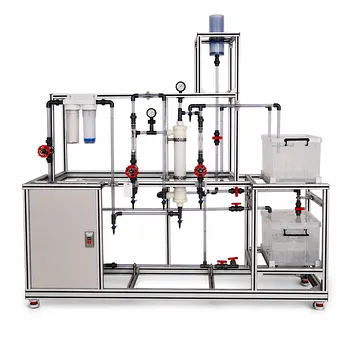
Multifunctional Membrane Separation Educational Pilot Plant with Ultrafiltration, Nanofiltration, Reverse Osmosis

Multifunctional Membrane Separation Educational Pilot Plant with Ultrafiltration, Nanofiltration, Reverse Osmosis

An integrated laboratory bench-scale membrane separation system for higher education engineering labs combining Ultrafiltration, Nanofiltration, and Reverse Osmosis processes. Features industrial PLC control with touch-screen HMI, transparent piping, and academic assessment software. Ideal for chemical and environmental engineering curricula.

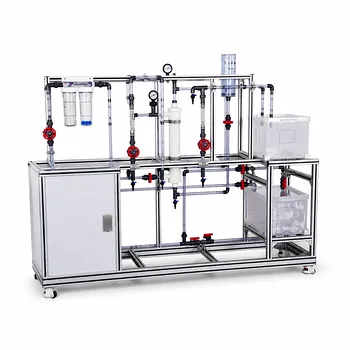
Ultrafiltration Membrane Separation Educational Pilot Plant

Ultrafiltration Membrane Separation Educational Pilot Plant

This ultrafiltration membrane separation educational pilot plant enables undergraduate students to process PVA solutions, study hollow fiber membrane dynamics, and perform quantitative analysis with spectrophotometry for hands-on learning of unit operations and industrial maintenance and membrane cleaning protocols.

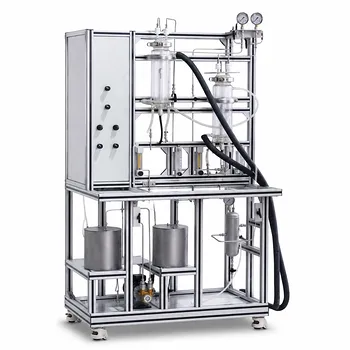
Multi-Functional Membrane Separation Educational Pilot Plant for Unit Operations Lab

Multi-Functional Membrane Separation Educational Pilot Plant for Unit Operations Lab

The Multi-functional Membrane Separation Educational Unit Operations Pilot Plant is an integrated bench-scale laboratory system designed for teaching undergraduate engineering education. It features Ultrafiltration, Nanofiltration, and Reverse Osmosis modules in a compact, mobile unit for practical hands-on learning.

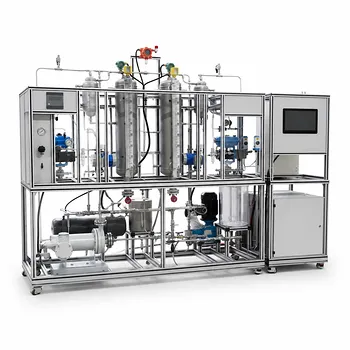
Hollow Fiber Ultrafiltration Membrane Separation Educational Pilot Plant

Hollow Fiber Ultrafiltration Membrane Separation Educational Pilot Plant

Explore our hollow fiber ultrafiltration membrane separation educational pilot plant for hands-on learning of industrial ultrafiltration processes, flux analysis, fouling mitigation, and process control. Compact, customizable, and built for engineering labs.

Photocatalytic Membrane Separation and Degradation Unit Operations Pilot Plant

Photocatalytic Membrane Separation and Degradation Unit Operations Pilot Plant

Bench-scale pilot plant integrating photocatalytic degradation with membrane separation for engineering education. Study advanced oxidation, microfiltration, and hybrid processes using industrial sensors. Features safety light-blocking curtain, low-noise compressor, and durable stainless-steel construction.

Multi Functional Membrane Crystallization Educational Unit Operations Pilot Plant

Multi Functional Membrane Crystallization Educational Unit Operations Pilot Plant

Integrated bench-scale membrane crystallization pilot plant for engineering education. Provides hands-on training in advanced separation technologies, combining membrane distillation crystallization and process intensification. Features variable scaling vessels, industrial-grade flow control, and interactive digital data acquisition. Customizable for university labs.

Alkaline Membrane Water Electrolysis Educational Pilot Plant Unit Operations Training System

Alkaline Membrane Water Electrolysis Educational Pilot Plant Unit Operations Training System

Hands-on educational pilot plant for alkaline membrane water electrolysis hydrogen production, integrating unit operations training with industrial PLC control, real-time data logging, customizable design, durable 316L stainless steel construction, explosion-proof safety, and modern 5G connectivity for university laboratories.

Bench Scale Dual Column Gas Separation and Capture Educational Pilot Plant

Bench Scale Dual Column Gas Separation and Capture Educational Pilot Plant

This dual-column educational pilot plant provides hands-on teaching of gas adsorption, separation, and capture processes. It features stainless steel columns, regeneration up to 400°C, and a 15.6-inch touchscreen PLC for TSA and PSA studies in chemical engineering curricula, process simulation.

Gas-Solid Heterogeneous Separation Demonstration Educational Unit Operations Pilot Plant

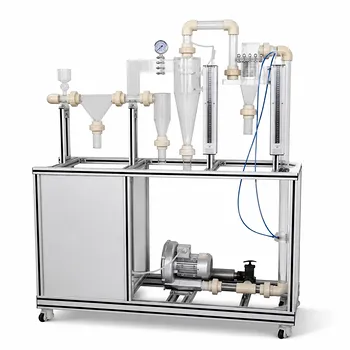
Gas-Solid Heterogeneous Separation Demonstration Educational Unit Operations Pilot Plant

Comprehensive visual transparent gas-solid separation pilot plant for chemical engineering labs. Demonstrates gravity settling inertial settling cyclone and bag filter technologies. Enables real-time analysis of fluid-particle mechanics pressure drop and collection efficiency. Ideal for undergraduate unit operations courses.

Carbon Material Thermal Pretreatment Multiphase Separation Educational Pilot Plant

Carbon Material Thermal Pretreatment Multiphase Separation Educational Pilot Plant

Educational pilot plant for carbon material thermal pretreatment and multiphase separation. Features jacketed agitated reactor, separation column, and modern controls for hands-on unit operations training in heat transfer, fluid flow, and process safety with industrial-grade materials and wireless data acquisition.

Multi-Component Gas Pressure Swing Adsorption Pilot Plant for Unit Operations Education

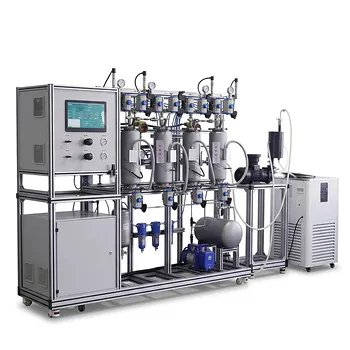
Multi-Component Gas Pressure Swing Adsorption Pilot Plant for Unit Operations Education

Multi-component gas pressure swing adsorption pilot plant designed for unit operations education. Features four-tower configuration, IoT touchscreen control, dual regeneration, and real-time breakthrough curve analysis for engineering training with safety interlocks and mobile frame simulates industrial PSA processes.

Pressure Swing Adsorption Educational Unit Operations Pilot Plant

Pressure Swing Adsorption Educational Unit Operations Pilot Plant

Integrated bench-scale pressure swing adsorption pilot plant for hands-on teaching of gas-solid separation, mass transfer, and process optimization using nitrogen-oxygen model, featuring dual-column design, industrial touchscreen control, digital assessment suite, and customizable hardware and software configurations for educational laboratories.

Educational Pressure Swing Adsorption Ethylene Capture Unit Operations Pilot Plant

Educational Pressure Swing Adsorption Ethylene Capture Unit Operations Pilot Plant

Advanced educational pilot plant for pressure swing adsorption ethylene capture provides comprehensive hands-on training in industrial gas separation processes, featuring an eight-column PSA system, real-time data acquisition, and fully customizable design for chemical engineering unit operations laboratories and research.

Bio-fermentation Ethanol Production Practical Training Unit Operations Pilot Plant

Bio-fermentation Ethanol Production Practical Training Unit Operations Pilot Plant

Bio-fermentation ethanol production pilot plant for hands-on training in unit operations: fermentation, solid-liquid filtration, membrane separation, and distillation. Bridges theory with industrial practice using industrial-grade components, customizable for university labs. Hybrid automated and manual control for comprehensive learning.

Natural Product Extraction Unit Operations Training Pilot Plant

Natural Product Extraction Unit Operations Training Pilot Plant

Integrated natural product extraction pilot plant for chemical engineering training bridges theory and industrial practice with modular extraction and evaporation/concentration units, hybrid touchscreen and manual control, realistic process simulation, and self-contained softened water and vacuum utilities.

Absorption and Desorption Educational Unit Operations Pilot Plant

Absorption and Desorption Educational Unit Operations Pilot Plant

Dual packed column absorption and desorption pilot plant for chemical engineering education, offering real-time mass transfer coefficient measurement, durable mobile frame, industrial touch-screen interface, and customizable design for varied laboratory curricula, enabling hands-on study of gas absorption and stripping.

Fixed-Bed Chemical Reaction and Gas Dust Tar Removal Unit Operations Pilot Plant

Fixed-Bed Chemical Reaction and Gas Dust Tar Removal Unit Operations Pilot Plant

Integrated educational pilot plant for studying catalytic gas-solid reactions and downstream gas purification. Features dual fixed-bed reactor, three-stage heating, and touchscreen control for hands-on engineering training. Ideal for chemical and environmental engineering curricula.

Multi-Functional Special Distillation Educational Pilot Plant

Multi-Functional Special Distillation Educational Pilot Plant

Versatile multi-functional special distillation pilot plant for chemical engineering education. Supports continuous, vacuum, azeotropic, reactive, extractive distillation. Transparent glass columns enable real-time visual observation of hydrodynamics and separation processes.

Supercritical High-Gravity Flash Evaporation Educational Unit Operations Pilot Plant

Supercritical High-Gravity Flash Evaporation Educational Unit Operations Pilot Plant

Bench-scale integrated teaching system for advanced separation and mass transfer, combining supercritical high-gravity flash evaporation with heating, chemical reaction, and material collection, featuring modular design, Stainless Steel 316L construction, transparent visualization, touchscreen control, and safety systems for chemical engineering education.

Dual-Mode Rectification Pilot Plant for Practical Training Unit Operations

Dual-Mode Rectification Pilot Plant for Practical Training Unit Operations

Industrial-scale dual-mode rectification pilot plant for chemical engineering practical training. Features real-material and simulated-material operation modes, sieve-plate column with sight glasses for visual observation of hydrodynamics, and customizable SCADA control for safe, hands-on learning of unit operations and mass transfer.


Leave Your Message