Knowledge Chemical Engineering Education Why is an alkaline boil-out procedure required? Complete Boiler Commissioning Guide
Author avatar

Tech Team · LABPARK

Updated 2 months ago

Why is an alkaline boil-out procedure required? Complete Boiler Commissioning Guide


The short answer: An alkaline boil-out is a critical commissioning step that strips away the residual manufacturing oils, grease, and mill scale left inside a new steam generator. It is executed by circulating a heated solution of caustic soda (NaOH) and soda ash (Na₂CO₃) through the boiler for several hours, while monitoring and replenishing the chemical concentrations.

A new boiler’s metal surfaces are coated with contaminants that inhibit heat transfer and fuel corrosion. The alkaline boil-out not only degreases the metal but also prepares it for the formation of a protective magnetite layer—a passivation step that demands precise chemical control and is an invaluable teaching moment in a pilot plant environment.

Why a Brand-New Boiler Isn’t “Clean”

Invisible Manufacturing Residue

During fabrication, pipework and pressure vessels are coated with forming oils, cutting greases, and rust-preventative compounds. These residues, if left in place, would foul heat exchange surfaces, reduce thermal efficiency, and decompose into corrosive organic acids under high temperature.

Mill Scale and Particulate Debris

Hot-rolled steel components carry a layer of mill scale—a flaky iron oxide that forms during production. This scale is loosely bonded and will spall off in service, clogging drain lines, control valves, and instrumentation ports in your pilot plant.

Executing the Alkaline Boil-Out

The Chemical Cocktail

The core recipe is a solution of approximately 3000 ppm sodium hydroxide (NaOH) and 3000 ppm sodium carbonate (Na₂CO₃). The combination provides intense alkalinity to saponify oils and lift both organic and inorganic contaminants.

Circulation at Boiling Temperature

The solution is circulated through all water-touched circuits while the boiler is brought to its boiling point. The high temperature accelerates the breakdown of greases and increases the solubility of loosened scale. A typical hold time ranges from four to eight hours, depending on the degree of contamination.

Vigilant Monitoring and Replenishment

As the boil-out progresses, the alkalinity drops because the caustic chemicals are consumed in reacting with contaminants. Sample the water at regular intervals—usually hourly—and titrate to confirm that both hydroxide and carbonate levels remain near the 3000 ppm target. Replenish the boiler water with fresh alkaline solution as needed to maintain the driving force for cleaning.

A Critical Safeguard: Sodium Nitrate

To prevent caustic embrittlement—a dangerous form of stress corrosion cracking at rivets or tube rolled joints—sodium nitrate may be added to the boil-out formulation. The nitrate acts as an inhibitor, ensuring that the highly alkaline environment cleans the steel without attacking its microstructural integrity.

Beyond Cleaning: Setting the Stage for Passivation

From Bare Metal to Magnetite Armor

Once the boil-out is complete and the system is thoroughly flushed, the now-pristine steel surface is ready for passivation. In the absence of oxygen and at a pH maintained above 10.5, boiler water reacts with the iron to form a thin, tightly adherent layer of magnetite (Fe₃O₄).

The pH Buffer That Protects Your Asset

If the alkalinity drops, this vital magnetite shield can be breached. Water would then attack the bare steel directly, producing ferric oxide (rust) and hydrogen gas. Maintaining a pH above 9.3 also dramatically reduces oxygen-driven pitting, especially at the water line where alkaline protection is most vulnerable. In a pilot plant, students learn to use chemical dosing stations to hold the pH inside this safe window—turning the boil-out’s cleaning lesson into an ongoing water-chemistry curriculum.

Understanding the Risks and Trade-offs

  • Caustic Handling Safety: Both NaOH and hot water pose serious personnel hazards. Full PPE, adequate ventilation, and rigorous lock-out procedures are non-negotiable.
  • Over-Cleaning Potential: An excessively long boil-out with too-high caustic levels can etch the metal and unnecessarily thin the pressure boundary. Stick to the recommended concentration and duration.
  • Disposal of Waste Stream: The spent boil-out solution is highly alkaline and contains emulsified oils and residual heavy metals. It must be neutralized and treated before discharge, per your site’s environmental permit.

Making the Right Choice for Your Pilot Plant

  • If your primary focus is long-term equipment reliability: Execute the full boil-out recipe with sodium nitrate and follow it with a strict passivation protocol at pH >10.5. The upfront time investment pays for itself in years of trouble-free steam generation.
  • If your primary focus is hands-on student learning: Use the boil-out as a live demonstration of saponification, chemical titration, and the principles of caustic embrittlement. Have students log concentration decay curves and calculate caustic consumption.
  • If your primary focus is rapid startup without compromising safety: Commission a pre-boil-out chemical cleaning by the manufacturer if available, then perform a shorter, confirmatory boil-out on-site. Always prioritize the post-clean passivation step—without it, you’ve simply created a bare metal surface that will corrode on contact with untreated water.

A carefully executed alkaline boil-out transforms a piece of equipment from a potential source of contamination and failure into a reliable, teachable asset that illustrates the full lifecycle of industrial water treatment.

Summary Table:

Stage Key Objective Chemical / Condition Duration
Chemical Cleaning Saponify oils & lift mill scale 3000 ppm NaOH + 3000 ppm Na₂CO₃ 4 to 8 hours
Embrittlement Safety Prevent stress corrosion cracking Add Sodium Nitrate (NaNO₃) During boil-out
Monitoring Maintain chemical strength Hourly water sampling & titration Continuous
Passivation Form protective magnetite layer Maintain water pH > 10.5 Post-flush operation

Maximize Training Value and Equipment Lifespan with LABPARK

Ensure your students and researchers master critical industrial processes safely. LABPARK design and supply premium Educational and Vocational Unit Operations Pilot Plants in chemical engineering, bioprocess & biotech, and environmental & water treatment for universities, research institutes, and enterprises.

Our pilot plants are engineered to provide realistic hands-on training, from boiler water chemistry to complex distillation systems. Contact us today to explore our solutions and get a customized quote for your laboratory!

Related Products

People Also Ask

Related Products

Rising and Falling Film Evaporation Educational Unit Operations Pilot Plant

Rising and Falling Film Evaporation Educational Unit Operations Pilot Plant

Hands-on educational pilot plant for studying rising and falling film evaporation, flow regimes, and heat transfer. Customizable for university labs with industrial instrumentation and data acquisition. Enables comparative evaluation of evaporation modes and energy efficiency.

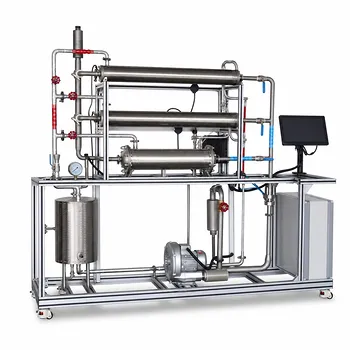
Three-Tube Heat Transfer Educational Pilot Plant for Unit Operations Training

Three-Tube Heat Transfer Educational Pilot Plant for Unit Operations Training

Three-tube heat transfer pilot plant for studying convective heat transfer enhancement and condensation. Allows comparison of smooth, corrugated, turbulent tubes, verifying empirical correlations. Ideal for chemical engineering education with safety and closed-loop steam recovery.

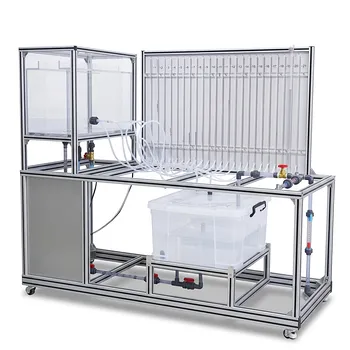
Bernoulli Equation Demonstration Unit Operations Pilot Plant

Bernoulli Equation Demonstration Unit Operations Pilot Plant

Laboratory pilot plant for Bernoulli's equation demonstration with transparent PVC pipes, 23 piezometer tubes for pressure measurement, and hands-on experiments. Designed for engineering education to study energy conservation, hydraulic grade line, and localized losses in fluid steady-flow systems.

Multi Functional Catalytic Reaction and Reactor Evaluation Educational Unit Operations Pilot Plant

Multi Functional Catalytic Reaction and Reactor Evaluation Educational Unit Operations Pilot Plant

Bench-scale educational pilot plant for catalytic reaction and reactor evaluation, integrating fixed bed, fluidized bed, and stirred tank reactors. Students compare reactor designs, evaluate catalysts, and study reaction kinetics and hydrodynamics. Perfect for unit operations labs in chemical engineering curricula.

Comprehensive Heat Transfer Coefficient Determination Educational Unit Operations Pilot Plant

Comprehensive Heat Transfer Coefficient Determination Educational Unit Operations Pilot Plant

Advanced industrial-grade educational pilot plant for comprehensive heat transfer coefficient determination. Enables quantitative convective heat transfer analysis, evaluates double-pipe and shell-and-tube exchanger configurations, and includes digital data acquisition. Customizable for engineering curriculum. Ideal for engineering unit operations labs.

Solid Spherical Heat Transfer Coefficient Determination Educational Chemical Engineering Pilot Plant

Solid Spherical Heat Transfer Coefficient Determination Educational Chemical Engineering Pilot Plant

This educational chemical engineering pilot plant enables students to determine convective heat transfer coefficients and observe transient thermal behavior of solid spheres under natural convection, forced convection, fixed beds, and fluidized bed regimes.

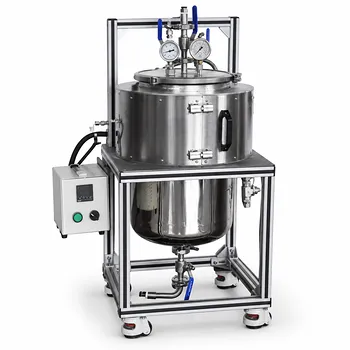
Hot Filtration Educational Unit Operations Pilot Plant Laboratory System

Hot Filtration Educational Unit Operations Pilot Plant Laboratory System

This integrated laboratory bench-scale hot filtration pilot plant enables students to study solid-liquid separation under thermal conditions, featuring a stainless steel vessel, removable heating jacket, and multi-layer filter plates for unit operations education, ideal for chemical engineering laboratory curriculum.

Continuous Batch Extractive Distillation Educational Pilot Plant

Continuous Batch Extractive Distillation Educational Pilot Plant

Versatile pilot plant for continuous, batch, and extractive distillation training. High-borosilicate glass column for visualizing hydraulics, 15.6-inch touchscreen with data logging, precise reflux ratio control 1-99, and durable corrosion-resistant frame. Ideal for chemical engineering education and process research.

Multi-Functional Special Distillation Educational Pilot Plant

Multi-Functional Special Distillation Educational Pilot Plant

Versatile multi-functional special distillation pilot plant for chemical engineering education. Supports continuous, vacuum, azeotropic, reactive, extractive distillation. Transparent glass columns enable real-time visual observation of hydrodynamics and separation processes.

Centrifugal Pump Performance and Orifice Flowmeter Calibration Educational Pilot Plant

Centrifugal Pump Performance and Orifice Flowmeter Calibration Educational Pilot Plant

This versatile educational pilot plant enables engineering students to conduct centrifugal pump performance tests, orifice flowmeter calibration, and fluid mechanics experiments using a transparent flow loop, industrial HMI, and 3D virtual simulation for a comprehensive hands-on learning experience.

Tubular Reactor Flow Characteristics Determination Educational Unit Operations Pilot Plant

Tubular Reactor Flow Characteristics Determination Educational Unit Operations Pilot Plant

Educational pilot plant for investigating tubular reactor flow characteristics and residence time distribution Features adjustable recycle for plug flow and backmixing studies industrial touchscreen interface and real-time data acquisition Ideal for chemical engineering unit operations laboratory training and education

Shell and Tube Heat Exchanger Heat Transfer Coefficient Determination Educational Pilot Plant

Shell and Tube Heat Exchanger Heat Transfer Coefficient Determination Educational Pilot Plant

LABPARK's shell and tube heat exchanger pilot plant enables students to investigate heat transfer coefficients, LMTD, co-current vs counter-current flow, bridging theory and industrial practice. Customizable for chemical, mechanical, environmental engineering curricula. Ideal for unit operations and process engineering labs.

Educational Compression Refrigeration Performance Determination Unit Operations Pilot Plant

Educational Compression Refrigeration Performance Determination Unit Operations Pilot Plant

This educational pilot plant for compression refrigeration performance determination offers dual COP evaluation, regenerative cycle comparison, and calorimeter calibration. Customizable for curriculum integration, it features environmentally conscious design. Supports thermodynamic mapping on pressure-enthalpy diagrams and synchronous monitoring with centralized instrumentation.

Orifice and Venturi Flowmeter Calibration Educational Pilot Plant for Fluid Mechanics Laboratory

Orifice and Venturi Flowmeter Calibration Educational Pilot Plant for Fluid Mechanics Laboratory

Enhance fluid dynamics education with the Orifice and Venturi Flowmeter Calibration Educational Unit Operations Pilot Plant, featuring transparent orifice and Venturi meters, industrial sensors, touchscreen interface for real-time data analysis and automatic coefficient calculations in engineering student laboratories.

Throttling Effect Determination Educational Unit Operations Pilot Plant

Throttling Effect Determination Educational Unit Operations Pilot Plant

Investigate the Joule-Thomson throttling effect with this educational unit operations pilot plant. Designed for engineering students, it enables hands-on comparative analysis of adiabatic gas expansion using precise process control, interactive digital interface, and eco-friendly operation, ensuring safe repeatable thermodynamic experiments.

Two-Dimensional Fluidization Hydrodynamics Educational Pilot Plant for Unit Operations Training

Two-Dimensional Fluidization Hydrodynamics Educational Pilot Plant for Unit Operations Training

Explore gas-solid and liquid-solid fluidization hydrodynamics with our transparent 2D educational pilot plant. Ideal for chemical engineering unit operations labs, it demonstrates fixed to fluidized bed regimes, measures pressure drop, and integrates QR-code digital learning for enhanced student training.

100L Continuous Loop Hydrogenation Educational Unit Operations Pilot Plant

100L Continuous Loop Hydrogenation Educational Unit Operations Pilot Plant

This 100L continuous loop hydrogenation pilot plant is designed for chemical engineering education, featuring 316 stainless steel construction, advanced gas-liquid mass transfer components, explosion-proof safety systems, and a 15.6-inch touchscreen with 5G connectivity, cloud data logging, bridging theory and industry.

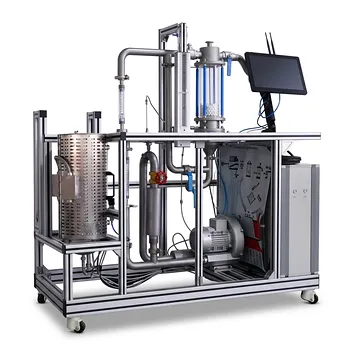
Supercritical High-Gravity Flash Evaporation Educational Unit Operations Pilot Plant

Supercritical High-Gravity Flash Evaporation Educational Unit Operations Pilot Plant

Bench-scale integrated teaching system for advanced separation and mass transfer, combining supercritical high-gravity flash evaporation with heating, chemical reaction, and material collection, featuring modular design, Stainless Steel 316L construction, transparent visualization, touchscreen control, and safety systems for chemical engineering education.

Dual Mode Heat Transfer Pilot Plant for Unit Operations Training

Dual Mode Heat Transfer Pilot Plant for Unit Operations Training

Engineering-scale dual-mode heat transfer pilot plant for hands-on unit operations training in chemical engineering. Features real and simulated modes, multiple heat exchanger types, comprehensive coefficient determination, and advanced process control with data acquisition for engineering students and researchers.

Fluid Friction Resistance Determination Educational Unit Operations Pilot Plant

Fluid Friction Resistance Determination Educational Unit Operations Pilot Plant

Engineered bench-scale system for university engineering labs. Provides hands-on fluid mechanics experience: quantitative energy loss analysis, flow regime observation, friction coefficient determination. Features four-point pressure measurement, transparent sections, industrial touchscreen PLC, 3D virtual simulation. Ideal for chemical, mechanical, civil engineering.


Leave Your Message