Without a cold box, cryogenic distillation below -100°C simply cannot function. At these temperatures, where gases like hydrogen and methane are separated, the driving force for separation is an extremely delicate vapor-liquid equilibrium. Even a tiny amount of ambient heat leaking into the system introduces enough energy to vaporize condensed liquids, collapsing that equilibrium and rendering the entire column inoperable. The cold box—a sealed container packed with high-performance insulation like expanded perlite—creates a stable thermal shield that makes the process physically and economically possible.
Cryogenic separation demands an environment where the only thermal energy in play is the precisely controlled heat of the process itself. A cold box doesn't just save energy; it is the foundational engineering solution that transforms a chaotic, heat-leaking collection of vessels into a coherent, functional distillation train.
The Physics of Cryogenic Separation
The Delicate Balance of Vapor and Liquid
Distillation separates components by boiling point. At cryogenic temperatures, those boiling points are incredibly close together. The process relies on a continuous cycle of condensation and vaporization happening on every tray or packing section inside the column.
Disturbing this cycle with an uncontrolled external heat source doesn't just make the process less efficient—it stops it. Heat causes excessive vapor generation in the liquid downcomers and reboilers, leading to flooding and a total loss of separation.
Why Ambient Heat is a Fatal Disruption
Standard industrial insulation that works for steam pipes is grossly inadequate at -150°C. The temperature difference between the process fluid and the environment is enormous, often exceeding 200°C.
This drives an immense heat flux. Every watt of heat that enters the column is a watt that must be removed again by the refrigeration system, but the real damage is done instantly. A local hot spot on a column wall disrupts the internal reflux flow, destroying the concentration profiles built up over hours of careful operation.
The Threat: Environmental Heat Leak
The Two-Fold Cost of Heat Ingress
Environmental heat leak has both a direct energy cost and a catastrophic process cost. First, it requires the plant's refrigeration unit to work harder, consuming significant additional power.
Second, and more critically, the uneven heat distribution warps the column's internal hydraulics. Cold liquid flowing down the column walls is reheated prematurely, vaporizing lighter components and mixing them back into the stages below, ultimately contaminating the product streams.
Moisture and Ice: The Silent Saboteur
Deep cryogenic surfaces below -100°C will instantly freeze any moisture in the air into a solid block of ice. Uninsulated equipment would quickly be encased in an insulating layer of ice, but that ice formation is unpredictable and destructive, trapping moisture against metal and accelerating corrosion.
Moreover, air itself can condense on these surfaces. Liquid oxygen dripping from an uninsulated pipe into organic materials is a severe fire and safety hazard. The cold box prevents this direct contact entirely.
The Solution: The Cold Box System
A Microclimate of Stability
The cold box provides more than just insulation; it creates a completely controlled microclimate around the process equipment. The enclosure is typically a gas-tight steel structure, purged with a dry gas like nitrogen.
This purge prevents any atmospheric moisture from entering the insulation and freezing. Inside, the space between the vessels is filled with expanded perlite, a low-density volcanic glass with exceptionally low thermal conductivity in cryogenic service.
How Perlite Insulation Works
Perlite's insulating power comes from its structure of countless microscopic, sealed air cells. Because these cells are too small to allow convection, the primary mode of heat transfer becomes gas conduction, which is very slow.
To further enhance performance, the perlite layer effectively eliminates radiative heat transfer from the warm outer wall to the cold inner equipment, as the tiny particles scatter thermal radiation. This combination of minimized conduction and blocked radiation is what keeps heat leak to an absolute minimum.
Modeling Industrial Reality in a Pilot Plant
For a pilot plant intended for research and education, the cold box is the single most important link to industrial practice. Every large-scale ethylene or LNG plant uses the exact same principle.
The pilot plant cold box demonstrates to students and researchers how to calculate an allowable heat leak, select insulation thickness, and design a pressure-relieved enclosure. It turns a theoretical concept into a tangible piece of process engineering.
Understanding the Trade-offs and Practical Challenges
Thermal Performance vs. Accessibility
The most significant trade-off is the complete inaccessibility of the equipment once the cold box is sealed. A simple valve adjustment or leak detection can require a full shutdown, warm-up, and box opening, a process that can take days.
This demands an exceptionally high standard of mechanical integrity and leak testing during construction. For a research pilot plant where modifications are frequent, this downtime can be a major constraint on experimental throughput.
The Problem of Perlite Settlement
Over repeated thermal cycles, expanded perlite particles can settle and pack down under vibration. This creates voids at the top of the cold box, exposing equipment directly to the warm steel casing and creating a concentrated heat leak point.
Mitigation requires careful vibration isolation, fill nozzles for re-topping the insulation, and sometimes a resilient blanket layer on the inner vessel to protect from direct contact. Moisture ingress during maintenance is another perpetual threat, as damp perlite loses its insulating properties and promotes corrosion.
Making the Right Choice for Your Cryogenic Pilot Plant
Your specific application dictates how to optimize the cold box design. Consider your priorities carefully before specifying a system.
- If your primary focus is data fidelity and modeling scale-up: Invest in a tightly sealed, nitrogen-purged cold box with sufficient wall thickness to eliminate all external thermal disturbances. Accurate data is impossible without a stable baseline.
- If your primary focus is educational demonstration and frequent reconfiguration: Opt for a design with flanged access panels and a faster warm-up/cooldown cycle, even if it means slightly higher steady-state heat leak. Prioritize the ability to quickly change internals between experiments.
- If your primary focus is handling flammable light gases like hydrogen: The cold box's purge gas system becomes a critical safety instrument. Ensure the design includes continuous analysis of the purge gas exit stream for flammable mixtures and a robust emergency depressurization plan for the entire enclosure.
The cold box is not merely a container full of insulation; it is the essential thermodynamic boundary that defines a cryogenic pilot plant's capability, turning an impossible process into a controllable and safe experimental platform.
Summary Table:
| Feature / Challenge | Impact / Solution |
|---|---|
| Ambient Heat Leak | Disrupts vapor-liquid equilibrium; causes flooding and loss of separation. |
| Moisture & Ice Ingress | Freezes on surfaces, accelerates corrosion, and creates safety hazards. |
| Cold Box Solution | Nitrogen-purged steel enclosure packed with expanded perlite insulation. |
| Perlite Insulation | Minimizes gas conduction and blocks radiative heat transfer. |
| Key Trade-off | Exceptional thermal protection vs. equipment accessibility for maintenance. |
Optimize Your Cryogenic Research with LABPARK
Building a reliable cryogenic distillation system requires precise thermal control and robust engineering. LABPARK provides premium Educational and Vocational Unit Operations Pilot Plants in chemical engineering, bioprocess & biotech, and environmental & water treatment designed specifically for universities, research institutes, and enterprises.
Ready to elevate your laboratory's capabilities and secure high-fidelity process data? Contact LABPARK today to consult with our experts and find the perfect pilot plant solution for your research and training needs!
Related Products
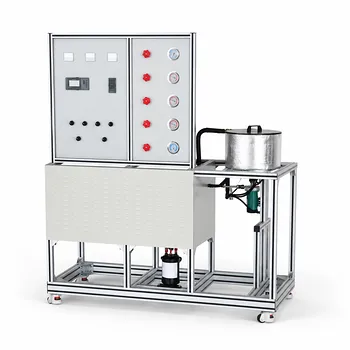
- Educational Compression Refrigeration Performance Determination Unit Operations Pilot Plant
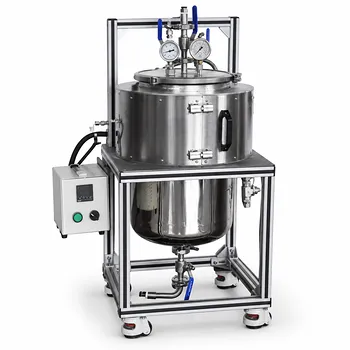
- Hot Filtration Educational Unit Operations Pilot Plant Laboratory System
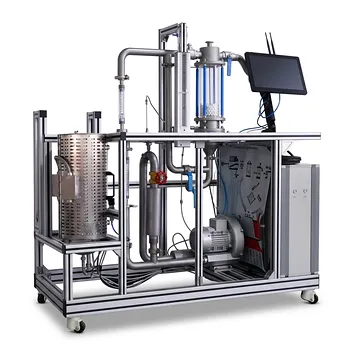
- Solid Spherical Heat Transfer Coefficient Determination Educational Chemical Engineering Pilot Plant
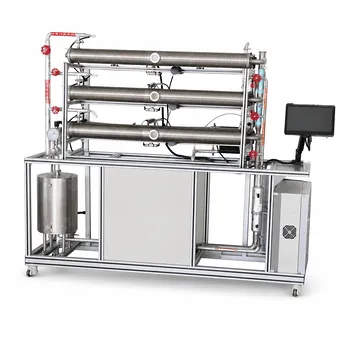
- Three-Tube Heat Transfer Educational Pilot Plant for Unit Operations Training
- Multifunctional Membrane Separation Educational Pilot Plant with Ultrafiltration, Nanofiltration, Reverse Osmosis
People Also Ask
- Why Switch Unit Operations Flow Configurations? Impact on Experimental Measurements
- Why is distinguishing between elastic and plastic deformation critical? Prevent tablet capping.
- How is unsteady-state flow analyzed & taught? Master Transient Systems in Unit Ops
- What are the differences between set-point, servo, and program control? Master unit operations training.
- How to use pilot plants to estimate gas compression costs? Master scale-up economics.