The answer lies in the physics of accumulation.
In a batch laboratory reactor, trace impurities often settle harmlessly or remain at concentrations too low to detect during short experimental runs. Yet in a real continuous process, a recycle stream acts like a concentrating loop, gradually amassing these stealthy contaminants over days or weeks. Integrated pilot plants that physically incorporate recycle loops expose this hidden buildup, making them vital for detecting catalyst deactivation and impurity issues that batch reactors simply miss.
Batch reactors lack the closed-loop concentration effect of industrial recycle streams. Trace impurities that would slowly accumulate and poison a commercial catalyst never reach a critical mass in open, short-duration batch tests. An integrated pilot plant with a recycle circuit is therefore the only reliable tool for simulating this long-term threat, preventing catastrophic underestimation of deactivation rates and yield losses.
The Hidden Danger of Trace Impurities in Continuous Processes
Feedstocks are never perfectly pure. They carry parts-per-billion levels of sulfur, metals, or oxygenates that look harmless in a single pass.
The Concentration Trap
A commercial continuous plant recycles unreacted feed and intermediate products to improve conversion and economics. Each pass returns a fraction of those trace impurities to the reactor, where they stay in the loop far longer than the main reactants. Over hundreds of cycles, their concentration can rise from innocuous to severely poisoning levels—a phenomenon absent in a one-pass batch scenario.
Catalyst Deactivation: A Slow-Motion Crisis
A poison present at 10 ppb may not affect activity in a 4‑hour batch experiment. After 30 days of continuous recycle, that same poison can build to 1 ppm on the catalyst surface, irreversibly blocking active sites. Without a recycle pilot plant, you will never observe this gradual deactivation until it destroys your commercial unit.
Why Batch Reactors Create a Dangerous Blind Spot
The batch reactor’s defining characteristic—an open, well-mixed vessel with no product return—is exactly why it fails to catch these issues.
No Steady-State Accumulation
In batch mode, you charge fresh feed, run the reaction, and discharge everything. Impurities leave with the product or remain at their original dilute level. They never get the chance to recycle and multiply. This makes it impossible to study the chronic, cumulative poisoning that dominates long-term catalyst life.
Vanishingly Low Signals
Trace species often fall below the detection limit of standard analytical instruments when diluted in a large batch volume. Only the concentrating action of a recycle stream pushes these signals into measurable ranges, revealing what truly stresses the catalyst.
Overestimated Long-Term Stability
Batch screening can paint an unrealistically rosy picture of catalyst durability. Supplementary pilot plant studies routinely show that actual catalyst lifetimes drop sharply once recycle loops are introduced, because the continuous concentration of by-products and impurities dramatically shifts the deactivation landscape.
The Mechanics of Detection: How Replicate Streams Expose the Invisible Threat
Integrating a recycle loop in a pilot plant transforms it from a simple reactor test into a real-world impurity concentrator.
Closing the Mass Balance Loop
A unit-ops pilot plant with recycle continuously returns a portion of the reactor effluent after separation. This recreates the exact accumulation pathway of commercial plants. By sampling the recycle stream and catalyst periodically, engineers can track the rising concentration of suspected poisons and correlate it with declining activity.
Uncovering By-Product Inhibition
Many reactions generate minor by-products that are partly recycled. In a single-pass batch experiment, these by-products never build up. In a recycle pilot plant, their return concentration climbs to levels that can inhibit the catalyst or poison active phases. This reveals a deactivation mechanism that was entirely invisible in the lab.
Validating Mitigation Strategies in Situ
Only a recirculating pilot plant allows you to test solutions like guard beds, purification columns, or controlled purge streams under realistic buildup dynamics. You can inject a known poison spike, observe its concentration in the recycle loop, and verify that a sacrificial sorbent bed effectively protects the main catalyst—real data that batch experiments cannot provide.
Beyond Impurity Detection: The Broader Value of Integrated Recycle Pilot Plants
While impurity accumulation is a critical driver, recycle-equipped pilot plants deliver other indispensable data that batch setups cannot. These additional benefits further cement their role in robust scale-up.
Accurate Reaction Kinetics Under True Steady-State
A batch reactor measures kinetics at constantly changing concentrations. A continuous pilot plant with recycle reaches a true steady state, reflecting the exact feed composition, recycle ratio, and impurity load of the commercial design. This provides the reliable kinetic parameters needed for accurate reactor modeling, preventing arbitrary tuning of models that would violate their physico‑chemical basis.
Realistic Catalyst Lifetime and Regeneration Cycles
Deactivation changes the thermal profile and reaction rate over time. Long-term recycle operation lets you measure these shifts continuously, capturing the gradual drop in activity and the effectiveness of regeneration protocols. This data is non‑negotiable for designing temperature‑programming strategies or sizing excess catalyst volumes in the final plant.
Preventing Overestimated Yields
Batch experiments often report higher yields because they avoid the equilibrium constraints and by-product buildup imposed by a recycle loop. A pilot plant with full reaction‑separation‑recycle structure confirms the actual per-pass and overall yields you can expect, eliminating the unpleasant surprise of a commercial unit that never meets its nameplate capacity.
Understanding the Trade-offs and Limitations of Integrated Recycle Pilot Plants
Embracing recycle pilot plants is not a trivial decision. They come with increased complexity and must be operated with care to yield trustworthy data.
Higher Cost and Longer Run Times
Building a pilot plant with a custom recycle loop is significantly more expensive than a simple laboratory autoclave. To see the accumulation effect, you must run it for weeks or even months, requiring dedicated operator attention and substantial consumable feedstocks. This can strain project budgets and timelines.
Risk of Exaggerating Accumulation
If the recycle loop’s material balance is not designed correctly—for example, no purposeful purge stream is included—trace impurities can accumulate to levels that never occur in a real plant. This can paint an overly pessimistic picture of catalyst life and lead to unnecessary over-engineering of purification systems.
Potential Introduction of New Artifacts
Long-term continuous operation increases the risk of corrosion, seal degradation, or lubricant leakage, which can introduce new contaminants into the recycle loop that are not present in the feedstock. These artifacts must be distinguished from genuine feed impurities through careful blank runs and analytical rigor.
The Need for Robust On‑Line Analytics
Detecting the slow accumulation of poisons demands sensitive, frequently calibrated on‑line analyzers. Batch sampling and occasional lab tests often miss the subtle concentration rise until after deactivation has already occurred. This adds further cost and complexity to the pilot plant setup.
Making the Right Choice for Your Scale-Up Goal
The decision to deploy an integrated pilot plant with recycle loops must be guided by the specific risks your process faces. Use the following guidelines to map your path.
- If your primary focus is screening dozens of catalyst candidates rapidly: Start with high‑throughput batch reactors to narrow down options, but recognize that the final selection must be validated under recycle conditions later to avoid late‑stage failures.
- If your primary focus is eliminating the risk of unknown impurity poisoning: An integrated recycle pilot plant is non‑negotiable. Pair it with a detailed feedstock analysis and install dedicated guard beds or adsorption units that can be tested directly in the recycle loop.
- If your primary focus is generating reliable kinetic and lifetime data for reactor design: Run a continuous pilot plant with a representative recycle ratio for at least several months. Use the deactivation profile to build a physics‑based model that your engineering team can trust for accurate scale‑up calculations.
- If your primary focus is operating within a constrained budget and timeline: Consider a mini‑pilot plant (lab‑scale with intensified recycle rates) that accelerates accumulation, but carefully interpret the results and validate a subset of findings with a targeted longer‑term campaign on the final catalyst.
A batch reactor shows you what your catalyst can do in a pristine instant. Only a recycle pilot plant reveals what it will do under the relentless, accumulating stress of a real process—and that insight is the foundation of every successful commercial design.
Summary Table:
| Feature | Batch Laboratory Reactors | Integrated Recycle Pilot Plants |
|---|---|---|
| Impurity Accumulation | None (Single pass, dilute impurities) | High (Recycle loops concentrate trace species) |
| Catalyst Lifetime Data | Short-term only (Overestimates stability) | Long-term tracking (Reveals slow deactivation) |
| By-Product Effects | Discharged (Inhibition missed) | Recycled (Simulates true process inhibition) |
| Kinetics & Yields | Transient state (Overestimated yields) | Steady-state (Realistic kinetic & yield modeling) |
Scale Up with Confidence Using LABPARK Systems
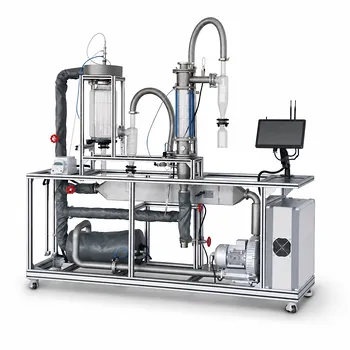
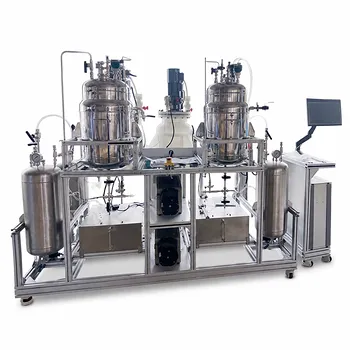
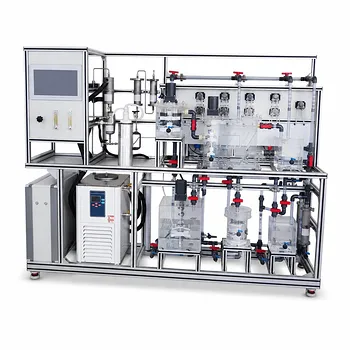
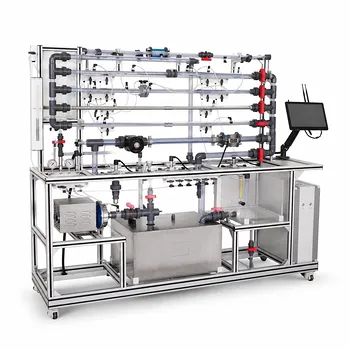
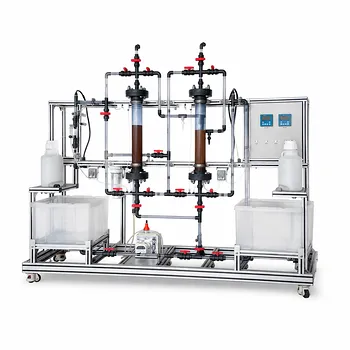
Transitioning from batch concepts to continuous industrial processes requires precise, representative data. LABPARK provides state-of-the-art Educational and Vocational Unit Operations Pilot Plants across chemical engineering, bioprocess & biotech, and environmental & water treatment.
Specially designed for universities, research institutes, and enterprises, our pilot plants allow you to accurately simulate recycle loops, monitor catalyst lifetime, and study impurity accumulation in realistic steady-state conditions.
Don't let hidden catalyst deactivation disrupt your scale-up. Contact LABPARK today to find the perfect pilot plant solution for your lab or facility!
Related Products
- Residence Time Distribution and Reactor Flow Characteristics Determination Educational Pilot Plant
- Solid Waste Pyrolysis and Refining Educational Pilot Plant for Unit Operations
- Multi Functional Membrane Crystallization Educational Unit Operations Pilot Plant
- Multi-Functional Drying Educational Unit Operations Pilot Plant
- Multi-Functional Special Distillation Educational Pilot Plant
People Also Ask
- Why is temperature regulation via a cooling jacket a critical feature in CSTR pilot plants used for laboratory training?
- How does steady-state multiplicity affect the operation and safety of exothermic reactions within a CSTR pilot plant? - Guide
- What parameters to monitor transitioning from Batch to CSTR? Master Pilot Plant Setup
- What role do customizable reactor pilot plants play in evaluating heat and catalyst performance? Scale-up Guide
- Importance of heat balance calculations in reactor pilot plants & how they are taught via unit ops equipment.