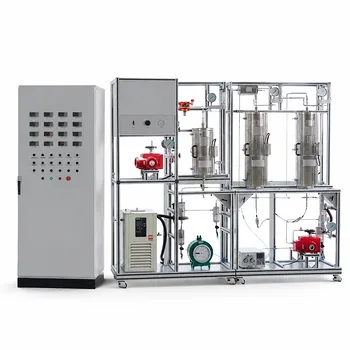
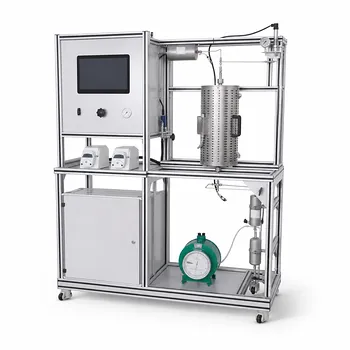
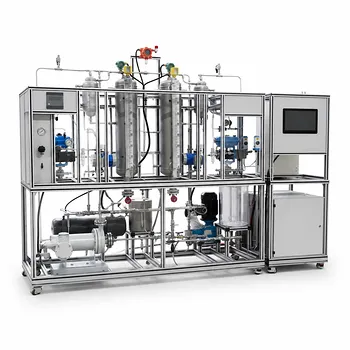
The straightforward answer is that cobalt-molybdenum (Co-Mo) and nickel-molybdenum (Ni-Mo) catalysts are the backbone of hydrodesulfurization (HDS) pilot plants because they are astonishingly effective at converting a broad spectrum of organic sulfur poisons into easily removable hydrogen sulfide. In a typical HDS pilot unit, these catalysts routinely operate at temperatures of 320–400°C, pressures of 3.0–4.0 MPa, and space velocities of 1000–3000 h⁻¹ for gas feeds (or 1–6 h⁻¹ for liquid feeds), with a hydrogen-to-oil volume ratio of 80–100. Those numbers are the surface-level answer, but the real insight lies in why these specific metals, at these exact conditions, are indispensable.
The choice of Co-Mo or Ni-Mo is not arbitrary. It solves a deep chemical problem: breaking the strong carbon-sulfur bond in mercaptans, thiophenes, and other stubborn sulfur molecules without degrading the valuable hydrocarbon stream. The operating window of 320–400°C and 3–4 MPa is the sweet spot where the catalytic cycle runs fast enough to be practical yet gentle enough to avoid coking and runaway cracking.
The Chemistry of Sulfur Removal – Why Co-Mo and Ni-Mo
Organic sulfur compounds poison sensitive downstream catalysts (like platinum reforming catalysts) and corrode equipment. HDS transforms them into inorganic H₂S, which can be scrubbed out with amine units. Co-Mo and Ni-Mo catalysts accomplish this through a finely tuned atomic partnership.
Converting the Unwanted: From Thiophenes to H₂S
Sulfur in petroleum is rarely present as pure sulfur atoms. It hides inside stable molecules like COS, CS₂, mercaptans, sulfides, and thiophenes. Cobalt and nickel on a molybdenum sulfide base break these carbon-sulfur bonds selectively. The active catalyst, after sulfidation, is essentially nanostructured MoS₂ crystals decorated with promoter atoms. This architecture creates sites that strongly adsorb sulfur compounds, weaken the C–S bond, and add hydrogen to liberate H₂S.
The Atomic Secret of Co-Mo Activity
Extended X‑ray Absorption Fine Structure (EXAFS) studies provide clear structural evidence. Analysis of the Mo K‑edge shows molybdenum retains a sulfur coordination shell remarkably similar to pure MoS₂, forming crystallites only about 10 Å in size. Meanwhile, the Co K‑edge reveals that cobalt sits in a highly disordered environment right at the edges of these MoS₂ slabs. This edge decoration is everything: the cobalt atoms create electron-rich “corner” sites where sulfur removal reactions are dramatically accelerated. Nickel plays a similar promoter role in Ni-Mo catalysts, enhancing hydrogenation strength when feeds contain nitrogen or highly refractory sulfur species.
Critical Operating Parameters for HDS Pilot Plants
The art of running an HDS pilot plant is balancing four interrelated parameters that directly determine desulfurization depth, catalyst life, and the quality of the research data.
Temperature and Pressure – The Driving Force for Reaction
A temperature window of 320–400°C supplies the activation energy needed to break C–S bonds without pushing the unit into thermal cracking territory. Below 320°C, reaction rates are too sluggish for practical throughput. Above 400°C, the risk of coke formation and excessive dehydrogenation rises sharply. The companion pressure range of 3.0–4.0 MPa keeps a high partial pressure of hydrogen, which is the kinetic driver that forces equilibrium toward H₂S and prevents coke from covering the catalyst surface. Higher pressures would improve kinetics further, but in a pilot plant, 3–4 MPa is the economical balance between performance and equipment complexity.
Space Velocity – Balancing Throughput and Efficiency
Space velocity, defined as the volumetric flow rate of feed per volume of catalyst, sets the residence time. For gas-phase feeds, a typical gas hourly space velocity (GHSV) of 1000–3000 h⁻¹ provides enough contact time for substantial sulfur conversion. For liquid feeds, the liquid hourly space velocity drops to 1–6 h⁻¹ to account for the higher mass‑transfer resistance. Pushing space velocity too high leads to incomplete sulfur removal; going too low wastes energy and can over‑expose the feed to high temperatures, triggering undesirable thermal reactions.
Hydrogen-to-Oil Ratio – Ensuring Complete Conversion
The hydrogen‑to‑oil volume ratio of 80–100 (measured as standard volumes) supplies the chemical demand for desulfurization and maintains a hydrogen‑rich atmosphere. This surplus hydrogen is far more than stoichiometry requires, but it serves a vital second purpose: it strips H₂S away from the catalyst surface and lowers the concentration of coke precursors. In a pilot plant, a ratio in this range reliably prevents catalyst starvation and allows researchers to isolate the effect of temperature and space velocity without hydrogen becoming a limiting variable.
Understanding the Trade-offs
Even within the “standard” parameter envelope, every decision involves a compromise. Ignoring these trade‑offs is the quickest way to produce misleading pilot data or deactivate a catalyst prematurely.
Temperature vs. catalyst life: Operating at the upper end of the temperature range (390–400°C) boosts conversion but accelerates the deposition of coke on the active sites. The catalyst lasts fewer cycles, and the data can become clouded by progressive deactivation.
Pressure vs. equipment cost: While 6–7 MPa would improve HDS rates, the pilot plant would require heavier‑walled reactors and more expensive safety systems. The 3–4 MPa band is a deliberate engineering compromise that makes the plant accessible for teaching and routine experimentation without sacrificing realistic kinetics.
Space velocity vs. conversion: A high GHSV (e.g., 3000 h⁻¹) maximizes productivity but may leave 50 ppm of sulfur where 10 ppm is required. In a pilot plant meant to study ultradeep desulfurization, researchers must choose lower space velocities to achieve those trace sulfur levels.
H₂/oil ratio vs. hydrogen recovery: An 80–100 ratio is practical for small‑scale units, but excessive hydrogen flow can dilute valuable product streams and increase the load on downstream separation. The pilot plant operator must balance conversion completeness with the cost of hydrogen recycling.
Making the Right Choice for Your Pilot Plant Goal
Ultimately, the Co-Mo/Ni-Mo catalyst system and its operating parameters are a flexible platform. The specific settings you dial in should be driven by what you need the pilot plant to teach or prove.
- If your primary focus is teaching fundamental HDS chemistry: Run a Co-Mo catalyst at the centre of the range—around 350°C, 3.5 MPa, and a GHSV of 1500 h⁻¹. The system will be forgiving, the kinetics clean, and students will clearly see the link between parameter changes and sulfur slip.
- If your primary focus is screening catalysts for ultra‑low sulfur diesel: Use a Ni-Mo catalyst and operate at the higher‑pressure end (4 MPa) with a low LHSV (1–2 h⁻¹). This promotes the hydrogenation of the most refractory dibenzothiophenes and gives you the resolution to discriminate between catalyst formulations.
- If your primary focus is scaling up a new feedstock: Start at the lower end of the temperature range (320–340°C) and incrementally raise it while monitoring H₂S production and coke deposits. This cautious approach maps the safe operating window before you commit to an expensive industrial design.
Mastering these metals and their numbers turns a pilot plant from a mysterious black box into a precision instrument for sulfur‑free fuel innovation.
Summary Table:
| Parameter | Gas Feed Range | Liquid Feed Range | Key Process Function |
|---|---|---|---|
| Temperature | 320–400°C | 320–400°C | Supplies activation energy; avoids thermal cracking |
| Pressure | 3.0–4.0 MPa | 3.0–4.0 MPa | Enhances H₂ partial pressure; limits coke formation |
| Space Velocity | 1000–3000 h⁻¹ (GHSV) | 1–6 h⁻¹ (LHSV) | Controls contact time and desulfurization depth |
| H₂/Oil Ratio | 80–100 (vol) | 80–100 (vol) | Prevents catalyst starvation; strips H₂S |
Optimize Your Chemical Engineering Lab with LABPARK
Are you looking to enhance your research or teaching capabilities in hydrodesulfurization and other catalytic processes? LABPARK designs and manufactures premium Educational and Vocational Unit Operations Pilot Plants across chemical engineering, bioprocess & biotech, and environmental & water treatment.
Whether you are a university equipping a training lab, a research institute scaling up new feedstocks, or an enterprise testing catalyst efficiency, our pilot plants deliver reliable, industrial-grade data.
Contact LABPARK today to discuss your custom pilot plant requirements and receive expert assistance!
Related Products
- Methane Cracking Educational Unit Operations Pilot Plant
- Electrolytic Hydrogen Production Educational Unit Operations Pilot Plant
- Steam Methane Reforming Hydrogen Production and Purification Educational Pilot Plant
- Green Anhydrous Ethanol Purification Extractive Distillation Unit Operations Training Pilot Plant
- Dual-Mode Rectification Pilot Plant for Practical Training Unit Operations
People Also Ask
- How do ethane vs naphtha cracking influence teaching pilot plant analytical configurations? Key Design Guide
- How can flow-NMR be integrated with pilot plant reactors to monitor kinetics? A Complete Guide
- How do cracking temperature and residence time affect olefin yield? Pilot Plant Guide
- How are utility consumption rates integrated into chemical pilot plant economic evaluations?
- How should OSBL investments be estimated? Key Steps to Avoid Budget Overruns in Pilot Plant Projects