The short answer is yes, several common species interfere — but each can be managed with a simple pretreatment.
In the Mohr titration for chloride, the argentometric endpoint relies on the precise formation of silver chloride before the red silver chromate appears. In blowdown samples from a boiler water treatment pilot plant, sulfite, sulfides, ferrocyanides, and suspended iron oxides are the primary troublemakers, while neglecting pH will also destroy the indicator’s sensitivity.
Core Insight
Accurate chloride monitoring during boiler blowdown control is the cornerstone of mass balance and corrosion risk assessment in pilot‑scale water treatment. The Mohr method is a classic teaching tool, but its reliability demands that you first identify and neutralize the reducing agents, complexing ions, and particulates that high‑temperature, high‑pressure boiler water inevitably introduces.
The Four Interferences Lurking in Boiler Blowdown
Boiler feedwater is chemically treated, and blowdown water carries a cocktail of dissolved solids, oxygen scavengers, and corrosion products. When you titrate these samples without pretreatment, the following species will either consume silver ions, mask the endpoint, or block the precipitation chemistry.
1. Sulfite – The Oxygen Scavenger That Steals Silver
Sulfite (SO₃²⁻) is deliberately dosed into boiler feedwater to remove dissolved oxygen. During a Mohr titration, sulfite reduces silver ions to metallic silver, producing a false, drifting endpoint.
Management
Add a few drops of dilute hydrogen peroxide (H₂O₂) to the sample before titration. The peroxide oxidizes sulfite to inert sulfate. Swirl and wait about one minute to ensure complete oxidation – you should see no further bubbling. This step is mandatory for any blowdown sample from a sulfite‑treated system.
2. Sulfide – The Black Precipitate That Wrecks the Potential
Hydrogen sulfide or dissolved metal sulfides occasionally appear in blowdown from reducing environments or after system upsets. Sulfide reacts instantly with silver to form jet‑black silver sulfide (Ag₂S), which can entirely consume the titrant before chloride even begins to precipitate.
Management
Acidify the sample with dilute nitric acid (HNO₃) and boil gently for five minutes. This volatilizes hydrogen sulfide. After boiling, cool the sample and carefully re‑adjust the pH to 7–10.5 with sodium bicarbonate or dilute NaOH before adding the potassium chromate indicator. Never skip the pH correction, or the chromate indicator will be protonated and lose its colour change.
3. Ferrocyanide – The Complexing Ion That Triggers False Endpoints
Ferrocyanide ([Fe(CN)₆]⁴⁻) can form when cyanide‑based treatments or corrosion inhibitors break down in the boiler. It prevents the sharp silver chloride precipitation by forming stable complexes, giving multiple, smeared potential breaks that ruin the titration.
Management
The primary reference warns that if ferrocyanide is present, the standard Mohr method cannot be used directly. The workaround is to pre‑treat the sample with a slight excess of 5 % copper sulfate (CuSO₄) solution. Ferrocyanide quantitatively precipitates as copper ferrocyanide (Cu₂Fe(CN)₆). Filter the sample through a fine paper or membrane filter, and determine chloride in the clear filtrate. This step adds time, but it rescues the titration for water that would otherwise be impossible to analyze by Mohr.
4. Finely Divided Ferric Oxide – The Rust That Masks the Endpoint
After a boiler shutdown, blowdown often carries suspended iron oxide particles that give the water a distinct orange‑brown haze. This colour obscures the faint yellow‑to‑brick‑red transition of the silver chromate indicator, making the endpoint invisible.
Management
Simply filter the sample through a 0.45 µm membrane filter before titration. Do not skip this step on “dirty” samples; your eye cannot compete with the optical noise. Filtration does not affect the dissolved chloride concentration.
The Inescapable Role of pH
A Mohr titration works only within a narrow pH window of 7.0 to 10.5.
In acidic solutions, the chromate ion (CrO₄²⁻) converts to dichromate, losing its ability to precipitate red silver chromate. In strongly alkaline solutions, silver hydroxide (AgOH) may precipitate prematurely. Blowdown samples are often alkaline due to phosphate or caustic treatments, so you will frequently need to add a few drops of dilute HNO₃ or acetic acid to bring the pH into range. Always check with a pH meter or indicating strip before adding the indicator.
Understanding the Trade‑offs
While these pretreatments keep your data trustworthy, they are not without pitfalls.
- Hydrogen peroxide oxidation can generate microbubbles that scatter light and make endpoint detection tricky in manual titrations. Let the sample rest.
- Acidification and boiling for sulfide risks converting chloride to volatile HCl if the acid is too strong and the boil too vigorous. Use dilute HNO₃ and a gentle simmer.
- Ferrocyanide removal with copper sulfate introduces a filtration step. Sluggish filtration can concentrate chloride in the last few drops, so always wash the filter paper with a small amount of chloride‑free water and add the washings to the filtrate.
- Filtration of iron oxide is straightforward, but a clogged membrane can extend sample preparation time dramatically. Pre‑filter through a coarse paper if suspended solids are high.
These extra steps add time and handling; in a pilot plant, you are balancing teaching value and process control speed. The Mohr method remains valuable because it forces students to confront real‑world interferences actively, but for high‑throughput monitoring, the potentiometric method using a silver electrode is the industrial preference.
How to Build a Robust Pilot‑Plant Procedure
The goal is not a perfect titration every time, but a defensible, repeatable protocol that teaches students to think about water chemistry from a troubleshooting perspective.
- If your primary focus is education and troubleshooting: Use the Mohr method as a diagnostic exercise. Have students test each pretreatment step on a spiked sample so they can see the individual interference effects before running the real blowdown sample.
- If your primary focus is high‑accuracy mass balance calculations: Consider adopting the potentiometric method for final verifications, but keep the Mohr method as a quick offline check. The pretreatment techniques (filtration, peroxide addition, ferrocyanide removal) are transferable.
- If your blowdown samples vary in turbidity and treatment chemicals daily: Create a “decision tree” checklist: measure pH first, look for orange colour (filter), smell for sulfide or know if sulfite is dosed (add peroxide), and check for ferrocyanide if cyanide‑based inhibitors are used.
A well‑managed Mohr titration doesn’t just give you a chloride number; it reveals the hidden chemistry your boiler is trying to tell you.
Summary Table:
| Interfering Species | Effect on Mohr Titration | Management / Pretreatment Method |
|---|---|---|
| Sulfite ($SO_3^{2-}$) | Reduces silver ions; causes false, drifting endpoint | Add dilute hydrogen peroxide ($H_2O_2$) to oxidize to sulfate |
| Sulfide ($S^{2-}$) | Forms black silver sulfide ($Ag_2S$) precipitate | Acidify with dilute $HNO_3$, boil, then re-adjust pH to 7–10.5 |
| Ferrocyanide ($[Fe(CN)_6]^{4-}$) | Forms complexes; ruins precipitation and endpoint | Treat with 5% copper sulfate ($CuSO_4$) and filter |
| Ferric Oxide (Rust) | Obscures the red silver chromate indicator transition | Filter sample through a 0.45 µm membrane filter |
| Improper pH (<7 or >10.5) | Destroys indicator sensitivity or precipitates silver | Adjust pH to 7.0–10.5 using dilute acid ($HNO_3$) or base |
Take Your Water Treatment Training to the Next Level with LABPARK
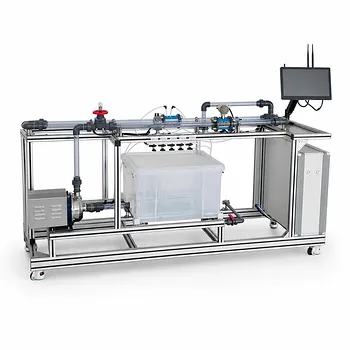
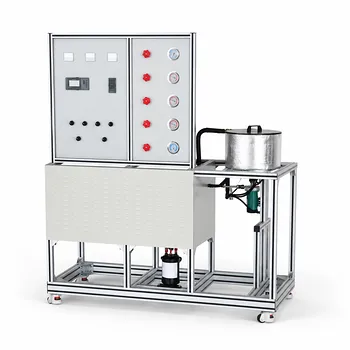
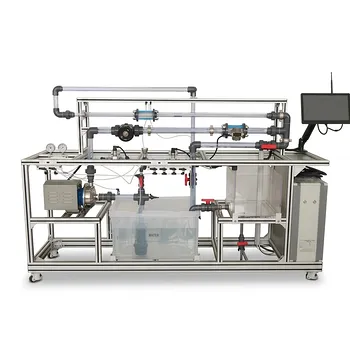
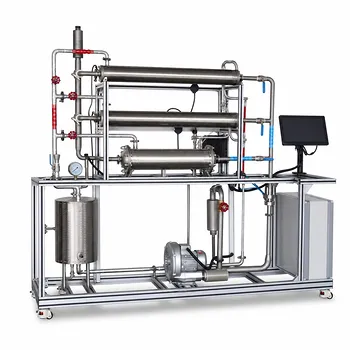
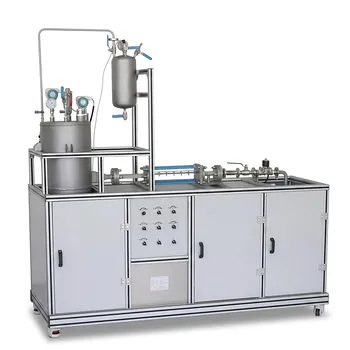
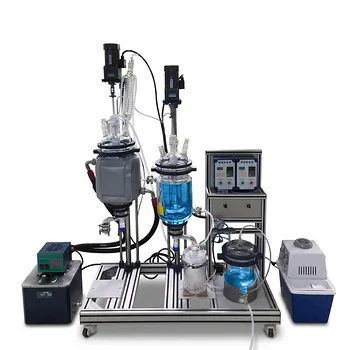
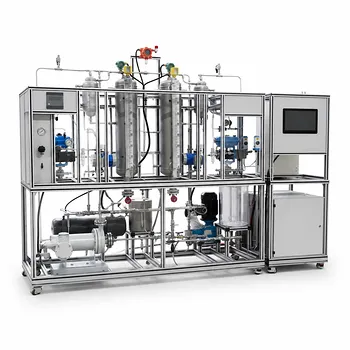
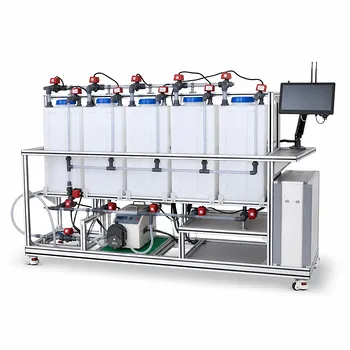
Achieving precise analytical results like chloride monitoring requires reliable experimental setups. LABPARK designs and manufactures high-quality Educational and Vocational Unit Operations Pilot Plants in chemical engineering, bioprocess & biotech, and environmental & water treatment.
We help universities, research institutes, and enterprises bridge the gap between theory and industrial practice with robust, safe, and highly visual training systems.
Ready to upgrade your laboratory capabilities? Contact our experts today to explore our pilot plant solutions!
Related Products
- Ion Exchange Water Purification Educational Pilot Plant for Engineering Unit Operations
- Electrolyte Distillation Purification and Formulation Educational Pilot Plant
- Orifice and Venturi Flowmeter Calibration Educational Pilot Plant for Fluid Mechanics Laboratory
- Educational Compression Refrigeration Performance Determination Unit Operations Pilot Plant
- Centrifugal Pump Performance and Orifice Flowmeter Calibration Educational Pilot Plant
People Also Ask
- How to Prevent Ion Exchange Channeling? Expert Solutions for Pilot Plants
- What operational precautions should lab operators take for resin volume changes and air pockets? Key Guide
- How does ion exchange work in water treatment pilot plants? Cost & process guide.
- How to use ion exchange pilot plants to verify alkalinity? A hands-on guide for engineering students.
- Why does iron degrade cation resin & how to demonstrate capacity recovery? Step-by-Step Lab Guide