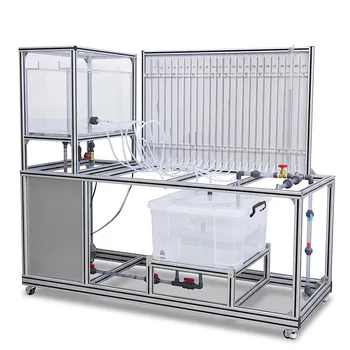
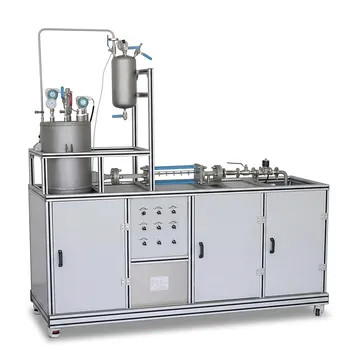
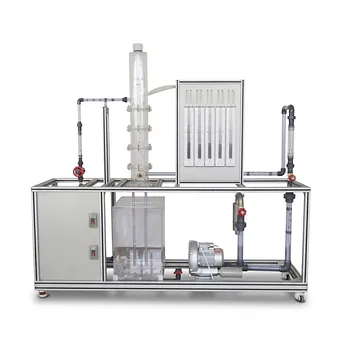
The choice between a Nutsche filter and a filter dryer pivots on one critical variable: manual intervention versus integrated containment. A Nutsche filter is a jacketed, single-plate filtration unit without an agitator—operators must manually smooth the cake, mix, and discharge solids, which sharply raises exposure risk. An agitated filter dryer, by contrast, combines filtration and drying inside a single closed vessel, using a height-adjustable agitator to automate cake management and eliminate open handling from slurry entry to solids discharge.
For pilot plants teaching chemical engineering unit operations, a Nutsche filter exposes students to fundamental filtration but leans heavily on manual steps. A filter dryer delivers a fully contained, hands-off process that mirrors modern pharmaceutical and fine-chemical manufacturing—at the cost of greater complexity. The deep choice is between teaching the basics with unavoidable operator contact and showcasing high-containment, integrated processing.
How the Process Flow Diverges: Functionality at a Glance
Understanding what each piece of equipment actually does—and doesn’t do—lays the foundation for all other differences.
Filtration Only vs. Filtration Plus Drying
A Nutsche filter is a single-purpose, bottom-discharge filtration device. It can remove mother liquor and wash solvents, and the jacket allows some heating, but it does not perform active drying. The cake is typically scooped out wet, transferred to a tray dryer, or left for ambient de-liquoring.
An agitator filter dryer is a two-in-one unit operation. It first isolates solids under pressure or vacuum, then uses a heated jacket and—crucially—an agitator that mechanically distributes heat and displaces residual solvent. Drying happens in the same vessel, eliminating a wet-cake transfer.
The Agitator’s Role in Process Quality
The primary reference highlights that the height-adjustable agitator is the pivotal functional component. During filtration, it can gently smooth the cake to prevent cracking and maintain consistent porosity. During drying, its blades constantly expose fresh surface, breaking lumps and enabling uniform heat distribution.
Without this agitator, a Nutsche filter relies on gravity and pressure differential. If the cake cracks, channels form, and wash efficiency plummets. Manual re-slurrying may be needed, which not only breaks containment but also introduces human variability into the process.
Containment: The Deciding Factor for Hazardous Materials
Closed versus open operations directly impact operator safety, environmental compliance, and the breadth of materials a pilot plant can handle.
Manual Handling in a Nutsche Filter
By design, a Nutsche filter requires operator interaction. Smoothing the cake, mixing in wash solvents, and digging out the final solids all happen through an open manway or after detaching the vessel. Each of these steps breaks containment. For solvents, this releases vapors; for potent active pharmaceutical ingredients (APIs), it creates a direct exposure pathway.
This manual contact is not a flaw—it is simply the trade-off for a simpler, less expensive unit. It makes the Nutsche filter suitable for non-toxic, low-potency materials where the risk to operators remains within acceptable limits.
The Closed-Loop Advantage of a Filter Dryer
A filter dryer operates as a fully closed system from slurry feed to dried-cake discharge. The agitator manages cake smoothing and breaking mechanically, without opening the vessel. Side discharge valves or bottom outlets can transfer solids into a closed container.
For a pilot plant handling potent compounds, cytotoxic materials, or high-value APIs, this containment is non-negotiable. Superior containment also simplifies cleaning validation and reduces housekeeping burdens, making the filter dryer the default choice in regulated industries.
Implications for Pilot Plant Training and Research
When the equipment will be used for education, the functional-containment split translates directly into learning outcomes.
Hands-On vs. Process Realism
A Nutsche filter gives students a tactile understanding of cake formation and washing. They see what a cracked cake looks like, feel the texture, and experience the challenges of manual discharge. This direct feedback is invaluable for teaching fundamental filtration principles.
A filter dryer, however, reflects modern industrial practice. Students interact with automated sequences, observe how agitator speed and jacket temperature influence drying curves, and appreciate the engineering behind contained solids handling. It prepares them for the reality of API manufacturing, where open handling is rarely permitted.
Demonstrating the Trade-offs
The supplementary reference stresses that having both units in the same pilot plant is a powerful educational tool. Side-by-side operation lets students contrast the simplicity and openness of a Nutsche filter with the containment and process integration of a filter dryer. It teaches that equipment selection is always a balance of capital cost, safety, and process requirements.
Understanding the Trade-offs
No single piece of equipment excels in every category. Recognizing the limitations of each prevents costly misapplication.
- Capital and Maintenance Complexity: A Nutsche filter is mechanically straightforward—a vessel, a filter cloth, a jacket. A filter dryer adds precision agitator mechanics, dynamic seals, and control systems. Initial cost and maintenance intervals are significantly higher.
- Scalability of Manual Steps: The manual mixing and discharge required by a Nutsche filter cannot transfer linearly to larger scales. What feels acceptable in a 10-liter pilot unit becomes a safety and ergonomic hazard in a 200-liter production vessel.
- Material Heat Sensitivity: While the jacket provides heating, the thermal history of a product in a filter dryer is highly uniform due to the agitator. In a Nutsche filter, static heating can create hot spots and temperature gradients that may degrade sensitive solids, unless the product is transferred to a dedicated dryer.
Making the Right Choice for Your Pilot Plant
The optimal decision flows directly from your primary objective—what you most need the equipment to teach or prove.
- If your primary focus is teaching classical filtration fundamentals and the value of operator observation: A Nutsche filter provides an unfiltered view of cake behavior and manual problem-solving. It is the right tool when materials are benign and learning supersedes containment.
- If your primary focus is demonstrating modern contained manufacturing or handling potent compounds: Choose an agitated filter dryer. It mirrors real-world good manufacturing practice, keeps people safe, and allows students to run integrated slurry-to-dry-solid campaigns without open exposure.
- If your primary focus is comparing process philosophies in a single curriculum: Invest in both. The side-by-side experience cements the critical lesson that safe, efficient processing demands matching equipment design to material hazard and process goal.
By aligning your equipment choice with the balance of education value and containment need, you equip your pilot plant to turn every filtration-and-drying experiment into a lasting, practical lesson.
Summary Table:
| Feature | Nutsche Filter | Agitated Filter Dryer |
|---|---|---|
| Functionality | Filtration only (requires separate drying) | Integrated filtration & drying (2-in-1) |
| Agitation | None (manual cake smoothing required) | Height-adjustable mechanical agitator |
| Containment | Open/Semi-contained (manual discharge) | Fully closed system (contained discharge) |
| Ideal For | Basic filtration training, benign materials | Modern industrial simulation, hazardous APIs |
Equip Your Lab with Industry-Standard Pilot Plants
Are you looking to upgrade your chemical engineering curriculum or research capabilities? LABPARK provides state-of-the-art Educational and Vocational Unit Operations Pilot Plants in chemical engineering, bioprocess & biotech, and environmental & water treatment for universities, research institutes, and enterprises.
Whether you need manual Nutsche filters for teaching process fundamentals or fully contained agitated filter dryers to simulate modern pharmaceutical manufacturing, we deliver safe, reliable, and scalable equipment tailored to your needs.
Contact LABPARK today to find the perfect pilot plant solution for your lab!
Related Products
- Constant Pressure Filtration Educational Unit Operations Pilot Plant
- Multifunctional Membrane Separation Educational Pilot Plant with Ultrafiltration, Nanofiltration, Reverse Osmosis
- Hot Filtration Educational Unit Operations Pilot Plant Laboratory System
- Multi-Functional Membrane Separation Educational Pilot Plant for Unit Operations Lab
- Orifice and Venturi Flowmeter Calibration Educational Pilot Plant for Fluid Mechanics Laboratory
People Also Ask
- How do educational unit operations pilot plants bridge theory and design? Bridge the Engineering Gap
- How do educational unit operations pilot plants bridge theory and industrial process development? Hands-On Learning
- How do educational unit operations pilot plants address safety and waste management when scaling up?
- How do unit operation requirements differ between traditional chemical processes and bioprocesses? Build Better Pilot Plant Curricula
- Why splitting a filtration batch doesn't always reduce cycle time? Pilot Plant Insights