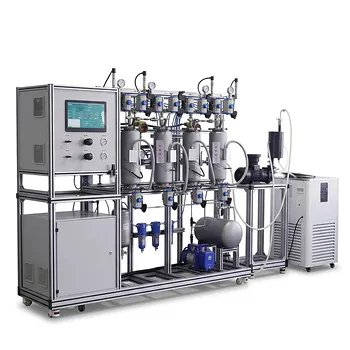
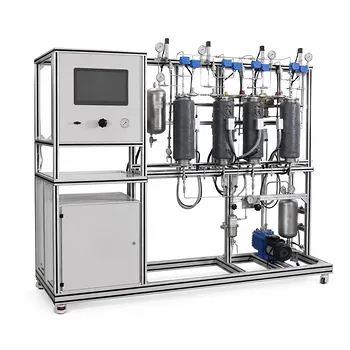
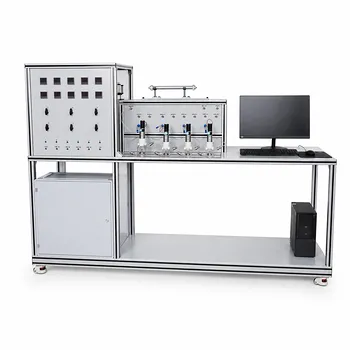
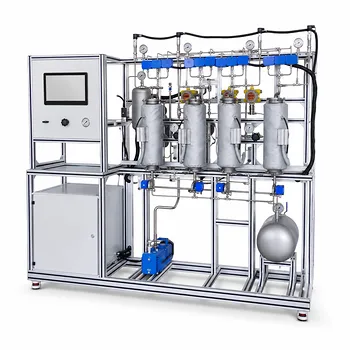
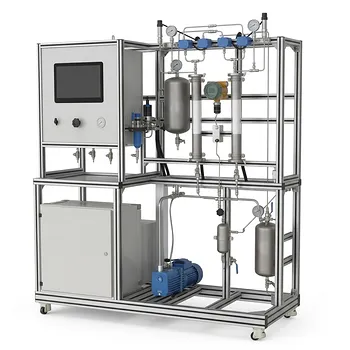
Zinc oxide dry desulfurization is a thermodynamically driven, irreversible gas-solid reaction, not a simple adsorption process. In pilot plant operations, the mechanism centers on ZnO converting hydrogen sulfide (H₂S) to zinc sulfide (ZnS) and water vapor, achieving total sulfur levels below 0.1 ppm. Achieving this requires maintaining a bed temperature between 350°C and 400°C and often leveraging a preceding hydrogenation step to convert non-H₂S sulfur species into the reactive H₂S form.
The success of a ZnO desulfurization pilot plant hinges on understanding that it is a two-tiered reactive system: first, organic sulfur compounds are hydrogenated to H₂S; second, ZnO chemically scavenges that H₂S at high temperature. Simply loading ZnO into a column without this upstream conversion ignores the fundamental chemistry that makes the process work for total sulfur removal.
The Core Chemical Mechanisms
The Primary H₂S Absorption Reaction
The dominant mechanism is a high-temperature gas-solid reaction. When hydrogen sulfide contacts the zinc oxide, it forms a stable zinc sulfide crystal lattice and releases water.
This is represented by the reaction: ZnO + H₂S → ZnS + H₂O. It is exothermic and effectively irreversible under pilot conditions, driving the sulfur capture to near completion.
Because the reaction produces water vapor, the outlet gas will have a higher dew point. This is a critical diagnostic parameter for monitoring reaction progress and breakthrough during pilot runs.
Handling Mercaptans and Other Sulfur Species
Mercaptans (like ethyl mercaptan) also react directly with ZnO. The typical pathway in the presence of steam and heat is decomposition to H₂S and an olefin, followed by the primary absorption of that H₂S.
In pilot plant settings, pure mercaptan reaction is slower than H₂S. You'll observe steeper breakthrough curves if mercaptans are the dominant contaminant and a hydrogenation pre-treatment isn't used.
The Critical Role of Hydrogen and Organic Sulfur
The hardest sulfur species to remove are carbonyl sulfide (COS) and carbon disulfide (CS₂). These do not react directly with ZnO at a meaningful rate under normal pilot temperatures.
Instead, the process relies on hydrogen already present in the gas stream. Over the ZnO pellet (often promoted with metals), COS and CS₂ are hydrogenated to H₂S at the same 350–400°C window. The newly formed H₂S is then instantaneously captured by the surrounding ZnO.
This means your pilot plant design must either supply a hydrogen-rich gas upstream or confirm a sufficient hydrogen concentration in the feed. Without hydrogen, the system will fail to remove COS, even with fresh ZnO.
Operational Parameters That Dictate Success
The Non-Negotiable Temperature Window
The reaction kinetics are too slow below 350°C to achieve deep desulfurization. The minimum operational limit for <0.1 ppm sulfur slip is firmly set here.
Exceeding 400°C, however, can cause sintering of the ZnO crystallites and reduce the pellet’s surface area and reactivity. The risk of zinc metal vaporization also increases in a highly reducing atmosphere at elevated temperatures.
The Influence of Promoters
Commercial ZnO sorbents for pilot plants are rarely pure zinc oxide. They incorporate structural and chemical promoters to overcome physical degradation.
Copper oxide (CuO) is a common promoter that dramatically accelerates hydrogenation reactions, ensuring COS conversion. Manganese dioxide (MnO₂) and magnesium oxide (MgO) are added to improve mechanical strength and prevent pellet shrinkage, which would otherwise cause gas channeling and premature breakthrough.
Monitoring the Sulfur Capacity
Unlike physical adsorbents, ZnO has a stoichiometric sulfur capacity. The bed does not “regenerate” in place; it saturates and must be replaced.
Pilot plant operators should plot the breakthrough curve by sampling the outlet with a total sulfur analyzer capable of <50 ppb detection. The bed is considered spent when the outlet sulfur concentration rises sharply, typically first as a tell-tale mercaptan slip before a full H₂S breakthrough.
Understanding the Trade-offs and Material Configurations
The Non-Regenerable vs. Regenerable Divide
The classic ZnO chemistry described in the primary process is a non-regenerable, once-through guard bed. It is a chemical sink for sulfur, turning ZnO into ZnS waste.
However, supplementary pilot plant research often explores a fundamentally different configuration: a regenerable, high-temperature bulk-removal sorbent. Here, a ZnO/SiO₂ entrapped sorbent operates at ~400°C but is periodically regenerated with air, converting ZnS back to ZnO and SO₂ in a cyclic batch process. This is crucial for front-end bulk H₂S removal but cannot achieve the sub-0.1 ppm polishing of the non-regenerable system.
Low-Temperature Polishing with Support Chemistry
If your pilot plant models a flue gas or stack-gas application, the classic 350°C requirement is impractical. A ZnO/Carbon entrapped sorbent fills this niche.
By supporting the ZnO on activated carbon, the sorbent acts as a protective polishing layer at much lower stack temperatures. The mechanism shifts slightly, with the carbon surface also physisorbing some species, but the trade-off is a significantly lower sulfur capacity per mass than the hot-chemical reaction.
Common Pitfall: Ignoring Water Vapor
The reaction produces water, and the feed gas itself often contains steam. High steam partial pressure can slow the ZnO reaction rate by competing for active sites and shifting reaction equilibrium backward.
In a pilot plant, you will see a measurable decrease in dynamic sulfur capacity when the steam-to-gas ratio increases above a threshold. This must be factored into process control and bed sizing.
Making the Right Choice for Your Pilot Plant Goal
The operating methodology you select must align with whether you are modeling bulk removal or final product polishing. Use these principles to guide your configuration.
- If your primary focus is achieving <0.1 ppm total sulfur for a synthetic natural gas or syngas product: Operate a non-regenerable ZnO guard bed at 350–400°C with a preceding hydrogenation catalyst or ensured hydrogen content. Pre-load your pilot reactors to maximize contact time for COS conversion.
- If your primary focus is studying high-capacity bulk H₂S removal for a gasifier off-gas: Use a regenerable ZnO/SiO₂ sorbent system. Operate at ~400°C and design your pilot plant with automated switching valves for cyclic absorption and air-regeneration runs.
- If your primary focus is end-of-pipe emission control at a low-temperature vent: Deploy a ZnO/Carbon entrapped sorbent bed. Measure the sulfur breakthrough as a function of relative humidity, and accept the lower capacity as a trade-off for the low-energy operating envelope.
Pilot plant desulfurization with ZnO is a masterclass in chemical reaction engineering—by matching the sorbent’s thermodynamic sweet spot to your exact sulfur-removal goal, you turn a simple tube of pellets into a precision purification system.
Summary Table:
| Parameter / Element | Role & Reaction Details | Optimal Target / Value |
|---|---|---|
| Temperature Window | Ensures reaction kinetics while preventing sintering | 350°C to 400°C |
| Primary Mechanism | Gas-solid irreversible reaction: ZnO + H₂S → ZnS + H₂O | Total sulfur < 0.1 ppm |
| COS/CS₂ Conversion | Catalytic hydrogenation converting organic sulfur to H₂S | Requires H₂ pre-treatment |
| Chemical Promoters | CuO (accelerates hydrogenation); MnO₂/MgO (mechanical strength) | Sorbent structural life |
| Water Vapor Impact | Competes for active sites; high steam limits capacity | Keep below threshold |
Optimize your laboratory and training capabilities with industry-leading process systems. LABPARK provides advanced Educational and Vocational Unit Operations Pilot Plants in chemical engineering, bioprocess & biotech, and environmental & water treatment for universities, research institutes, and enterprises. Ready to elevate your gas purification research? Contact us today to discover how our customizable pilot plants can meet your exact research and training goals.
Related Products
- Two-Dimensional Fluidization Hydrodynamics Educational Pilot Plant for Unit Operations Training
- Multi-Component Gas Pressure Swing Adsorption Pilot Plant for Unit Operations Education
- Fixed-Bed Chemical Reaction and Gas Dust Tar Removal Unit Operations Pilot Plant
- Dual-Mode Rectification Pilot Plant for Practical Training Unit Operations
- Multi-Modal Distillation Unit Operations Training Pilot Plant
People Also Ask
- What pressure drop characteristics should students & researchers monitor in a fluidization pilot plant?
- How does active time pulsing mixing enhance fluid homogenization? Configuration Guide for Educational Pilot Plants
- How can acoustic chemometrics prevent reactor clogging in educational fluidized bed pilot plants?
- What is the operational significance of solids feed rate on emulsion phase dynamics in fluidized bed pilot plants?
- How can inline NIR & microwave sensors study fluidized bed drying dynamics? A Real-Time Guide