Solids feed rate is the direct controller of the emulsion phase’s net particle flux. By manipulating the rate at which fresh solids enter the bed, an operator can fundamentally shift the hydrodynamics, dictating whether the emulsion phase moves as a net downflow, holds completely stationary, or circulates as a net upflow. This single parameter is your primary lever for adjusting the bubble-to-emulsion gas exchange in real time.
While gas flow sets the fluidization state, the solids feed rate governs the emulsion phase’s residence time and direction, serving as the most direct operational handle to combat gas bypassing and optimize reaction conversion in a fluidized bed pilot plant.
The Solids Feed Rate as the Emulsion Phase’s Steering Wheel
The emulsion phase is where the solid reactants reside. Its movement pattern relative to the vessel walls is not fixed; it’s a variable you can command.
Controlling Net Solids Movement
The net flow of the emulsion phase is critically dependent on the feed rate. Depending on your set point, you can achieve three distinct regimes. A very low feed rate can result in a net downward movement of the emulsion, as solids are consumed or lost faster than they are added. A finely balanced feed rate achieves a stationary emulsion phase, where the inward flux perfectly matches consumption and elutriation. By increasing the feed rate further, you force the emulsion into a net upward movement, continuously renewing the solid inventory from the bottom up.
Moderating Bubble Dynamics with Feed
This control over solids movement directly influences the bubble phase. An increased solids feed rate, which thickens the emulsion phase, actively reduces the bubble volume fraction. As the bubble fraction decreases, the bubble rise velocity is also moderated. This is not just a hydrodynamic curiosity; it’s a direct controller of contact efficiency.
From Contact Efficiency to Bed Stability
The ultimate goal of adjusting the feed rate is to optimize how gas and solids interact. This is where the operational significance translates directly to pilot plant performance.
Mastering Gas Bypassing
The primary performance bottleneck in a fluidized bed is gas bypassing—where reactant gas travels through the bed in large fast-moving bubbles without contacting the solid catalyst or reactant. The operational significance of the feed rate is that it combats this. An increased feed rate increases the dense emulsion fraction, forcing more gas to percolate through the solids rather than short-circuiting through bubbles. As per the two-phase model, this shift in gas distribution alters the material balance, dramatically improving the effective reaction rate and conversion in the emulsion phase.
The Link to Thermal Uniformity
This optimized gas-solid contact is the foundation of temperature control. The solid mixing rate, which determines the bed's thermal uniformity, is crucial for exothermic reactions. A properly managed feed rate prevents the formation of stagnant hot spots in the emulsion. It ensures the continuous renewal of solids, which act as a heat sink and heat transfer medium, directly preventing unwanted side reactions or catalyst sintering.
Understanding the Hidden Cost: Attrition and Fines
Manipulating the feed rate is not without consequence. The pursuit of perfect mixing must be balanced against particle integrity.
The Attrition Trade-off
A high solids feed rate and its associated mixing intensity contribute to particle attrition. Mechanical friction and collisions break down the solids into fine dust. This attrition rate is a function of the energy in the system. While a robust feed rate combats bypassing, it also accelerates particle degradation, creating fines. These fines are easily entrained out of the reactor, causing material loss and increasing the dust load on downstream cyclone separators.
Operating Inside the Feasible Window
Your feed rate strategy must respect the particle size range the system can handle, typically between 0.07 and 3.0 mm for effective pilot plant simulation. A feed of overly large particles forces you to increase the gas velocity, widening the bubble paths you are trying to close. A feed of overly fine particles leads to immediate carryover. The operational significance of the feed rate, therefore, also lies in managing the particle size distribution within the bed by balancing the fresh feed's properties against the continuous generation of fines through attrition.
Actionable Operational Strategies for Your Pilot Plant
Your choice of a solids feed rate set point should align with the specific objective of your pilot-scale experiment.
- If your primary focus is maximizing gas-solid contact and reaction conversion: Operate with a higher solids feed rate to create a net upward emulsion movement and minimize the bubble volume fraction, directly reducing gas bypassing.
- If your primary focus is studying intrinsic kinetics with a well-mixed assumption: Tune the feed rate to achieve the stationary emulsion phase, creating a stable, back-mixed solids inventory ideal for determining parameters like reaction order and effective diffusivity.
- If your primary focus is minimizing material loss and downstream blockages: Carefully balance the feed rate against particle attrition. Use a feed rate sufficient for mixing but low enough to prevent the excessive generation of fines, selecting a feed particle size near the upper end of the recommended range for durability.
Ultimately, the solids feed rate is not a set-and-forget parameter but an active dynamic control that defines whether your fluidized bed pilot plant achieves high-performance reaction engineering or simply an elaborate fluidization failure.
Summary Table:
| Solids Feed Rate | Emulsion Phase Movement | Key Operational Effect & Application |
|---|---|---|
| Low | Net Downward | Solids are consumed or lost faster than they are added |
| Balanced | Stationary | Stable back-mixed inventory; ideal for studying intrinsic kinetics |
| High | Net Upward | Minimizes gas bypassing and bubble volume; maximizes contact efficiency |
Ready to optimize your fluidized bed research and training? LABPARK provides premium Educational and Vocational Unit Operations Pilot Plants in chemical engineering, bioprocess & biotech, and environmental & water treatment. Specifically designed for universities, research institutes, and enterprises, our pilot plants deliver the control and reliability needed to master complex emulsion phase dynamics. Contact our experts today to find the perfect system for your lab!
Related Products
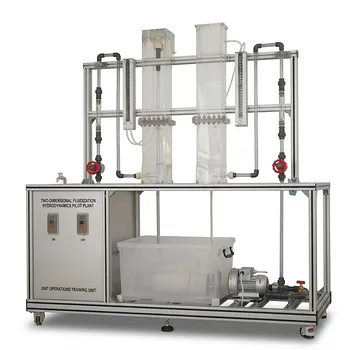
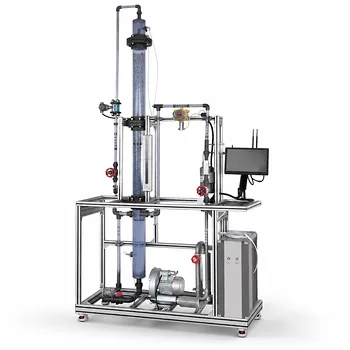
- Two-Dimensional Fluidization Hydrodynamics Educational Pilot Plant for Unit Operations Training
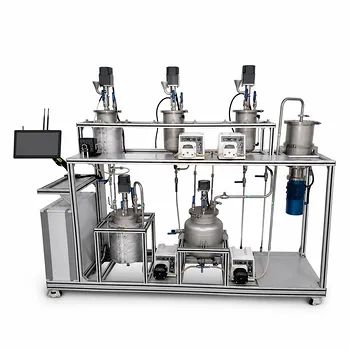
- Multi-Reactor Educational Pilot Plant for Reaction Engineering Unit Operations
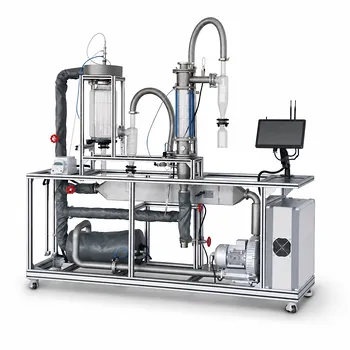
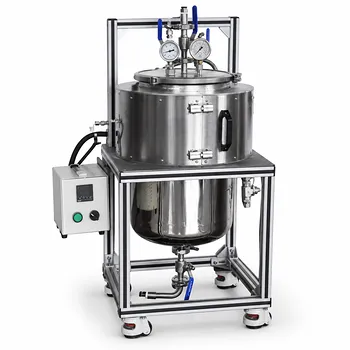
- Fluidized Bed Gas Solid Catalytic Reaction Educational Pilot Plant
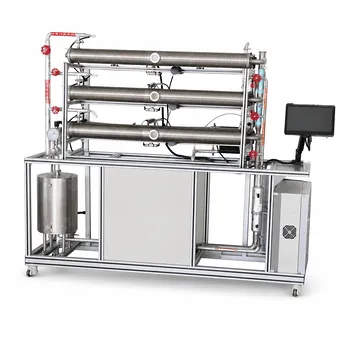
- Multi-Functional Drying Educational Unit Operations Pilot Plant
- Multi Functional Catalytic Reaction and Reactor Evaluation Educational Unit Operations Pilot Plant
People Also Ask
- What pressure drop characteristics should students & researchers monitor in a fluidization pilot plant?
- How does active time pulsing mixing enhance fluid homogenization? Configuration Guide for Educational Pilot Plants
- How can acoustic chemometrics prevent reactor clogging in educational fluidized bed pilot plants?
- Why is UB/Ui critical in fluidized bed pilot plant modeling? Master Gas-Solid Contact
- How can inline NIR & microwave sensors study fluidized bed drying dynamics? A Real-Time Guide