Your pilot plant’s temperature data is only as good as the sensor behind it. The choice between a thermocouple and an RTD is not about picking a “better” technology—it’s about matching the sensor’s inherent strengths to your specific process window. For most chemical engineering unit operations, the decision hinges on a single threshold: 500°C. Above this point, you will almost certainly need a thermocouple. At or below it, a Resistance Temperature Detector (RTD) will deliver higher accuracy, superior long-term stability, and far better noise immunity—critical factors for precise pilot‑scale research and process control.
The core rule is temperature-driven, but the real insight lies in what happens at the boundaries. If your pilot process operates below 500°C, an RTD like a Pt100 is the gold standard for accuracy, even though it costs a bit more and is physically less rugged. Above 500°C, the stability of an RTD falls off a cliff, and a thermocouple becomes the only reliable choice. Master this threshold, and you also gain clarity on speed, wiring, and lifetime drift.
The Fundamental Choice: Thermocouple vs. RTD
How They Work
An RTD measures temperature by sensing the change in electrical resistance of a pure metal (usually platinum) as it heats up. A thermocouple generates a tiny voltage at the junction of two dissimilar metals, a voltage that varies non‑linearly with temperature.
Key Performance Profiles
This physical difference creates two distinct personalities. An RTD is an intrinsically linear, stable, and precise device. A thermocouple is a fast, rugged, and wide‑ranging sensor that trades some accuracy and stability for the ability to survive extreme heat.
The 500°C Decision Line
This is the practical boundary where the strengths of each technology align with the needs of chemical pilot plants.
When to Use an RTD: The Precision Zone (-200°C to 500°C)
In mid‑to‑low temperature unit operations—distillation columns, heat exchangers, bioreactors, or precise crystallization studies—a platinum RTD (Pt100 or Pt1000) is the superior choice. It offers 0.1°C to 0.5°C accuracy out of the box, excellent long‑term stability (drift of less than 0.1°C per year), and a linear output that simplifies calibration and control tuning.
RTDs also give you superb immunity to electrical noise. In a pilot plant teeming with variable‑frequency drives, pumps, and stirrer motors, this noise rejection prevents erratic readings that can ruin a kinetic model or drive a controller unstable.
When to Use a Thermocouple: The High-Heat Arena (Above 500°C)
For catalytic reactors, thermal cracking units, gasification, or combustion experiments that push past 500°C, thermocouples are the only viable choice. Type K (up to ~1300°C), Type S/R (up to ~1600°C), or even Tungsten‑Rhenium alloys (up to 2300°C) can withstand temperatures where RTDs would rapidly oxidize, drift, and fail.
While you sacrifice some absolute accuracy, thermocouples provide rugged simplicity, fast thermal response, and the ability to operate in reducing or inert atmospheres when housed in the proper protection tube.
Accuracy and Signal Integrity in a Pilot Environment
Pilot plants are not benign laboratories. They are squeezed, dynamic spaces where data quality directly determines the credibility of any scale‑up study.
Why Pilot Plants Punish Bad Sensors
Long sensor cable runs are common, acting as antennas that pick up electromagnetic interference from heavy electrical equipment. Thermocouple signals are microvolt‑level and extremely susceptible to this noise, often requiring costly, shielded extension wire and careful grounding.
The RTD Advantage in Control Loops
An RTD’s signal (resistance change) is far more robust, and when paired with a standard 4‑20 mA transmitter, the measurement becomes almost immune to electrical noise over long distances. This makes an RTD the safer bet for any closed‑loop control where a single temperature spike can ruin a product or make a reaction unsafe.
Beyond Temperature: Response Time and Mechanical Durability
Thermocouple Speed
A bare, exposed junction thermocouple can react to a temperature change in less than a second. For a pilot‑scale fluidized bed or a rapid exotherm, this speed is invaluable.
RTD Fragility and Protection
Standard wire‑wound RTD elements are slower (several seconds) and physically more delicate than a metal‑junction thermocouple. However, thin‑film RTDs and proper thermowell selection (e.g., stainless steel up to 1000°C, ceramic for aggressive chemistries) can close the response‑time gap while protecting the sensor from chemical attack and flow‑induced vibration.
Understanding the Trade-offs
No single sensor wins everywhere. Ignoring the weaknesses of your primary choice leads to bad data and costly re‑work.
The Cost of Precision Below 500°C?
An RTD costs more than a bare thermocouple, but this is rarely the deciding factor in a pilot plant. The real “cost” can be slower response if you do not use a grounded, thin‑film element. If your process is fast and accuracy can be slightly relaxed (e.g., ±2°C is acceptable), a thermocouple may still be the pragmatic pick, but only if you invest in noise‑canceling signal conditioning.
Why an RTD Above 500°C Fails
Even if a Pt100 is rated to 650°C, its accuracy and long‑term stability degrade dramatically above 500°C. The platinum wire succumbs to contamination and grain‑boundary changes, causing permanent drift that corrupts a continuous pilot run. The primary reference is unequivocal: above 500°C, you are gambling with your data if you stick with an RTD.
Wiring and Grounding Pitfalls
Thermocouples require extension‑grade cable of the exact same alloy and careful cold‑junction compensation. A wrong connector or unshielded wire can introduce errors larger than the process variable itself. RTDs using a 3‑wire or 4‑wire connection eliminate lead‑resistance errors, but they demand a compatible transmitter or input card.
Making the Right Choice for Your Pilot Plant
Your selection must flow from the unit operation’s temperature demand and the quality of the data you need for scale‑up.
- If your process operates continuously above 500°C: Use a thermocouple. Choose the calibration (K, S, R, or WRe) based on the exact temperature span and atmosphere, and protect it with a suitable ceramic or quartz thermowell for chemical resistance.
- If your primary focus is high‑accuracy control and modeling in the -200°C to 500°C range: Use a 3‑ or 4‑wire Pt100 RTD with a 4‑20 mA transmitter. You will get stable, noise‑free data that stands up to audit and scale‑up calculations.
- If you need the fastest possible response time for a dynamic reactor study: Opt for an exposed‑junction thermocouple, but accept the trade‑off in long‑term stability and budget for frequent cold‑junction verification.
- If your pilot plant has long cable runs and heavy electrical noise: The RTD + transmitter combination is almost always the safer, lower‑drift path to a clean control signal.
The right sensor transforms a pilot plant from a room full of hardware into a true data‑generating research tool. Match the tool to the thermal task, and your measurements will hold up from the bench to the full‑scale plant.
Summary Table:
| Feature | RTD (e.g., Pt100) | Thermocouple |
|---|---|---|
| Temperature Range | -200°C to 500°C (degrades above) | Up to 1300°C+ (Type K/S/R/WRe) |
| Accuracy & Stability | High (0.1°C to 0.5°C), low drift | Moderate, higher drift over time |
| Response Time | Slower (seconds) | Extremely fast (< 1 second) |
| Noise Immunity | High (ideal for long cable runs) | Low (susceptible to EMI/noise) |
| Best Suited For | Distillation, bioreactors, crystallization | Catalytic reactors, gasification, combustion |
Optimize Your Pilot Plant Instrumentation with LABPARK
Designing a reliable system requires matching the right sensors to your process windows. LABPARK provides premium Educational and Vocational Unit Operations Pilot Plants in chemical engineering, bioprocess & biotech, and environmental & water treatment. We help universities, research institutes, and enterprises select and integrate the precise instrumentation needed to secure high-quality scale-up data.
Ready to upgrade your laboratory setup? Contact our engineering team today to discuss your pilot plant requirements!
Related Products
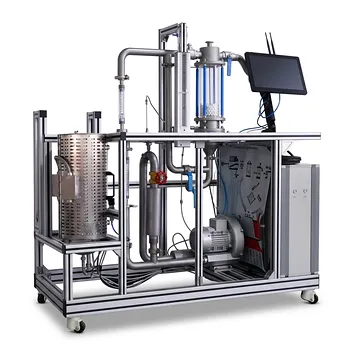
- Solid Spherical Heat Transfer Coefficient Determination Educational Chemical Engineering Pilot Plant
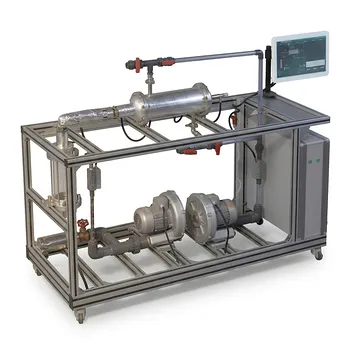
- Shell and Tube Heat Exchanger Heat Transfer Coefficient Determination Educational Pilot Plant
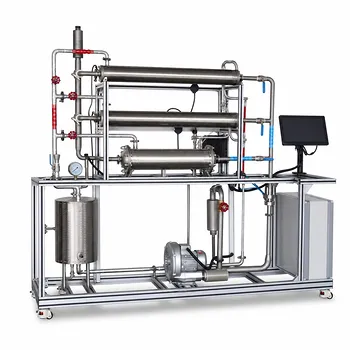
- Comprehensive Heat Transfer Coefficient Determination Educational Unit Operations Pilot Plant
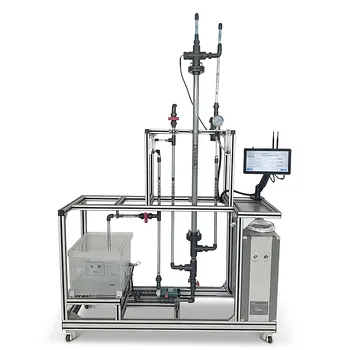
- Dual Mode Heat Transfer Pilot Plant for Unit Operations Training
- Tubular Reactor Flow Characteristics Determination Educational Unit Operations Pilot Plant
People Also Ask
- How are steady-state and unsteady-state heat transfer processes demonstrated practically using chemical engineering pilot plants?
- How Pilot Plants Show Natural vs. Forced Convection Heat Transfer
- How do unit conversions affect pilot plant calibration? Avoid errors in heat transfer data analysis
- Why is the prevention of scale formation on heat exchanger surfaces a critical learning objective? Key Lessons
- How is the thermal resistance of a thick-walled hollow cylinder calculated? Key Equations