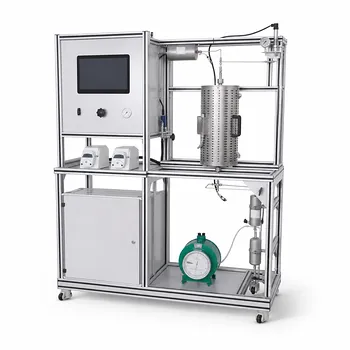
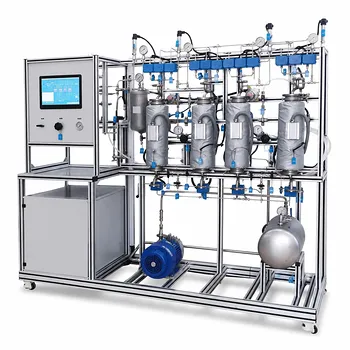
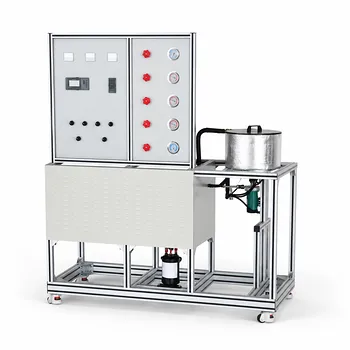
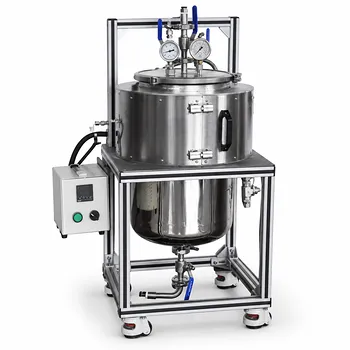
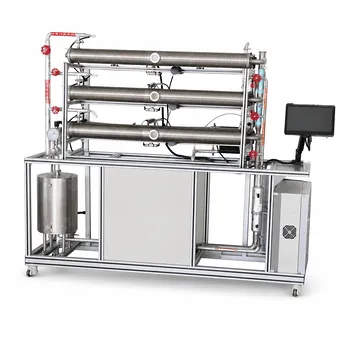
The core difference lies in whether you prioritize managing acute toxicity or extreme operating conditions.
For a chemical engineering unit operations lab, the interfacial phosgene route polymerizes at mild temperatures and ambient pressure but requires the handling of lethal phosgene gas, a chlorinated solvent, and caustic alkali—demanding rigorous gas containment and scrubbing systems. The melt transesterification method avoids phosgene and solvents entirely, instead using high temperatures exceeding 250°C and deep vacuum to drive off phenol; its lower toxicity risk makes it the safer educational choice, but it demands pilot equipment capable of high-temperature heating, high‑vacuum distillation, and high‑torque mixing to manage the increasingly viscous melt.
In academic and vocational pilot plants, melt transesterification is generally preferred because it eliminates the catastrophic toxic‑gas hazard inherent to phosgene‑based systems. However, the interfacial method’s unit operations can still be taught safely by substituting safer model reactions or isolating the downstream separation train, while the melt route excels at demonstrating advanced reactor control, vacuum management, and the interplay of process parameters on polymer quality.
Process Differences at the Unit Operation Level
Interfacial Phosgene Route: Low‑Temperature Reaction with Solvent Extraction
The interfacial method combines phosgene gas, bisphenol A (BPA), sodium hydroxide, and a methylene chloride organic phase in a biphasic system at or near ambient temperature.
Key unit operations start with controlled phosgene feed and gas scrubbing to destroy unreacted gas, followed by vigorous mixing in a continuous stirred‑tank reactor, phase separation, and extensive washing of the organic layer to remove salts and residual BPA.
The polymer is then recovered through precipitation, filtration, and drying—a series of liquid–liquid extraction and solids‑handling steps that are central to the teaching value of this process.
Melt Transesterification Route: High‑Temperature, High‑Vacuum Step‑Growth
This method reacts BPA directly with diphenyl carbonate (DPC) in the melt phase, with no added solvent.
The core unit operation is a high‑temperature reactor (180–300°C) equipped with a deep vacuum system (typically 130–400 Pa) that continuously strips the phenol byproduct, driving the equilibrium toward high molecular weight.
The equipment train includes a thermal oil heating jacket, a high‑vacuum distillation column or condenser for phenol capture, and a high‑torque anchor or helical agitator designed to handle the exponential viscosity rise as chain growth proceeds.
Safety Considerations and Lab‑Specific Mitigations
Interfacial Method: Managing Phosgene and Solvent Hazards
Phosgene is acutely toxic and potentially lethal at parts‑per‑million concentrations, so any experiment using it requires a dedicated fume hood with a phosgene‑specific detector, a caustic scrubber on the vent, and emergency stop‑systems.
The methylene chloride solvent adds inhalation and dermal exposure risks, while the caustic soda (NaOH) introduces a corrosive burns hazard.
In a teaching setting, the full‑scale interfacial reaction is rarely run with actual phosgene; instead, labs simulate the reaction using a safer acid chloride or focus exclusively on the downstream washing, precipitation, filtration, and drying unit operations to convey the separation challenges without the gas‑handling risk.
Melt Method: Addressing Thermal and Vacuum Risks
The primary hazards shift to high‑temperature burns from reactor surfaces and thermal oil circuits, the implosion risk of glass equipment under high vacuum, and the handling of molten polymer and phenol vapor.
Phenol vapor is toxic but far less acutely hazardous than phosgene; it must be condensed and captured with a cold trap and residual scrubbing, but it does not demand the same level of life‑safety containment as a lethal gas.
Because the melt route eliminates the catastrophic acute toxicity, it is almost universally preferred for student‑operated pilot plants—provided the setup incorporates high‑temperature interlocks, pressure relief, vacuum‑rated glass or metal vessels, and personal protective equipment for thermal hazards.
Adapting the Methods for a Teaching Pilot Plant
Using Model Reactions for Interfacial Polymerization
When the goal is to teach liquid–liquid extraction and solids processing, the interfacial route can be run without phosgene by substituting a benign di‑acid chloride monomer that forms an analogous biphasic system.
The experiment then concentrates on the separation train: phase separation, aqueous washes, precipitation in a non‑solvent, vacuum filtration, and drying—allowing students to characterize the influence of wash efficiency and precipitation conditions on purity.
This approach preserves the unit operations curriculum while completely eliminating the need for gas‑phase safety infrastructure.
Demonstrating High‑Performance Reactor Control with Melt Transesterification
A melt transesterification pilot plant lets students actively monitor and adjust vacuum level, temperature profile, and agitator torque as the reaction proceeds.
By taking samples at different stages, they can correlate the degree of vacuum and phenol removal rate with molecular weight build‑up and polymer color, directly illustrating the principle of equilibrium‑driven step‑growth polymerization.
The experiment also teaches the operation of thermal oil heating systems, the use of vacuum gauges and cold traps, and the mechanical handling of high‑viscosity melts—skills that transfer to many industrial polymer processes.
Understanding the Trade‑offs
The choice boils down to a trade‑off between acute toxicity and operational complexity. The interfacial phosgene route operates at forgiving temperatures and near‑atmospheric pressure, but its safety infrastructure must be flawless—a single gas leak can be catastrophic. The melt route is inherently safer in terms of material toxicity, yet it forces students and pilot plant designers to confront high temperatures, deep vacuum, and rapidly changing fluid dynamics.
From an educational perspective, the melt route’s operational hurdles are often desirable because they naturally drive inquiry into heat transfer, mass transfer (phenol removal), and polymer rheology. The interfacial method’s value shifts toward separation science, but only when the toxic reaction is replaced by a surrogate or when the focus remains on downstream processing.
Industry increasingly favors the solvent‑free melt process for sustainability and safety, but the interfacial method remains relevant for producing certain high‑optical‑quality resins. For a teaching lab, the key is to align the experiment’s hazards with the infrastructure, instructor expertise, and the specific unit operations you want to highlight.
Making the Right Choice for Your Teaching Goal
Each route offers a distinct set of learning outcomes and safety boundaries. Select the configuration that matches your primary educational objective while staying within your lab’s risk envelope.
- If your primary focus is student safety and minimizing toxic inventory: Design the experiment around the melt transesterification reactor, incorporating high‑temperature interlocks, vacuum‑rated equipment, and phenol capture—this route removes the lethal gas hazard entirely.
- If your primary focus is teaching liquid‑liquid extraction and solids handling: Build an interfacial process experiment using a non‑toxic surrogate for phosgene; center the lab on the washing, precipitation, filtration, and drying steps to showcase purification unit operations without gas risk.
- If your primary focus is demonstrating the interplay of process parameters on polymer quality: Use the melt transesterification pilot plant to let students manipulate vacuum level and temperature ramp rate, then measure molecular weight and residual phenol; the direct cause‑and‑effect insight is unmatched.
- If your primary focus is balancing both routes within limited infrastructure: Run the melt process for reactor‑intensive lessons and complement it with a cold‑flow separation train (e.g., using a pre‑made polymer solution) to illustrate interfacial washing and precipitation without any reactive chemistry.
An informed choice between these methods turns a batch synthesis lab into a powerful platform for studying reaction engineering, separation science, and process safety in one integrated curriculum.
Summary Table:
| Feature / Parameter | Interfacial Phosgene Route | Melt Transesterification Route |
|---|---|---|
| Operating Temperature | Low/ambient temperature | High temperature (180–300°C) |
| Operating Pressure | Near ambient pressure | Deep vacuum (130–400 Pa) |
| Primary Hazard | Acute toxicity (lethal phosgene gas, solvents) | High thermal burns, vacuum implosion, phenol vapor |
| Key Unit Operations | Gas scrubbing, phase separation, solvent extraction | High-vacuum distillation, thermal oil heating, high-torque mixing |
| Teaching Focus | Liquid-liquid extraction, washing, filtration, drying | Reactor control, vacuum management, melt rheology |
| Safety Suitability | High risk (requires toxic gas mitigation or surrogates) | Safer choice for students (focuses on physical/thermal safety) |
Build a Safer, Modern Unit Operations Lab with LABPARK
Designing a polymer synthesis experiment requires balancing educational value with rigorous safety standards. LABPARK provides state-of-the-art Educational and Vocational Unit Operations Pilot Plants in chemical engineering, bioprocess & biotech, and environmental & water treatment.
We assist universities, research institutes, and enterprises in setting up robust, industrial-grade training systems—from high-temperature vacuum reactors for melt polymerization to safe model extraction trains.
Let us help you select the ideal equipment configuration for your curriculum. Contact LABPARK today to consult with our experts!
Related Products
- Polymerization Granulation and Pellet Processing Educational Unit Operations Pilot Plant
- Carbon Dioxide Hydrogen Methanol Synthesis Educational Unit Operations Pilot Plant
- Carbon Dioxide PVT Curve Determination Educational Unit Operations Pilot Plant
- Methanol Synthesis and Catalyst Performance Evaluation Educational Unit Operations Pilot Plant
- Carbon Dioxide Hydrogenation Methanol Synthesis Educational Unit Operations Pilot Plant
People Also Ask
- How do educational unit operations pilot plants bridge theory and design? Bridge the Engineering Gap
- How do educational unit operations pilot plants address safety and waste management when scaling up?
- Why Compare Predicted and Experimental Excess Enthalpy? Key to Accurate Pilot Plant Scale-up
- When to transition from PID to adaptive control in pilot plants? Key process indicators.
- Why is the chemical plant startup schedule crucial? De-risk scale-up with pilot plants.