The choice between a spring-loaded and a pilot-operated relief valve for a pilot plant hinges on one critical parameter you can measure immediately: the gap between your normal operating pressure and the vessel’s maximum allowable working pressure (MAWP).
If your process runs comfortably below 90% of the set pressure, a traditional spring-loaded valve offers the broadest chemical compatibility and simplest maintenance. When you must operate within 95% of the MAWP, or require a bubble-tight seal right up to the set point, a pilot-operated valve becomes essential—provided its elastomer seals can survive your process fluid’s temperature and chemistry.
Pilot-plant designers face a fundamental tension: spring-loaded valves deliver all-metal resilience for diverse research chemicals but leak near their set point, while pilot‑operated valves provide zero-leakage operation at the edge of design pressure—yet their soft seals impose strict temperature and solvent limits. Your selection balances shutoff precision against material robustness, and for most multi‑chemical pilot lines, the chemical compatibility question overrules everything else.
The Operating-Margin Problem: Why 5% Matters in Pilot Plants
Pilot‑scale reactors and distillation columns often explore conditions close to equipment limits. The valve that works perfectly in a production plant may silently fail in your research unit by simmering long before the MAWP is reached.
The 95% Simmer Limit of Spring-Loaded Valves
A conventional spring-loaded safety valve begins to lift and leak—known as “simmer”—at 92% to 95% of its set pressure.
If your pilot‑plant experiment runs at 94% of MAWP, you are venting process fluids continuously. This compromises data accuracy, creates fugitive emissions, and can degrade the valve seat over repeated cycles.
How Pilot-Operated Valves Eliminate Pre-Leakage
A pilot‑operated valve uses the system’s own pressure to hold the main disc tightly closed.
The process pressure acts on a larger area above the disc than below it, so the higher the pressure, the tighter the seal—right up to the set point. No simmer, no lifting, no wasted product.
Managing Backpressure in Fluidic Pilot-Plant Networks
Pilot units often discharge into shared headers, scrubbers, or temporary catch tanks, creating fluctuating backpressure that can seriously mislead a standard spring-loaded valve.
Why Downstream Fluctuations Favor Balanced Bellows or Pilots
A conventional spring‑loaded relief valve has its set pressure increased pound‑for‑pound by superimposed backpressure.
If your downstream system pressure wavers by a few psi, the valve’s true relief point shifts unpredictably. Spring‑loaded valves with a balanced bellows solve this, but they still suffer from simmer near setpoint. Pilot‑operated valves, by design, sense system pressure directly at the vessel and ignore downstream backpressure entirely.
Process Fluid Compatibility: The Non-Negotiable Decider
As soon as your pilot plant handles multiple solvents, acids, or high‑temperature streams, the soft‑goods inside a pilot‑operated valve become a single‑point vulnerability.
Temperature Limits of Elastomer Seals
Pilot‑operated valves rely on O‑rings and diaphragms made of nitrile, Viton®, EPDM, or similar.
Each elastomer has a hard temperature cap—often below 200°C—while a spring‑loaded valve’s metal‑to‑metal seat can handle several hundred degrees. For a reactor pilot plant testing exothermic reactions, this gap alone often forces the spring‑loaded choice.
Chemical Attack and Swelling Risks
The same elastomers that give you perfect shutoff can swell, soften, or disintegrate in contact with ketones, esters, or aromatic solvents.
A spring‑loaded valve avoids this entirely through metal‑seat lapping. In a research environment where the next experiment may involve an untested solvent, the all‑metal spring‑loaded design significantly reduces the risk of a hidden seal failure.
Pressure Range Extremes: Where Pilot-Operated Valves Dominate
There are two absolute pressure bands where the pilot‑operated design is not just favorable but often the only practical solution.
Low-Pressure (<230 kPa) and High-Pressure (>69 bar) Dominance
At very low set pressures, a spring‑loaded valve struggles to maintain a stable, repeatable lift because the spring has minimal stored energy.
At very high pressures, the massive spring required becomes physically bulky and imprecise. Pilot‑operated valves circumvent both limits by using a small pilot to control a large main valve, delivering accurate relief at both ends of the spectrum. If your pilot plant involves vacuum systems or gas‑phase reactions above 70 bar, pilot‑operated becomes the primary path.
Understanding the Trade-offs
Every advantage comes with a penalty. In a pilot‑plant setting—where cleanliness, rapid turnaround, and variable conditions are the norm—these trade‑offs directly shape daily operations.
Reliability and Maintenance Complexity
A spring‑loaded valve is mechanically simple: a spring, a disc, a nozzle. Field maintenance often involves just lapping the seat.
A pilot‑operated valve contains multiple small passages, a pilot cartridge, and elastomeric parts. Blockage of the pilot tube by polymerized vapor, dust, or sticky condensates can render the valve inoperable, a real risk in polymerization or fouling‑service pilot units.
Cost and Availability
Spring‑loaded valves are commodity items available in a wide range of materials from multiple vendors.
Pilot‑operated valves cost significantly more upfront and require specific elastomer kits for rebuilds. For a pilot‑plant manager running a dozen different vessels on a tight budget, the spring‑loaded option often wins simply on lifecycle economics.
Risk of Pilot-Tube Blockage
The small‑diameter sensing lines that feed the pilot can easily become clogged.
If that line plugs while the valve is closed, the main disk stays locked shut regardless of vessel pressure—a latent, catastrophic failure mode that demands a strict inspection protocol.
Making the Right Choice for Your Pilot Plant
Your decision rests on what dominates your experimental environment: precise leak‑free operation at the edge of MAWP, or broad‑spectrum chemical flexibility with minimal maintenance. Choose deliberately with these goal‑oriented guidelines.
- If your primary focus is testing a wide variety of aggressive or high‑temperature chemicals: Select a spring‑loaded valve with metal‑to‑metal seating. Use a balanced‑bellows version if downstream backpressure is variable.
- If your primary focus is running reactions at pressure setpoints consistently above 90% of the vessel MAWP: A pilot‑operated valve is the only sound choice. Verify the elastomer material is fully compatible with every solvent, reactant, and temperature extreme you plan to test.
- If your primary focus is minimizing fugitive emissions during long‑hold experiments at near‑design pressure: The zero‑leakage characteristic of the pilot‑operated valve before set point makes it the superior environmental and process‑integrity option.
- If your primary focus is low‑pressure (<2.3 barg) or high‑pressure (>69 barg) pilot‑scale work: Pilot‑operated valves deliver the mechanical precision you cannot achieve with a spring, but pair them with a strict pilot‑line flushing protocol to avoid blockage.
Your relief valve is the last line of defense in a pilot plant where tomorrow’s experiment may look nothing like today’s. Match the valve’s soft‑goods limitations to your chemical inventory, and the mechanical precision to your operating margin—and you will have a system that protects both your researchers and your research.
Summary Table:
| Selection Factor | Spring-Loaded Relief Valves | Pilot-Operated Relief Valves |
|---|---|---|
| Operating Pressure | Must run < 90% of set pressure (simmers at 92-95%) | Can run up to 95% of MAWP (bubble-tight seal) |
| Chemical Compatibility | High (all-metal seats resist most solvents) | Limited (elastomers prone to swelling/attack) |
| Temperature Limits | High (handles several hundred degrees) | Low (typically capped below 200°C due to seals) |
| Backpressure Impact | Sensitive (requires balanced bellows) | Insensitive (measures system pressure directly) |
| Maintenance / Risk | Simple, easy to clean and lap seats | Complex, risk of pilot-tube clogging |
Ensure Safety & Precision in Your Pilot Plant Operations
At LABPARK, we understand that selecting the right pressure relief system is vital to protecting your researchers and securing accurate experimental data.
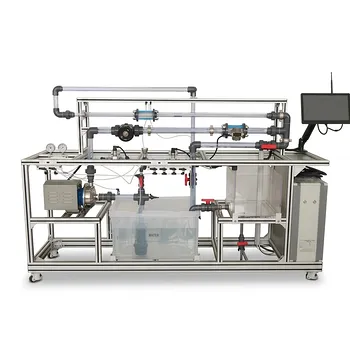
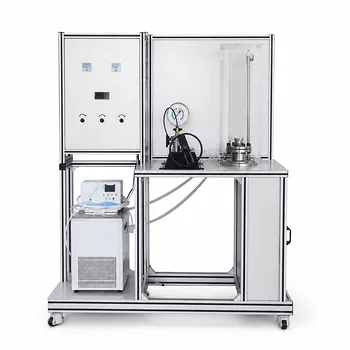
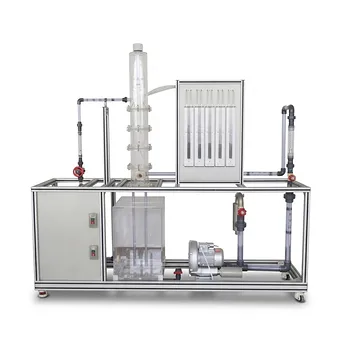
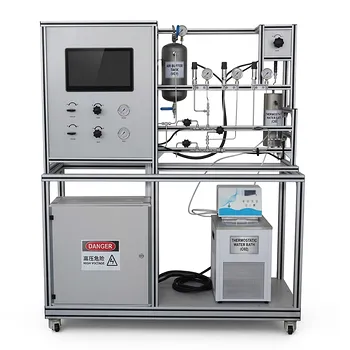
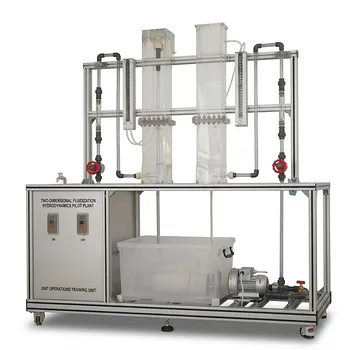
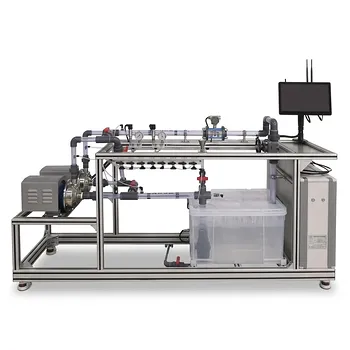
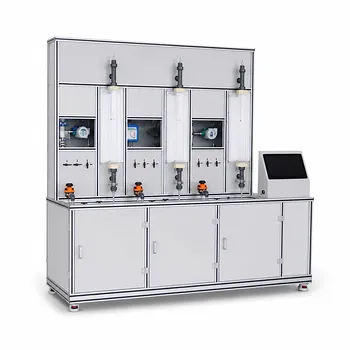
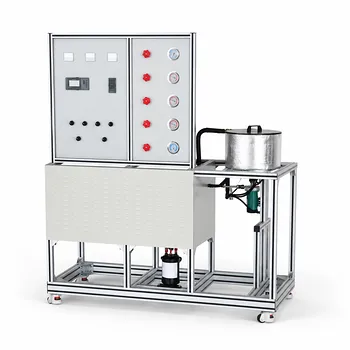
We provide premium Educational and Vocational Unit Operations Pilot Plants in chemical engineering, bioprocess & biotech, and environmental & water treatment. Tailored for universities, research institutes, and enterprises, our pilot plants are designed to meet strict safety and operational standards.
Ready to configure a high-performance pilot system? Contact LABPARK today to consult with our technical team and find the ideal solution for your laboratory.
Related Products
- Bernoulli Equation Demonstration Unit Operations Pilot Plant
- Constant Pressure Filtration Educational Unit Operations Pilot Plant
- Cavitation Phenomenon Demonstration and Analysis Educational Unit Operations Pilot Plant
- Orifice and Venturi Flowmeter Calibration Educational Pilot Plant for Fluid Mechanics Laboratory
- Fluid Friction Resistance Determination Educational Unit Operations Pilot Plant
People Also Ask
- How does nozzle geometry affect energy efficiency and jet performance in fluid mechanics laboratory demonstration units?
- How is the Bernoulli equation applied in fluid mechanics training plants? Visualize energy conservation rules.
- How to demonstrate rapid vs slow valve closure? Clear water hammer transient experiments for engineering labs.
- How does friction factor differ in laminar vs turbulent flow? Lab Experiment Guide
- How do pilot plants teach U-tube manometers? Master Differential Pressure Calculations