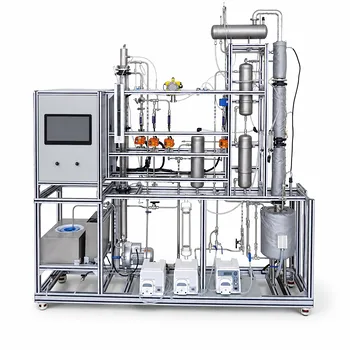
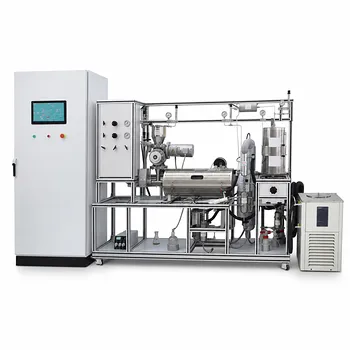
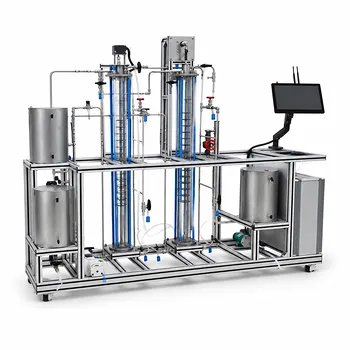
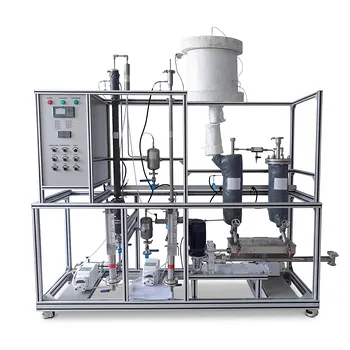
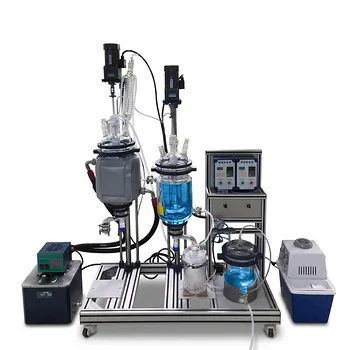
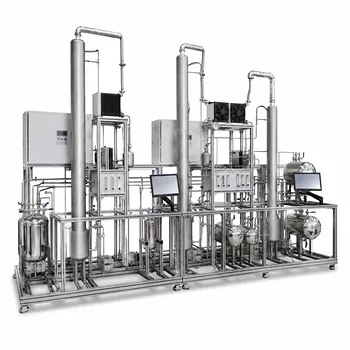
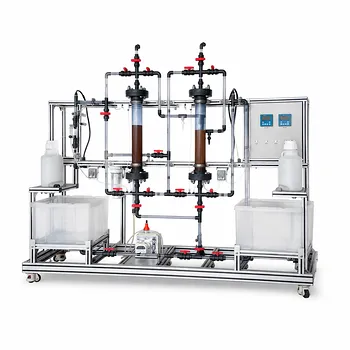
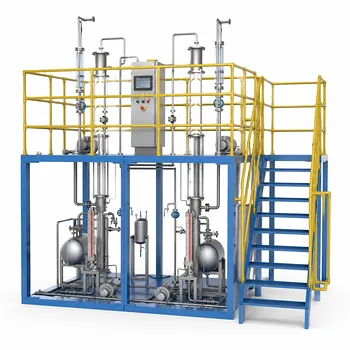
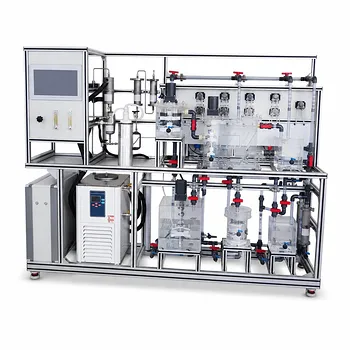
Configuring an effective pilot plant for teaching solvent recovery or petrochemical synthesis is about more than assembling scaled-down industrial equipment—it requires a deliberate integration of process vessels, separation systems, safety controls, and utility infrastructure to create a safe, hands-on learning environment that mirrors real plant operations. At its core, the plant must include a vaporizer or reboiler, a heated reactor, a condenser, and a separation train such as a distillation or absorption column. Key configuration factors focus on properly sizing heat transfer areas, defining safe operating pressures (typically atmospheric to 5–10 bar), and ensuring the facility’s utilities can supply the required electricity, cooling water, steam, and ventilation.
The true value of a teaching pilot plant lies not in its individual parts but in the integrated system that allows students to perform mass and energy balances, optimize solvent recovery rates, and manage process safety. These skills only emerge when equipment selection, safety infrastructure, and operational flexibility are all prioritized from the start.
The Essential Components of an Educational Pilot Plant
Vaporizers and Feed Preparation
A kettle-type reboiler or electric vaporizer heats the liquid feed to the required temperature before it enters the reactor or column.
For solvent recovery systems, a dedicated preheater or air heater can be used to bring a gas stream to the optimal temperature before condensation and adsorption steps.
Reactor Configurations for Synthesis and Recovery
The reactor must provide precise temperature control through a heating jacket or internal coil. This allows students to study kinetics and thermal effects during reactions like methyl ethyl ketone (MEK) production.
When handling volatile or toxic solvents, closed-loop glass reactor systems are preferred. These integrate an overhead condenser for direct solvent recycling and are built with ATEX-compliant components to prevent ignition hazards.
Condensation and Heat Recovery
A shell-and-tube or double-pipe condenser is essential for cooling product vapors and returning condensate to the process.
For gas-phase solvent recovery, a deeper cooling chain is necessary: a chiller/condenser followed by a gas-liquid separator and a refrigeration unit. This setup mimics industrial exhaust clean-up and lets students measure recovery efficiency under different temperature profiles.
Separation Trains: Distillation, Absorption, and Extraction
The core separation unit can be a packed absorption column, a fractional distillation tower, or a liquid-liquid extraction column. The choice depends on the mixture’s boiling points and solubility characteristics.
To demonstrate full-cycle solvent recovery, include dual adsorbent beds—one onstream for adsorption, the other regenerating with hot air. A blower moves the process gas through the beds, completing the continuous treatment loop.
Auxiliary Components: Pumps, Compressors, and Storage
Centrifugal feed pumps move liquids through the system, while an air compressor supplies the air stream for regeneration or stripping operations. Multiple storage tanks hold fresh solvent, recovered solvent, and waste streams, enabling students to perform material balances around each unit.
Critical Configuration Factors for Realistic Teaching
Scaling Heat Transfer and Residence Times
Pilot-scale heat exchangers must be sized so that students can calculate overall heat transfer coefficients and compare them to industrial norms. Overly large safety margins can mask poor performance; under-designed units can create unsafe thermal runaways.
Defining Safe Operating Pressure Envelopes
While many teaching plants run at atmospheric pressure, systems that involve synthesis or high-boiling solvents may require pressures up to 5–10 bar. Every pressurised vessel must be fitted with a pressure relief valve and, where reactive hazards exist, a rupture disc.
Matching Utility Infrastructure to Process Needs
Before any equipment arrives, verify the laboratory’s electricity (voltage, phase, capacity), cooling water (flow rate, pressure, temperature), process air, steam, and safe drainage. A mismatch here leads to constant downtime and corrupted experimental data.
Designing for Flexibility vs. Specialization
Modular, skid-mounted units with quick-connect fittings let a single plant be reconfigured for distillation, extraction, or absorption experiments. However, flexibility comes at a cost: every connection is a potential leak point, and the system requires more rigorous safety checks.
Safety and Infrastructure: The Non-Negotiable Foundation
Operator Training and Emergency Protocols
Every student must complete rigorous safety training and sign a safety commitment before entering the lab. The facility must have clearly marked master shut-off valves for water, electricity, and gas, plus accessible eyewash stations, emergency showers, and fire extinguishers.
Engineering Controls: Fume Hoods, Closed-Loop Systems, and Ventilation
Any operation generating toxic, volatile, or irritating vapors must be conducted inside a fume hood. This is not optional—it is a primary engineering control that protects students during start‑up and shutdown when emissions are highest.
Where fume hoods are impractical, use closed-loop systems with continuous solvent vapor monitoring sensors. These systems integrate the reactor, condenser, and recovery loop into a single sealed unit, significantly reducing fugitive emissions.
Hazardous Area Classification and Explosion Prevention
If organic solvents like acetonitrile or diisopropyl ether are used, all electrical components in the immediate vicinity—pumps, sensors, agitators—must be ATEX-certified. This includes installing fire-safe seals and ensuring all metal parts are properly bonded and grounded.
Waste Minimization and Disposal Protocol
Teach waste minimization at the source by integrating in‑process solvent recovery rather than just end‑of‑pipe treatment. A simple recycle loop with a distillation column lets students explore the energy‑to‑purity trade‑offs and directly reduces hazardous liquid waste.
Understanding the Trade-offs and Pitfalls
Cost vs. Pedagogical Value
A high‑fidelity distillation column with automated data logging offers excellent teaching data but may consume half the budget. A basic packed column with manual reflux splitting often teaches the same fundamentals at a fraction of the cost—provided students spend more time taking careful measurements.
Safety Overhead vs. Process Realism
Adding ATEX‑rated equipment, blast‑proof enclosures, and continuous gas detection adds complexity and cost. If the teaching goal is basic mass balances, this overhead can drown the core message. However, for courses on industrial process safety, these are the very features that bring realism into the lab.
Flexibility vs. Integration Complexity
A single, flexible plant that can be rearranged for multiple experiments is tempting. Yet every reconfiguration risks damaging seals, introducing contamination, and requiring fresh safety approvals. A more focused design—dedicated to either distillation or solvent recovery but not both—often yields higher uptime and more reproducible student results.
Making the Right Choice for Your Program
Your program’s learning objectives will determine which components and configuration factors take priority. Use these goal‑oriented guidelines to shape your pilot plant specification.
- If your primary focus is broad chemical engineering fundamentals: prioritize a modular system with a heated reactor, a distillation column, and a liquid‑liquid extraction unit, supported by robust safety infrastructure and manual control loops.
- If your primary focus is specialized solvent recovery: invest in a closed‑loop glass plant with a deep chiller, gas‑liquid separator, dual adsorbent beds, and real‑time vapor monitoring to replicate industrial exhaust treatment.
- If your primary focus is petrochemical synthesis (e.g., MEK production): configure the plant with a high‑pressure reactor system, a fractionation column, and a solvent recycle loop, ensuring all pressure vessels are correctly rated and protected by relief devices.
- If your primary focus is safety and regulatory compliance training: select ATEX‑rated components, integrate continuous gas detection, and build the learning experience around emergency shutdown drills, permit‑to‑work procedures, and hazard analysis.
- If your primary focus is budget‑conscious flexibility: start with a single‑skid glass reactor with overhead condenser and a simple packed column, then add adsorption and extraction modules as resources allow.
By anchoring every equipment choice and configuration decision to your teaching goals, you transform a collection of vessels and pipes into a true learning platform that equips students with the hands‑on judgment and safety awareness they need in industrial chemical operations.
Summary Table:
| Category | Key Elements & Systems | Primary Purpose in Teaching |
|---|---|---|
| Core Components | Vaporizers, reactors, condensers, separation columns (distillation/absorption) | Replicates industrial-scale mass and energy transfers. |
| Key Configurations | Sizing heat transfer areas, pressure envelopes (up to 5-10 bar), utility matching | Ensures realistic residence times, safety, and operational uptime. |
| Safety Controls | ATEX-compliant parts, relief valves, fume hoods, closed-loop systems | Protects operators from thermal hazards and volatile solvent vapors. |
| System Design | Modular skid-mounting, bypass lines, flexible connection configurations | Allows multi-scenario experiments (distillation, extraction, absorption). |
Build a Safer, High-Performance Lab with LABPARK
Are you looking to upgrade your chemical engineering curriculum or vocational training facility? LABPARK provides state-of-the-art Educational and Vocational Unit Operations Pilot Plants in chemical engineering, bioprocess & biotech, and environmental & water treatment for universities, research institutes, and enterprises.
By partnering with us, you benefit from:
- Uncompromised Safety: Standard ATEX-compliant designs, automatic shut-offs, and closed-loop systems to protect students.
- Pedagogical Excellence: High-fidelity systems engineered for precise mass & energy balance calculations and hands-on process control training.
- Tailored Engineering: Modular, skid-mounted configurations that match your exact utility limits and spatial requirements.
Ready to design the ultimate hands-on learning environment? Contact our technical specialists today to discuss your custom pilot plant specifications!
Related Products
- Carbon Dioxide Absorption and Desorption Educational Pilot Plant for Carbon Capture Studies
- Solid Waste Pyrolysis and Refining Educational Pilot Plant for Unit Operations
- Comprehensive Liquid-Liquid Extraction Pilot Plant for Engineering Education
- Dual-Mode Rectification Pilot Plant for Practical Training Unit Operations
- Steam Methane Reforming Hydrogen Production and Purification Educational Pilot Plant
People Also Ask
- How does operating pressure influence the transition between absorption and desorption in a CO2 pilot plant?
- How do temperature variations affect CO2 transport models in pilot plants? Model vs Reality
- What unit operations are critical for CCUS training pilot plants? Build hands-on engineering expertise.
- How do electrolytes affect phase equilibrium in absorption pilot plants, and how to calculate it?
- Why is critical surface tension key in column internals? Optimize gas absorption pilot plant efficiency