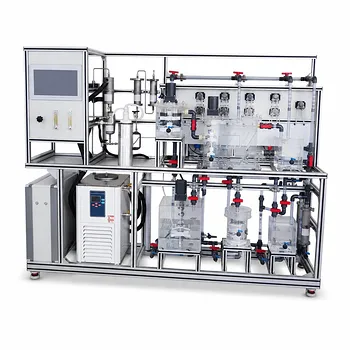
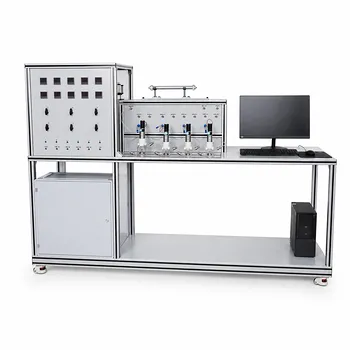
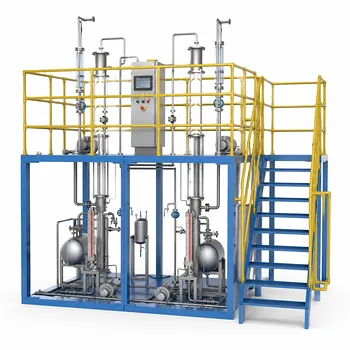
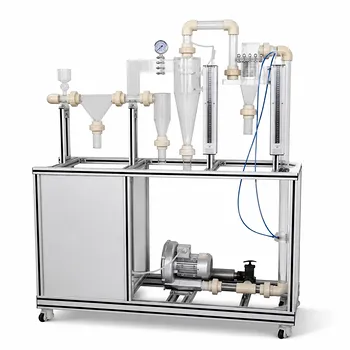
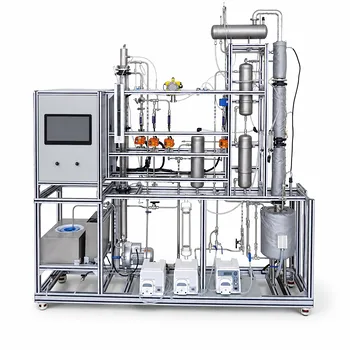
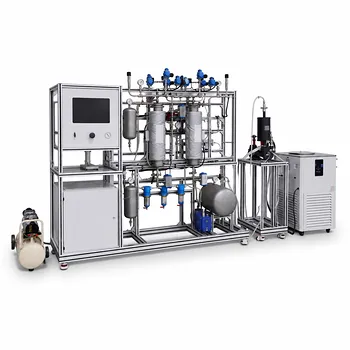
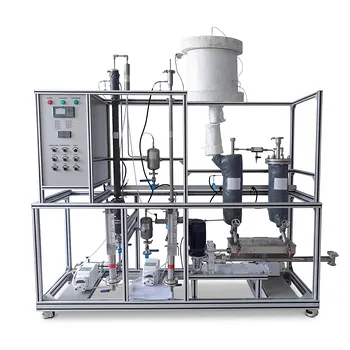
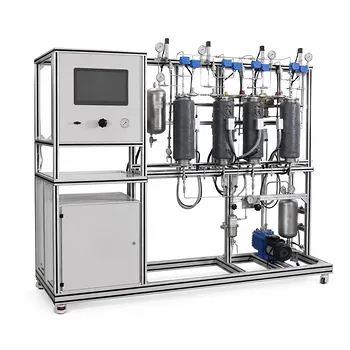
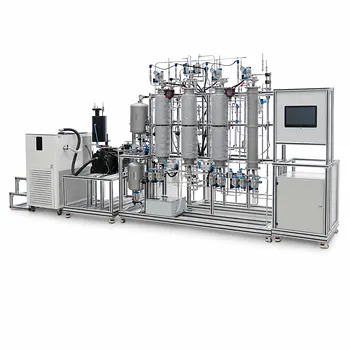
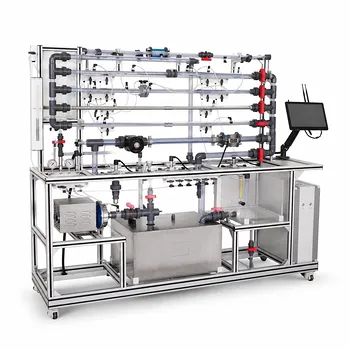
The bedrock of gaseous effluent resource recovery in pilot plants is a suite of four unit operations: absorption columns, adsorption scrubbers, low-temperature thermal separation systems, and biofilters. These are the essential modules that allow researchers and students to move beyond simple pollution control and actively extract valuable materials or energy from waste gas streams. They enable hands‑on investigation of how to concentrate recoverable components—such as solvents, condensable hydrocarbons, or biomass—from highly dilute industrial effluents, directly bridging the gap between laboratory curiosity and industrially viable recovery.
Gaseous effluent resource recovery pilot plants hinge on four core unit operations—absorption, adsorption, low-temperature separation, and biofiltration. Their shared purpose is to capture and concentrate valuable components from dilute gas streams, making it possible to study the scalability, mass transfer efficiency, and economic boundaries of recovery technologies before full-scale deployment.
Why Recovery-Focused Unit Operations Are Different from Simple Gas Cleaning
Conventional gas scrubbing or incineration may neutralize a pollutant but often discards any intrinsic value. Resource recovery flips that logic. The unit operations in a pilot plant must therefore do double duty: they must remove the contaminant and simultaneously deliver it in a form that can be reused, sold, or fed back into the process. This transforms waste gas into a secondary raw material or energy carrier.
What Makes an Operation “Essential” for Resource Recovery
An essential unit operation in this context is one that:
- Captures the target component at low concentration without excessive energy,
- Concentrates the captured material to a commercially useful level, and
- Is scalable in a way that allows students and researchers to map laboratory data onto industrial‑scale economics.
The four primary reference operations all satisfy these criteria, each with its own recovery mechanism.
The Overarching Challenge of Dilute Streams
Most gaseous effluents have valuable components present in parts per million or low percent ranges. That low driving force makes mass transfer sluggish and equipment large. A pilot plant’s value is in demonstrating how these operations overcome the thermodynamic and kinetic hurdles, using real gas mixtures to generate the data needed for techno‑economic evaluation.
Absorption Columns: Recovering Liquified Contaminants in a Scrubbing Liquid
Absorption is the workhorse for large‑volume gas streams carrying soluble contaminants. Ammonia, hydrogen sulfide, and volatile organic compounds (VOCs) can all be recovered by selective washing.
How Absorption Enables Resource Recovery
In a pilot‑scale scrubbing tower, the waste gas contacts a liquid solvent—water, alkaline solutions, or organic solvents—that preferentially dissolves the target compound. The contaminant leaves the gas phase and becomes part of the liquid. By regenerating that liquid (e.g., via stripping or distillation), the captured species can be reclaimed in concentrated form. This turns a pollution abatement step into a chemical recovery loop.
Studying Mass Transfer and Solvent Regeneration
Pilot absorption units let researchers study mass transfer coefficients, flooding limits, and the influence of liquid‑to‑gas ratios. They also provide the platform to test solvent regeneration methods, including hot‑air stripping or pH‑swing, and to measure the energy needed to close the recovery cycle—a critical data point for viability.
Adsorption Scrubbers: Harvesting High‑Value Trace Compounds
When the recoverable target is present in trace quantities—think mercury, dioxins, or specialty VOCs—adsorption often becomes the only practical route. The primary reference specifically identifies adsorption scrubbers as essential.
Packed Beds of Solid Sorbents
These pilot units pass the gas through a bed of activated carbon, zeolites, or metal‑organic frameworks. The contaminants adhere to the high‑surface‑area solid, effectively concentrating them up to 10,000‑fold on the adsorbent. Resource recovery happens during the regeneration step: thermal or vacuum desorption drives off the trapped molecules as a concentrated vapor stream that can be condensed or directly reused.
Measuring Breakthrough Curves and Cycle Life
Adsorption pilot plants are indispensable for generating breakthrough curves under varying flow rates and humidities. These curves define the adsorbent’s useful life and the timing of the regeneration cycle. Without such data, scaling a recovery adsorber is guesswork. The ability to experiment with desorption techniques—steam, inert gas, vacuum—also helps optimize the energy footprint of the recovery.
Low‑Temperature Thermal Separation: Unlocking Condensable Valuables by Cooling
Many waste gas streams contain components with a boiling point just above ambient, such as water, light hydrocarbons, or organic solvents. Lowering the temperature can turn these vapors into a recoverable liquid phase.
Condensation and Fractionation at Pilot Scale
In a low‑temperature thermal separation unit, the gas is cooled in stages—often using refrigeration or heat exchange with cold process streams. As the temperature drops, different compounds condense according to their dew points. This staged condensation can yield separate liquid fractions: a water layer, a light oil layer, and sometimes a pure solvent cut. The pilot plant thus demonstrates how energy put into cooling is traded against the value of the recovered liquids.
Heat Recovery Integration
These systems rarely operate in isolation. They are often paired with waste heat boilers or cross‑exchangers that use the incoming hot gas to pre‑heat process streams. By demonstrating the interplay between thermal separation and heat recovery, pilot plants teach the fundamental principle that the energy for cooling can be partly offset by the energy reclaimed from the gas itself.
Biofilters: Converting Organic Pollutants into Biomass and Bio‑Energy
Biofilters represent the biological arm of resource recovery. Instead of capturing a chemical, they transform organic pollutants into microbial biomass, which itself can be a resource—whether as a soil amendment, animal feed supplement, or feedstock for anaerobic digestion.
Aerobic Bioconversion on a Solid Support
In a pilot biofilter, the gas passes through a packed bed of organic material (compost, wood chips, or synthetic media) hosting an active biofilm. Microbes oxidize VOCs and odorants, using the carbon and energy for growth. The recovered “product” is the resulting biomass, which can be harvested periodically, or the biogas (methane) obtained if the operation is run anaerobically.
Demonstrating Limits and Biotic Stability
Pilot biofilters let students and researchers explore the slow kinetics of biodegradation, the risk of bed acidification, and the need for moisture and nutrient control. By measuring the conversion efficiency over weeks, they learn where biological systems can outcompete physicochemical methods—especially for low‑concentration, biodegradable streams where energy‑intensive regeneration would kill the economic case.
Overcoming the Common Pitfalls of Resource Recovery Pilot Plants
Even with the right unit operations in place, recovery pilot plants face recurring obstacles that directly affect data quality and scale‑up. Recognizing these issues is part of what makes pilot‑scale work so instructive.
- Energy‑intensive regeneration: Whether it’s heating an adsorbent bed or chilling a condenser, the energy cost of recovering a dilute stream can easily exceed the value of the product. Pilot data must capture this boundary.
- Selectivity trade‑offs: No single operation recovers everything. Absorption may co‑absorb water, adsorption may load up on humidity, and biofilters prefer specific biodegradation pathways. The pilot plant must demonstrate how to sequence operations to isolate a target without contamination.
- Equipment size versus conversion: High‑recovery from dilute streams demands large towers or deep adsorbent beds, leading to high pressure drops. The pilot plant reveals where the capital and operating costs begin to outweigh the recovered value.
- Fouling and corrosion: Real waste gases contain tars, fly ash, or acid gases that foul packing, plug adsorbents, and corrode cold surfaces. Addressing these material challenges is as much a learning objective as the recovery chemistry itself.
Making the Right Choice for Your Recovery Goal
The four essential unit operations are not interchangeable; they fit different recovery scenarios. The goal of the pilot plant determines which operation to centralize in your demonstrations or research.
- If your primary focus is recovering a water‑soluble reactive gas like ammonia or H₂S: Lead with an absorption column and couple it with a solvent regeneration loop to reclaim the chemical as a concentrated solution.
- If your primary focus is capturing high‑value, low‑concentration VOCs or trace metals: Deploy an adsorption scrubber with thermal or vacuum desorption to produce a concentrated, marketable liquid product.
- If your primary focus is harvesting condensable hydrocarbons or moisture from a hot, humid stream: Build around a low‑temperature thermal separation train, integrating heat recovery to demonstrate how cooling costs can be partly offset.
- If your primary focus is biodegradable organic pollutants and you seek a carbon‑neutral biomass or biogas output: Make the biofilter or a biotrickling filter the centerpiece, and use the pilot to chart the kinetic and stability boundaries of the biological system.
Every pilot plant that demonstrates gaseous effluent resource recovery must ultimately prove that the value of what is recovered justifies the cost of the capturing operation. By mastering these four essential unit operations, you give students and researchers the toolkit to make that proof tangible.
Summary Table:
| Unit Operation | Recovery Mechanism | Target Compounds | Key Pilot Study Focus |
|---|---|---|---|
| Absorption Columns | Selective liquid dissolution & solvent stripping | Ammonia, $H_2S$, soluble VOCs | Mass transfer, solvent regeneration energy |
| Adsorption Scrubbers | Solid surface adhesion & thermal/vacuum desorption | Trace VOCs, mercury, dioxins | Breakthrough curves, adsorbent cycle life |
| Low-Temp Separation | Staged cooling, condensation & fractionation | Light hydrocarbons, solvents, moisture | Heat recovery integration, energy efficiency |
| Biofilters | Aerobic bioconversion into biomass or biogas | Biodegradable organic pollutants | Biodegradation kinetics, biofilm stability |
Bring Hands-On Resource Recovery to Your Lab
Ready to equip your students and researchers with the tools to master gaseous effluent recovery? LABPARK provides state-of-the-art Educational and Vocational Unit Operations Pilot Plants in chemical engineering, bioprocess & biotech, and environmental & water treatment.
Designed specifically for universities, research institutes, and enterprises, our modular systems bridge the gap between classroom theory and industrial application.
Contact LABPARK Today to discuss your laboratory requirements and receive a customized pilot plant proposal!
Related Products
- Thermal Desorption Exhaust Gas and Tail Water Treatment Educational Pilot Plant
- Gas Phase Mixing and Residence Time Distribution Determination Educational Unit Operations Pilot Plant
- Dual-Mode Gas Absorption and Desorption Unit Operations Training Pilot Plant
- Fixed-Bed Chemical Reaction and Gas Dust Tar Removal Unit Operations Pilot Plant
- Gas-Solid Heterogeneous Separation Demonstration Educational Unit Operations Pilot Plant
People Also Ask
- How is P, M, and B alkalinity applied in pilot plants? Prevent Boiler Scaling & Corrosion
- Lime-Soda vs. Cation Exchange Softening: How Do Effluent Characteristics Compare in Pilot Plants?
- How do anodic & cathodic inhibitors protect heat exchangers? Optimize Your Water Treatment Pilot Plant
- How is iron concentration monitored to evaluate corrosion and filtration efficiency in water treatment pilot plants?
- What are inline fluorescence sensor risks, and how can they be managed? Key Strategies