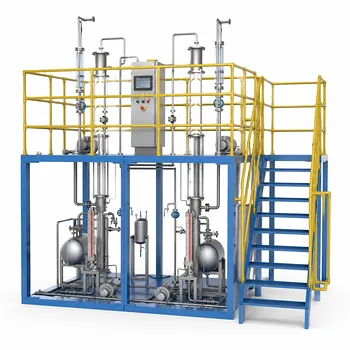
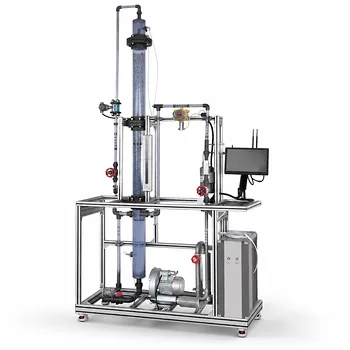
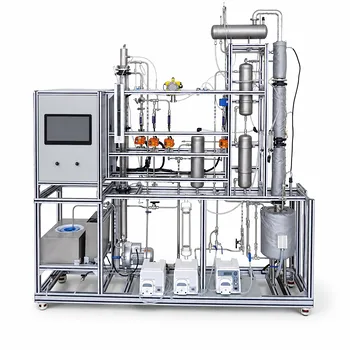
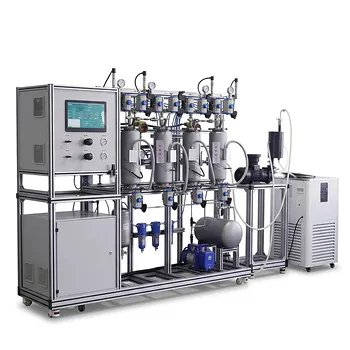
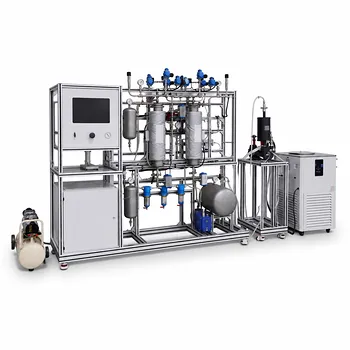
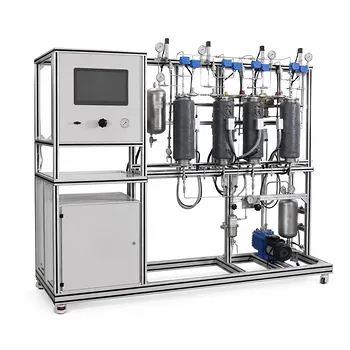
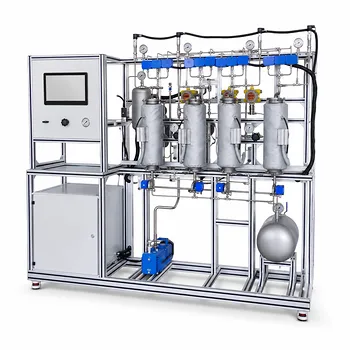
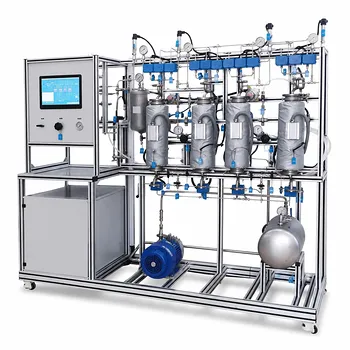
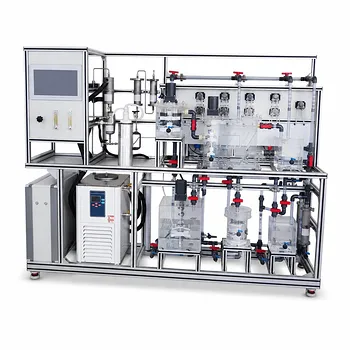
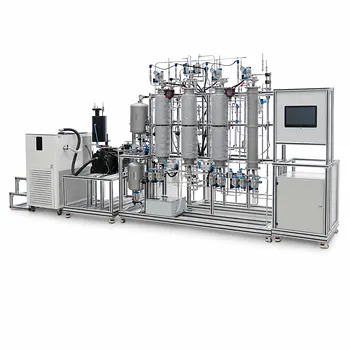
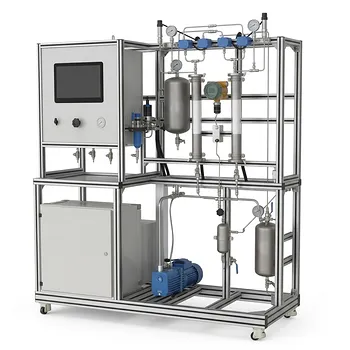
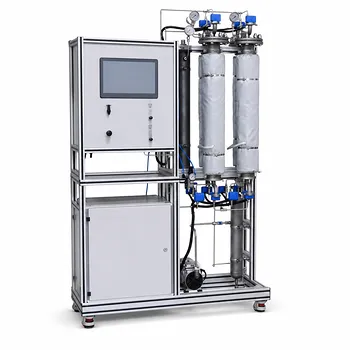
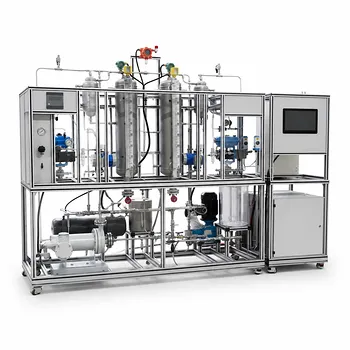
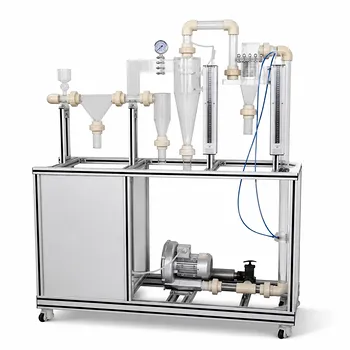
Operating a pilot plant for acidic gas absorption demands a meticulous, dual-focus approach to safety and materials science. The essential considerations are selecting chemically resistant wetted materials — primarily borosilicate glass, PTFE, and high-grade stainless steel — and integrating active safety systems like gas sensors, emergency shutdown valves, and exhaust scrubbing. Simultaneously, you must ensure the plant design incorporates proper pressure relief, transparent sections for hydrodynamic observation, and an absorbent carefully chosen for its safety profile, not just its absorption performance.
A safe pilot plant is a system, not just a collection of compatible parts. While borosilicate glass provides unmatched corrosion resistance and visual insight, its fragility and pressure limits require compensating measures like protective tape and atmospheric venting. The deepest need is to create an environment where the inherent hazards of acidic gases are neutralized through redundant engineered safeguards, allowing operators to focus on reliable research and training without compromising their well‑being.
Material Compatibility: The Foundation of Corrosion Control
The acidic environment created by gases like SO₂, H₂S, or chlorine rules out standard carbon steel immediately. Selecting the right material for every wetted component — columns, packing, piping, gaskets, and seals — is your first line of defense against catastrophic leaks and equipment failure.
The Trifecta of Corrosion‑Resistant Materials
Three material classes dominate pilot‑scale acidic gas absorption for good reason. They each address a specific vulnerability.
Borosilicate glass offers near‑universal resistance to mineral acids and oxidizing agents, making it ideal for handling HCl, sulfuric acid mists, or aggressive scrubbing liquors. Its transparency is a standout educational and diagnostic tool — operators can directly observe flooding, channeling, or fouling on column internals. However, glass is inherently fragile and cannot tolerate high pressure, so it must be externally wrapped with protective plastic tape and vented to atmosphere to prevent dangerous pressure buildup.
PTFE (polytetrafluoroethylene) resists virtually all chemicals, even at elevated temperatures, and is the go‑to choice for gaskets, seals, and flexible linings. In acidic gas service, PTFE gaskets ensure reliable, chemically inert sealing between glass or metal flanges, preventing the hidden leaks that lead to workspace contamination and corrosion of support structures.
High‑grade stainless steel (304 or 316) provides mechanical strength and durability that glass cannot. It is necessary for structural components, pressure vessels, and piping in systems that must operate above atmospheric pressure. While not immune to all acids — 316L is preferred for chloride‑containing environments to resist pitting — its long‑term integrity in humid, corrosive lab atmospheres makes it a practical backbone for the plant’s non‑transparent sections.
Transparent Columns Without Sacrificing Safety
Pilot‑scale absorption columns often feature glass segments so students and researchers can see hydrodynamic behavior. To safely exploit this advantage, two protective measures are mandatory. First, the exterior of glass pipes and vessels should be wrapped with a tough, transparent adhesive tape that prevents shattering and contains glass fragments if breakage occurs. Second, all‑glass systems must include adequate venting to atmosphere; a sealed glass system can quickly become a pressure bomb if a downstream valve is mistakenly closed. Size the vent line generously and route it to the exhaust scrubbing system.
Designing Safety into the Plant Architecture
Material choice alone cannot neutralize the acute toxicity and asphyxiation risks of gases like H₂S, SO₂, or chlorine. The plant must actively monitor, contain, and neutralize hazardous substances through a layered safety design.
Gas Detection and Emergency Shutdown
A network of fixed gas sensors, positioned at potential leak points (flanges, pump seals, sample ports) and around the plant perimeter, is non‑negotiable. These sensors must trigger a hardwired emergency shutdown system (ESD) that immediately isolates the gas supply, stops the liquid circulation pumps, and activates an alarm. The ESD logic should default to a fail‑safe state — closing a pneumatic gas supply valve on loss of power or instrument air — to prevent uncontrolled releases.
Exhaust Scrubbing and Containment
Acidic gas pilots inevitably vent small quantities of unabsorbed gas, especially during start‑up or process upsets. An exhaust scrubbing system — typically a packed column using a neutralizing solution (e.g., NaOH for SO₂ or chlorine) — must treat all vent streams before release. This scrubber is a secondary absorption system dedicated to safety, not process efficiency. Additionally, place all chemical storage vessels and the column sump inside a sealed containment bund or drip tray made of chemical‑resistant material, with level alarms that detect leaks early.
Pressure Relief and Overpressure Protection
Even if the column operates at near‑atmospheric pressure, overpressure scenarios can arise from blocked vents, gas evolution from an unexpected reaction, or a failed pressure regulator. Install certified pressure relief valves or burst discs on every vessel that can be isolated by valves. The relief discharge must be piped into the exhaust scrubbing system, never directly into the room. For glass systems, supplement mechanical relief with a simple liquid seal or atmospheric vent sized to handle the maximum possible gas flow.
The Hidden Safety Factor: Absorbent Selection
The scrubbing liquid itself can become a hazard if not chosen appropriately. The absorbent’s safety profile is just as critical as its solubility and selectivity, especially in a teaching or research lab where the solvent may be handled manually.
Stability and Non‑Hazardous Properties
An ideal solvent for pilot‑scale teaching labs is chemically stable, non‑flammable, non‑toxic, and non‑corrosive to the chosen materials of construction. Aqueous amine solutions, while effective for H₂S and CO₂, can decompose under high temperatures and form corrosive degradation products. If amines are required, select a thermally stable formulation like MDEA and provide a dedicated solvent purification system or a strict maintenance schedule. For purely acidic gas absorption without the need for reversible reaction, caustic solutions (NaOH) are simple and efficient, but their corrosive nature demands impeccable material compatibility and spill handling procedures.
Low Volatility to Protect the Workspace
Solvent loss through the column top is not just an economic concern; it introduces volatile organic compounds or corrosive mists into the vent stream. Absorbents with low vapor pressure at operating temperature minimize this fugitive emission, reducing the load on the exhaust scrubber and preventing gradual corrosion of the building’s HVAC ducts. This is a key differentiator between specialty absorbers and simple water scrubbing in closed‑loop pilot systems.
Understanding the Trade-offs
Every design choice in a pilot plant is a compromise. Recognizing these trade‑offs will help you build a system that is safe, functional, and educationally valuable without chasing an unattainable ideal.
Glass transparency vs. pressure rating. Borosilicate glass offers visual access but limits operating pressure to a few tenths of a bar. If your process requires even modest back‑pressure (e.g., to simulate a downstream compressor), you must use a stainless steel column and sacrifice direct visual observation, possibly replacing it with gamma‑ray scanning or external temperature profile analysis to infer flooding.
Corrosion‑resistant alloys vs. chemical universality. A 316L stainless steel plant is robust and semi‑transparent (through sight glasses), but it may still be attacked by high‑concentration hydrochloric acid or wet chlorine gas. Glass and PTFE are chemically universal but introduce mechanical fragility and higher fabrication complexity. Often, a hybrid design — a glass column section with PTFE‑lined steel end caps and stainless steel support structures — hits the sweet spot.
Active safety vs. human oversight. Redundant gas sensors and ESD valves increase system complexity and cost. Over‑reliance on automation can lead to alarm fatigue or a false sense of security. The safest pilot plants balance automatic trips with clear, manual emergency procedures, regular gas detector calibration checks, and a culture where every operator knows the location of the manual isolation valve and self‑contained breathing apparatus.
Making the Right Choice for Your Operational Goal
Your specific objective dictates which safety and material priorities you should elevate. Use the following guide to focus your resources where they matter most.
- If your primary focus is student training and visual pedagogy: Invest in a borosilicate glass column with protective tape wrap, an oversized atmospheric vent, and multiple gas sensors with distinct audio/visual alarms. Use a simple, non‑toxic absorbent like dilute sodium hydroxide, and place the entire unit inside a clear polycarbonate enclosure to contain any glass breakage event.
- If your primary focus is industrial‑scale process simulation: Use a high‑alloy stainless steel column rated for the required pressure, with PTFE‑lined internals where acidic condensate may collect. Integrate a certified ESD system tied to a gas‑detection grid, and install an exhaust scrubber sized for a full‑bore gas release. Select a commercial, thermally stable solvent like MDEA and include a solvent filtration loop to control degradation products.
- If your primary focus is reproducible research data: Prioritize chemical stability and material inertness above all else. A borosilicate glass column with PTFE gaskets eliminates corrosion as a variable and prevents metallic ion contamination of your liquid samples. Use a well‑characterized, low‑volatility solvent, and document all material certificates and safety system proof‑test records to support the validity of your published results.
Ultimately, a pilot plant for acidic gas absorption succeeds when its materials and safety systems become invisible — doing their job so dependably that operators can focus purely on the science, secure in the knowledge that every conceivable hazard has been engineered out before the first gas valve ever opens.
Summary Table:
| Material / System | Key Characteristics | Primary Application | Essential Safety Considerations |
|---|---|---|---|
| Borosilicate Glass | Near-universal corrosion resistance, transparent | Column segments, visual diagnostic vessels | Fragile; requires protective tape wrap & atmospheric venting |
| PTFE (Teflon) | Chemically inert, high-temperature tolerance | Gaskets, seals, flexible linings | Crucial for preventing workspace leaks at joints |
| 316L Stainless Steel | High mechanical strength, structural durability | Pressure vessels, piping, support frame | Susceptible to pitting from concentrated chlorides |
| Active Safety Systems | Gas sensors, automated ESD valves, exhaust scrubbers | Leak containment and hazardous gas neutralization | Require regular proof-testing and fail-safe logic |
Build a Safe and Reliable Pilot Plant with LABPARK
Ensure the highest safety standards and material compatibility in your laboratory. LABPARK designs and provides premium Educational and Vocational Unit Operations Pilot Plants in chemical engineering, bioprocess & biotech, and environmental & water treatment for universities, research institutes, and enterprises worldwide.
Need help custom-designing your next pilot plant to meet strict safety and process standards? Contact our engineering experts today to discuss your project requirements!
Related Products
- Dual-Mode Gas Absorption and Desorption Unit Operations Training Pilot Plant
- Absorption and Desorption Educational Unit Operations Pilot Plant
- Packed Bed Absorption Educational Unit Operations Pilot Plant
- Carbon Dioxide Absorption and Desorption Educational Pilot Plant for Carbon Capture Studies
- Multi-Component Gas Pressure Swing Adsorption Pilot Plant for Unit Operations Education
People Also Ask
- How do two-film & penetration theories apply to gas absorption pilot plant teaching? Key pedagogical insights.
- How does partial pressure behavior influence gas absorption pilot plants? Master Mass Transfer
- How is the direction and driving force of mass transfer determined in a gas absorption unit operations pilot plant?
- What are the limitations of Henry's Law in gas absorption pilot plants? Avoid critical lab errors.
- How to model chemical absorption as physical absorption? The pilot plant simplification criterion.