Molecular compactness is the secret weapon that dictates how tightly a pollutant clings to DNA—and, in turn, how sensitively a biosensor can detect it before it causes harm. The size and shape of a molecule govern the strength of DNA intercalation. Compact, multi-ring structures like benzo[a]pyrene intercalate with far higher stability than their less compact cousins (e.g., dibenz[a,h]anthracene), enabling detection at parts-per-billion levels. In chemical engineering and biotech training pilot plants, this knowledge allows students and operators to optimize process monitoring systems, targeting the most toxic carcinogens with precision.
Core takeaway: Molecular compactness directly boosts intercalation binding affinity and lowers the limit of detection. Compact carcinogens nestle deeply into DNA, shielded from destabilizing water, so sensors can flag them at trace concentrations. In training pilot plants, this principle becomes a design and calibration tool—predicting which pollutants will trigger the earliest, most reliable alarms and which require complementary monitoring.
The Molecular Logic of DNA Intercalation
How Size and Shape Control Binding Affinity
DNA intercalation occurs when a flat, aromatic molecule slips between adjacent base pairs. The more rings a molecule has, the larger its hydrophobic surface area, which can strengthen van der Waals contacts inside the DNA helix.
But raw size is only half the story. Compactness—how tightly the rings are packed—determines how well the intercalated molecule is protected from surrounding water.
Compare two five-ring pollutants: benzo[a]pyrene (BaP) and dibenz[a,h]anthracene (DBA). BaP has a fused, roughly circular architecture; DBA's rings are arranged in a more linear, less compact shape.
When BaP intercalates, its compact shape is almost entirely buried between the base pairs. That dramatically reduces the solvent-accessible surface area that remains exposed to water.
The Physics of Protection from Aqueous Media
Water molecules constantly compete with intercalators for hydrogen bonding sites and hydrophobic patches on DNA. Every interaction with water tends to destabilize the intercalation complex.
A compact intercalator, once tucked in, presents a minimal target for those competing water molecules. The thermodynamic cost of desolvation is lower, and the bound state becomes far more favorable.
This translates directly into lower limit of detection (LOD). A biosensor relying on DNA intercalation will respond to BaP at concentrations well below what is needed for DBA. In practical terms, you can detect a compact carcinogen at parts-per-billion levels, while a non-compact analog might only trigger a signal at much higher—potentially unsafe—concentrations.
Applying Intercalation Principles to Pilot Plant Monitoring
Translating Molecule‑Structure Insight into Sensor Design
Chemical engineering and biotech training plants often use DNA-based biosensors to monitor process water or effluents for genotoxic compounds. These sensors exploit the natural affinity of planar molecules for base pairs.
By choosing a DNA sequence that favors intercalation of known priority pollutants, students can directly observe how molecular architecture alters sensor sensitivity. A training session might compare BaP and DBA side by side, demonstrating that the compact molecule yields a robust signal at twenty times lower concentration.
Understanding this relationship helps operators predict early which analytes will be easiest to detect and which demand signal amplification or an entirely different recognition element.
Calibrating for Trace Carcinogen Detection
When a pilot plant handles streams that could generate BaP-like compact carcinogens, the sensor can be calibrated to alarm at single-digit ppb. Because the intercalation signal is so strong, even a tiny amount produces a meaningful sensor response.
For less compact pollutants, the same sensor would show a weak or absent signal at the same trace level. This forces a conscious design choice: either set a higher alarm threshold (risking later detection) or pair the intercalation sensor with a preconcentration step.
The knowledge thus enables smarter process control: a sudden spike on a DNA sensor tuned for compact molecules strongly suggests a high-toxicity event, triggering immediate action to protect both process integrity and environmental safety.
Understanding the Trade-offs
Selectivity vs. Sensitivity: The Compactness Bias
A sensor optimized for compact intercalators will shine with BaP but may be nearly blind to equally toxic, non‑compact compounds. A linear five-ring carcinogen, though chemically similar, might evade detection, giving a false sense of security.
This is a classic monitoring trade‑off: high sensitivity for one class can mean a dead zone for another. Before relying on a DNA intercalation approach, operators must map the most probable and most dangerous pollutants in their specific process.
Training plants can use this bias as a teaching point: no single sensor covers all risks, and a robust monitoring strategy often demands orthogonal methods.
The Environmental Context: Real Matrices Are Messy
Process effluents rarely resemble clean buffer. Salts, organic solvents, and other planar molecules can compete for intercalation sites or destabilize the DNA helix itself.
The protective advantage of compactness can be blunted if the surrounding medium is highly disruptive. Students quickly learn that the LOD established in the lab may not hold under real‑world conditions—a matrix effect that must be quantified and corrected.
Therefore, compactness‑based design is a starting point, not a magic bullet. Pilot plant training should always include validation runs with actual process fluids to confirm sensor performance.
Making the Right Choice for Your Goal
- If your primary focus is early warning for high‑toxicity compact carcinogens: Use a DNA‑based biosensor with strong affinity for benzo[a]pyrene‑like structures and calibrate it to alarm at low ppb. This gives you the fastest, most sensitive alert for these priority threats.
- If your primary focus is broad‑spectrum pollutant screening: Combine the intercalation sensor with a secondary technique (e.g., chromatographic analysis) to catch less compact but harmful molecules that the DNA sensor may miss, ensuring comprehensive effluent safety evaluation.
- If your primary focus is training students on sensor design principles: Make compactness a central case study. Have learners experiment with different DNA sequences and molecular probes to visualize firsthand how shape changes the detection floor and the ever‑present selectivity trade‑offs.
By leveraging the innate relationship between molecular compactness and intercalation stability, you turn a fundamental biochemical principle into a practical lever for safeguarding both your pilot plant’s processes and the environment.
Summary Table:
| Feature / Parameter | Benzo[a]pyrene (BaP) | Dibenz[a,h]anthracene (DBA) |
|---|---|---|
| Molecular Shape | Compact, circular five-ring | Linear, elongated five-ring |
| Aqueous Exposure | Fully buried (protected from water) | Exposed to destabilizing water molecules |
| Binding Affinity | Exceptionally high | Moderate to low |
| Limit of Detection (LOD) | Trace levels (parts-per-billion) | Higher concentrations required |
Bring Industrial-Scale Process Monitoring into Your Lab
To effectively train the next generation of engineers and researchers in biosensor calibration and environmental analysis, hands-on experience with real-world systems is essential.
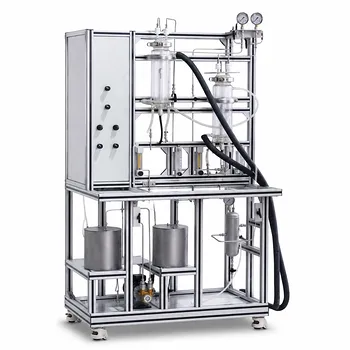
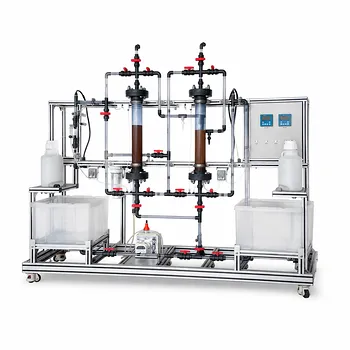
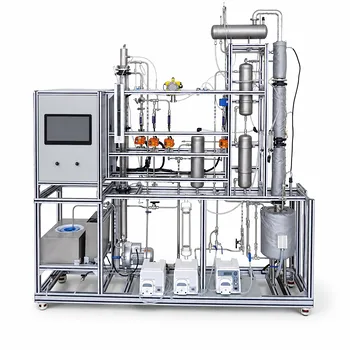
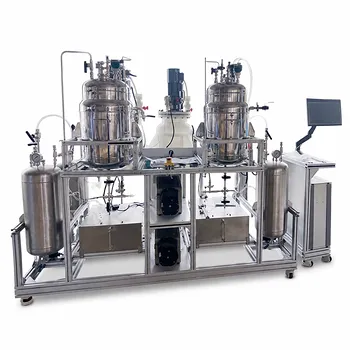
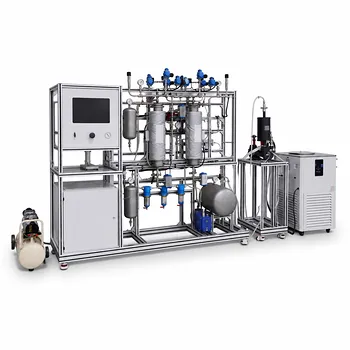
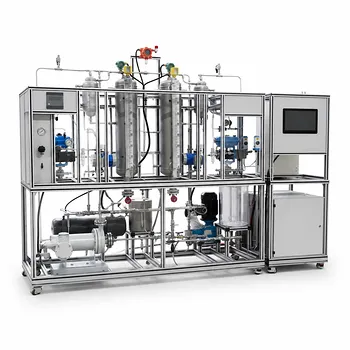
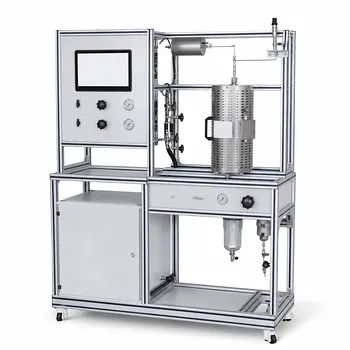
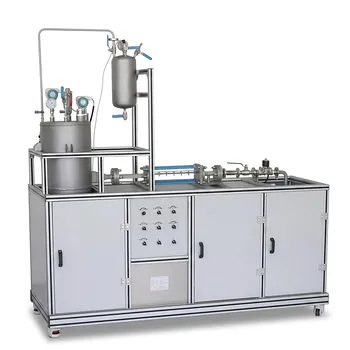
LABPARK provides premium Educational and Vocational Unit Operations Pilot Plants in chemical engineering, bioprocess & biotech, and environmental & water treatment. Specifically tailored for universities, research institutes, and enterprises, our pilot plants allow students to safely simulate pollutant monitoring, master sensor design, and optimize chemical processes.
Ready to upgrade your laboratory capabilities? Contact LABPARK today to find the perfect pilot plant solution for your institution!
Related Products
- Multifunctional Membrane Separation Educational Pilot Plant with Ultrafiltration, Nanofiltration, Reverse Osmosis
- Photocatalytic Membrane Separation and Degradation Unit Operations Pilot Plant
- Educational Unit Operations Pilot Plant for Intraparticle Diffusion Effective Factor Measurement
- Multi-Functional Membrane Separation Educational Pilot Plant for Unit Operations Lab
- Multi Functional Catalytic Reaction and Reactor Evaluation Educational Unit Operations Pilot Plant
People Also Ask
- Pervaporation vs. Vapor Permeation: Handling Suspended Solids in Membrane Pilot Plants
- How do PEI, PVDF, and PSU membranes compare in pilot plants? Find the best fit.
- What are the trade-offs of polymer vs inorganic membranes in teaching pilot plants? Key laboratory comparison.
- How can operators optimize operating conditions and cleaning protocols in membrane separation pilot plants to mitigate fouling?
- What are the advantages of membrane separation in pilot plants? Efficient Organic Vapor Recovery