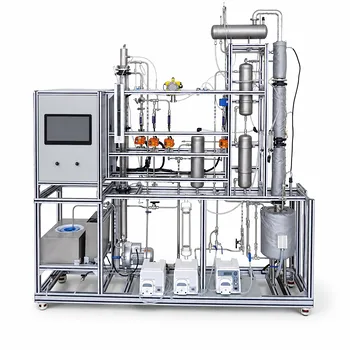
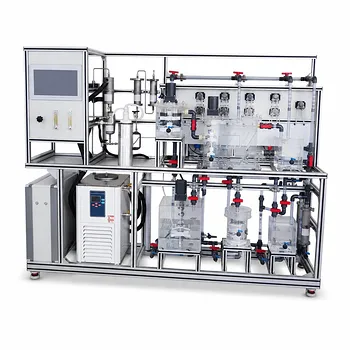
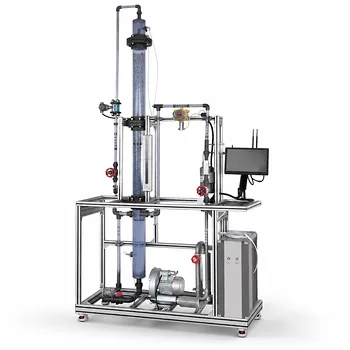
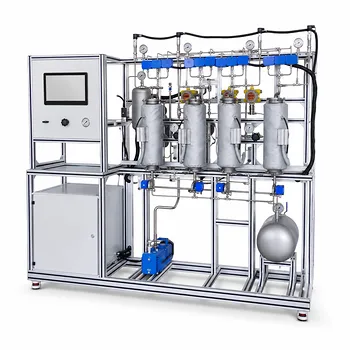
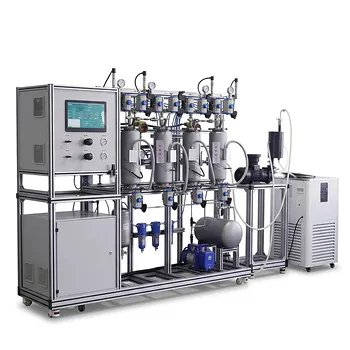
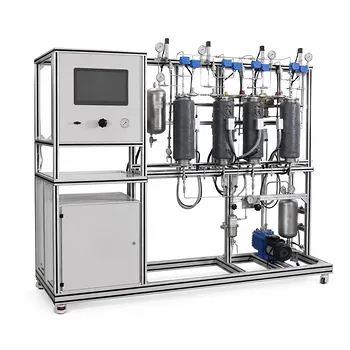
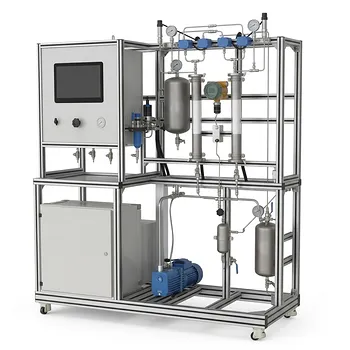
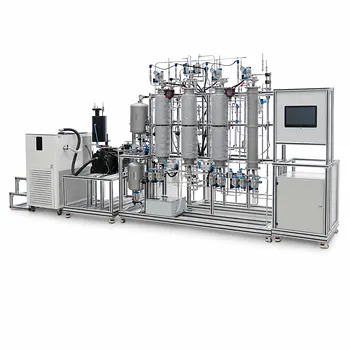
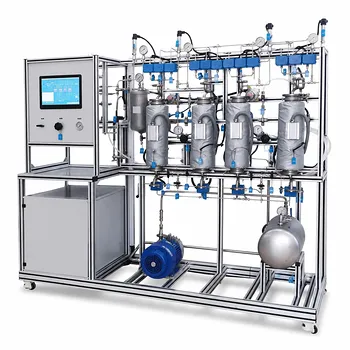
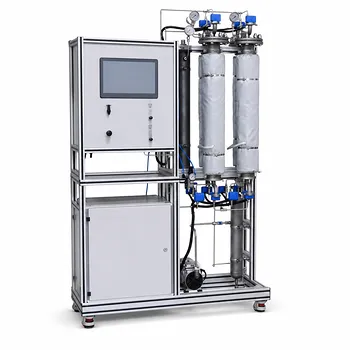
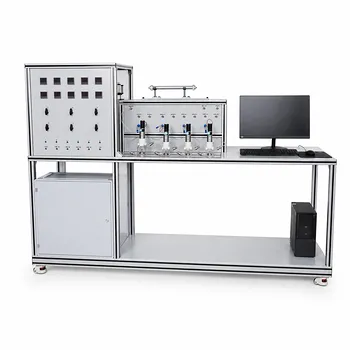
To teach industrial solvent regeneration methods effectively, a gas absorption-desorption pilot plant should feature three flexible configurations: depressurization (flash) regeneration, gas stripping regeneration, and thermal (steam) regeneration. These setups allow students to operate the plant under different driving forces—pressure reduction, inert gas partial pressure, and temperature elevation—and directly compare the energy demands and recovery efficiencies of each pathway.
A truly educational pilot plant goes beyond simply offering different regeneration modes; it reveals why a method is chosen. By manipulating pressure, stripping gas flow, and temperature, students discover how physical and chemical solvents respond to each driving force, building the diagnostic skill to select the right regeneration strategy for any industrial solute-solvent pair.
The Three Pillars of Solvent Regeneration
These three configurations form the core of a flexible pilot plant. Each one teaches a distinct industrial pathway and the thermodynamic principle behind it.
Depressurization (Flash) Regeneration
This method relies on a sudden pressure drop to release dissolved gas. The pilot plant achieves this with pressure-reducing valves that expand the rich solvent into a flash vessel at a lower pressure.
Because the equilibrium shifts instantly, gases like CO₂ desorb without external heat input. This perfectly illustrates physical absorption, where solubility alone governs the process. Students can vary the flash pressure and measure the volume of gas released, directly linking operating pressure to regeneration efficiency.
Gas Stripping Regeneration
Here, an inert gas such as air is introduced at the bottom of a regeneration column. It reduces the partial pressure of the solute in the gas phase, driving the solute out of the liquid.
In a pilot plant, this is typically done in a packed column operated counter-currently. Even with safe teaching systems like CO₂-water, the principle is the same as stripping H₂S or organic vapors in industry. By adjusting the liquid-to-gas ratio and measuring outlet concentrations, students quantify the mass transfer driving force and learn how to avoid column flooding.
Thermal (Steam) Regeneration
Thermal regeneration is indispensable for chemical absorption. When chemical bonds form between solvent and solute, depressurization is not enough; the plant must break those bonds with heat.
An indirect steam reboiler or a heating jacket raises the solvent temperature, reversing the reaction and driving off gases like SO₂. A downstream condenser then recovers the solvent. This setup teaches the link between reaction enthalpy and energy cost, making the concept of regeneration heat duty tangible.
Critical Supporting Features for an Educational Pilot Plant
Beyond the three regeneration modes, the plant’s design must support deep experimental learning. Several auxiliary features make this possible.
Modular Column Design and Configurability
Fixed equipment limits learning. A modular system allows columns to be connected in series or operated with adjustable bed heights and tray counts.
This flexibility lets students explore how increased contact volume and additional stages improve stripping efficiency. It directly links pilot-scale observations to the extended absorption and multi-stage designs common in acid gas production or NOx recovery.
Precise Instrumentation and Control
Without precise data, regeneration is a black box. The plant needs thermal control systems, pressure regulation valves, flow controllers, and gas sensors at key points.
These instruments allow students to measure how a small temperature increase shifts the equilibrium and to calculate mass transfer coefficients. They transform the pilot plant from a demonstration into a quantitative research tool.
Safe and Versatile Solvent-Solute Systems
Teaching with hazardous materials limits hands-on time. A well-designed pilot plant uses safe baseline systems like CO₂-water to teach fundamentals, while maintaining the chemical compatibility to run other solvent-solute pairs.
The inert gas used for stripping (air, nitrogen) must also be chosen to simulate industrial conditions without risk. This balance keeps the plant accessible for training while proving its relevance to real processes.
Understanding the Trade-offs
Choosing a regeneration method is rarely about a single performance metric. An effective pilot plant must expose these trade-offs to prepare students for practical decision-making.
Energy Consumption and Efficiency
- Depressurization demands the least energy—a simple pressure drop—but is limited to physically absorbed gases and achieves only modest recovery unless the pressure ratio is extreme.
- Gas stripping requires compression of the stripping gas, and the energy cost scales with the gas flow rate and column pressure drop.
- Thermal regeneration consumes the most energy, as heat must be supplied to break chemical bonds. However, it often recovers the solvent at a higher purity.
A pilot plant that can measure electrical power, steam flow, and gas volumes lets students build energy-use comparisons across methods.
Operational Complexity and Corrosion
Chemical absorption adds purification power but also introduces corrosion and solvent degradation at high temperatures. A pilot plant demonstrating thermal regeneration should include temperature limits and materials selection as part of the learning exercise.
By contrast, gas stripping systems are mechanically simpler but require careful management of the stripping gas to avoid contamination of the recovered solute stream. Students learn that industrial choices balance performance against plant longevity.
Recovery Purity and Selectivity
Physical regeneration (depressurization, simple stripping) often leaves a residual solute load in the lean solvent. Chemical absorption with thermal regeneration drives off chemically bound gas, yielding a leaner solvent for re-circulation.
This trade-off—higher purity versus higher energy—is central to acid gas removal and solvent recovery. The pilot plant should let students sample the lean solvent after each regeneration mode and quantify the residual concentration, making the concept of regeneration efficiency concrete.
Making the Right Choice for Your Curriculum
The ideal configuration depends entirely on the learning outcomes you prioritize. Use the following guide to match plant features to your educational goals.
- If your primary focus is fundamental mass transfer principles: Prioritize the gas stripping configuration with a CO₂-water system and precise gas sensors. This allows clear calculation of mass transfer coefficients and observation of flooding limits.
- If your primary focus is physical absorption processes: Ensure the plant includes a dedicated depressurization loop with pressure-reducing valves and a flash vessel. Students should be able to plot the relationship between flash pressure and gas recovery.
- If your primary focus is industrial chemical absorption and high-purity recovery: Include a thermal regeneration system with a steam reboiler, solvent condenser, and corrosion monitoring. This setup teaches the real cost of breaking chemical bonds.
- If your primary focus is process optimization and scale-up: Demand full modularity—series column connections, adjustable bed heights, and interchangeable packing types. This allows experiments that verify multi-stage efficiency gains.
A pilot plant that puts pressure, temperature, and stripping gas flow rate directly in the student’s hands does more than teach a process—it builds the instinct to identify the driving force behind any solvent regeneration challenge.
Summary Table:
| Regeneration Method | Driving Force | Key Educational focus | Energy & Complexity |
|---|---|---|---|
| Depressurization (Flash) | Pressure reduction | Physical absorption & equilibrium shift | Low energy demand, simple valves/vessel |
| Gas Stripping | Inert gas partial pressure | Mass transfer coefficients & flooding limits | Medium energy, counter-current columns |
| Thermal (Steam) | Temperature elevation | Chemical absorption & reaction enthalpy | High energy, requires reboiler/condenser |
Equip Your Laboratory with Industry-Ready Pilot Plants
Are you looking to enhance hands-on engineering education and process research? LABPARK provides state-of-the-art Educational and Vocational Unit Operations Pilot Plants in chemical engineering, bioprocess & biotech, and environmental & water treatment.
Designed specifically for universities, research institutes, and enterprises, our modular gas absorption-desorption systems allow students to master key industrial solvent regeneration methods with safe, precise, and highly configurable equipment.
Ready to elevate your curriculum or testing capabilities? Contact us today to discuss your project needs!
Related Products
- Carbon Dioxide Absorption and Desorption Educational Pilot Plant for Carbon Capture Studies
- Dual-Mode Gas Absorption and Desorption Unit Operations Training Pilot Plant
- Absorption and Desorption Educational Unit Operations Pilot Plant
- Thermal Desorption Exhaust Gas and Tail Water Treatment Educational Pilot Plant
- Multimodal Absorption and Desorption Pilot Plant for Unit Operations Training
People Also Ask
- How does operating pressure influence the transition between absorption and desorption in a CO2 pilot plant?
- How do temperature variations affect CO2 transport models in pilot plants? Model vs Reality
- What unit operations are critical for CCUS training pilot plants? Build hands-on engineering expertise.
- How do electrolytes affect phase equilibrium in absorption pilot plants, and how to calculate it?
- Why is critical surface tension key in column internals? Optimize gas absorption pilot plant efficiency