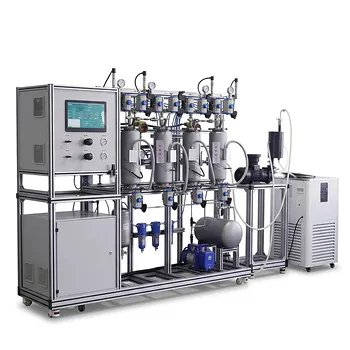
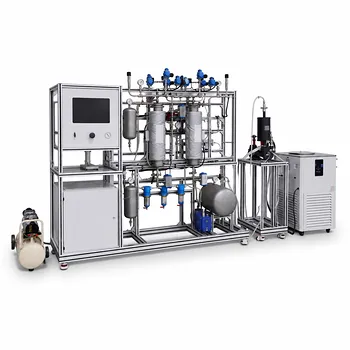
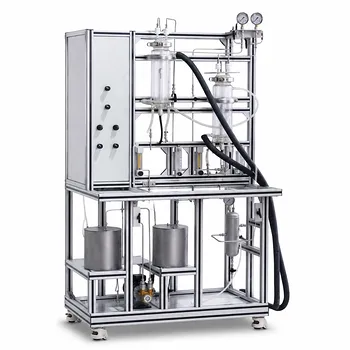
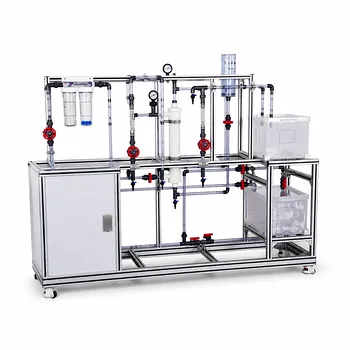
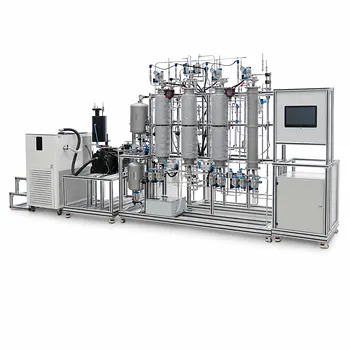
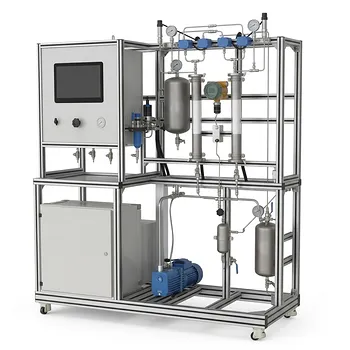
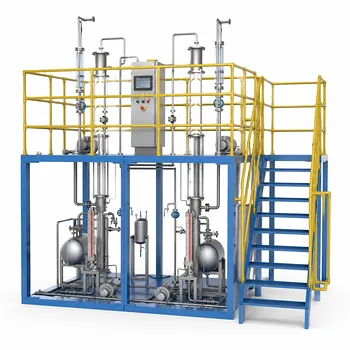
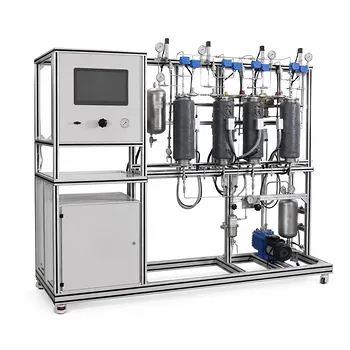
A gas membrane separation pilot plant is not a simple demonstration tool—it is a critical investigative platform that exposes the gap between idealized membrane science and real-world performance. Researchers can directly observe and quantify key performance limitations such as declining permeability due to fouling, compaction, and plasticization, as well as fundamental operational phenomena like the pressure ratio constraint, boundary layer formation, and the inherent purity–recovery trade-off in single-stage configurations.
While textbooks define membrane performance by intrinsic selectivity and permeability, a pilot plant reveals that actual operation is dominated by time-dependent degradation, fluid dynamics, and system-level constraints. Mastering these phenomena transforms a researcher from a membrane chemist into a process engineer capable of de-risking industrial scale-ups.
Probing Core Performance Criteria Under Real Conditions
Selectivity and Permeability: The Theoretical Benchmarks, Tested
A pilot plant allows you to measure selectivity (the membrane’s ability to discriminate between molecules based on size, adsorption affinity, or solubility) and permeability (the rate at which a specific gas passes through the membrane material) under precisely controlled conditions.
Unlike idealized pure-gas tests, you can study how mixed-gas feeds cause deviations from theoretical selectivity. Exposure to heavy hydrocarbons, aromatics, or water vapor often suppresses separation efficiency far below the material’s innate potential.
The Influence of Membrane Thickness and Morphology
Permeability is inversely proportional to membrane thickness, making ultra-thin selective layers desirable but mechanically fragile. Researchers can use the pilot plant to observe how physical compaction of composite membranes at high feed pressures alters flux and creates non-ideal transport behavior.
Critical Operational Degradation Phenomena
Fouling: The Silent Flux Killer
Progressive membrane fouling is the most pervasive operational limitation. By tracking a gradual decline in permeate flux and an increase in pressure drop over time, researchers can correlate feed contaminants with irreversible performance loss and reduced membrane lifetime.
Chemical Attack and Plasticization
Polymeric membranes suffer limited chemical resistance. Exposure to aggressive pH, organic solvents, or high CO₂ partial pressures can cause plasticization—a swelling of the polymer matrix that permanently destroys selectivity. This is a key lesson: highly selective carrier-facilitated transport membranes often fail in less than a month when challenged with real gas streams containing trace aggressive components.
Compaction Under High Pressure
When operating at industrial pressures, a pilot plant makes it impossible to ignore membrane compaction. The dense layer of an asymmetric membrane physically densifies, increasing its effective thickness and permanently reducing flux—a phenomenon that cannot be extrapolated from ambient bench-scale data.
System-Level Constraints and Scalability
The Pressure Ratio Dilemma
Separation efficiency is not solely a material property; it depends fundamentally on the pressure ratio (feed pressure divided by permeate pressure). A pilot plant demonstrates that insufficient pressure ratio destroys the driving force, making it impossible to achieve target purity regardless of how selective the membrane is.
Boundary Layer and Flow Distribution Effects
Intrinsic selectivity is only achievable if concentration polarization is minimized. Researchers can manipulate feed flow rates and module geometry to visualize how poor flow distribution creates stagnant boundary layers, artificially lowering observed selectivity compared to the membrane’s true capability.
Lack of Traditional Economies of Scale
A counter-intuitive limitation unique to membrane systems is the scale-up factor of approximately 1. The pilot plant proves that adding capacity requires a linear increase in the number of membrane modules arranged in series or parallel, not larger individual units—fundamentally altering cost projections.
Process Configuration Pitfalls
The Single-Stage Purity–Recovery Trade-off
A gas membrane pilot plant is the ideal tool to demonstrate the thermodynamic dilemma of single-stage separation. When separating acid gas mixtures like CO₂ and methane, you can observe that achieving pipeline-grade natural gas (low CO₂ in the non-permeate) while simultaneously maintaining high CO₂ purity in the permeate requires complex multi-stage configurations with intermediate compression.
Understanding the Inherent Trade-offs
No membrane material excels in all categories. A pilot plant forces researchers to navigate the following objective trade-offs:
- You can choose a highly selective material, but it often sacrifices chemical stability, leading to rapid plasticization or aging in real feeds.
- You can maximize flux with ultra-thin membranes, but they are highly susceptible to compaction and defect formation under pressure cycling.
- You can aim for high product purity with a low stage-cut, but this drastically reduces product recovery, wasting valuable gas.
- You can simulate simple single-stage separation, but you will encounter the hard thermodynamic limit that prevents high purity in both product streams simultaneously.
- You can avoid fouling by extensive feed pre-treatment, but this introduces capital and energy penalties that must be accounted for in the overall process economics.
Actionable Insights for Your Pilot Plant Research
Tailor your experimental plan based on your primary research objective.
- If your primary focus is evaluating new membrane materials: Expose them to actual or simulated raw gas feeds immediately. Monitor the rate of permeability decline over weeks, not hours, to map plasticization thresholds and chemical incompatibilities.
- If your primary focus is process optimization: Systematically alter the pressure ratio, stage-cut, and flow rate. Map the exact purity versus recovery curve to define the economic optimum for a given separation.
- If your primary focus is scale-up feasibility: Run identical modules in parallel and series configurations to measure the real pressure drop accumulation and flow maldistribution, then validate that the scale-up factor truly approximates one for your specific module design.
- If your primary focus is operational training: Intentionally induce fouling and then test cleaning protocol efficiency, or ramp pressure to observe the irreversible flux loss from compaction—creating a failure-mode library.
A pilot plant turns theoretical limitations into tangible engineering challenges, and the depth of your insight depends entirely on how rigorously you confront these non-idealities head-on.
Summary Table:
| Key Phenomenon | Description | Research Insight |
|---|---|---|
| Fouling & Plasticization | Flux decline and polymer swelling from feed contaminants. | Critical for predicting long-term membrane lifespan under real conditions. |
| Pressure Ratio Constraint | Separation efficiency limited by feed-to-permeate pressure ratio. | Establishes thermodynamic limits for single-stage system designs. |
| Concentration Polarization | Stagnant boundary layers lowering observed selectivity. | Drives the need for optimized flow distribution and module geometry. |
| Linear Scale-Up (Factor ≈ 1) | Capacity increases linearly with module count, not vessel size. | Alters CAPEX/OPEX projections compared to traditional unit operations. |
Accelerate Your Research and Training with LABPARK
Bridge the gap between theoretical laboratory research and industrial reality. LABPARK provides advanced Educational and Vocational Unit Operations Pilot Plants in chemical engineering, bioprocess & biotech, and environmental & water treatment for universities, research institutes, and enterprises.
Our pilot scale systems enable your team to safely analyze complex operational phenomena—including membrane compaction, fouling, and scale-up constraints—under highly controllable, real-world conditions.
Ready to elevate your institution's research capabilities? Contact LABPARK today to customize your unit operations pilot plant!
Related Products
- Multi-Functional Membrane Separation Educational Pilot Plant for Unit Operations Lab
- Multi-Component Gas Pressure Swing Adsorption Pilot Plant for Unit Operations Education
- Gas-Solid Heterogeneous Separation Demonstration Educational Unit Operations Pilot Plant
- Multifunctional Membrane Separation Educational Pilot Plant with Ultrafiltration, Nanofiltration, Reverse Osmosis
- Ultrafiltration Membrane Separation Educational Pilot Plant
People Also Ask
- What are the key differences in membrane configurations? Choose the Right Unit Operations Pilot Plant
- How Do Pervaporation, Vapor, and Gas Permeation Differ in Pilot Plants? Key Comparison
- What are the advantages of membrane separation pilot plants? Energy-saving process intensification.
- How do PEI, PVDF, and PSU membranes compare in pilot plants? Find the best fit.
- Pervaporation vs. Vapor Permeation: Handling Suspended Solids in Membrane Pilot Plants