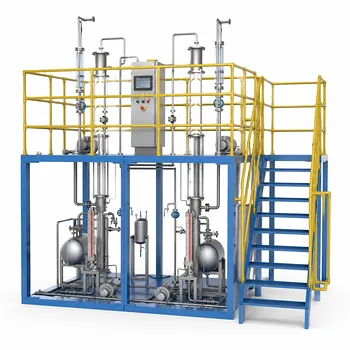
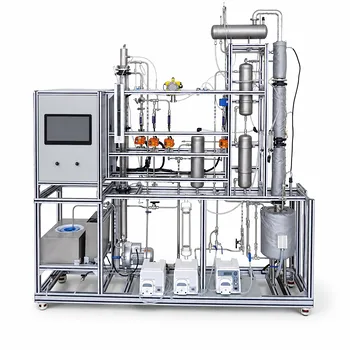
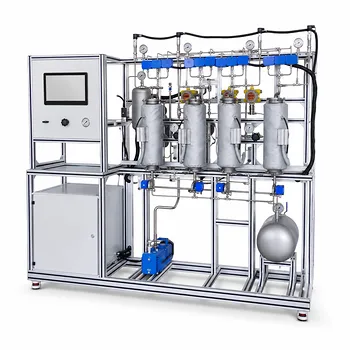
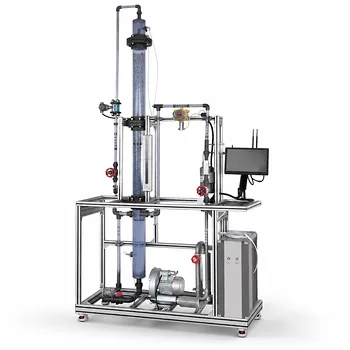
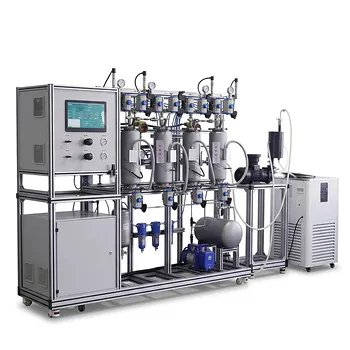
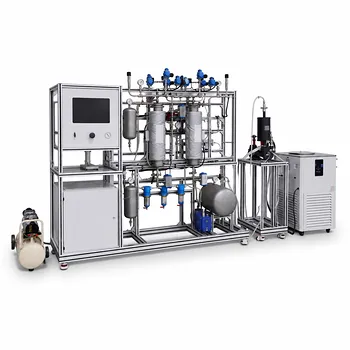
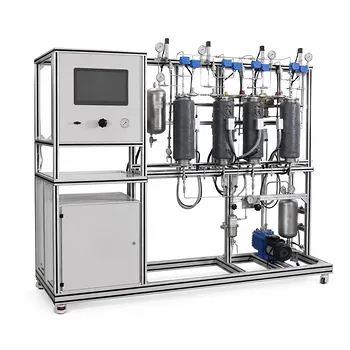
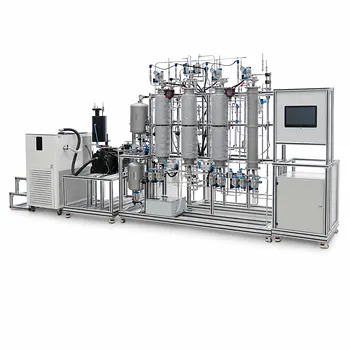
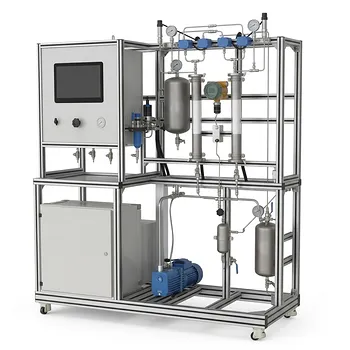
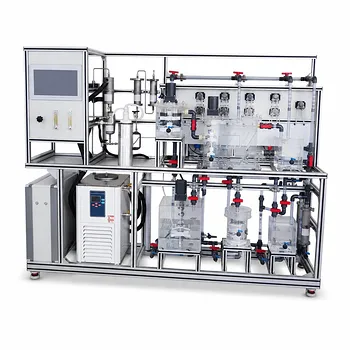
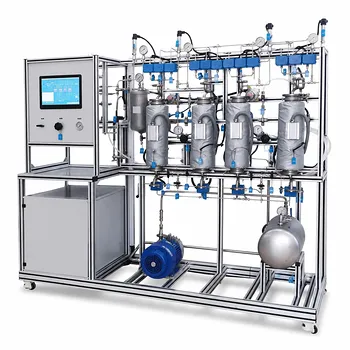
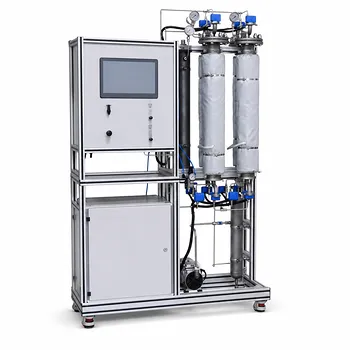
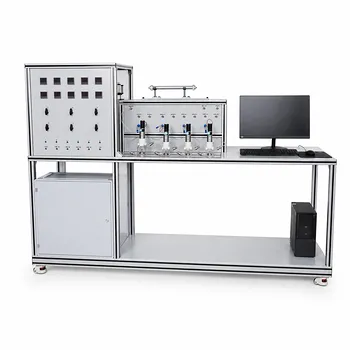
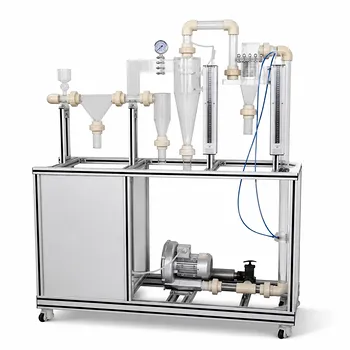
The foundation of every successful gas absorption pilot plant experiment lies in a deliberate, informed absorbent choice. When selecting a solvent for a unit operations pilot plant used in chemical engineering education or research, the key factors you must scrutinize are solubility, selectivity, volatility, viscosity, and safety/stability. These five criteria directly determine the mass transfer efficiency, operational feasibility, and didactic value of your experiments.
The right absorbent balances high loading capacity with safe, energy‑conscious operation. While chemical solvents like amines deliver intense, reaction‑enhanced absorption ideal for teaching core principles at low pressure, their reversibility and corrosive nature must be managed. Physical solvents offer elegant pressure‑swing simplicity but demand high‑pressure or cryogenic conditions. Your selection must align the absorbent’s intrinsic properties with your pilot plant’s educational objective, not just its technical specification.
The Five Non‑Negotiable Absorbent Criteria
Every absorbent evaluation for a gas absorption pilot plant starts here. These properties define whether the solvent can deliver clear, repeatable, and safe experimental data.
Solubility: The Engine of Mass Transfer
High solute solubility directly increases the absorption rate and reduces the required solvent circulation rate. In a pilot plant, this means smaller, safer equipment and faster attainment of steady state, which is critical for a time‑limited teaching lab.
Chemical solvents, such as aqueous MDEA (methyldiethanolamine) for CO₂, amplify solubility through a reversible chemical reaction. This allows the liquid to hold far more solute than physical dissolution alone would permit. However, the reaction must be fully reversible to enable solvent regeneration, closing the learning loop on the complete absorption‑desorption cycle.
For physical solvents, solubility follows Henry’s Law. You must therefore control temperature and pressure precisely to achieve meaningful uptake. This makes them ideal for illustrating thermodynamic principles but less forgiving operationally.
Selectivity: Purity and Measurement Clarity
The solvent must preferentially absorb only the target gas component. High selectivity prevents interference from inert species like nitrogen or unreacted feedstock, yielding a clean outlet gas stream and unambiguous concentration measurements.
In a pilot plant, poor selectivity muddies the mass balance. Students cannot reliably calculate key parameters like the Number of Transfer Units (NTU) if half the observed concentration drop comes from an unintended cocurrent dissolution. Choose an absorbent known to be selective for your specific solute under the planned operating conditions.
Volatility: Preventing Solvent Escape
A low vapor pressure at the column’s operating temperature is non‑negotiable. The absorbent must not vaporize and leave with the treated gas stream. Solvent loss contaminates the exit gas analysis, distorts the mass balance, and can create a breathing hazard or flammability risk inside the laboratory.
For chemical absorbents like amines, volatility is generally low at typical absorption temperatures (20–40°C). However, during thermal regeneration (>105°C), solvent evaporation becomes a significant parameter. Your pilot plant design must either condense and return vapors or account for this loss.
Viscosity: The Hydraulic Reality
Lower viscosity translates directly into better fluid dynamics inside the packed or trayed column. A thin solvent spreads more easily over the packing, increasing the wetted interfacial area for mass transfer without demanding excessive pump work.
High‑viscosity absorbents create several problems for a pilot plant: elevated pressure drop, reduced flooding limits, and poor liquid distribution. These effects obscure the underlying mass transfer phenomena, making it hard for students to separate hydraulic effects from kinetic ones. Aim for a viscosity that mimics industrial practice while keeping experimental pressure drops within safe, readable ranges.
Safety and Stability: The Non‑Compromising Baseline
The solvent must be non‑toxic, non‑corrosive, and chemically stable to ensure a long equipment life and a safe teaching or research environment. A pilot plant is repeatedly started, stopped, and left idle; the solvent must not degrade into aggressive by‑products during these cycles.
Amines, for example, can form heat‑stable salts and become corrosive to carbon steel. This demands careful material selection (stainless steel) and additive management. Physical solvents like polyethylene glycol dimethyl ether are thermally stable and non‑corrosive, but many operate under high pressure, shifting the safety focus to mechanical integrity.
Understanding the Trade‑offs: Chemical vs. Physical Absorption
Pilot plant design begins with the fundamental choice between a chemical and a physical absorbent. This decision cascades into pressure requirements, energy consumption, and the pedagogical lessons you can deliver.
When Chemical Absorption Teaches the Most
Chemical absorption pilot plants, typically using amines like MEA or MDEA, operate at atmospheric or slightly elevated pressure and moderate temperature (absorption near 20–40°C, stripping above 105°C). This is the preferred route for educational labs because it avoids the hazards and utility costs of high‑pressure or cryogenic systems.
These plants excel at demonstrating reaction‑enhanced mass transfer, high purification depth, and the direct coupling between absorption and thermal regeneration. The downside is that you must manage precise chemical dosing, heat of reaction, and solvent degradation—all of which add operational complexity that can overwhelm a short lab session if not well automated.
Where Physical Absorption Shines
Physical absorption pilot plants (e.g., using methanol or Selexol) operate on the principle of pressure‑swing solubility. They require high pressure (2–5 MPa) and sometimes deep refrigeration (−54°C for methanol), conditions that make them less common in typical university labs.
The advantage is conceptual elegance: you strip the solute by simply reducing pressure, with no external heat. This provides a direct, tangible demonstration of Henry’s Law. If your research focuses on high‑pressure gas cleaning (like syngas purification) and you have the necessary safety infrastructure, a physical absorption setup is a powerful platform.
The Hidden Challenge of High‑Concentration Systems
When the target gas is present at high concentration, the total molar flow rate drops significantly as solute transfers to the liquid. This volumetric shrinkage creates a bulk flow toward the interface, known as the drift effect. Neglecting this drift factor when calculating the required packing height—using the dilute‑system assumption of constant flow—will underestimate the column length.
A well‑instrumented pilot plant with intermediate sampling ports allows students to measure this concentration gradient and apply the drift‑corrected design equation, which uses the logarithmic mean of the inert gas fraction. Selecting an absorbent capable of handling these high loads without viscosity or thermal issues is essential for such advanced experiments.
Packing Wettability: The Often‑Overlooked Interface
The absorbent’s surface tension interacts with the packing material’s critical surface tension to determine the wetted area. For instance, glass (σc ≈ 73 × 10⁻³ N/m) wets easily with aqueous solutions, while PTFE (σc ≈ 40 × 10⁻³ N/m) often causes channeling.
If you need to maximize mass transfer efficiency—especially in an educational setup where you want clean NTU/HTU measurements—choose a packing material with a high critical surface tension relative to your solvent. Steel and glass packings are far more forgiving than plastics when using water‑like absorbents.
Making the Right Choice for Your Goal
Your specific experimental or pedagogical objective must be the final filter. Use the following goal‑based recommendations to align your selection with your pilot plant’s mission.
- If your primary focus is teaching the fundamentals safely and cost‑effectively: Select an aqueous amine like MDEA for chemical absorption of CO₂. The low‑pressure operation, clear reaction enhancement, and manageable regeneration temperature minimize infrastructure demands while maximizing didactic clarity.
- If your primary focus is demonstrating industrial acid gas removal with high purity: Choose a formulated amine blend that optimizes both absorption rate and strippability. Invest in corrosion‑resistant materials and accurate chemical analysis to manage solvent degradation over extended campaigns.
- If your primary focus is exploring high‑pressure physical solubility and pressure‑swing regeneration: Opt for a physical solvent like Selexol, but only if your facility can safely handle 2–5 MPa pressures and the associated gas inventory. Ensure the column is rated for the required pressure and that all safety interlocks are redundant.
- If your primary focus is studying mass transfer fundamentals in a dilute system: Water can serve as a simple, safe, and zero‑thermal‑regeneration physical absorbent under ambient conditions. This setup is ideal for first‑principles HTU/NTU experiments where you control temperature and flow rates precisely.
In every case, prioritize solvent stability and compatibility with your column’s materials—what you measure in the pilot plant must reflect the true absorption kinetics, not an artifact of corrosion or uncontrolled solvent loss.
Summary Table:
| Criterion | Key Description | Pilot Plant Impact |
|---|---|---|
| Solubility | High capacity (chemical/physical) | Affects mass transfer rate & equipment sizing |
| Selectivity | Target component preference | Ensures clean mass balance & clear experimental data |
| Volatility | Low solvent vapor pressure | Prevents solvent loss & laboratory safety hazards |
| Viscosity | Low fluid flow resistance | Optimizes hydraulics, wetting, & pressure drops |
| Safety & Stability | Non-toxic & non-corrosive | Ensures safe operation & long equipment service life |
Enhance Your Lab Operations with LABPARK
Choosing the right solvent is just one step in running a successful pilot plant. LABPARK provides premium Educational and Vocational Unit Operations Pilot Plants in chemical engineering, bioprocess & biotech, and environmental & water treatment tailored for universities, research institutes, and enterprises.
Let us help you design safe, efficient, and highly pedagogical laboratory setups that deliver reliable experimental data. Contact LABPARK today to discuss your equipment needs and pilot plant specifications with our technical experts!
Related Products
- Dual-Mode Gas Absorption and Desorption Unit Operations Training Pilot Plant
- Carbon Dioxide Absorption and Desorption Educational Pilot Plant for Carbon Capture Studies
- Carbon Dioxide Adsorption and Capture Educational Unit Operations Pilot Plant
- Absorption and Desorption Educational Unit Operations Pilot Plant
- Packed Bed Absorption Educational Unit Operations Pilot Plant
People Also Ask
- How do two-film & penetration theories apply to gas absorption pilot plant teaching? Key pedagogical insights.
- How is the direction and driving force of mass transfer determined in a gas absorption unit operations pilot plant?
- How does partial pressure behavior influence gas absorption pilot plants? Master Mass Transfer
- What are the limitations of Henry's Law in gas absorption pilot plants? Avoid critical lab errors.
- How to model chemical absorption as physical absorption? The pilot plant simplification criterion.