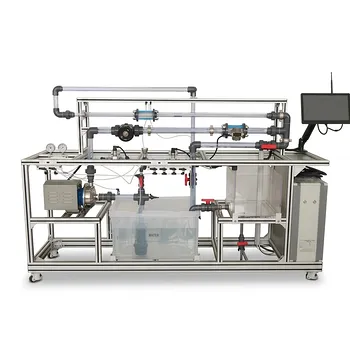
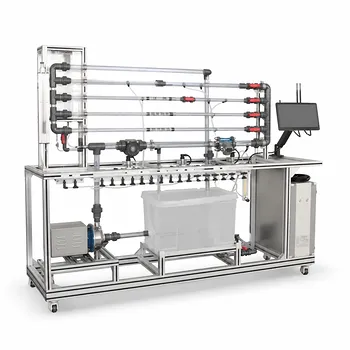
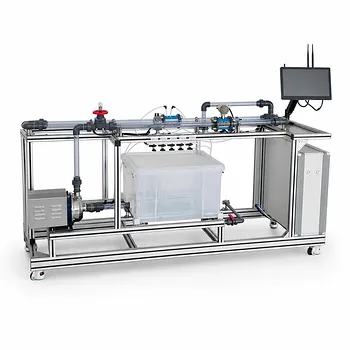
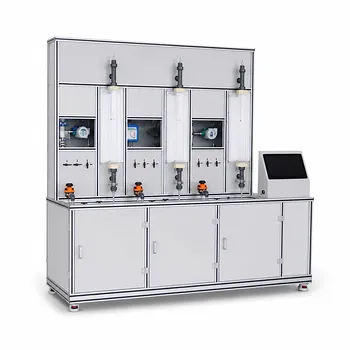
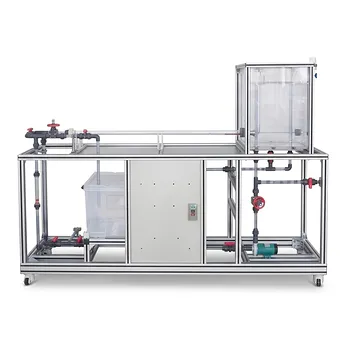
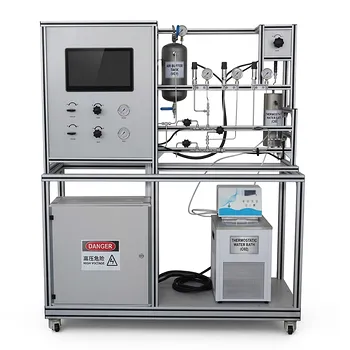
Mock-ups are the low-cost, low-risk proving ground for fluid dynamics.
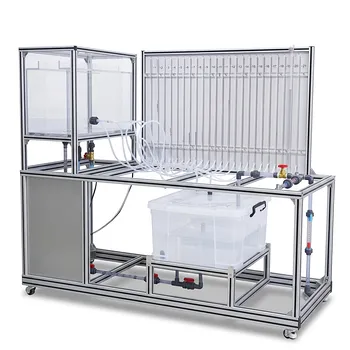
In chemical engineering scale-up, cold flow models are simplified physical replicas of process equipment that operate without chemical reactions. They allow engineers to visualize flow patterns, study mixing behavior, and test the performance of reactor internals at ambient, non-hazardous conditions—long before constructing an expensive, high-temperature pilot plant.
Cold flow models de‑risk scale‑up by isolating hydrodynamics from chemistry. They expose flow maldistribution, dead zones, and bypassing early, ensuring that the expensive pilot plant you build will actually move fluids the way your design intends.
Why Flow Validation Determines Scale‑Up Success
When a reaction leaves the lab bench, mixing and fluid distribution become make‑or‑break factors. Poor flow patterns create hot spots, side reactions, or stagnant zones that ruin yield and selectivity. A cold flow model answers the most fundamental question first: Will the fluids contact each other correctly?
The Hidden Danger of Skipping Hydrodynamic Tests
A beautifully designed reactor on paper can hide severe bypassing or channeling. Without physical flow data, pilot plants often launch with unanticipated problems that require costly retrofits. A cold flow model makes the invisible visible.
De‑risking Capital‑Intensive Pilot Construction
Operating at ambient temperature and pressure, these mock‑ups are dramatically cheaper and safer than reactive units. They let you fail fast on plastic, glass, or low‑cost metal, rather than discovering a flow crisis inside a high‑alloy pressure vessel.
How Cold Flow Models Deliver Actionable Answers
The power of a non‑reactive system lies in its ability to be probed and diagnosed without interference from heat or mass transfer. Two core techniques transform a mock‑up into a diagnostic laboratory.
Residence‑Time Distribution (RTD) and the Intensity Function
Injecting a tracer into the feed and measuring its exit concentration over time yields the residence‑time distribution. Engineers can then calculate the intensity function—a real‑time measure of how likely a fluid element is to leave the system. Spikes in this function immediately pinpoint bypassing, channeling, or stagnant dead zones that would remain hidden in a reactive unit.
Diagnosing Non‑Ideal Flow Patterns
Comparing the measured RTD against ideal reactor models (plug flow or perfectly mixed) reveals the gap between theory and reality. A clean RTD curve tells you the vessel behaves predictably; a skewed or multi‑peaked curve warns that internal design changes are mandatory before chemistry enters the picture.
Testing Internals: From Guesswork to Proof
Reactor internals—baffles, spargers, distribution plates—are often designed from empirical rules. A cold flow model turns those rules into verifiable fact.
Validating Baffle and Distributor Performance
You can mount physical prototypes of internals inside the model and immediately see their effect on flow patterns. Dye injection or video tracking shows whether a baffle truly breaks up swirl or just adds pressure drop with no mixing benefit. The design gets validated, not assumed.
Quantifying the Approach to Ideal Behavior
The same tracer data that diagnoses problems also quantifies success. You can measure how closely the model approaches ideal plug flow or ideal stirred‑tank behavior, giving a numerical confidence score before you commit to expensive materials of construction.
Mock‑ups Within the Bigger Pilot Plant Ecosystem
Cold flow models are not a replacement for reactive pilot plants—they are a critical precursor. The broader scale‑up journey still requires unit‑operations pilot plants that integrate reactions, heat transfer, and full material balances.
Bridging Hydrodynamics and Real‑World Data
A unit‑operations pilot plant collects actual material inputs, step durations, and equipment constraints. The flow insights from a cold flow model ensure that this empirical data is gathered under correct flow conditions. Without that step, you risk optimizing a poorly designed system.
Validating Process Simulators and Equipment Sizing
The data from reactive pilot runs—mass and energy balances, cycle times—validates the mathematical models used in process simulators. But if the underlying hydrodynamics are flawed, those balances will reflect a distorted reality. The cold flow model ensures the physical foundation is sound before you trust the simulator’s predictions for commercial scale.
Understanding the Trade‑offs
Cold flow models deliver immense value, but their limitations must be respected to avoid over‑reliance.
What They Won’t Tell You
A cold flow model cannot predict reaction rates, heat evolution, or quenching behavior. It isolates fluid mechanics, meaning you get no information about conversion, selectivity, or thermal runaway. These must be studied later in a reactive unit.
The Scaling Challenge
Matching dimensionless numbers (like Reynolds or Froude) in a small‑scale mock‑up is not always possible. If exact similitude cannot be achieved, some flow phenomena may not scale linearly. The model still provides a directional improvement, but the absolute accuracy has bounds.
The Integration Trap
A perfectly optimized flow pattern can still fail if the subsequent reaction generates phase changes or viscosity shifts not present in the cold fluid. Never treat a cold flow model as a substitute for a reactive campaign—treat it as a prerequisite that makes that campaign far more likely to succeed.
Making the Right Choice for Your Scale‑Up Goal
Your decision to invest in a cold flow model depends on what you are trying to solve. Use the following guide to align your effort with your greatest risk.
- If your primary focus is minimizing capital risk: Build a cold flow model early. It will catch flow‑related design flaws before you spend on expensive high‑pressure or high‑alloy hardware.
- If your primary focus is training and teaching process fundamentals: Cold flow mock‑ups offer a safe, visual, and immediately intuitive way to demonstrate mixing, RTD, and internal performance without hazardous chemicals.
- If your primary focus is understanding reaction kinetics and final yields: A cold flow model is essential for the hydrodynamic foundation, but you must follow it with a reactive pilot plant to validate thermal and chemical performance.
- If your primary focus is validating a process simulator’s mass balance only: Do not skip the hydrodynamics—ensure your pilot‑plant data is collected under verified flow conditions, or the model validated will be for a system that does not exist in reality.
A smart scale‑up strategy places the cold flow model exactly where it belongs: at the front of the line, proving the fluid mechanics, so that every dollar spent afterward is spent on a system that already works as it should.
Summary Table:
| Feature / Parameter | Cold Flow Models (Mock-ups) | Reactive Pilot Plants |
|---|---|---|
| Primary Focus | Hydrodynamics, mixing, & fluid flow | Reaction kinetics, yield, & thermodynamics |
| Operating Conditions | Ambient temperature & pressure | Process-specific temperature & pressure |
| Safety & Cost | Low risk, low cost (plastic/glass) | High risk, high cost (alloys/pressure vessels) |
| Key Diagnostics | Residence-Time Distribution (RTD), bypassing | Conversion rates, thermal runaway, mass balance |
| Equipment Scale | Simplifies physical replicas | Fully integrated operational units |
Accelerate Your Scale-Up Journey with LABPARK
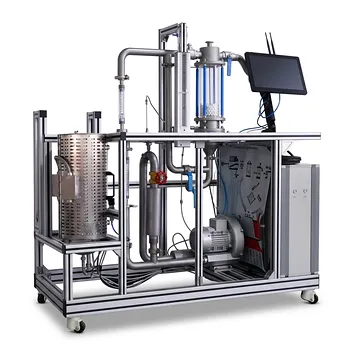
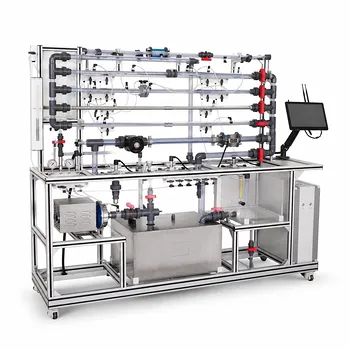
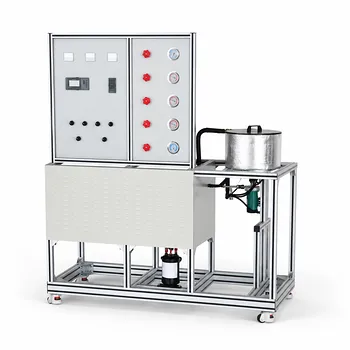
Transitioning from fluid dynamics validation to real-world chemical processing requires reliable, high-performance equipment. LABPARK designs and manufactures premium Educational and Vocational Unit Operations Pilot Plants specializing in:
- Chemical Engineering
- Bioprocess & Biotech
- Environmental & Water Treatment
Tailored for universities, research institutes, and enterprises, our pilot plants bridge the gap between process simulation and commercial reality.
Ready to bring accuracy and safety to your next scale-up project? Contact LABPARK today to explore our customizable pilot plant solutions!
Related Products
- Rising and Falling Film Evaporation Educational Unit Operations Pilot Plant
- Centrifugal Pump Performance and Orifice Flowmeter Calibration Educational Pilot Plant
- Fluid Friction Resistance Determination Educational Unit Operations Pilot Plant
- Orifice and Venturi Flowmeter Calibration Educational Pilot Plant for Fluid Mechanics Laboratory
- Two Phase Flow Pattern Velocity Resistance Measurement Educational Pilot Plant
People Also Ask
- How do educational unit operations pilot plants bridge theory and design? Bridge the Engineering Gap
- How do educational unit operations pilot plants address safety and waste management when scaling up?
- How is the heat transfer area calculated for an evaporation unit operations pilot plant during experimental design? Guide
- How to select educational evaporator pilot plants for thermal & scaling solutions? Complete Guide
- What are the structural characteristics & applications of rising-falling film evaporators in unit operations training?