Steam's role in hydrocarbon cracking is fundamentally about shifting chemical equilibrium and protecting the reactor. By injecting steam, you're reducing the partial pressure of the hydrocarbon feed. This directly favors the primary cracking reactions that produce valuable light olefins like ethylene, while simultaneously suppressing the secondary polymerization and coking reactions that foul the reactor. It’s a deliberate thermodynamic and kinetic intervention.
The core problem in cracking is managing coking and maximizing olefin yield. Adding steam solves both by altering the reaction environment. Its low molecular weight, high heat capacity, and chemical properties make it the ideal, easy-to-separate diluent for both industrial furnaces and sensitive pilot-plant reactors.
The Thermodynamic Purpose: Shifting the Equilibrium
The primary cracking of hydrocarbons like ethane into ethylene and hydrogen is a volume-increasing, endothermic reaction. Lowering the partial pressure of the hydrocarbon reactant directly shifts the equilibrium to favor the forward reaction, boosting conversion at any given temperature.
Why Reducing Partial Pressure is Critical
Le Chatelier's principle dictates that a system under stress will shift to relieve it. By diluting the feed with steam, you effectively reduce the "concentration" of the reactant hydrocarbon molecules. Since the reaction creates more product molecules than it started with, the system responds by pushing the reaction forward to increase the total number of molecules and counteract the dilution.
The Vacuum Alternative and Why It's Impractical
You could theoretically achieve the same partial pressure reduction by operating under a deep vacuum. However, in a high-temperature pilot plant, maintaining a vacuum poses enormous engineering challenges, such as sealing against leaks and managing safety risks. Steam dilution is a far simpler, safer, and more cost-effective method to achieve the same thermodynamic advantage.
The Kinetic and Protective Purposes: Beating Coking
Beyond thermodynamics, steam plays a crucial kinetic and physical role in keeping the reactor alive. The biggest enemy in cracking is coke—solid carbon deposits—which insulates the reactor tube, increases pressure drop, and eventually forces a costly shutdown.
Suppressing Secondary Reactions
The same reduction in hydrocarbon partial pressure also kinetically suppresses the unwanted secondary reactions. Polymerization and coking are typically higher-order reactions compared to primary cracking. By diluting the active species, you dramatically slow these foulant-forming pathways, directly extending the run time of the pilot reactor.
Continuous Surface Regeneration
Steam is not an entirely inert bystander. It actively gasifies solid carbon deposits on the reactor tube wall via the water-gas reaction (C + H₂O → CO + H₂). This provides a mild, continuous cleaning action that reduces the net rate of coke buildup on the hot metal surfaces, protecting the reactor.
Why Steam is the Ideal Diluent for Pilot Plants
For an educational or research pilot plant, the choice of diluent is about more than just chemistry. Steam possesses a unique combination of properties that make it perfectly suited for this scale.
Low Molecular Weight for Maximum Effect
The effectiveness of a diluent in reducing partial pressure depends on its molar fraction. Steam has a very low molecular weight (18 g/mol). This means that for a given mass flow, it provides a large number of moles, maximizing the reduction of the hydrocarbon partial pressure with a minimal mass of added diluent.
High Heat Capacity for Temperature Stability
Cracking reactions are highly endothermic. Steam’s high heat capacity allows it to act as a thermal flywheel. It carries a large amount of sensible heat into the reaction zone, buffers against sharp temperature drops, and promotes a more uniform temperature profile inside the reactor tube—critical for obtaining accurate kinetic data.
Effortless Product Separation
After the reaction, you're left with a complex mixture of products. Steam is trivially separated from the hydrocarbon stream simply by condensing the cooled effluent into liquid water. This leaves the cracker products uncontaminated and ready for analysis, without the need for energy-intensive distillation or absorption steps.
Corrosion Inhibition and Material Protection
Steam also provides a protective function. It reacts with sulfur compounds in the feedstock to form hydrogen sulfide, which is carried out of the reactor. This inhibits sulfur-based corrosion on the metal reactor tube, a significant issue that can compromise the integrity and accuracy of a pilot plant.
Understanding the Trade-offs
While steam is near-ideal, its use is not without trade-offs that must be managed.
Energy and Cost Penalty
Generating superheated steam requires significant energy. You are adding mass that must be heated to the reaction temperature, only to condense it out later. The steam-to-oil ratio is therefore a critical economic and operational optimization, balancing yield and run length against the energy input.
Metallurgical Concerns
Steam can cause high-temperature oxidation or decarburization of certain reactor alloys over time. Pilot plant operators must ensure their reactor materials of construction are compatible with the high-temperature steam environment to avoid premature tube failure or catalytic effects from surface oxides.
Making the Right Choice for Your Goal
Selecting the correct steam-to-hydrocarbon ratio is the core operational decision. The optimal value is dictated by your feedstock and experimental goals.
- If your primary focus is maximizing olefin yield with a light feedstock (ethane, propane): Use a low steam ratio (0.25–0.5 kg/kg). The low coking tendency of these feeds means the primary goal is partial pressure reduction for equilibrium conversion.
- If your primary focus is extending run time and model coking behavior with a heavy feedstock (naphtha, diesel): A high ratio is mandatory (0.75–5.0 kg/kg). Here, steam's roles as a coke gasifier and thermal buffer become paramount to prevent rapid fouling and maintain heat transfer.
- If your primary focus is generating precise mass and energy balances for scale-up: You must precisely meter both streams. The condensate recovery system becomes a crucial analytical tool for closing the overall mass balance and verifying the actual steam-to-oil ratio.
Ultimately, treating steam not as an extra cost but as a powerful, tunable process variable will unlock the full potential of your pilot plant reactor.
Summary Table:
| Property/Role | Mechanism & Action | Key Benefit for Pilot Plants |
|---|---|---|
| Partial Pressure Reduction | Shifts equilibrium of volume-increasing reactions | Increases conversion & olefin yield |
| Coke Suppression | Dilutes reactants & gasifies carbon (C + H₂O) | Extends run time; protects reactor walls |
| High Heat Capacity | Acts as a thermal flywheel buffering temp drops | Ensures uniform temperature profiles |
| Easy Separation | Condenses directly from the effluent stream | Delivers uncontaminated product analysis |
Accelerate Your Research & Training with LABPARK
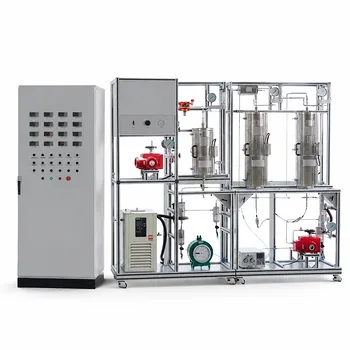
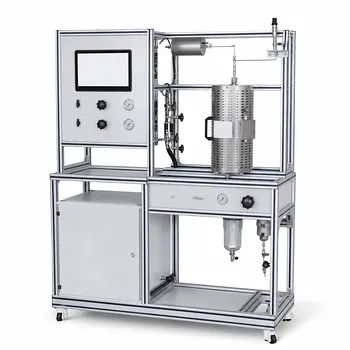
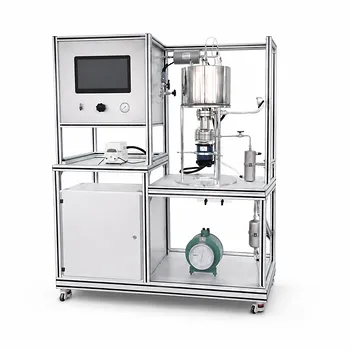
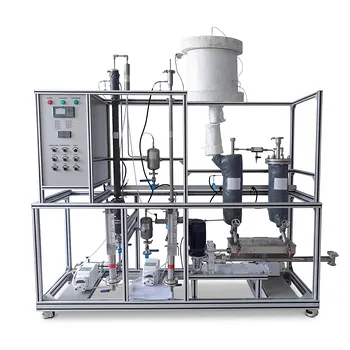
Looking to equip your lab with advanced testing systems? LABPARK provides premium Educational and Vocational Unit Operations Pilot Plants in chemical engineering, bioprocess & biotech, and environmental & water treatment. Designed specifically for universities, research institutes, and enterprises, our systems offer precise process control, robust materials, and accurate data acquisition.
Ready to elevate your unit operations? Contact our experts today for a customized pilot plant solution!
Related Products
- Methane Cracking Educational Unit Operations Pilot Plant
- 100L Continuous Loop Hydrogenation Educational Unit Operations Pilot Plant
- Crude Benzene Hydrogenation Educational Unit Operations Pilot Plant
- Carbon Dioxide Hydrogenation Methanol Synthesis Educational Unit Operations Pilot Plant
- Fixed-Bed Chemical Reaction and Gas Dust Tar Removal Unit Operations Pilot Plant
People Also Ask
- How do ethane vs naphtha cracking influence teaching pilot plant analytical configurations? Key Design Guide
- How can flow-NMR be integrated with pilot plant reactors to monitor kinetics? A Complete Guide
- How do cracking temperature and residence time affect olefin yield? Pilot Plant Guide
- How are utility consumption rates integrated into chemical pilot plant economic evaluations?
- How should OSBL investments be estimated? Key Steps to Avoid Budget Overruns in Pilot Plant Projects