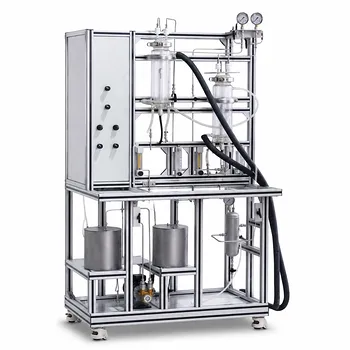
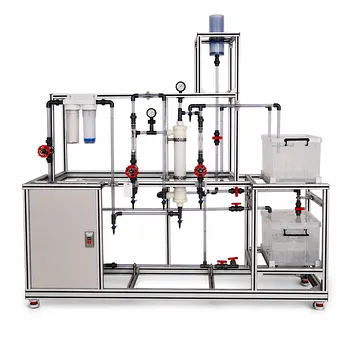
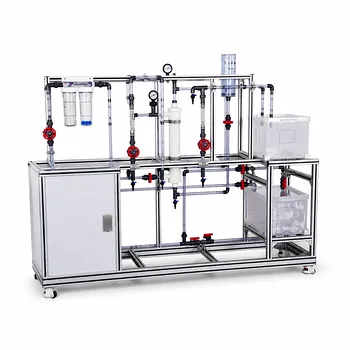
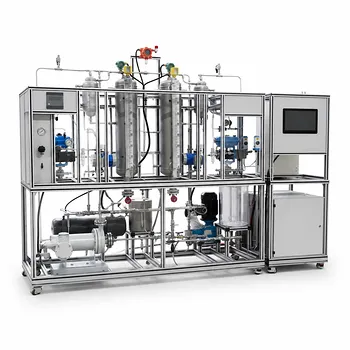
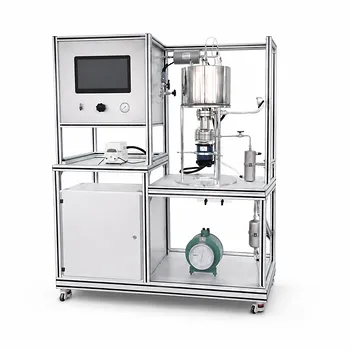
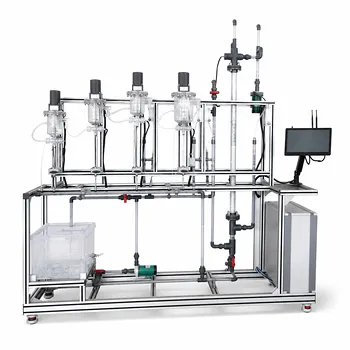
The future of chemical engineering education is miniature, modular, and membrane-driven. Incorporating membrane contactors and membrane reactors into unit operations pilot plants delivers a decisive educational advantage: it teaches process intensification and sustainable design as a lived experience, not just a theoretical ideal. These systems combine mass transfer or chemical reaction directly with membrane separation, moving students beyond traditional pressure-driven membranes and into the compact, energy-efficient technologies that now define modern industrial practice.
The core educational value lies in shifting the learning paradigm from isolated unit operations to integrated, intensified processes. By operating membrane contactors and reactors in a pilot plant, students internalize how to simultaneously achieve high selectivity, lower energy consumption, and a minimal physical footprint—skills essential for designing greener, more efficient chemical plants.
Bridging the Gap Between Theory and Next-Generation Industrial Practice
From Classroom Concepts to Tangible Efficiency
Traditional curricula often segregate reaction engineering and separation science into separate modules. Membrane contactors and reactors tear down that wall. Students can physically observe how removing a product in situ shifts equilibrium and boosts conversion, or how a membrane interface enables non‑dispersive mass transfer without the energy penalty of phase change. This direct observation makes abstract concepts like mass transfer limiting steps or thermodynamic efficiency concrete and memorable.
The Unique Role of Membrane Contactors and Reactors
Unlike reverse osmosis or ultrafiltration, which simply act as barriers, membrane contactors facilitate gas‑liquid or liquid‑liquid mass transfer without dispersing one phase into the other—eliminating issues like emulsion formation or flooding. Membrane reactors, on the other hand, integrate a catalyst and a permselective membrane to continuously remove a product or add a reactant, often achieving higher selectivity and operating at milder conditions. For students, these modules become hands‑on laboratories for studying reaction‑separation synergy, advanced mass transport models, and the engineering of interfacial phenomena.
Building Competency in Process Intensification and Sustainability
Experiencing the Principles of Green Chemistry
Operating a pilot‑scale membrane contactor allows students to measure exactly how much solvent is saved, how energy consumption drops when no distillation is needed, and how waste generation shrinks. Because these processes run efficiently at ambient temperature, they inherently align with green chemistry’s call for safer solvents, reduced energy use, and real‑time pollution prevention. Instead of memorizing twelve principles, students generate data that proves the sustainability case firsthand.
Mastering Critical Process Parameters (CPPs) and Control
Membrane‑based systems are highly sensitive to variables like transmembrane pressure, sweep‑flow rate, concentration polarization, and temperature gradients. On a well‑instrumented pilot plant, learners identify precisely which parameters drive product quality—the Critical Process Parameters—and then apply tools like Failure Mode and Effects Analysis (FMEA) to anticipate upsets. This practice in coupled system control builds a mindset of proactive risk assessment that directly transfers to regulated industries like pharmaceuticals and food processing.
Understanding the Trade‑offs and Engineering Limitations
No educational experience is complete without facing real-world constraints. Membrane contactors and reactors bring their own: membrane fouling, limited chemical compatibility, potential wetting or swelling, and higher initial complexity compared to a simple stirred tank. In a teaching pilot plant, students deliberately induce these problems—monitoring flux decline, executing clean‑in‑place cycles, and discovering why a membrane that works beautifully in the lab can fail on scale‑up. Learning to diagnose and mitigate these limitations instills the disciplined skepticism that separates a trained engineer from a theory‑only graduate.
Operational Flexibility and Multi‑Functionality in a Single Pilot Plant
Integrating with Traditional Unit Operations
A well‑designed pilot plant can link a membrane contactor directly to a batch reactor, turning it into an extractor, a decanter, or a continuous phase separator. This multi‑functionality means a single, compact setup can teach reaction, extraction, distillation, and membrane separation within a coherent process flow. Students gain a systems‑level understanding of how to balance capacities, optimize raw material conversion, and manage recycles—the same challenges they will face in an operating plant.
Enabling Safe Study of Hazardous or Challenging Reactions
Membrane reactors share the safety advantages of microreactors: high surface‑area‑to‑volume ratios enable superior heat transfer, making it safe to study highly exothermic reactions or unstable intermediates at a bench scale. The precise residence time control in a continuous membrane reactor lets students explore rapid kinetic regimes that would be dangerous in a batch vessel, while the membrane itself can act as a heat exchanger or safety barrier. This safe exposure to hazardous chemistry builds confidence and competence for roles in fine chemicals or pharmaceuticals.
Aligning with Industry 4.0 and Future Workforce Needs
Data‑Rich Environments for Digital Skills
Modern membrane pilot plants are sensor‑intensive, generating streams of real‑time data on pressure drops, flow rates, selectivities, and permeate quality. Students learn to build digital twins, apply statistical process control, and use multivariate analysis to optimize performance. This hands‑on digitalization experience is exactly what employers seek in an era where chemical plants are becoming cyber‑physical systems.
Preparing for Careers in Pharma, Biotech, and Fine Chemicals
The pharmaceutical industry is rapidly transitioning from batch to continuous manufacturing, often using membrane‑based separations and reactors to meet purity and yield targets. By training on pilot systems that mirror these commercial configurations, students graduate with a CV that speaks directly to process development and manufacturing roles. They are not learning about emerging technology—they are already proficient in it.
Making the Right Choice for Your Educational Goal
The specific learning outcomes depend on how the pilot plant is configured and which aspects are emphasized.
- If your primary focus is teaching process intensification fundamentals: Choose a modular pilot system that juxtaposes conventional unit operations with membrane reactors and contactors, enabling direct comparison of energy consumption, yield, and physical footprint.
- If your primary focus is sustainability and green engineering: Prioritize instruments that allow students to measure E‑factors, solvent usage, and CO₂ footprint, so the environmental advantage of integrated membrane processes emerges from their own data.
- If your primary focus is vocational or pre‑employment training: Opt for industrial‑grade sensors and automation, where students perform clean‑in‑place cycles, troubleshoot fouling, and operate under real‑time alarm management—mirroring the complexity of a modern plant.
In a discipline where the line between reaction and separation is blurring, pilot plants that embrace membrane contactors and reactors transform chemical engineering education into a launchpad for the sustainable, intensified factories of tomorrow.
Summary Table:
| Educational Focus | Core Technology | Key Learning Outcome |
|---|---|---|
| Process Intensification | Membrane Reactors | Shift reaction equilibrium and boost conversion in situ |
| Sustainable Design | Membrane Contactors | Achieve non-dispersive mass transfer with lower energy and solvent use |
| Industry 4.0 & Control | Digitalized Pilot Plants | Manage Critical Process Parameters (CPPs) and troubleshoot fouling |
Bring Next-Gen Chemical Engineering to Your Lab
Ready to prepare your students for the future of process intensification? LABPARK provides state-of-the-art Educational and Vocational Unit Operations Pilot Plants in chemical engineering, bioprocess & biotech, and environmental & water treatment. We help universities, research institutes, and enterprises bridge the gap between classroom theory and modern industrial practice with modular, digitalized systems.
Contact LABPARK today to discuss your curriculum needs and request a custom pilot plant proposal!
Related Products
- Photocatalytic Membrane Separation and Degradation Unit Operations Pilot Plant
- Ultrafiltration Membrane Separation Educational Pilot Plant
- Multi Functional Membrane Crystallization Educational Unit Operations Pilot Plant
- Multifunctional Membrane Separation Educational Pilot Plant with Ultrafiltration, Nanofiltration, Reverse Osmosis
- Hollow Fiber Ultrafiltration Membrane Separation Educational Pilot Plant
People Also Ask
- What are the key differences in membrane configurations? Choose the Right Unit Operations Pilot Plant
- How Do Pervaporation, Vapor, and Gas Permeation Differ in Pilot Plants? Key Comparison
- What are the structural & performance trade-offs of flat-sheet, spiral-wound, & hollow-fiber membrane modules?
- How do PEI, PVDF, and PSU membranes compare in pilot plants? Find the best fit.
- Pervaporation vs. Vapor Permeation: Handling Suspended Solids in Membrane Pilot Plants