Process temperature, chemical corrosiveness, thermal shock resistance, gas tightness, and the required insertion depth are the five non-negotiable factors. A protection tube that fails on even one of these dimensions will compromise measurement accuracy, ruin the sensor, or contaminate your pilot-plant product—long before you see any external warning sign.
The protection tube isn't just a shield; it is the primary barrier that defines your temperature measurement's reliability. Material selection must reconcile the operating temperature limit with the real chemical and mechanical stresses of your unit operation, whether that's a gentle bioprocess fermentation or a high-pressure catalytic reactor.
The Critical Role of the Protection Tube in Pilot Plants
Pilot plants sit between lab-scale curiosity and full-scale production. Every sensor failure here wastes expensive materials, corrupts design-of-experiment data, and delays scale-up decisions. The thermocouple junction itself is delicate—bare wires would corrode, short-circuit, or catalyze unwanted side reactions. The protection tube shoulders the entire environmental burden.
What a Protection Tube Really Does
The tube physically separates the thermoelements from the process fluid. It must transmit heat rapidly to the junction while blocking chemical attack.
It also provides mechanical integrity against flow-induced vibration, pressure, and the bending stress of long insertion lengths. In stirred tanks and high-velocity pipe flows, an unsupported ceramic tube can snap instantly.
Finally, it preserves measurement purity. Any pinhole leak or permeation can let reactive gases poison the junction, causing a silent, drifting measurement error that invalidates the entire campaign.
Key Selection Factors for Chemical and Bioprocess Environments
You are not just picking a material from a table. You are solving a multi-variable equation where temperature, chemistry, and mechanics shift with each unit operation.
Operating Temperature and Thermal Shock Resistance
Every material has a maximum service temperature and a very different tolerance for sudden temperature changes.
- Stainless steel (up to ~1000 °C) handles moderate heat and rapid thermal cycling well. It thrives in general fluid-flow and heat-transfer modules where the temperature ramp rate is controlled. However, above 900 °C, scaling and strength loss accelerate.
- Quartz (up to ~1200 °C) offers excellent thermal shock resistance and optical clarity, but it is fragile and softens close to its upper limit.
- Alumina ceramic (above 1900 °C) withstands extreme heat but shatters under abrupt thermal transients. In a pilot plant where a cold reactant slug hits a hot tube, a ceramic failure is almost guaranteed.
Chemical Corrosiveness and Compatibility
Your process recipe dictates the corrosion mechanism. The same material can be inert in one stream and catastrophically attacked in another.
Stainless steel resists many organic acids and clean-in-place (CIP) caustics, making it the default for stainless steel-dominated bioprocess skids. Yet it is vulnerable to chloride pitting and strong reducing acids.
Quartz and alumina ceramics are immune to oxidation and most acid attacks, which is why they are specified for high-temperature reactors with corrosive catalysts or acidic off-gases. Bioprocess operations rarely need them unless you have steam sterilization cycles above standard autoclave temperatures or highly corrosive media where metal ions could leach and inhibit cell cultures.
Mechanical Strength and Insertion Depth
The tube must withstand the bending moment created by fluid forces. The longer the insertion depth, the greater the demand on flexural strength.
- Metallic tubes allow deep insertion into large-diameter pipes and vessels without additional support. They can be bent to shape and welded into flanges.
- Ceramic tubes are best kept short and vertical. In pilot-scale fluidized beds or deep reactor tubes, they often need an outer metal protection sheath, creating a double-walled assembly that compromises response time but saves the sensor.
Gas Tightness and Contamination Prevention
This is often overlooked until a sensitive catalyst is poisoned. At high temperatures, gases can diffuse through porous materials or small imperfections.
Impervious ceramic tubes (fully dense alumina) provide a near-perfect gas barrier up to their temperature limit, protecting the thermocouple from oxygen ingress or hydrogen attack. In reducing atmospheres with more than 5% hydrogen, a leaky tube will quickly embrittle metal sheaths and chemically reduce thermocouple elements, leading to drift. Quartz, when intact, is also gas-tight and works well for inert gas or vacuum environments.
Understanding the Trade-offs
Every tube material embeds a critical performance compromise. Ignoring these trade-offs is the fastest route to field failure.
Response Time vs. Protection
A thick-walled tube protects better but slows down heat transfer, delaying your measurement of transient events like runaway reactions. A thin-walled tube responds faster but is easier to puncture or collapse. Pilot-plant engineers often overprotect and then wonder why their control loop sees temperature 30 seconds late.
Cost and Availability
Ceramic and quartz tubes cost orders of magnitude more than standard stainless-steel sheaths. They also need specialized fittings and extreme care during installation. If your process is comfortably below 1000 °C and only mildly corrosive, choosing an exotic ceramic adds unnecessary expense and fragility with zero data-quality benefit.
Sensor Compatibility
The protection tube must match not only the process but also the thermocouple type inside. For instance, while tungsten-rhenium thermocouples operate up to 2300 °C in hydrogen-rich settings, their protection tube must be made of a dense refractory material that can withstand the same reducing environment without contaminating the junction. The sensor and the sheath material form a single measurement system; mismatching them creates an invisible drift.
Making the Right Choice for Your Pilot Plant
Your decision matrix starts with the most aggressive condition in your operating window—not the average.
- If your primary focus is general chemical pilot operations below 1000 °C with moderate corrosion: Choose a corrosion-resistant stainless-steel sheath for its strength, thermal shock tolerance, and ease of integration into flow modules and heat exchangers.
- If your primary focus is high-temperature or oxidative corrosive reactors (800–1200 °C): Select quartz for its gas-tightness and purity, but design the mounting to avoid mechanical shock and limit insertion depth.
- If your primary focus is extreme-temperature catalysis or ceramic processing above 1200 °C: Use a dense alumina ceramic tube, accept the thermal shock risk, and implement strict pre-heating and cooldown protocols to prevent fracture.
- If your primary focus is bioprocess pilot operations requiring frequent sterilization and corrosion by CIP chemicals: A high-grade stainless-steel sheath remains the optimal balance of chemical resistance, thermal shock tolerance, and mechanical reliability, without risking metallic contamination that could inhibit cell cultures at ppm levels.
Your protection tube is the silent partner in every temperature datapoint you collect. Chose it with the same rigor you apply to the catalyst or the media formulation, and your pilot-plant data will stand up confidently at scale-up review.
Summary Table:
| Material | Max Temp | Chemical Resistance | Thermal Shock Resistance | Best For |
|---|---|---|---|---|
| Stainless Steel | ~1000 °C | Good (CIP caustics, organic acids) | High | General fluid-flow & bioprocess |
| Quartz | ~1200 °C | Excellent (acids, oxidation) | High | High-temp oxidative/corrosive reactors |
| Alumina Ceramic | >1900 °C | Excellent (gas-tight, reducing gases) | Low | Extreme-temperature catalysis |
Optimize Your Pilot Plant Measurements with LABPARK
Ensuring precise temperature control starts with selecting the right materials. LABPARK provides state-of-the-art Educational and Vocational Unit Operations Pilot Plants in chemical engineering, bioprocess & biotech, and environmental & water treatment for universities, research institutes, and enterprises.
Whether you need to guarantee strict measurement accuracy for academic research or robust durability for industrial scale-up, our expert-designed systems are engineered to withstand the most demanding thermal and chemical environments.
Ready to elevate your research or training capabilities? Contact our engineering team today to find the perfect pilot plant solution for your lab!
Related Products
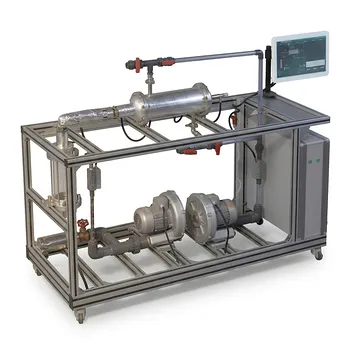
- Shell and Tube Heat Exchanger Heat Transfer Coefficient Determination Educational Pilot Plant
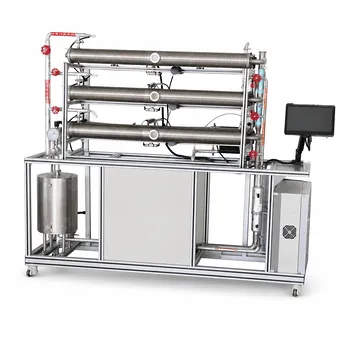
- Three-Tube Heat Transfer Educational Pilot Plant for Unit Operations Training
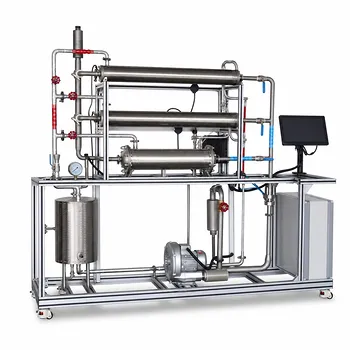
- Comprehensive Heat Transfer Coefficient Determination Educational Unit Operations Pilot Plant
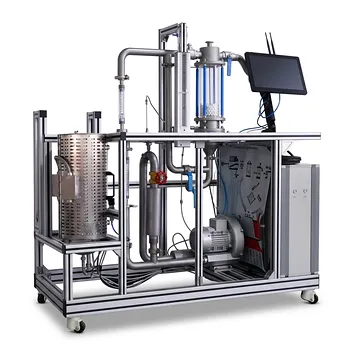
- Solid Spherical Heat Transfer Coefficient Determination Educational Chemical Engineering Pilot Plant
- Hot Filtration Educational Unit Operations Pilot Plant Laboratory System
People Also Ask
- Why Apply LMTD Correction in Shell-and-Tube Pilot Plants & How to Determine It
- How is the fouling factor (Rd) evaluated? Key Pilot Plant Insights for Students
- How is fouling factor demonstrated using shell and tube pilot plants? Practical Lab Guide
- Why is simulating and calculating fouling factors crucial when operating educational heat exchanger pilot plants?
- Why Estimate Tube Wall Temp in Heat Exchangers? Master Pilot Plant Thermal Resistance