Optical pH and CO2 sensors promise hard-to-match insight into bioprocess dynamics, but their real-world value hinges on two non-negotiable attributes: how quickly they signal a change and how long they can do so reliably. The response time of these sensors is fundamentally governed by the immobilization matrix that houses the sensing dye and its interaction with the surrounding chemical environment. For pH, entrapping the dye in a thin sol-gel glass matrix on a glass substrate delivers millisecond-range response and tolerance for repeated autoclaving. For CO2, embedding the dye and a phase transfer catalyst in a hydrophobic plastic film produces a second-range response to diffusing CO2, which is optimal for monitoring low concentrations (below 5%). However, the operational lifespan is limited by an irreversible chemical change: during prolonged runs of 20 to 100 hours, the dye itself can become permanently protonated, causing the sensor to drift out of specification in continuous use.
The matrix that immobilizes the sensor dye is a double-edged sword. A thin sol-gel glass film grants optical pH sensors blazing millisecond speed and autoclave stability, while a hydrophobic plastic film gives CO2 sensors the necessary rapid equilibration. Yet both designs face the same ultimate limit—the irreversible protonation of the dye after 20–100 hours of continuous exposure, which truncates their operational life even under gentle process conditions.
The Matrix-Speed Connection: How Sensor Construction Dictates Response Time
The Glass Advantage for pH: Sol-Gel and Ultra-Fast Kinetics
Optical pH sensors rely on FRET (Fluorescence Resonance Energy Transfer) dyes, whose fluorescence changes with the local proton concentration.
To achieve a millisecond response, these dyes are trapped inside a thin, porous sol-gel matrix deposited on a glass substrate.
The sol-gel’s open, inorganic structure allows unhindered diffusion of hydrogen ions into the dye layer.
Because the film is extremely thin, the time it takes for protons to reach every dye molecule is negligible, producing a response speed that is effectively instantaneous for bioprocess control.
This glass-based construction also brings a crucial processing advantage: the sensor can survive repeated autoclaving cycles without delamination or loss of sensitivity, a non-negotiable requirement in sterile bioprocessing.
Plastic Films for CO2: Engineering a Barrier for Controlled Diffusion
Dissolved carbon dioxide is not an ion; it is a neutral gas that must first cross a membrane and then be hydrated to an acidic species that the dye can detect.
To meet this challenge, CO2 sensors embed the indicator dye and a phase transfer catalyst inside a hydrophobic plastic film.
The hydrophobic film acts as a selective barrier—it allows CO2 gas to permeate rapidly from the aqueous process medium while retaining the dye and the catalyst.
Once inside, the catalyst speeds up the hydration of CO2 to carbonic acid, and the resulting pH shift is read by the dye.
This design produces a response time in the range of seconds, which is fast enough to track metabolic shifts in fed-batch or continuous cultures, and it is especially tuned for accurate monitoring when CO2 concentrations stay below 5%.
The Hidden Limit: Chemical Degradation and the End of Sensor Life
Permanent Protonation: Why Your Sensor Drifts After a Few Days
Even when a sensor is physically robust, the dye chemistry can impose a hard life limit.
After 20 to 100 hours of continuous exposure to the process medium, the indicator dye can undergo irreversible protonation.
Once a dye molecule is permanently protonated, it loses its ability to respond dynamically to changes in pH or CO2, causing the sensor’s readings to drift or flatline.
This is not a gradual wear-out from photobleaching or mechanical stress—it is a chemical transformation of the reporting element itself, and it marks the true end of the sensor’s operational lifespan.
The Role of the Phase Transfer Catalyst in CO2 Sensor Longevity
In CO2 sensors, the phase transfer catalyst is essential for fast signal generation, but it also introduces a subtle complexity.
The catalyst accelerates the hydration of CO2, producing the acidic species that the dye reports on.
However, under prolonged deployment, the catalyst’s efficiency can change or it may leach from the plastic matrix, further altering the local pH inside the film.
While the primary reference identifies dye protonation as the dominant failure mode, any decline in catalyst activity would compound the loss of sensitivity, making the sensor’s tail-end performance unpredictable after the 20–100 hour window.
Understanding the Trade-offs
Speed vs. Stability: When a Fast Response Can’t Mask a Short Life
The very matrix choices that deliver lightning-fast response also influence how long the sensor can last.
A sol-gel matrix for pH gives a millisecond response and stands up to autoclaving, but it does nothing to shield the dye from the aqueous environment that causes permanent protonation.
Similarly, the CO2 sensor’s hydrophobic plastic film allows rapid CO2 ingress, but the dye inside is still exposed to acid once the gas hydrates.
In both cases, the design that maximizes response speed accepts a finite shelf life of a few days in continuous operation.
Operators must recognize that a sensor that performs brilliantly on day one may be chemically spent by day three.
Autoclavability: A Crucial Design Constraint for pH Sensors
For pH sensors, the ability to withstand high-temperature steam sterilization is often as important as response time.
The sol-gel-on-glass platform is specifically chosen because it survives repeated autoclaving without cracking or peeling, unlike many polymer-based films that would degrade.
This resilience does not extend the dye’s chemical lifetime, but it ensures that the sensor can be re-sterilized for multiple batches, provided the cumulative exposure time does not exceed the 20–100 hour limit.
The trade-off is clear: you gain sterility assurance and rapid kinetics, but you must plan for replacement well before the dye protonates permanently.
Making the Right Choice for Your Bioprocess
Your sensor strategy must balance the speed you need against the duration you can afford. Consider these goal-oriented guidelines:
- If your primary focus is ultra-fast response for dynamic control loops (e.g., glucose-induced pH excursions): Choose a sol-gel-immobilized FRET pH sensor. Its millisecond kinetics will give you the process visibility you need, but plan to replace it before 100 hours of cumulative exposure.
- If your primary focus is low-level CO2 monitoring in mammalian cell cultures (below 5%): Opt for a hydrophobic plastic film-based CO2 sensor. Its second-range response is well-matched to metabolic shifts, but factor in the 20–100 hour dye protonation limit for continuous campaigns.
- If your primary focus is long-duration pilot plant runs lasting several days to weeks: Recognize that optical sensors based on these dye chemistries are not designed for month-long, uninterrupted use. Either plan for in-place sensor swaps, or augment your data with an orthogonal technique like at-line gas analysis to cover the gap when the dye’s response degrades.
- If your primary focus is reusability across multiple autoclave cycles: Leverage the sol-gel pH sensor’s steam-tolerant design. Just log the total wet-contact hours across batches to avoid creeping past the protonation threshold mid-campaign.
Ultimately, matching sensor chemistry to your specific unit operation is not about finding a “best” sensor; it is about knowingly trading off millisecond responsiveness against a chemically imposed expiration date that kicks in after a few tens of hours.
Summary Table:
| Sensor Type | Immobilization Matrix | Response Time | Lifespan Limit | Key Advantage / Application |
|---|---|---|---|---|
| Optical pH | Thin sol-gel glass film | Milliseconds | 20–100 hours | High autoclave tolerance; fast dynamic control |
| Optical CO2 | Hydrophobic plastic film | Seconds | 20–100 hours | Optimal for low-concentration CO2 (<5%) |
Elevate Your Bioprocess Education and Research with LABPARK
To master dynamic control loops and manage sensor lifespans in practice, hands-on experience with pilot-scale equipment is essential. LABPARK provides premium Educational and Vocational Unit Operations Pilot Plants in chemical engineering, bioprocess & biotech, and environmental & water treatment.
Tailored for universities, research institutes, and enterprises, our systems offer students and researchers the ideal platform to study real-world bioprocess dynamics, sensor integration, and system control.
Ready to upgrade your lab capabilities? Contact us today to discover how LABPARK pilot plants can enhance your training and research outcomes!
Related Products
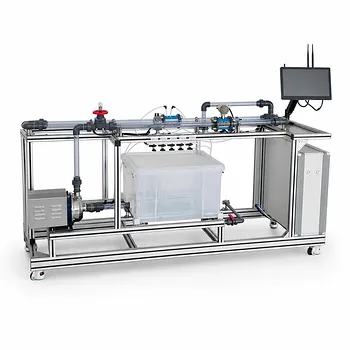
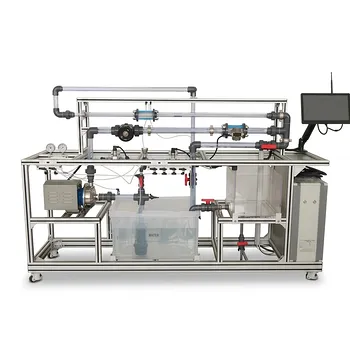
- Orifice and Venturi Flowmeter Calibration Educational Pilot Plant for Fluid Mechanics Laboratory
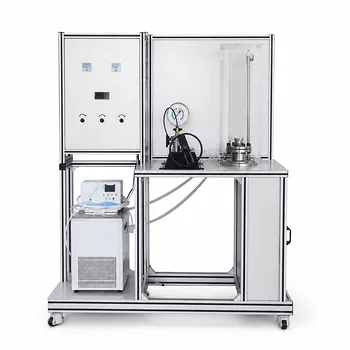
- Carbon Dioxide PVT Curve Determination Educational Unit Operations Pilot Plant
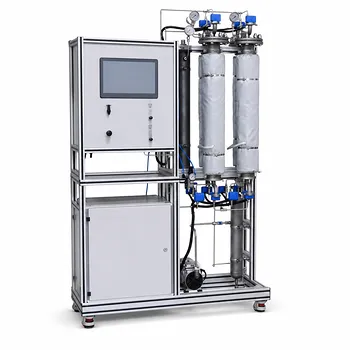
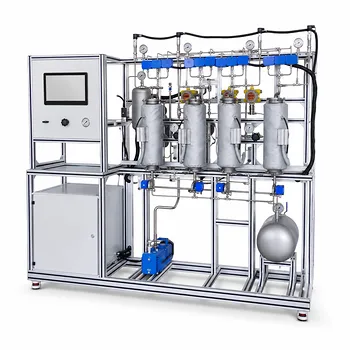
- Low Concentration Carbon Dioxide Capture Pressure Swing Adsorption Educational Pilot Plant
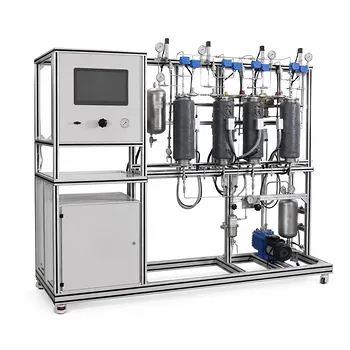
- Bench Scale Carbon Dioxide Capture Educational Unit Operations Pilot Plant
- Ion Exchange Water Purification Educational Pilot Plant for Engineering Unit Operations
People Also Ask
- What is the difference between static and stagnation pressure? Master Pilot Plant Flow Measurement
- How do pilot plants demonstrate siphon pressure variations? Visualizing Bernoulli's Energy Balance
- How do fluid mechanics training pilot plants facilitate the visualization and calculation of laminar and turbulent flows?
- How to update chemometric calibration models in pilot plants? Best practices for process engineers.
- Why are the laws of similitude critical in fluid flow pilot plants? Scale Up Safely