The separation efficiency of silica gel in chemical engineering laboratory training hinges on three critical factors: particle size, moisture content, and chemical selectivity. A particle size around 200 mesh balances solvent flow and resolution, while a water content of 10–12% provides reliable adsorption activity without degrading sensitive compounds. Additionally, silica gel’s polar, slightly acidic surface makes it inherently selective for polar analytes, but it can cause severe tailing with basic molecules unless the mobile phase is adjusted—turning a simple TLC experiment into a powerful lesson in surface chemistry.
The performance of silica gel as a stationary phase is defined by a delicate equilibrium between its physical texture and chemical surface. In a training lab, controlling mesh size and water content is paramount, but never overlook its innate polarity—this determines whether your students achieve sharp, well-resolved bands or frustrating, irreproducible tailing.
The Physical Factors: Particle Size and Moisture Content
The Goldilocks Particle Size
Particle size directly controls the kinetic properties of the separation. If the silica gel particles are too large, the mobile phase races through the bed, and the number of theoretical plates plummets, yielding poor resolution. If they are too fine, solvent flow becomes excessively slow, and band broadening from diffusion and eddy effects takes over, often manifesting as tailing. For routine TLC training, a 200-mesh silica gel is the practical sweet spot—it provides a fast, visible development with enough theoretical plates to cleanly resolve mixtures of dyes or simple organic compounds.
Moisture: The Activity Regulator
Silica gel’s adsorption capacity is inversely proportional to its water content. The silanol groups that drive polar retention are deactivated when they bind water molecules.
- A water content below 1% yields maximum activity but can generate such strong adsorption that spots streak or compounds degrade irreversibly.
- The 10–12% water range is standard for general-purpose TLC, delivering reproducible Rf values and forgiving behavior.
- Above 17% water, the surface is so deactivated that silica gel essentially acts as a support for partition chromatography, not as a true adsorbent.
In lab training, you can quickly restore activity by heating the silica gel or pre-coated plates at 100–110°C to drive off adsorbed surface water. This step, followed by cooling in a desiccator, standardizes moisture content and gives students direct experience with the concept of adsorbent activation.
The Chemical Factor: Polarity and Selectivity
A Polar, Slightly Acidic Surface
Silica gel’s surface is crowned with silanol (Si–OH) groups, creating a weakly acidic environment (pH roughly 5–6 when wetted). This makes it a highly effective polar adsorbent for neutral and acidic compounds. Alcohols, phenols, and carboxylic acids separate cleanly because they hydrogen-bond readily with the stationary phase. The selectivity is therefore governed by the analyte’s ability to participate in dipole–dipole and hydrogen-bonding interactions—a principle that underpins the “like attracts like” logic of normal-phase chromatography.
Taming the Tailing with Basic Analytes
The same surface acidity becomes a problem when basic compounds—such as alkaloids or amines—are chromatographed. The amines protonate on the acidic silica, leading to irreversible binding and severe tailing. In a teaching lab, this is not a failure; it is an open invitation to discuss pH control. Adding a small amount of a base (e.g., triethylamine or ammonia) to the mobile phase neutralizes the surface and yields sharp spots. Students can directly compare the behavior of a basic dye on untreated silica versus on a plate developed with a basic modifier, dramatically illustrating how chemical compatibility governs separation efficiency.
Understanding the Trade-offs in Training Settings
Resolution vs. Lab Time
Finer particles (300–400 mesh) give better resolution but slow development to a crawl. In a 3-hour lab session, a 200-mesh plate offers the best compromise—students obtain clear results without waiting an entire period. Demonstrate the effect by running a simple two-spot mixture on both 100-mesh (coarse) and 200-mesh silica gel—the difference in band sharpness makes the theory tangible.
Activity vs. Reproducibility
Highly activated (bone-dry) silica improves retention but invites irreproducible Rf values because plates instantly re‑adsorb moisture from the air when removed from the oven. Equilibrating plates to ambient humidity (10–12% water) yields student‑friendly consistency. The trade-off is a slight loss of absolute activity, but the gain in experimental robustness far outweighs it. Always instruct students to handle plates only by the edges and to note room humidity; these small details build good chromatography habits.
Mechanical Strength for Pilot‑Plant Scale‑Up
When moving from TLC to column chromatography in an educational pilot plant, an additional set of factors emerges. Silica gel must possess high mechanical strength and attrition resistance to resist crushing under bed weight and fluid pressure, preventing column clogging. The specific surface area (typically 300–1200 m²/g) and pore size distribution (2.2–15.0 nm for silica gel) must match the adsorbate’s molecular dimensions—if pores are too narrow, mass transfer is hindered and capacity drops; if too wide, selectivity suffers. Selecting silica gel with the right bulk density and particle size distribution ensures a stable pressure drop and realistic unit‑operations data, turning a simple separation into a true engineering experiment.
Making the Right Choice for Your Training Objective
- If your primary focus is demonstrating fundamental adsorption principles: Use standard TLC‑grade silica gel (200 mesh, 10–12% water) and have students prepare plates from scratch. Contrast results from oven‑activated and air‑equilibrated layers to teach the role of water deactivation.
- If your primary focus is separating a polar mixture of neutral compounds: Stick with untreated silica gel; its polar surface will yield sharp, well‑resolved spots and reinforce the “like dissolves like” concept in normal‑phase chromatography.
- If your primary focus is teaching the impact of stationary phase acidity: Include a basic test dye (e.g., methylene blue) and challenge students to eliminate tailing by adding a base modifier to the mobile phase, then discuss how alumina’s different pH grades would alter the outcome.
- If your primary focus is scaling up to column chromatography in a pilot plant: Select silica gel with high mechanical strength, a pore size distribution matched to your target molecule, and a particle size distribution that balances pressure drop and efficiency—this ensures safe, realistic unit‑operation experiments.
By treating silica gel not as a generic powder but as a tunable material with specific physical and chemical fingerprints, you turn every TLC plate into a precisely controlled experiment—the hallmark of effective engineering laboratory training.
Summary Table:
| Factor | Recommended/Typical Value | Impact on Separation Efficiency |
|---|---|---|
| Particle Size | ~200 mesh (TLC training) | Balances solvent flow velocity and peak resolution. |
| Moisture Content | 10%–12% water | Regulates adsorption activity; avoids tailing or degradation. |
| Surface Polarity | Weakly acidic (pH 5–6) | High selectivity for polar compounds; causes tailing in bases. |
| Mechanical/Pore Specs | 2.2–15.0 nm pores, high strength | Ensures bed stability and prevents clogging in pilot plant scale-ups. |
Elevate Your Chemical Engineering Lab Training with LABPARK
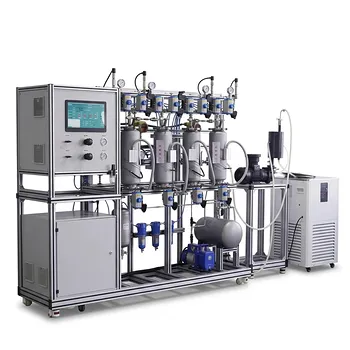
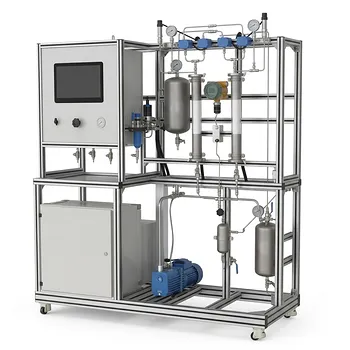
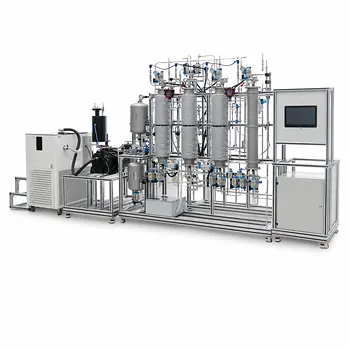
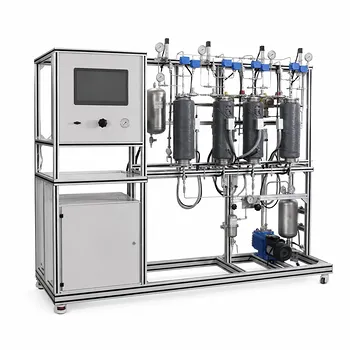
Looking to scale up from benchtop chromatography to pilot-plant operations? LABPARK provides state-of-the-art Educational and Vocational Unit Operations Pilot Plants in chemical engineering, bioprocess & biotech, and environmental & water treatment. Designed specifically for universities, research institutes, and training enterprises, our pilot plants deliver realistic, safe, and hands-on learning experiences to bridge the gap between theory and industrial practice.
Ready to enhance your curriculum? Contact LABPARK today to discover how we can customize the perfect training plant for your institution!
Related Products
- Gas-Solid Heterogeneous Separation Demonstration Educational Unit Operations Pilot Plant
- Hot Filtration Educational Unit Operations Pilot Plant Laboratory System
- Constant Pressure Filtration Educational Unit Operations Pilot Plant
- Dual-Mode Rectification Pilot Plant for Practical Training Unit Operations
- Multi-Component Gas Pressure Swing Adsorption Pilot Plant for Unit Operations Education
People Also Ask
- Why is pressure drop characterization critical in separation pilot plants? Key operational insights.
- How do separation pilot plants compare distillation vs alternatives? Optimize process selection
- What separation subsystems should be analyzed when configuring separation units for chemical and bioprocess pilot plants? Key Design Factors
- Why Do Flash Calculations Fail for Light-Gas Mixtures? Prevent Pilot Plant Simulation Errors
- What are the key thermodynamic considerations for gas mixture modeling? Expert Guide